
THE WORD OF MARIO JUAREZ
On Wednesday, a federal judge will decide whether an FBI Agent told the truth when he sought permission to raid an Oakland mayor and businessman’s home. The answer may depend on whether he should have Googled his own witness.
On March 5, 2026, a federal judge will decide whether FBI Special Agent Duncan Haunold must take the witness stand in an Oakland courtroom to answer a question that has doomed this case since the day agents showed up at the homes of Oakland Mayor Sheng Thao and the city’s recycling contractor, David Duong: why didn’t you check?
The question is the basis of a Franks hearing — a proceeding in which a federal judge examines whether an FBI agent lied or recklessly misled a magistrate to secure a search warrant application.
If U.S. District Judge Yvonne Gonzalez Rogers finds that Agent Haunold’s 78-page affidavit omitted material facts about the government’s key informant and included a false narrative about an alleged assassination attempt, the search warrants that launched Oakland’s bribe-the-mayor corruption case could be invalidated.
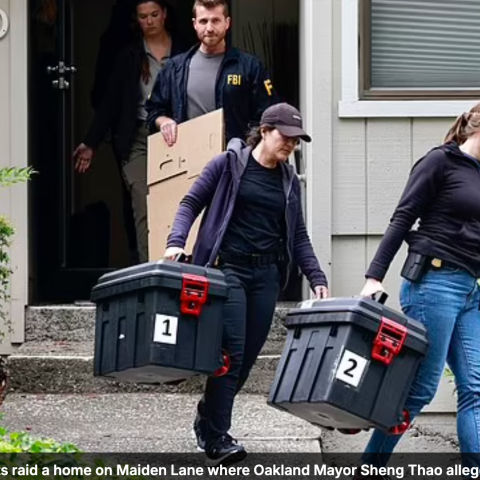
Evidence seized in the June 2024 raids — from the homes of Duong, his son Andy, their recycling offices, and the home of former Oakland Mayor Sheng Thao — could be tossed out.
If the evidence gets tossed, the case against David Duong will go with it.
The case is United States v. Thao, et al., Case No. 4:25-cr-00003-YGR.
The indictment reads like a juicy public corruption prosecution if you do not bother to read between the lines.
Federal prosecutors allege that David Duong, president of California Waste Solutions, the company that has the recycling contracts for both Oakland and San Jose, conspired with his son Andy, to bribe Mayor Thao, in part through her partner Andre Jones.
The amounts are small to buy a mayor of a major city.
Duong allegedly paid $75,000 in campaign mailer funding to help Thao get elected, and then $95,000 more to Jones.
In return, Thao was allegedly bribed to extend the Duongs’ Oakland recycling contract (she didn’t), purchase modular housing units (she didn’t), and facilitate city appointments (she didn’t).
The maximum theoretical prison term is 95 years in federal prison.
The case against the defendants rests on one man: Mario Roberto Juarez, AKA Co-conspirator #1.
I. The Man Behind the Case
Most federal corruption prosecutions need a cooperating witness. Someone on the inside who can tell the jury what the documents mean, that the participants knew they were doing wrong, that the payments were bribes, and that the meetings were corrupt.
In this case, that witness is Juarez, Co-Conspirator 1, a local businessman and political consultant who cofounded a housing company meant to provide modular homes for homeless people in the area.
He founded the company with the Duongs, who financed the company.
Juarez’s history exemplifies the skill set and dedication to justice that the modern FBI exhibits at nearly every turn.
Businessman and consultant Juarez’s style emerged in the early 2000s.
In 2002, the City of Oakland hired Juarez to collect unpaid debts. Within two years, city attorneys alleged that Juarez failed to accurately report what he collected, and because of that miscalculation, he somehow failed to remit the city’s share. The city sued. Juarez settled in 2007, paying $31,942 in restitution.
That same year, Juarez filed for bankruptcy. Creditors claimed $679,000 in debts.
In 2006, two clients sued Juarez’s collection company for keeping $108,000 he collected on their behalf. A judge ordered him to pay $94,000. Juarez never paid.

In 2008, Mauro and Hilda Bucio loaned Juarez $210,000 for a biodiesel venture. The venture never quite got off the ground. Mainly because Juarez spent the money on himself instead of what he told the Bucios he was using it for.
The Bucios demanded repayment. Juarez filed a police report accusing Mauro Bucio of pointing his fingers at him “as if he were going to shoot.”
A judge was unconvinced. A court entered a judgment against Juarez for $338,040, which was never paid.
In 2010, Juarez’s landlord sued him for fraud after discovering he had built himself an illegal residence inside a commercial property he had rented and refused to pay rent.
During the litigation, the landlord’s attorney, Sandra Raye Mitchell, filed a sworn declaration alleging that Juarez had pushed her, struck her in the face, and torn her clothing. Juarez responded by seeking a restraining order against Mitchell. He claimed she had punched him in the head. As for her injuries, he claimed Mitchell had ripped her own clothes and beaten herself.
In 2012, Juarez was hired as a leasing agent to find a tenant for a commercial warehouse. His commission was one month’s rent — $3,500. According to state regulatory records, Juarez cleverly created two lease agreements. The version for the landlord showed a $7,000 security deposit. The version the tenant signed listed a $21,000 deposit and a $10,000 broker commission. The tenant paid $31,000. Juarez gave the landlord $7,000 and pocketed the rest.
The California Department of Real Estate investigated. In 2015, Juarez lost his real estate license. The Alameda County District Attorney charged him with felony grand theft and forgery. The DA later reduced the charges, Juarez entered a no-contest plea, and received deferred entry of judgment.
In 2021, according to an affidavit by Alameda County DA Inspector David Bettencourt, Juarez obtained a $3 million loan from Balboa LLC using Oakland real estate as collateral. He didn’t make the payments.
Balboa foreclosed.
But that did not stop Juarez from obtaining a $250,000 loan from Stewart Chen, head of the Oakland Chinatown Improvement Council, using the same properties as collateral without telling Chen the properties were already pledged and lost through foreclosure.
Chen confronted Juarez about the missing loan payments and the double-pledged collateral. Juarez responded by surprising Chen’s wife at work and accusing Chen, without evidence, of hiring prostitutes.
Juarez never paid Chen a dime.
Inspector Bettencourt, in his affidavit seeking Juarez’s banking records, wrote that Juarez was “prone to using tricks, deception, lies or omissions to not only secure payments, but to stall the lenders when they begin to ask for agreed on payments, then resorting to threatening language and behavior when the lenders begin losing patience.”
Between 1992 and 2024, Alameda County Superior Court records list 33 civil lawsuits involving Mario Juarez.
The pattern is the same. Juarez enters a business relationship. Money flows one way — to him. The business fails, the money disappears. The partner demands payment. Juarez accuses that partner of a crime.
This is the excellent man the FBI relies upon to destroy a mayor and a successful businessman with an exemplary record.
In 2022, the predator Juarez found David Duong.
II. How the FBI Found Its Witness
Just to be clear, the FBI did not begin its hapless investigation by investigating the spotless David Duong. It did not begin by investigating the Oakland Mayor Sheng Thao.
It began by investigating Juarez. The investigation was triggered, the government stated, “after [Juarez] failed to pay for a negative political mailer targeting Thao’s opponents” in the November 2022 mayoral election.
Yes, that’s part of the bribe, allegedly, and it was Juarez who stiffed the print shop. The print shop filed a complaint. The FBI started looking at Juarez.
Federal agents obtained a warrant for Juarez’s iCloud account and found text messages, notes, and calendar entries that were self-serving and documented, they thought, a scheme involving the Oakland mayor’s race. They obtained additional warrants for email accounts and cell site location data. Four separate warrants were issued by two different magistrate judges between February and May 2024, all before the FBI spoke to Juarez as a cooperating witness.
The iCloud records contain text messages between Juarez and Andy Duong.
They are not messages from David Duong. The documentary evidence generated by a year of investigation — the government’s documentary evidence from Juarez’s iCloud — produced ambiguous text messages between Juarez and various parties.
III. The Text Messages That Built the Case
The federal indictment against Thao, Jones, and the Duongs is built on text messages. Read them carefully.
Every incriminating text was written by Juarez to Andy Duong. Thao is discussed in the third person. David Duong is barely present.
Juarez is narrating.
On October 7, 2022, Juarez texted Andy Duong: “Meet with Sheng. She will buy 100 units if mayor.” Then: “Guarantee.” Then: “$30 million contract for 100 units.” Then: “$300k contract.” Thao was not on the thread. She did not write “guarantee.” Juarez told Andy Duong she had — and the government wrote it into an indictment as though it were a recorded confession.
On November 18, 2022, after Thao won the mayoral election, Juarez texted Andy Duong: “We may go to jail… But we are $100 million dollars richer.” Andy replied, “Money buys everything.” The government presents this as consciousness of guilt. It reads just as easily as two men talking big after their preferred candidate won — with Juarez inflating his own importance.
On December 14, 2022, Juarez texted Andy Duong: “I gave the $20k to Andre Jones as a loan — FYI.” This is the government’s evidence of a bribery payment. It is also a man telling his business partner he loaned someone money and calling it a loan.
On March 26, 2023, Juarez sent Andy Duong a detailed summary he titled “Deal Points for Sheng Thao,” listing the mailer expenditures, the payments, and Thao’s alleged commitments on housing units, the recycling contract, and city appointments. The government treats this as a written confession of the bribery scheme. Thao never saw it. David Duong never saw it. It was Juarez’s summary, sent to Andy Duong, drafted by the same man who forged duplicate lease agreements, fabricated loan applications, and created false invoices throughout his career.

On April 11, 2023, Juarez texted Andy Duong a formal “Compensation Package” for Jones — complete with draw amounts, commission structures, and bonus tiers. The government presents this as a formalized bribery payment schedule. It reads identically to a standard independent contractor commission agreement, because that is what it was.
On February 6, 2023, Juarez texted Andy Duong about City Employee 1: “He needs to say that he is on board with Recycling Company” and “the appointment is the direct result of the lobbying taking place.” The government reads this as evidence of a corrupt appointment scheme. It is Juarez telling his business partner what Juarez wanted to happen, not a record of anything Thao agreed to.
Now look at what Thao herself actually wrote in the entire indictment. On October 12, 2022, she texted Jones: “Hey do you have what [CO-CONSPIRATOR 1] needs? He’s asking for it” and “Pls pls connect with him.” That is the sum total of Thao’s incriminating text messages in a 31-page federal indictment. A vague request to put two people in touch.
No reasonable criminal documents his own crimes in real time, in writing, to his business partner. Criminals use burner phones, code words, and cash. What Juarez produced — the deal-point memos, the compensation packages, the play-by-play narration of meetings — is not the record of a conspiracy. It is the record of a man building his own importance on paper, the way he always has.
The entire documentary foundation of this case is Mario Juarez telling people what Mario Juarez did, what Mario Juarez arranged, and what Mario Juarez was promised.
IV. The Man Who Came In from the Cold
Then, on June 6, 2024, Juarez walked into the FBI and told agents that David Duong had attended meetings where the bribery scheme was discussed and had personally approved the corrupt payments. Those meetings have no record. No recording exists. No email confirms what was said. No third party corroborates Juarez’s account.
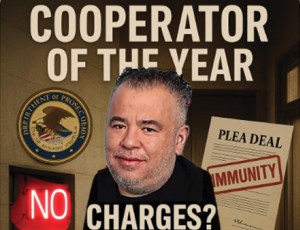
The defense filing states: “Only Co-Conspirator 1 gave the government evidence that David Duong allegedly actually knew of or participated in any corruption. Co-Conspirator 1 claimed to have heard David discuss the supposed scheme in meetings — meetings where the only record is the word of Co-Conspirator 1.”
According to the defense motion, Juarez contacted authorities on May 5, 2024, after a confrontation with the Duong family at the Duongs’ office.
At the time, Juarez was facing felony check fraud charges from the Alameda County District Attorney. He was under investigation by Alameda County Inspector Bettencourt for mortgage fraud involving over $3 million in loans. He had been locked out of the Evolutionary Homes office by the Duongs for failing to deliver on a housing construction contract.
He had been paid to build 50 modular homes, pocketed the money, and delivered only two.
The government’s own affidavit, as described in the defense filings, acknowledged that Juarez “appears to be motivated by revenge against the DUONGs and a desire to obtain protection from law enforcement.”
The defense described a man “facing multiple, multi-million-dollar lawsuits from the Duongs and others and desperate to escape the legal consequences of his conduct” — running the same play he had run for thirty years.
V. What the Agent Left Out
Eight days after Juarez’s cooperation interview, on June 14, 2024, FBI Special Agent Haunold submitted an affidavit to a federal magistrate judge seeking authorization to search the homes of David Duong, Andy Duong, and Mayor Thao, as well as the offices of California Waste Solutions.
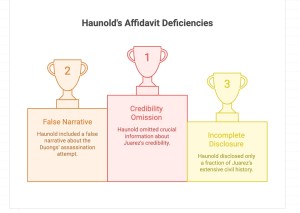
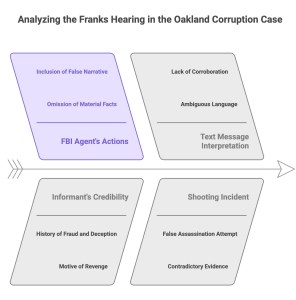
The defense’s Franks motion argues that Haunold’s affidavit was a little deficient.
First, it omitted information about Juarez’s credibility, and second, it included an entirely false narrative that the Duongs attempted to assassinate Juarez.
It is true that the truth-challenged Agent Haunold disclosed some information about Juarez’s background. The affidavit included a footnote acknowledging pending fraud charges, six prior arrests for theft, embezzlement, and battery, a recent $250,000 fraud allegation, and a motive of revenge. According to the government’s opposition, Haunold also disclosed that the FBI and the U.S. Attorney’s Office in San Francisco had investigated Juarez for money laundering in 2015 and 2016.
That was about ten percent of the grifter Juarez’s history.
Special Agent Haunold did not disclose the 33 civil lawsuits. He forgot to mention fraud judgments totaling hundreds of thousands of dollars. He did not disclose the surrendered real estate license, the forged lease agreements, the City of Oakland fraud settlement. He did not disclose the pattern, documented over decades, in which Juarez accused business partners of crimes after defrauding them.
When an agent already knows his informant is revenge-motivated, facing criminal charges, and accused of defrauding a business partner, there is a duty to disclose all relevant material.
He can’t just say he didn’t know.
A search of Alameda County court records would have taken minutes and revealed everything. Haunold had been investigating Juarez for over a year. He never searched, or, if he did, he never bothered to inform the magistrate.
The government argues that Haunold had no affirmative duty to search civil court records and that “availability” of additional impeachment information is not the standard under Franks. The government attempts to minimize Juarez’s civil history as “stale civil allegations” and notes that many of the judgments against Juarez were default judgments.
VI. The Shooting That Wasn’t
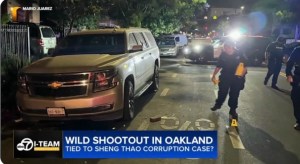
The second part of the deception and perhaps the meat of the defense’s Franks motion concerns a shooting at Juarez’s residence on the night of June 9, 2024.
According to the defense motion, the affidavit described the shooting as a targeted attack. Haunold wrote that “shots were fired at [Juarez’s] residence” and he “returned fire.” The affidavit stated that the “shooter or shooters were waiting for [Juarez] to return home and may have attempted to draw [Juarez] out of his home before they opened fire.”
Haunold concluded that “the shooting was targeted and may have been coordinated by the Duong family in an attempt to kill or harm [Juarez] to prevent him from cooperating with the investigation.”
The affidavit asserted probable cause to believe the Duongs had violated 18 U.S.C. § 1512(a) — witness tampering through attempted murder. That is a separate federal crime carrying up to 30 years in prison. The magistrate judge was being asked to authorize the raids based on the allegation that David and Andy Duong had tried to have Juarez killed.
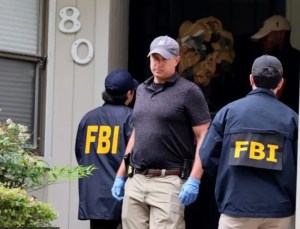
The question for Judge Gonzalez Rogers is whether the affidavit’s characterization of the shooting reflects recklessness or something worse. The evidence available to Haunold before he signed it on June 14 points in one direction.
Juarez told Oakland police that he heard a disturbance, went outside, and was fired upon by unknown assailants, then returned fire with his .40-caliber handgun.
Juarez’s son told responding officers he heard four shots. A neighbor confirmed four shots. Officers recovered four .40-caliber casings in his front yard.
The problem was that all four casings matched Juarez’s gun.
Juarez said that the attackers fired first, and he returned fire.
Then there should have been casings from another gun.
And more than four shots. The attackers’ shots plus Juarez’s four. But witnesses heard only four. All four casings matched Juarez’s gun.
What happened is obvious: Juarez fired four shots. The supposed assassins fired nothing.
Additional evidence contradicted the assassination theory the defense argues was unsupported by evidence in the FBI’s possession. A neighbor had seen two individuals hitting Juarez’s car with a brick before the shooting. Officers found a smashed car window and a red brick at the scene. Juarez told officers he heard “two booming sounds” and saw an individual inside his vehicle before the shooting began.
The area is known for frequent criminal activity. The so-called assassination suspects were described as local individuals seen hanging around a nearby liquor store.
The evidence is consistent with a car burglary. Juarez heard the noise of his smashed window, came outside, and started shooting.
It was not a coordinated assassination, unless assassins tried to lure Juarez outside so he could shoot at them.
The defense also posed a question that the government has conveniently not answered: If the Duongs were out to assassinate Juarez because he had become an informant, then how did the Duongs know? How did they know Juarez was cooperating with the FBI? The shooting occurred three days after the June 6 FBI interview. There is no evidence that the Duongs were aware of it.
The modern day Department of Justice is cute. Always cute, usually too cute by half.
Caught red-handed, the government attempted to minimize the significance of the shooting, arguing that it was included in the affidavit only for “context and completeness” regarding “events, Co-Conspirator 1’s state of mind, and potential motives for statements to law enforcement.”
The defense reply makes the government’s argument sound as foolish as it is. The affidavit did not treat the shooting as context. It asserted probable cause that the Duongs committed a violent federal crime. You cannot claim an allegation of attempted murder is mere background when you used it to justify searching a man’s home.
There is more, and it shows that these rascals will say anything and hide anything at the FBI. It is part of their shtick.
In Oakland they use something called ShotSpotter. It is an acoustic gunfire-detection record. ShotSpotter confirmed the four shots, all attributed to Juarez. The government stated that the reports were not received by an FBI task force officer until June 15, 2024, one day after Haunold signed the affidavit. The government argues Haunold could not have known that Juarez, his trustworthy informant, lied when he wrote the warrant.
The defense notes a minor point: Rollover warrants were obtained on June 20, five days after the ShotSpotter data arrived. Those subsequent warrants continued to describe the shooting as an attack on Juarez in which he returned fire. The ShotSpotter data was in the FBI’s possession. The narrative was not corrected.
The FBI re-interviewed Juarez after he lied to the FBI about the assassination attempt, which was really only a car burglary. They waited until September 2024 — three months after the raids. At that point, confronted with the evidence, Juarez changed his story. He admitted he had fired at the men.
Ironically, Andy Duong is charged in Count Eight under 18 U.S.C. § 1001(a)(2) — false statements to federal agents — for telling the FBI he did not know about payments to Jones. That carries five years.
Juarez told the FBI that unknown assailants fired at him and he returned fire. That was false. The physical evidence proved it was false. He admitted it was false three months later. But his lie did not merely mislead agents in an interview. Haunold embedded it into his sworn affidavit as the factual basis for alleging the Duongs had committed witness tampering through attempted murder under 18 U.S.C. § 1512(a) — a charge carrying thirty years. A magistrate read Juarez’s fabrication, believed it, and signed the warrants that launched this prosecution.
Andy Duong faces Count Eight for lying about payments. Juarez lied about a shooting, framed his business partners for attempted murder, and his lie was used to raid their homes. He was never charged. His felony fraud case was dismissed. The government now calls his false statement a matter of “context and completeness.”
VII. The Hearing
On Wednesday, March 5, Judge Gonzalez Rogers will hear arguments on whether the defense has made the “substantial preliminary showing” required to proceed with a full Franks evidentiary hearing.
That threshold is lower than proving a Franks violation. The defense needs only to demonstrate enough evidence that the agent’s omissions and misrepresentations were deliberate or reckless, and that the omitted information was material to the probable cause determination.
If the judge grants the hearing, Haunold will take the stand. The defense will ask him what he knew about his star witness, when he knew it, and what he chose not to investigate. They will walk him through the 33 lawsuits, the forged leases, the surrendered license, the City of Oakland fraud. They will ask him about the four casings in Juarez’s front yard, the brick on the sidewalk, the smashed car window, the witnesses who heard only four shots. They will ask him why a man the government itself described as motivated by revenge was taken at his word.
If the court ultimately finds that Haunold’s omissions were reckless and material — that the affidavit, corrected to include the omitted information and stripped of the false shooting narrative, cannot support probable cause — the evidence from the June 2024 raids gets suppressed.
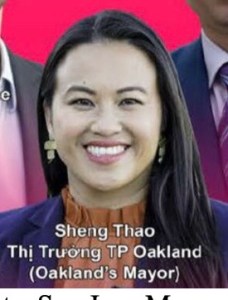
Without that evidence, federal prosecutors are left with what a year of investigation produced before Juarez walked in the door: text messages written by one man, meetings described only by a serial fraudster, and payments consistent with legitimate business.
The Ninth Circuit warned about witnesses like Juarez in United States v. Bernal-Obeso, 989 F.2d 331 (9th Cir. 1993), in language the defense quoted in its motion: “Criminals caught in our system understand that they can mitigate their own problems with the law by becoming a witness against someone else. Some of these informants will stop at nothing to maneuver themselves into a position where they have something of value to sell.”
Juarez was facing felony charges and millions in fraud exposure when he contacted the FBI. He had been locked out of his office by the Duongs for failing to deliver on a million-dollar housing contract. He had a documented, decades-long history of defrauding business partners and then accusing them of crimes when they came after him.
He had something to sell.
The FBI bought it without checking the receipt.
The Franks hearing in United States v. Thao, et al., Case No. 4:25-cr-00003-YGR, is scheduled for March 5, 2026, at 10:00 AM before Judge Yvonne Gonzalez Rogers in the Northern District of California, Oakland.
Tomorrow: Even if the warrants survive, what does the government actually have? Part 2: The Bribe That Wasn’t Paid.
Other stories in this series:


Stories in other publications:
https://oaklandside.org/2025/12/01/mario-juarez-oakland-fbi-corruption-sheng-thao-david-duong/