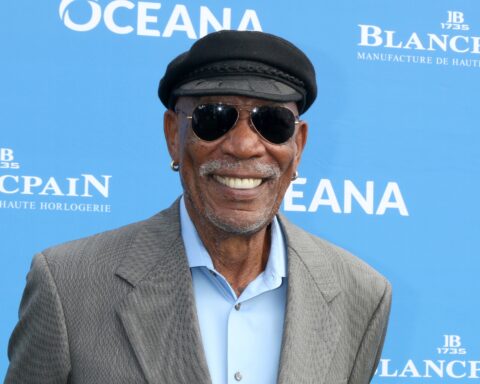

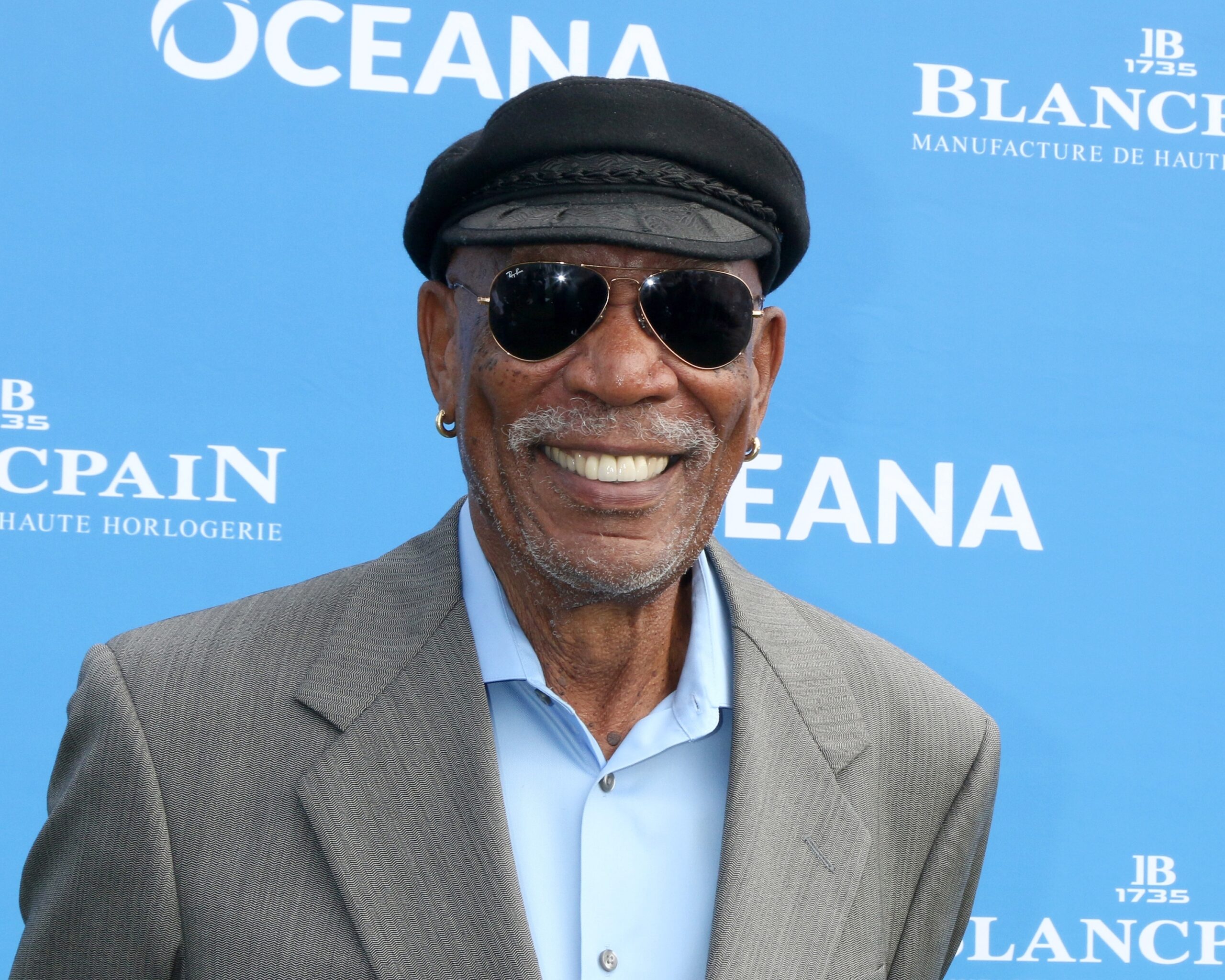
Morgan Freeman has the most recognized voice in Hollywood. He also has lawyers, and they have been busy.
On February 27, Freeman appeared on CBS Mornings to promote The Dinosaurs, a Netflix documentary produced by Steven Spielberg that he narrated.
The conversation turned, as it tends to now, to artificial intelligence. The anchor asked him directly. What does he think about AI companies trying to replicate his voice without his permission?
His answer was three words: “I’ve got lawyers.”
He did not stop there. He confirmed his legal team has already been active, that people have tried to clone his voice using AI, and that his lawyers have worked to “tamp that down.”
The companies that have tried have not succeeded. The ones that try next will face the same outcome.
Why Are AI Companies Hijacking Morgan Freeman’s Voice?
Freeman is 88 years old and has been working in Hollywood for six decades, appearing in more than 100 films. But it is not the films that make his voice a target for AI replication, it is everything else.
He has narrated documentaries, commercials, and prestige projects at a volume that has made his delivery essentially synonymous with authority. When a studio or brand wants a voice that conveys weight and trust, the reference point is Morgan Freeman.
That is the thing AI companies want to replicate. Not just his tone but the shorthand it carries.
What those companies may not know, and what Freeman revealed in the CBS Mornings interview, is that the voice they are trying to steal was not something he was born with. He built it.
“I went to school and studied voice and diction,” he said, explaining that something as simple as yawning helps relax the throat to produce a deeper, more resonant sound. The deep, unhurried delivery that audiences recognize as distinctly his is the result of decades of intentional training. He is not protecting a natural gift. He is protecting professional work.
In a previous interview with The Guardian, he was more direct about what unauthorized replication means to him, “Don’t mimic me with falseness. I get paid for doing stuff like that, so if you’re gonna do it without me, you’re robbing me.”
Where Does Freeman’s Legal Team Draw The Line?
Freeman’s position is not a blanket refusal of all imitation. He made a distinction on CBS Mornings between theft and licensed use, and the distinction matters.
He recalled an earlier arrangement. An English company paid him to allow someone in England who could sound like him to perform voiceover work on his behalf.
“Yeah, that works,” he said. The campaign he was likely referring to was for the UK insurance company More Than, which used an impressionist billed as “More Than Freeman” in its ads. Freeman signed off on it. He was compensated. That is the framework he is willing to operate within.
The newer version of that framework, one he is now participating in directly, is even cleaner.
He has become the actual voice of Warburtons, a major UK bread brand, following in the footsteps of Robert De Niro, George Clooney, Sylvester Stallone, and Samuel L. Jackson in that campaign.
He is not lending his brand by proxy. He shows up, he records, he gets paid. That is the deal he is willing to make.
What he is not willing to make is any deal that happens without him. The anchor on CBS Mornings pushed further, asking whether he would be open to AI using his voice if the company compensated him fairly.
His answer was yes. The problem is that the companies doing it now are not asking. They are taking.
What Is Morgan Freeman Currently Working On?
The CBS Mornings appearance was built around The Dinosaurs, the Netflix docuseries produced by Steven Spielberg.
Freeman narrated it. He admitted in the interview that he had no interest in dinosaurs whatsoever before the project came along, the scale of the production and Spielberg’s involvement was what drew him in.
The series has been described as a roaring success, using CGI to reconstruct prehistoric life with Freeman’s voice guiding viewers through it.
At 88, Freeman is not slowing down. In 2025 he narrated Ken Burns’ American Revolution for PBS and appeared in Now You See Me 3.
He co-executive produced The Grey House with Kevin Costner, an eight-part Prime Video series that premiered February 26, about four Southern women who operated a secret spy network for the Union during the Civil War.
Coming up next is something entirely different. On March 27, Freeman will appear live at Thalia Mara Hall in downtown Jackson, Mississippi, for his Symphonic Blues Experience, the first time the production has been presented in his home state.
The Mississippi Symphony Orchestra will perform alongside blues artists from Ground Zero Blues Club in Clarksdale, a venue Freeman co-founded with the late Bill Luckett.
He will narrate a cinematic journey through the origin and evolution of Delta blues, with Martin Gellner serving as composer, conductor, and music director.
The show begins at 7:30pm ET at 255 E. Pascagoula Street in Jackson. It is being presented in partnership with Visit Mississippi, Visit Clarksdale, Memphis Tourism, and the Crossroads Economic Partnership.
Why The Timing Matters
Freeman’s CBS Mornings interview landed in the middle of an industry-wide reckoning with AI voice replication. He is not the only one pushing back.
Hank Azaria and Nancy Cartwright of The Simpsons have spoken publicly about the threat to voice actors.
Anime dubbing performers have called out AI localization as both unethical and poor quality. Disney has gone in a different direction, striking exclusive licensing deals for its own characters rather than fighting replication.
What Freeman is doing is different from all of those approaches. He is not lobbying.
He is not giving speeches about the future of the industry. He is not waiting for regulation. He hired lawyers, the lawyers are working, and he is telling anyone who asks what his answer is in three words.
There is a version of this story that is just a celebrity delivering a good quote and moving on.
The quote is genuinely good, brisk, confident, funny in its understatement.
The fuller version of the story is that he is 88 years old with a trained voice he spent a career building, and he has spent the last several months watching AI companies treat that work as raw material for their own products.
His lawyers have already been active. He is already on record with The Guardian calling it what it is. Theft.