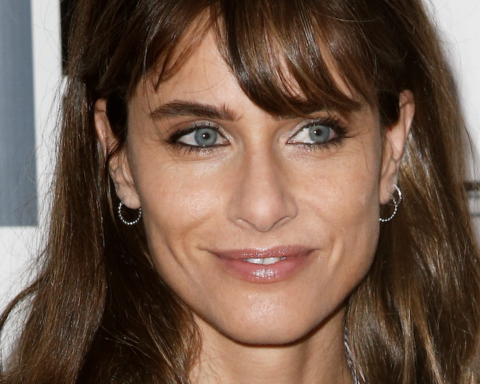

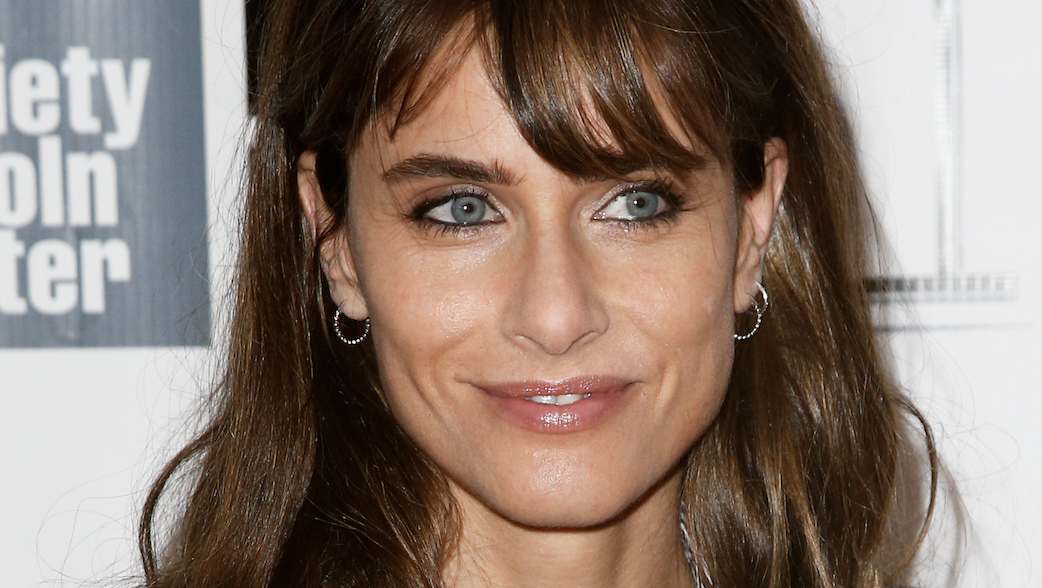
Amanda Peet has revealed that she was diagnosed with Stage I breast cancer last fall, at the same moment both of her parents were in hospice care on opposite coasts of the country.
She shared the news in a deeply personal essay published in The New Yorker on Saturday, March 21, titled “My Season of Ativan.”
Peet, 54, is one of the more quietly accomplished figures in Hollywood, an actress who broke through in The Whole Nine Yards in 2000, went on to work with Nancy Meyers, Aaron Sorkin, and the Duplass brothers, co-wrote and executive produced The Chair for Netflix in 2021, and currently stars in Your Friends & Neighbors on Apple TV+.
She is married to David Benioff, co-creator of Game of Thrones, and has three children. She does not have social media. The essay is the first time she has spoken publicly about any of this.
What Was Peet’s Diagnosis?
Peet had long been monitored closely due to what her doctors described as “dense” and “busy” breasts, terms used not as compliments, she noted, but as warnings requiring extra screening.
She had been seeing a breast surgeon every six months. The Friday before Labor Day 2025, she went in for what she expected to be a routine scan.
It was not routine. Her doctor, who usually chatted during examinations, went silent. She told Peet she didn’t like what she saw on the ultrasound and wanted to perform a biopsy.
Then she said she would hand-deliver the sample to pathology at Cedars-Sinai herself. Peet wrote that this was the moment she understood what was happening.
The results came the following day. Peet described waiting with her husband, managing anxiety with small doses of Ativan that barely registered given how elevated her blood pressure was.
The doctor texted at 4:42 PM, “All poodle features!” The tumor appeared small, and testing revealed Peet was hormone-receptor-positive and HER2-negative, two results that point toward more treatable forms of the disease.
She wrote that she felt happier than she had before the diagnosis, as someone who didn’t have cancer. That lasted about ten minutes, until she remembered she still needed an MRI.
The MRI did not show lymph node involvement, which was good news. But a radiologist found a second mass in the same breast.
Another biopsy was ordered, described as excruciating, and Peet was told there was a 50-50 chance it contained more cancer. Two days later, she learned it was benign.
She would need a lumpectomy and radiation but not a double mastectomy or chemotherapy. She described the realization this way: cancer diagnoses come in a slow drip.
Radiation was manageable, she wrote, until the final stretch, when the physical toll became harder to ignore. She received a clear scan in January 2026.
Both Parents, Both Coasts
The cancer diagnosis arrived in the middle of a period that would have been devastating on its own.
Peet’s parents had long been divorced and were living on opposite coasts. Her mother, who had advanced Parkinson’s disease, had been in hospice in Los Angeles since June 2025.
Her father, a New York corporate lawyer, had only entered hospice a week before he died, so recently that the family hadn’t expected him to go first.
When her sister called to say their father was about to die, Peet flew to New York. She didn’t make it in time.
She saw his body before it was taken from his apartment but did not get to say goodbye.
She wrote that she felt guilty for not crying, and then noticed that the grief of her father’s death was quickly displaced by terror about her own health.
Her exact words were, “As soon as my dad’s corpse was out of sight, I was free to panic about my cancer again.”
She had not told her mother about the diagnosis. The essay opens with the reason why, her mother had been the person she told everything to, and it was strange, and deliberate, to keep this from her.
During the months of treatment, Peet largely stayed away from her mother’s cottage in Los Angeles. It was only later, as radiation ended and her mother’s condition worsened, that she returned.
In January 2026, two weeks after her clear scan, a hospice nurse told Peet that her mother was going to die within days and that most people find it easier to call the mortuary before the immediate aftermath rather than during it.
Peet began making the arrangements. She then went to be with her mother.
The essay ends with those final hours. Peet described climbing onto her mother’s rented hospital bed to get into her line of vision, since her mother was looking at the ceiling and in pain.
They locked eyes. Peet said “howdy doodle,” the greeting her mother had always used with her. Her mother quieted.
They stared at each other for what felt like several minutes without speaking. Peet wrote that she wasn’t certain whether her mother knew she was looking at her daughter or simply at a shape in the room, but that something was being communicated anyway.
“Time was running out,” she wrote, “and, besides, I had already told her everything.”
The Response To Peet’s Diagnosis
Because Peet does not use social media, the response to the essay has come through others.
Her best friend, actress Sarah Paulson, posted a tribute on Instagram that has been widely shared.
Paulson, who has known Peet for years and calls her “Bird,” described the essay as “the most profoundly gorgeous essay about the loss of her parents, while dealing with a breast cancer diagnosis.” She ended the post simply, “Bird, I love you beyond.”
Comedian Amy Sedaris commented on The New Yorker‘s Instagram post that she loved Amanda Peet.
Actress Julie Benz called the essay “beautiful and heartbreaking.” Writer Sarah Gormley wrote that the essay “blew me away” and said she was hoping Peet would eventually write a memoir.
For a woman who built a career in public while keeping almost everything private, the essay reads like a deliberate choice to let people in, not for the diagnosis, and not for the grief, but for the specific experience of holding all of it at once, in a season when there was no good place to put any of it.