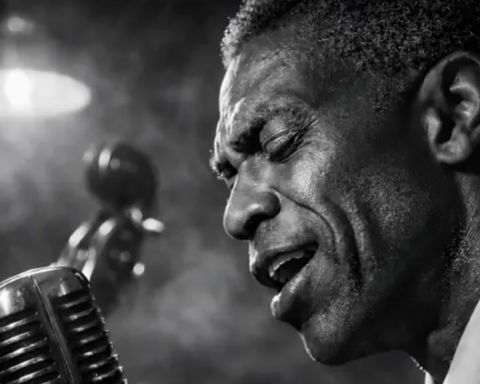

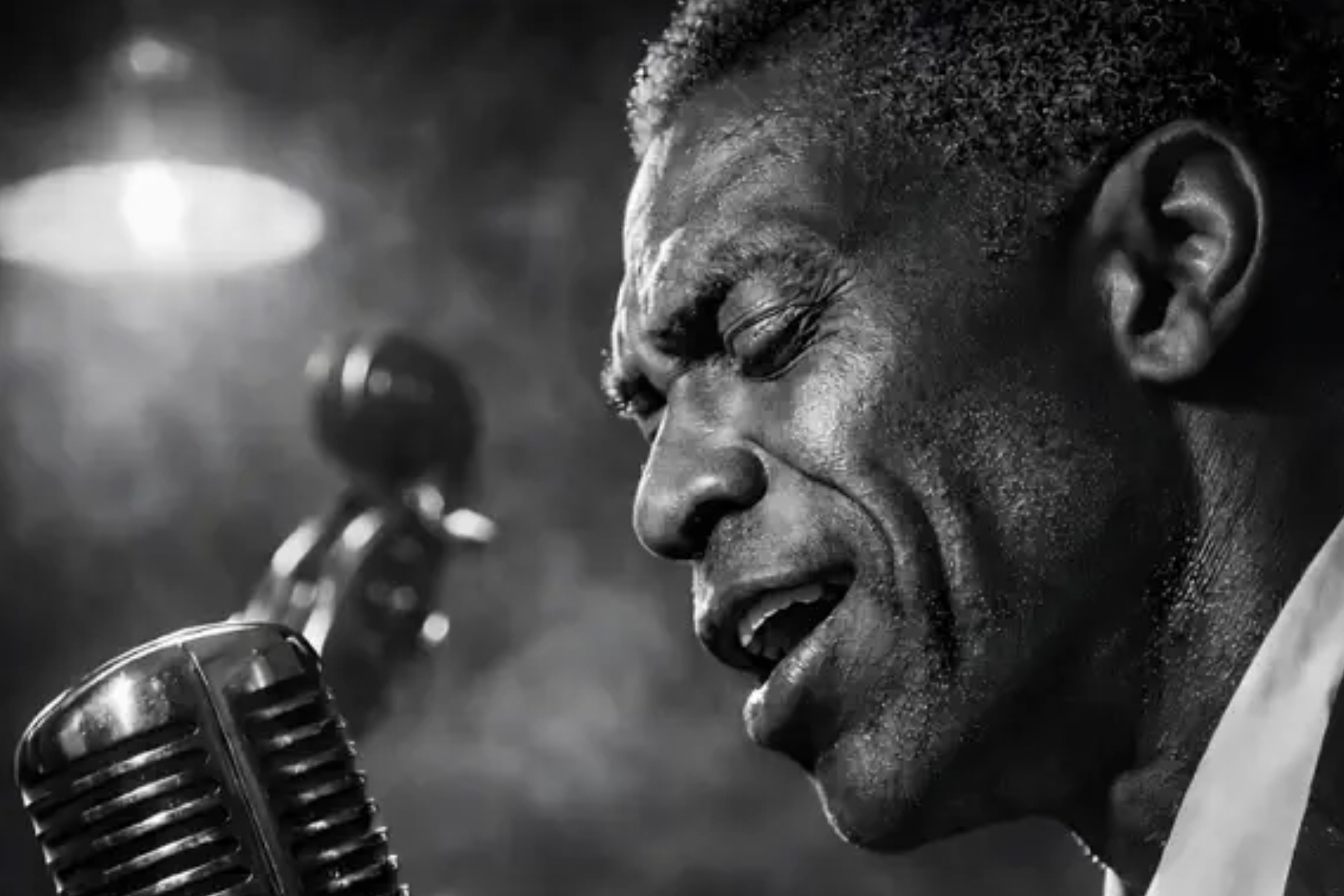
Eddie Dalton is a gray-haired, soulful blues singer with 1.4 million YouTube views, 230,000 Facebook followers, three songs simultaneously in the iTunes top 10, an album sitting at number three on the iTunes Top Albums chart, and a number one single in both the United States and the United Kingdom.
He is also entirely fictional. Every element of him, his voice, his face, his persona, his music, was generated by artificial intelligence.
There is no real Eddie Dalton.
The story was first broken by Showbiz411, which identified the person behind the project as Dallas Ray Little, a content creator based in Greenville, South Carolina, who operates through a company called Crunchy Records.
Little produces AI music and videos under a roster of fake artist names. Eddie Dalton is the one that broke through.
What Does Dalton’s Music Sound Like?
This part is what makes the story interesting beyond the novelty. The music is not obviously artificial. Listeners in the comment sections of Dalton’s YouTube videos describe it as “captivating soulful music” and “smooth.”
One commenter wrote, “I never heard of Eddie Dalton till I came across this song yesterday. I am now an official fan.”
Multiple commenters across platforms have praised the music without any apparent awareness that the artist does not exist.
The sound draws direct comparisons to Otis Redding and BB King, the warm, weathered timbre of classic blues and soul, the kind of voice that makes people feel like they are discovering a forgotten legend rather than a generated file.
The track “Another Day Old” is the breakout. It has over 1.4 million views on YouTube. The irony of the title — something he will never be, as Showbiz411 noted — has not been lost on observers.
The album is called “The Years Between.” He has six songs on iTunes: “Another Day Old,” “Running to You,” “Cheap Red Wine,” “Stay a Little Longer,” “She Don’t Stay Long,” and “Somewhere Along the Way.”
All eleven of his songs that appeared on the iTunes top 100 in the period following his viral breakthrough were chart entries in the blues genre, though his presence on the all-genres chart required real volume to achieve.
The iTunes Problem
The chart dominance looks more complicated once the underlying numbers are examined.
According to tracking data from Luminate, the three songs that reached the iTunes top 10 generated approximately 6,900 track sales and 525,000 streams in a single week.
Those are real but modest numbers. The reason those numbers produced top chart positions is structural, iTunes rankings are driven heavily by paid digital downloads rather than overall listener engagement or streaming volume.
This means that a concentrated effort to generate downloads, particularly within a specific genre category, can produce chart positions that look like mainstream success but do not reflect mainstream reach.
This is not a new vulnerability in the iTunes system, but Eddie Dalton is the most visible example yet of an AI-generated act exploiting it at scale.
As one music industry insider noted, “The day we hear one of these songs on the radio we’ll take this seriously.” But radio airplay was never the point.
The iTunes chart positions generate visibility, algorithmic recommendations, and the appearance of credibility, all of which can drive more downloads and streams. The cycle is self-reinforcing.
Apple Music’s listing for Eddie Dalton on iTunes does not appear to include any label or disclosure indicating the artist is AI-generated.
The Disclosure Question
Dallas Little pushed back directly on the characterization of his operation as a content farm and his audience as being misled. “I don’t appreciate how my work has been characterized,” he said in a statement to Showbiz411.
“Referring to it as a ‘content farm’ and suggesting people are being misled is inaccurate; it presents opinion as fact rather than reporting. Every social media video is clearly labeled as AI-generated, and many listeners are fully aware of that and enjoy the music for what it is. All of the songs are written by me.”
The factual dispute here is specific. TikTok videos associated with Eddie Dalton are labeled as AI-generated.
His YouTube channel, where the music has accumulated millions of views and where most of the enthusiastic fan comments appear, does not say anywhere that the music is AI-created.
Whether that constitutes meaningful disclosure is a question reasonable people are disagreeing about actively.
Little also makes a point that several commentators have taken seriously. He wrote the songs.
The lyrics, the compositional choices, the creative direction, those came from a human.
The voice and visual presentation were generated. Where the line falls between human creative authorship and AI production is genuinely contested in the industry and in copyright law.
What Does Dalton’s Success Mean For The Music Industry?
Under current US copyright law, works generated entirely by AI without meaningful human creative authorship are not eligible for copyright protection.
Whether the songs attributed to Eddie Dalton qualify under that standard, given that Little wrote the lyrics, is an open legal question that has not been tested.
The Recording Academy, which governs Grammy eligibility, has been wrestling with the same question without resolution.
The broader context is a music industry already under significant pressure from AI. In 2024, the Recording Industry Association of America filed a lawsuit against the AI music generation services Suno and Udio, alleging that the companies trained their models on copyrighted recordings without consent.
Elton John and Dua Lipa have both publicly urged governments to tighten laws around the use of copyrighted material in training AI systems.
Eddie Dalton is suspected to be one of several AI acts produced by the same operation.
Others include a country artist called Dallas Little, and performers going by the names Cody Crotchburn and Cade Winslow. Crunchy Records’ website, which carries a copyright notice dated 2035, describes its mission as, “Progress isn’t the enemy, stagnation is.”
The comment that captures the central tension of the entire story came from X user Evan Kirstel, who wrote,
“An artist named ‘Eddie Dalton’ just hit number one on iTunes. Two more songs in the top ten. Millions of views on YouTube. Completely AI-generated. Voice, style, everything. Sounds like a mix of Otis Redding and BB King, but there’s no actual human behind it. It’s showing up on real charts, competing with real artists, getting real streams. If most listeners can’t tell the difference, does it actually matter?”
That question does not have a consensus answer yet. The fact that it is being asked seriously, in the context of a number one iTunes song by an artist who does not exist, tells you something about where things are heading.