John Sterling Died At 87 After Calling Over 5,000 Consecutive Yankees Games
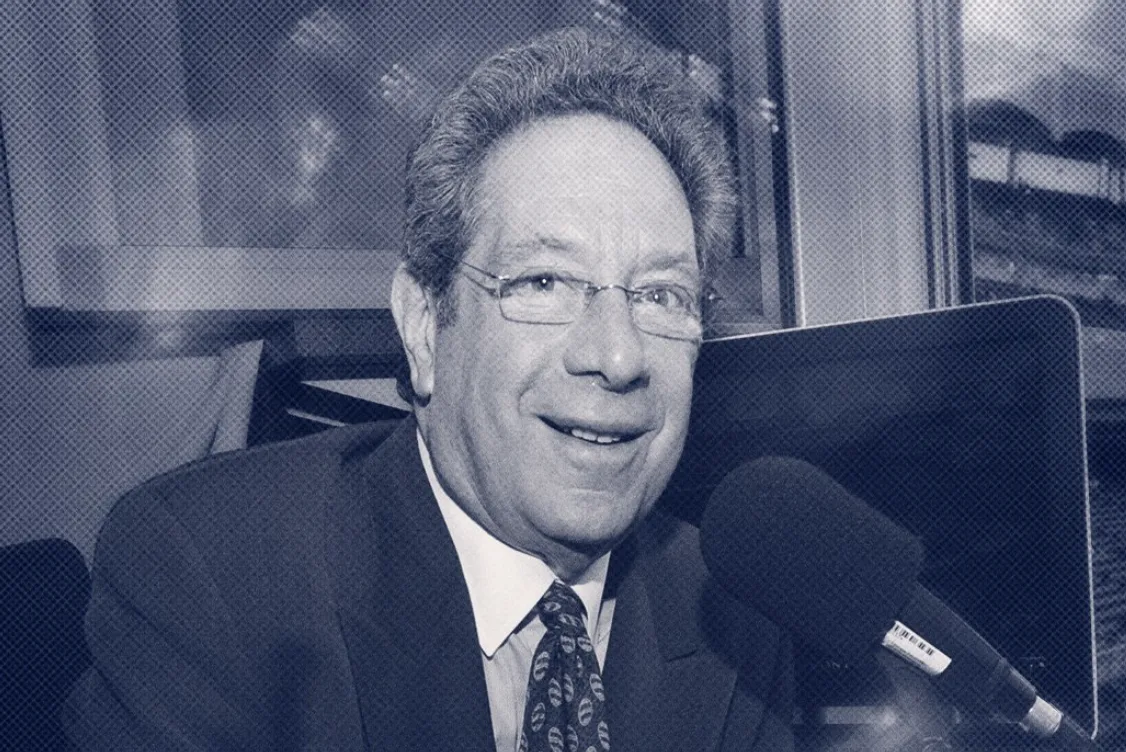
John Sterling, the radio voice of the New York Yankees for 36 seasons whose booming baritone, personalized home run calls and gyrating victory celebrations made him one of the most recognizable and beloved broadcasters in the history of American sports, died on Monday May 4, 2026. He was 87.
The Yankees and WFAN radio station confirmed his passing. Sterling had undergone heart bypass surgery this winter and had been recovering at his home in Edgewater, New Jersey.
The Yankees issued a statement that was brief and appropriate. “The Yankees mourn the loss of legendary broadcaster John Sterling. Our thoughts are with John’s family, friends and loved ones at this time.”
WFAN, the station where Sterling spent the final decades of his broadcasting career, went further. “We are devastated to hear about the passing of John Sterling, a WFAN and Yankees radio icon whose voice was synonymous with an entire generation of Yankee fandom. Rest in peace, John.”
For anyone who grew up listening to Yankees baseball on the radio from 1989 to 2024, that voice was not merely associated with the game. It was the game.
The Man Behind The Voice
John Sterling was born John Sloss, grew up on the Upper East Side of Manhattan, and began broadcasting at 19 years old at a small station in western New York.
He changed his surname from Sloss to Sterling because, as he later told The Athletic, it “gave him more shine.” As biographical decisions go, it was an accurate one.
His path to Yankee Stadium was long and winding in the way that radio careers often are. In the 1970s he became a fixture in New York sports, calling games for the New York Stars of the World Hockey Association, the New York Islanders, the New York Nets of the American Basketball Association, and hosting a talk show on WMCA from 1971 to 1978.
He called Morgan State Football for eight years. He called Washington Bullets basketball in 1981. He spent time in Atlanta in the 1980s calling games for the Braves and Hawks.
He had his first contact with the Yankees in the mid-1970s, hosting pregame shows on WMAS and WINS radio, sometimes alongside broadcasting legend Mel Allen.
Then in 1989, a call came from a producer at WABC, and John Sterling became the radio voice of the New York Yankees.
He would hold that position for 36 years. He never seriously considered leaving. The team, losing in the early years, dominant in the late 1990s, competitive for most of what followed, was, in the most genuine sense, his.
George Steinbrenner understood that early. During a rain delay in Milwaukee, probably around 1990 or 1991 when the Yankees were a bad baseball team, Sterling recalled Steinbrenner approaching him with a specific kind of reassurance.
“I just want you to know you’ll always be the Yankee announcer,” Steinbrenner told him. “And if they try to hire anyone else, I’ll veto it.” Sterling told that story for the rest of his life. It was the moment he knew he was home.
The Calls That Defined Him
Radio broadcasting requires something that television does not, the ability to make a listener see what they cannot see.
John Sterling was, by any fair assessment, one of the best who ever did it. His voice was a baritone instrument that he used like a conductor uses a baton. It went up when the moment called for rising, dropped when the moment demanded weight, and broke into song when something extraordinary happened.
The home run calls are the part of the Sterling catalog most often quoted and most instantly recognized by anyone who ever listened to a Yankees game on the radio.
He created a personalized call for every Yankee who hit a home run, a theatrical flourish that turned a statistical event into a singular, memorable moment.
For Derek Jeter, “The Captain comes through.” For Bernie Williams, “Bern, baby, Bern.” For Alex Rodriguez, “An A-bomb from A-Rod.” For Mariano Rivera, “Mo, better blues.” For Mark Teixeira, “Tex Message.” For Robinson Cano, “Robbie Cano, don’tcha know.” For Aaron Judge, whose titanic home runs arrived after Sterling had already been doing this for nearly three decades, “All rise. There it goes. Judge has issued his ruling.”
These were not invented at a desk. They emerged from Sterling’s genuine engagement with the players he watched every single day for months at a time. He paid attention. He cared.
Sterling expressed it in the specific theatrical register that made him impossible to imitate and impossible to forget.
The signature call that brought every win home was the victory announcement, the one Yankees fans waited for after every late lead held, every clutch hit, every save converted. “Yankees win.” Brief pause.
Then, with the full force of his voice and the physical celebration that viewers of YES Network games occasionally caught on camera, “Theeeeee Yankees win.”
The Sterling Shake, a full-body shimmy of satisfaction, went with it.
“It is high, it is far, it is gone” was the home run formula that preceded the personalized tag. He delivered it with conviction every time, whether the ball was a 450-foot bomb to dead center or a 330-foot chip shot that barely cleared the right field wall. The conviction was never ironic. It was always real.
The Number That Defines A Career
At his retirement ceremony on April 20, 2024, a full event at Yankee Stadium attended by players, organization officials and fans who lined up to honor him, the Yankees presented Sterling with a jersey.
It bore not a conventional player number but the number 5,631. That was how many games he had called for the Yankees total, regular season and postseason combined.
Of those 5,631 games, 5,060 came consecutively, from September 1989 through July 2019, without a single absence. Thirty years of baseball, every game, every inning, every at-bat.
He was 51 years old when the streak began and 81 when it ended, and it ended only because friends and colleagues spent years convincing him to take a series off for his health.
Sterling called Derek Jeter’s entire career. He called five World Series championships. He called eight World Series total. He won 12 Sports Emmys.
He was nominated twice for the Ford C. Frick Award, the highest honor the Baseball Hall of Fame bestows on broadcasters.
The person beside him for most of those years was Suzyn Waldman, his partner in the booth whose own career became inseparable from his.
She called him “one of a kind” Monday and said each of their working days had been “a unique, funny, strange, wonderful experience.”
Her final words captured what Sterling meant as a professional and as a person, “There will never be another person like that, to have that kind of love for a team and that kind of love for his fan base.”
The Last Chapter
Sterling initially retired in April 2024 citing health concerns. He had been working reduced schedules in his final years after the iron man streak ended in 2019, acknowledging, gradually and without much complaint, that 64 years of broadcasting had a physical toll alongside the professional rewards.
His retirement ceremony honored him appropriately for someone who had given that much to that many.
Then the Yankees made the postseason. And the World Series. And the voice that had called five championships came back one more time.
He called the 2024 World Series. It was his final broadcast. He came back for one last autumn, because the Yankees were playing and he loved the Yankees and it was not in him to not be there.
He told people at his retirement that he considered himself “a very blessed human being” who had “lived out a childhood dream of broadcasting on the radio for more than 64 years.” He meant it. His voice was the proof.
John Sterling died on May 4, 2026. He was 87 years old. He called 5,631 Yankees games. He never missed one he could help missing.
The Yankees win. Theeeeee Yankees win.