
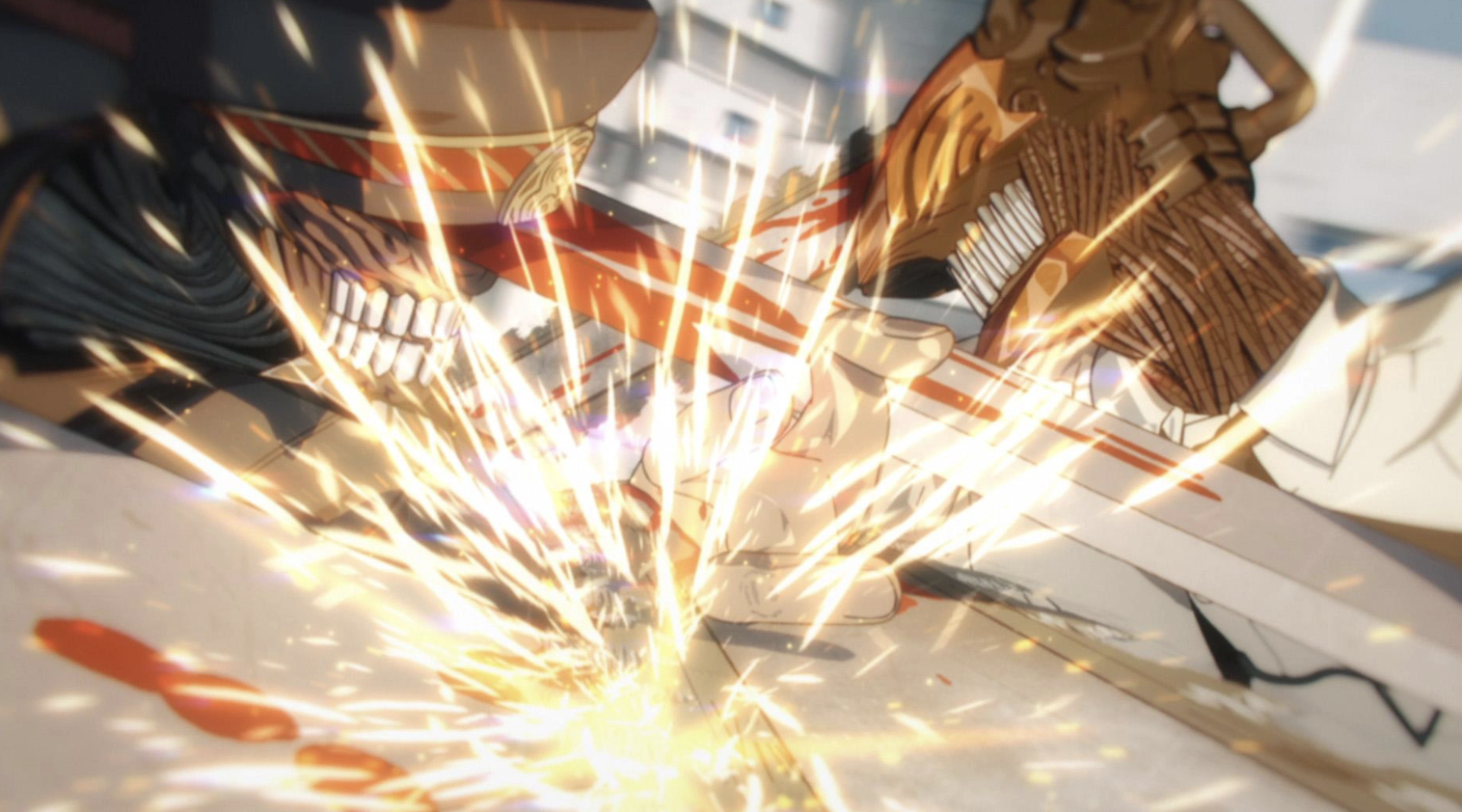
Tatsuki Fujimoto’s Chainsaw Man is over. Chapter 232, titled “Thank You, Chainsaw Man,” was released on March 24 on Shonen Jump+, and it ends with a banner that reads simply “The End,” not “End of Part Two,” not a teaser for what comes next.
Just “The End.” After eight years, 232 chapters, and one of the most devoted and frequently heartbroken fanbases in modern manga, Denji’s story is finished. And in its final pages, Fujimoto gave fans back the one character whose loss had hurt the most.
Power is alive. Or at least, something very close to it.
For anyone who has read Part 1 and remembers exactly how she died, a death so brutal and so abrupt that it became one of the defining moments of the series, that sentence alone is worth reading twice.
What Happened In The Final Chapter?
To understand the ending, you need what came just before it. Chapter 231, “Goodbye, Pochita,” published on March 10, delivered the pivot the whole series had been building toward.
Pochita, Denji’s small, chainsaw-faced devil companion, the creature who had been with him since the beginning, tore out his own heart and ate it.
In doing so, he erased the Chainsaw Devil from existence entirely. His final words to Denji, “Keep on dreaming. In a world without me.”
The sacrifice was an act of love rooted in an uncomfortable truth. Throughout the series, every time Denji achieved something he had dreamed of, the emptiness arrived almost immediately.
The dream was always better than the reality. Pochita’s logic: Denji’s desires, and the chaos they generated, had brought the world to the edge of catastrophe.
The only way to give him something like peace was to wipe the slate, to put him back at the beginning, before any of it, without the memory of what he had lost.
Chapter 232 opens on that reset world. Denji is back at the start, living the same difficult life from Chapter 1, blood on his hands, reflecting that he had “a good and bad dream.”
He still wants the same simple things, video games, dates, a pet dog. The yakuza come for him. The Zombie Devil attacks. He is about to die exactly as he did in the opening pages of the entire series.
And then Power steps out of the dark and saves him.
She introduces herself. She fights off the zombies. She uses her blood to revive him and contracts him into her service because, she says, he smells like a dog and she likes dogs.
The dynamic, Power and Denji, bickering and inseparable, is immediately, recognizably itself. The Control Devil re-enters the picture too, though not as Makima.
This time it is Nayuta, running a devil-hunting organization in her own way while attending school and playing video games with Meowy. Denji and Power become her devil hunters.
The chapter’s most meaningful moment comes at school. While clearing a devil, Denji notices Asa across the courtyard, about to stumble and accidentally crush Bucky the chicken devil against her chest, the exact incident that sent her spiralling into everything that defined her arc through all of Part 2.
Denji drops what he is doing and catches her just in time. Bucky survives. Asa never meets the War Devil. The whole spiral never happens.
Asa thanks him. She calls him “Chainsaw Man” because he is holding a chainsaw. Something stirs in Denji when he hears it.
But it doesn’t last, and the series ends with Denji and Power heading out to get something to eat, Denji casting one last look at Asa as they go.
No memories of the prior timeline. No grand acknowledgement of everything that was sacrificed to get here. Denji got what he deserves, even though he will never know it.
Why Power’s Return Matters
Power died in Part 1 in one of the most shocking and upsetting deaths in the series. She was not a character who was supposed to make it, Fujimoto had established early that nobody was safe, but her absence from Part 2 was felt throughout.
Fans spent years hoping for some version of her return, and the series gave them exactly that in its final pages.
Not a resurrection, not a miraculous loophole, but a reset world where the version of Power who never had to die is simply there, exactly as she was. Chaotic, funny, difficult, and completely herself.
For a series that had spent much of Part 2 introducing new characters and new threads, many of which remain unresolved, closing with the reunion of the Part 1 core is a statement about what Chainsaw Man was always actually about.
How Did Fans React To The Ending?
The ending is, predictably, divisive. The two-week notice was itself a shock, Fujimoto announced the ending at the bottom of Chapter 231 and gave no further warning.
Many fans had held out hope that the definitive “The End” banner would turn out to be the end of Part 2 only, as the end of Chapter 97 had read “END OF PART ONE.” It doesn’t. By every indication, this is it.
Critics of the ending have a long list of unresolved threads, the Four Horsemen storyline, the Death Devil, the Primal Fears, the prophecy that built for years and never quite arrived.
Aki is conspicuously absent from the reset timeline. Denji still somehow has chainsaw powers despite Pochita’s self-erasure, something that, by the internal logic of the series, should be impossible.
Whether these are meaningful loose ends or deliberate ambiguities is, at this point, up to the reader.
Defenders argue that Chainsaw Man was never really about the mythology. It was about Denji, his smallness, his desires, his inability to be satisfied by anything he managed to obtain.
In that reading, the ending delivers exactly what the series was always building toward, Denji gets what he deserves, without knowing it, in a world shaped entirely by someone else’s love for him.
The Power reunion and the Asa save are not resolutions to plot threads. They are emotional ones.
What Comes Next?
The manga ending does not mean the end of Chainsaw Man as a franchise. MAPPA announced an Assassins Arc anime project at Jump Festa in December 2025, whether it will be a television series or a film has not been confirmed.
A stage play adapting the Reze Arc is scheduled for Tokyo and Kyoto from July to August 2026.
The live-action film adaptation of Fujimoto’s one-shot Look Back, directed by Hirokazu Kore-eda and acquired by GKIDS for international release, is also forthcoming. The final manga volume releases June 4, 2026.
After the ending announcement, Fujimoto posted on X recommending Pixar’s Hoppers. The Shonen Jump+ platform, for its part, has invited readers to look forward to whatever he works on next.
Eight years. 232 chapters. 30 million copies. And Power, in the end, came back.