
Scottie Scheffler finished second at the 2026 Masters by one shot. He came from twelve strokes back after two rounds to put himself one putt away from a playoff.
He played the final 39 holes of the tournament without a single bogey, the first player to go bogey-free across the final two rounds at Augusta National since 1942.
He birdied and eagled his way through Saturday and Sunday in one of the great weekend comebacks in modern Masters history.
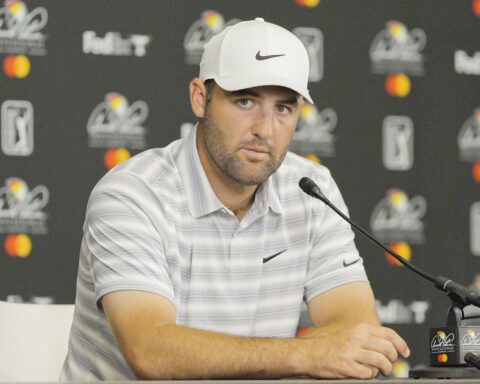
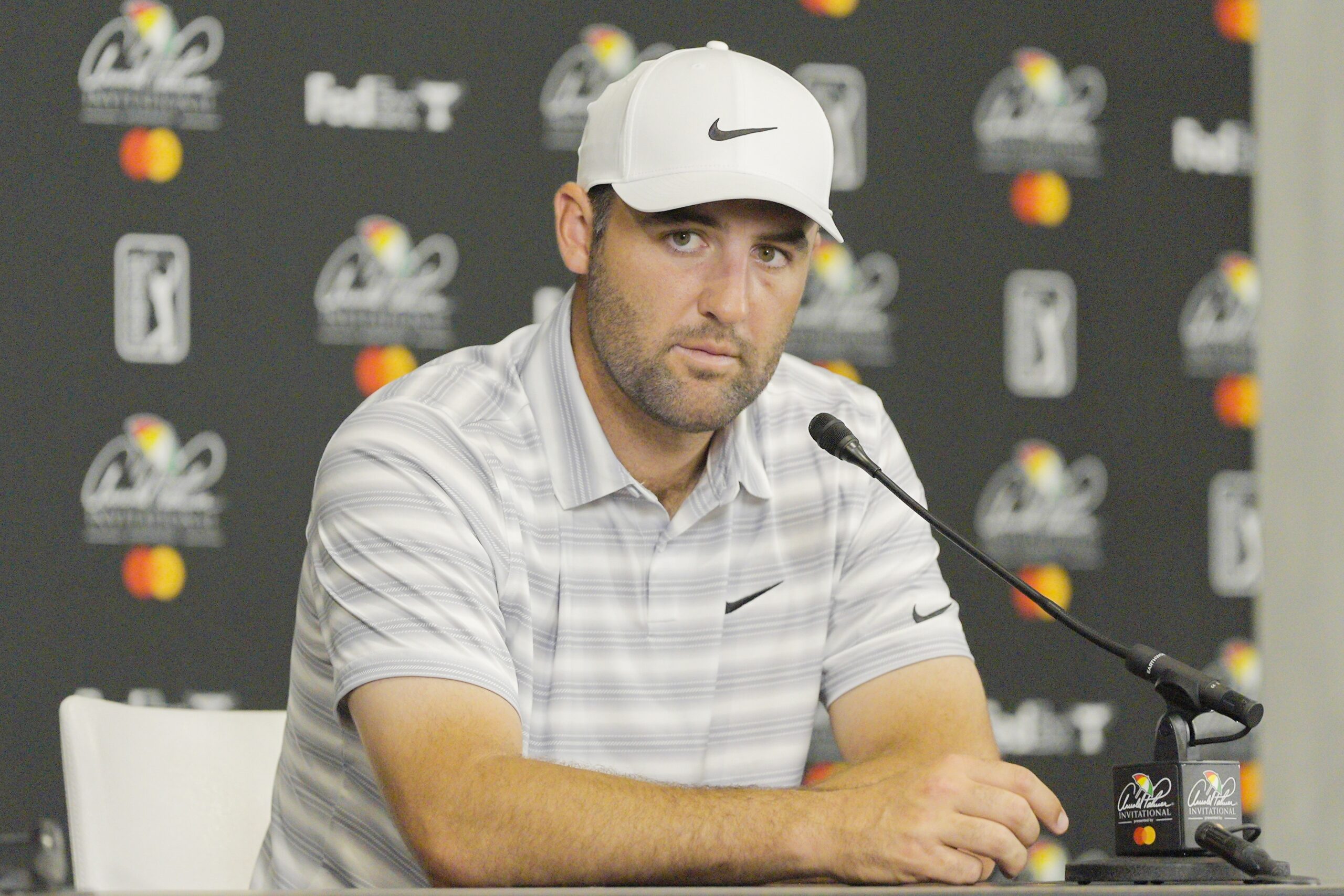
When it was all over, he stood at the microphone and said he was “a bit surprised” at what Augusta National did to the greens between Thursday and Friday, and that it cost him his best chance of winning.
That is not a tantrum. That is a precise grievance from a very precise man, and the numbers support it.
How Did Scheffler’s Afternoon Unfold?
Scheffler drew the late afternoon tee time on Thursday. That matters enormously at Augusta National, where the course plays differently depending on when you go out and how the grounds crew has managed the conditions in the hours prior.
Thursday was supposed to be the driest, most demanding Masters in fifteen years. The grounds were firm, the greens fast, the course reverting to the old Augusta that used to break players rather than accommodate them.
Shane Lowry said Thursday morning it might be “the toughest Masters we’ve played in a while.” Justin Rose, after his early round, joked that the trophy might need to be a yellow jacket rather than green.
Scheffler went out in those conditions in the afternoon. The course was as firm and fast as it would be all week.
He posted a two-under 70, a genuinely strong score given what he was playing in, and went to bed three shots behind the leaders. He had every reason to expect that Friday morning would be more of the same, or worse.
It was not.
Overnight, Augusta National watered the greens. They softened them. Whatever the reasoning, whether they saw how punishing Thursday afternoon had been and adjusted, whether the forecast shifted, the course that Scheffler walked onto Friday morning was materially different from the one he had navigated twelve hours earlier.
The greens were slower. They were more receptive. Shots that would have skipped off the firm Thursday surfaces were holding.
Scheffler went out in the early wave on Friday and could not take advantage of it.
He shot two-over 74, four bogeys, one of which came at the par-5 13th where a hanging lie forced a difficult decision and he caught a tributary of Rae’s Creek, and another at the par-5 15th where his approach overcooked and ended up in the penalty area beyond the green.
He went to the recorder as the 12th-round streak of par or better at Augusta, the third-longest in Masters history behind Tiger Woods and Jon Rahm, snapped under conditions that confused and confounded him.
Meanwhile, the late afternoon Friday wave was playing a golf course Scheffler barely recognized from his own round.
Rory McIlroy birdied six of his last seven holes. He made the final four in a row. Cameron Young was moving similarly.
The field bombed Friday afternoon, and by the time the second round was complete, Scheffler was twelve shots off the lead and the Masters was effectively over for the world’s best player before the weekend even started.
“I’d say Friday probably hurt the most in terms of my chances of winning,” Scheffler said after the final round. He added:
“We went out on Thursday, Thursday afternoon were some of the most challenging conditions we had all week. I didn’t see many birdies out there Thursday afternoon. Going out on Friday, whatever they did to the greens to soften them up, they did some stuff, and I just wasn’t able to take advantage of that going out early on Friday. And then you saw the barrage of birdies that Rory made and Cam Young and a bunch of guys made on Friday late in the day, and I think I finished maybe two over par on Friday.”
He wasn’t the only one who noticed. Jake Novak, who also drew tough Thursday afternoon conditions, was equally disoriented Friday morning.
“I three-putted four times early today because I was not prepared at all for how slow the greens were,” Novak said. “Just on the putting green and stuff they were still rolling fast. I didn’t realize how much slower they were going to be this morning.”
Adam Scott, playing in his 25th consecutive Masters and arguably the player alive who understands Augusta National’s surfaces as well as anyone, said in the early Saturday rounds, “The greens are still very, very friendly.”
By Saturday the course had opened up completely. Two players, Scheffler and Cameron Young, shot 65. Two more shot 66. There were 35 total rounds under par.
The course played approximately four strokes easier on Saturday than it had on Thursday. That is an enormous swing in scoring conditions across a 72-hole event where the margin at the top was one shot.
What Was Scheffler’s Point In Complaining?
When Scheffler said he would have liked “a bit more equal” firmness between Thursday and Friday, he was not complaining about rain or bad luck or things genuinely outside anyone’s control.
He was specifically pointing at a decision, a watering decision, that Augusta National made between rounds.
The first five players on the leaderboard after 54 holes all teed off before 10:45 a.m. on Thursday, the early wave that avoided the most demanding conditions.
They got the easier Thursday morning, then found themselves in the late afternoon wave on Friday when the greens were soft and birdies were falling like rain. They saw the best of two worlds.
Scheffler saw the worst of two worlds. Hardest Thursday, softest Friday, and in neither case could he turn the conditions to his advantage the way the leaders did.
He acknowledged his own role in it with characteristic honesty. “If I am going to blame anything, I should probably blame the first two rounds before I start looking at stuff from the last couple.”
He was making the point that a player capable of what he did on Saturday and Sunday should have been better positioned to use those rounds.
He is correct. He was also correct that the conditions made an already difficult Friday exponentially harder to navigate, and that the gap between the two afternoon waves over the first 36 holes was meaningful rather than marginal.
Scheffler was not asking for sympathy. He was stating an observation.
Scheffler’s Near Historical Record This Weekend
The reason this specific Masters stings in a particular way for Scheffler, beyond the one-shot margin, is the historical record that passed through his hands.
This was his seventh Masters start. He won his first in 2022, his third start. He won his second in 2024, his fifth start.
A win at the 2026 Masters would have made him the fastest player ever to reach three green jackets, doing it in seven appearances, one fewer than Arnold Palmer, Jack Nicklaus, and Tiger Woods, each of whom required eight appearances to accomplish the same.
He is 29 years old. He had never finished outside the top 20 in a Masters in seven career appearances.
He had made five straight top-10 finishes at majors and was in the top seven or better in six of his last seven majors. He is, by any reasonable measure, the best golfer in the world right now.
And he finished second. By one shot. With a 17th-hole putt that sat on the lip of the cup and refused to fall. “The putt on 17 I thought I made,” Scheffler said.
That putt would have forced a playoff. In a playoff against Rory McIlroy, who had already bogeyed the 72nd hole and finished the week managing rather than dominating, anything could have happened.
What Did Scheffler Accomplish This Weekend?
Before the conversation around course setup becomes the story, it is worth stating what Scheffler actually did across the final two rounds, because it was extraordinary.
Saturday: Eagle on the par-5 2nd. Five birdies. Zero bogeys. A 65, the lowest round of his career at Augusta National.
He went from twelve shots back to four back in a single afternoon, and he felt like he left shots on the course.
Sunday: Bogey-free 68. Nine birdies and one eagle across Saturday and Sunday combined. A 133 weekend total, his personal best at Augusta.
He became the first player since 1942 to play the final two rounds of the Masters without a bogey, a feat that spans 84 years and covers virtually every generation of the sport’s greatest players.
McIlroy won because he had built a lead so large that Scheffler’s historic weekend, as good as it was, could only get within one.
McIlroy also won because he scrambled beautifully under pressure, getting up and down at the 72nd hole after driving into trouble, tapping in for bogey as Scheffler stood on the 18th tee needing something he couldn’t manufacture.
“I gave myself some opportunities,” Scheffler said. “I started the weekend maybe 12 back, so to get within one was a pretty good run.”
It was. It was also the kind of result that a player processes for a long time afterward, cataloguing the moments where the outcome diverged from what it might have been.
The Friday 74 on softened greens he couldn’t read. The 13th hole approach that found the creek. The 15th hole approach that overshot. The 17th hole putt that stopped on the lip.
One shot. One decision by the Augusta National grounds crew between rounds one and two. One putt on 17 that didn’t go.
Rory McIlroy made history. Scottie Scheffler had a point.