
On April 15, 1947, a 28-year-old man from Pasadena, California walked onto Ebbets Field in Brooklyn and played first base for the Brooklyn Dodgers. He scored a run.
The Dodgers beat the Boston Braves 5-3. By every statistical measure it was an ordinary baseball game. By every other measure it was one of the most consequential days in American history.
That man was Jackie Robinson. Today, April 15, 2026, is the 79th anniversary of that debut.
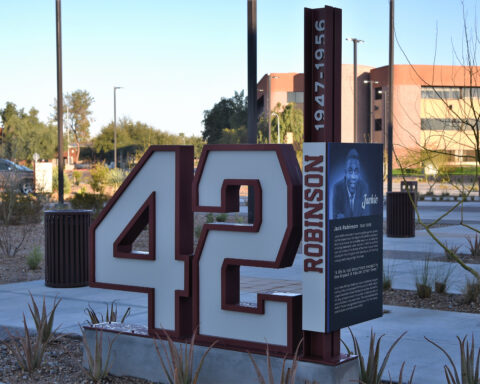
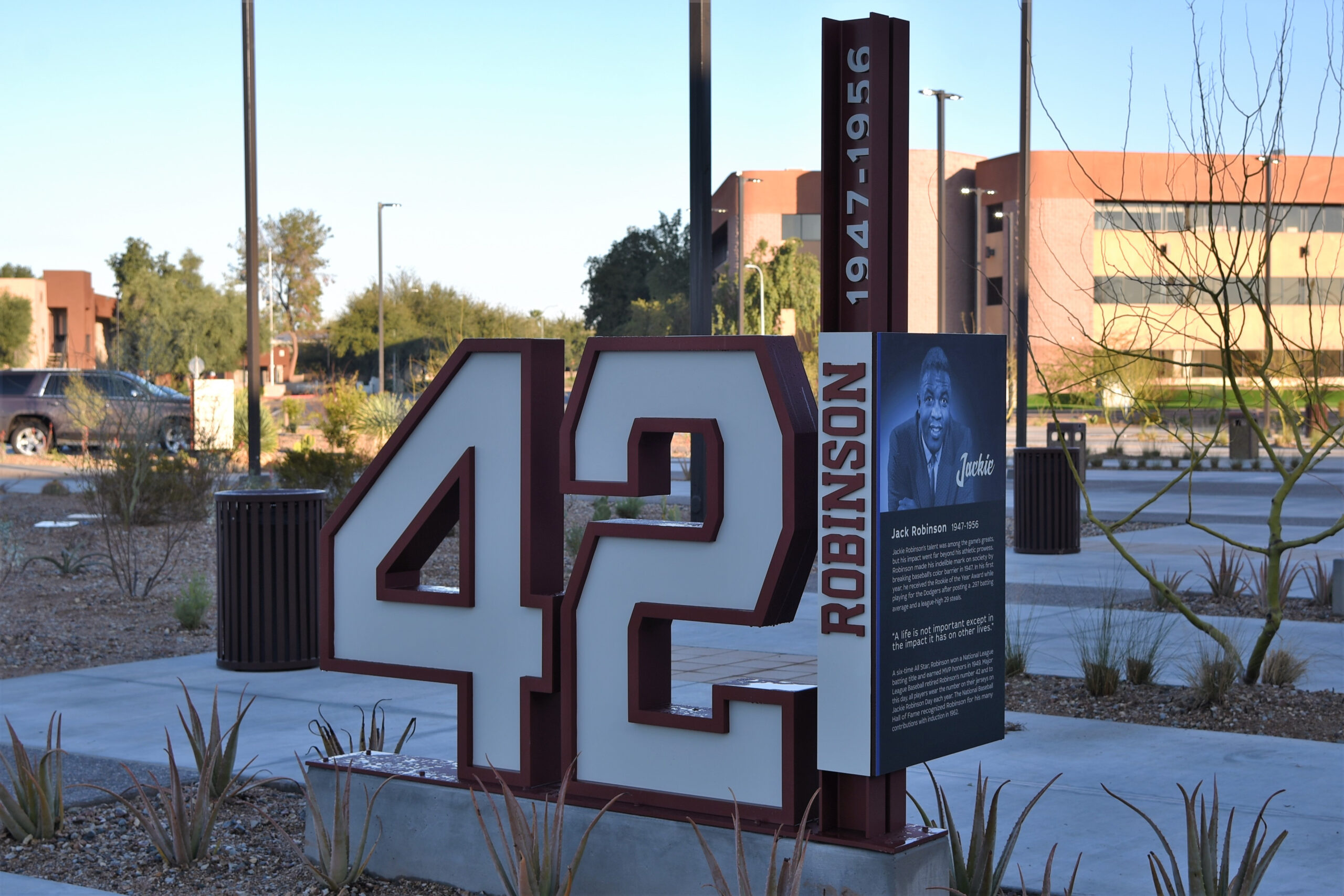
It is Jackie Robinson Day, the annual MLB observance in which every player, every manager, every coach, and every umpire across all 30 teams wears the number Robinson wore for his entire career, 42.
This year the jerseys are in Dodger Blue regardless of each team’s primary colors, with royal blue “42” socks from Stance and a “42” side patch on every club’s cap.
All 30 teams are holding community events, scholarship programs, youth clinics, and ceremonies designed to honor both what Robinson did and what he pointed toward for the rest of his life.
What Happened On April 15, 1947?
The color barrier Robinson broke on that day was not an accident of history. Baseball had been deliberately segregated since the late 19th century.
In 1887, the International League voted to bar future contracts for Black players, one of the formal mechanisms through which a so-called “gentlemen’s agreement” kept the major leagues white for nearly six decades.
Black players had no shortage of talent. They played in the Negro Leagues, which produced extraordinary athletes and deeply loyal fanbases. They were simply not permitted to play in the majors.
April 15, 1947 was Opening Day. Robinson had been signed two years earlier by Brooklyn Dodgers president Branch Rickey, who chose him not only for his ability, which was prodigious, but for his character.
Rickey told Robinson plainly that he needed someone with the courage not to fight back. Robinson, who had competed at four sports at UCLA and served in the US Army, understood what he was being asked to endure.
Death threats. Racial abuse from fans in the stands and players on opposing teams. Hotels that would not take him.
Restaurants that would not serve him. Teammates who initially circulated a petition against playing alongside him.
He endured it all with a discipline that still reads, across eight decades, as one of the most extraordinary acts of sustained human courage in American public life.
He was named Rookie of the Year in 1947, the award now bears his name. In 1949 he was the National League MVP, leading the league in batting at .342 and in stolen bases with 37.
He played in six All-Star Games. He won a World Series with the 1955 Brooklyn Dodgers. He retired in 1956 with a career batting average of .311. In 1962 he became the first Black player inducted into the National Baseball Hall of Fame.
How Did Wearing The Number 42 Turn Into A Tradition?
Robinson wore 42 for his entire career. In April 1997, the 50th anniversary of his debut, Commissioner Bud Selig joined Robinson’s widow, Rachel Robinson, and President Bill Clinton at Shea Stadium to retire the number across all of Major League Baseball.
It is the only uniform number in baseball history retired by all 30 teams simultaneously.
Players who were already wearing 42 were grandfathered in; the last of them was Mariano Rivera of the New York Yankees, who wore it until his retirement in 2013.
MLB established April 15 as Jackie Robinson Day in 2004. For the first several years, individual players and teams chose to participate.
The turning point came in 2007, when Ken Griffey Jr., one of the biggest stars in the game, asked Commissioner Selig for permission to wear 42 on Jackie Robinson Day.
Selig approved immediately and encouraged the idea league-wide. By the time April 15 arrived, more than 200 players had chosen to wear it, including the entire rosters of the Dodgers, Mets, Astros, Phillies, Cardinals, Brewers, and Pirates.
In 2008, every player on every team wore 42. In 2009 it became official policy. It has continued every year since.
What Has MLB Planned This Season?
This year MLB has launched a new campaign called “We Are Jackie,” narrated by Hall of Famer CC Sabathia, featuring a dedicated spot across MLB Media and a social media interview series.
The participants include 2026 Hall of Fame inductee Andruw Jones, 2022 Jackie Robinson NL Rookie of the Year Michael Harris II, Athletics outfielders Lawrence Butler and Denzel Clarke, Cardinals outfielder Victor Scott II, and AUSL players Maya Brady and Jayda Coleman.
The conversation across all of them centers on how Robinson’s legacy has shaped their careers and what it means to carry it forward.
The team-by-team tributes go deep into community. At Dodger Stadium, Robinson’s granddaughters, Sonya Pankey Robinson and Ayo Robinson, will join both teams and Bob Kendrick, president of the Negro Leagues Baseball Museum, for the annual reflection at the No. 42 statue in Centerfield Plaza. A commemorative jersey goes to every fan in attendance.
The Seattle Mariners are doing something unprecedented this year. Starting in 2026, they wear Seattle Steelheads uniforms during every Sunday home game at T-Mobile Park, an ongoing tribute to the 1946 Seattle Steelheads of the Negro Leagues.
They are the first MLB team to incorporate a historic Negro Leagues uniform into their standard rotation.
In January they launched the Steelheads Community Fund with a $500,000 commitment to local, Black-led baseball and softball organizations.
In Houston, the “Play Ball” call for tonight’s Astros-Rockies game comes from JC Hartman, the Astros’ first African American player, and the National Anthem will be sung by Jeanette Spinks, the first African American police sergeant in the history of the Houston Police Department.
Three hundred fifty Nike Jr. RBI League players will fill the seats. Before the game, players and coaches will hold a private Breaking Barriers panel conversation with Astros Youth Academy participants about their own experiences and Robinson’s legacy.
In Cincinnati, the Reds have been running a Joe Morgan HBCU Classic since April 11, featuring historically Black colleges and universities playing at the Youth Academy in Negro League-style uniforms.
In Kansas City, 113 area students are visiting the Urban Youth Academy and then the Negro Leagues Baseball Museum, one of the most important museums in American sports.
In Milwaukee, a youth art contest asking children ages 8 through 17 to design jerseys, sneakers, or posters representing social justice and equality will produce the ceremonial first pitch thrower.
The Chicago White Sox are putting Amateur City Elite program participants on the field, young people from a program explicitly designed to reverse declining participation in baseball among Black youth, one of the sport’s most pressing concerns.
In Philadelphia, the Phillies are gathering at the Miller Parker Philadelphia Stars Negro League Memorial Park in West Philadelphia for a free outdoor community event honoring both Robinson and the city’s own Negro Leagues history.
In Los Angeles the Angels sent Jo Adell and Brent Suter to the Jackie Robinson Museum in New York the day before Jackie Robinson Day, not a requirement, not a photo opportunity, but a deliberate act of education.
The Blue Jays, playing on the road, are authenticating and auctioning every piece of in-game 42 gear worn today, with proceeds going to the Jays Care Foundation’s RBI program and youth baseball access initiatives across Canada.
What Did Robinson Say When He Spoke At The World Series In 1972?
Every serious engagement with Jackie Robinson Day has to include what Robinson himself said about it, or rather, what he would have said if the day had existed when he was alive.
Nine days before his death on October 24, 1972, Robinson appeared before Game 2 of the World Series. He was 53 years old, nearly blind from diabetes, visibly diminished. He spoke briefly.
He said he would not be satisfied until he could look down the third base line and see a Black manager.
He could not. The first Black manager in modern baseball, Frank Robinson, no relation, with the Cleveland Indians, was hired in 1975, three years after Jackie’s death.
In the decades since, progress in Black representation in baseball’s dugouts, front offices, and ownership has been uneven at best.
The sport that honors Robinson every April 15 has also spent much of the intervening 79 years still grappling with what he was asking for.
Jackie Robinson Day is at its best when it holds both things together, the celebration of what he accomplished, which was extraordinary, and the acknowledgment that what he pointed toward is still unfinished work.
He did not just want to be remembered at first base in 1947. He wanted the door to stay open. Wearing 42 is the easiest part of honoring him. The rest is harder, and he knew it.