Allbirds Is Being Sold For $39 Million And It Was Worth $4 Billion Just Five Years Ago
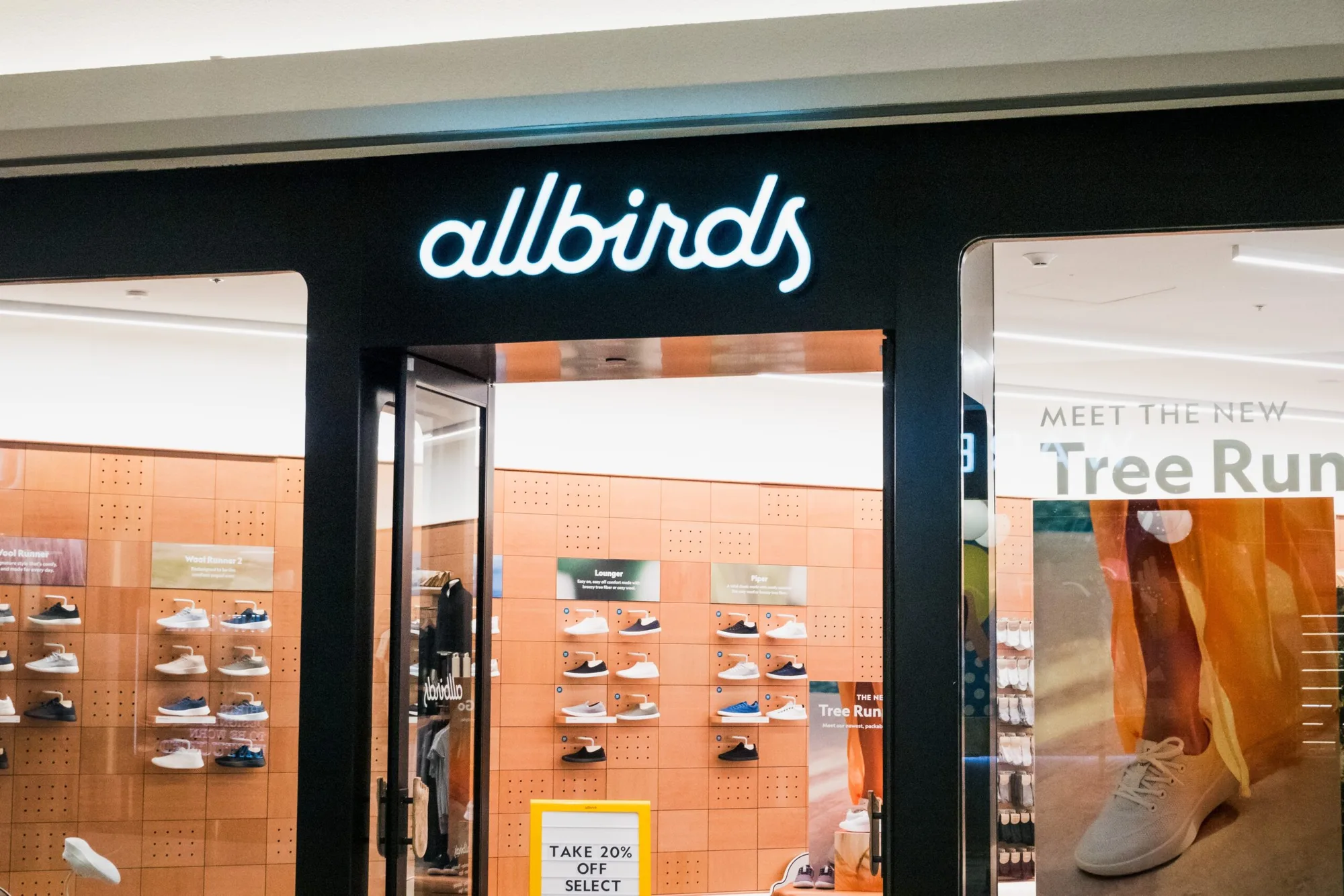
Allbirds, the clothing brand, is being sold for $39 million. The company was valued at $4.1 billion in 2021, just five years ago.
This represents a 99 percent collapse in value over roughly four years, and it is the most complete illustration yet of what happens when a single great product gets mistaken for a durable business.
American Exchange Group, a brand management firm that also owns Aerosoles, agreed to purchase substantially all of Allbirds’ assets for $39 million in cash.
The deal was announced around the end of March 2026, the same day Allbirds filed its 10-K with the SEC containing language about “substantial doubt about our ability to continue as a going concern.”
After the asset sale closes, the company intends to dissolve entirely and distribute whatever proceeds remain to stockholders after settling liabilities and transaction costs.
Equity investors, who bought in at anything close to the IPO price, will be lucky to recover pennies on the dollar.
The proxy statement is expected to be filed by April 24, 2026. The transaction is expected to close in Q2 2026.
The story of how a company that raised $301 million in a celebrated IPO arrived at this outcome is instructive, and it is not particularly complicated.
How Did Allbirds Start?
Tim Brown is a New Zealander who played professional football, soccer, and led New Zealand back to the World Cup for the first time in nearly three decades.
Part of his job as a professional athlete was wearing sponsored sportswear. He grew to dislike it, especially the overbranding.
The petroleum-based synthetics. The way every major shoe looked like a billboard for its own logo. He started thinking about an alternative.
In 2014, while enrolled in business school, Brown launched a Kickstarter campaign to fund a merino wool shoe. It raised $119,000 in five days.
He connected with Joey Zwillinger, an American biotech engineer and renewables expert from San Francisco who had previously sold algae fuel.
Together they raised $2.7 million in seed funding, moved to San Francisco, and launched Allbirds in March 2016 with a single product. The Wool Runner.
The name comes from a piece of New Zealand identity. The country has no native land mammals, it was, historically, a land of all birds.
The Wool Runner was a $95-$110 sneaker made from 16-micron merino wool, recycled plastic shoelaces, and a proprietary SweetFoam midsole built from sugarcane byproduct, a material the founders made open-source so the entire industry could move away from plastic.
The wool was spun by Italian manufacturer Reda, which also supplies Gucci, Tom Ford, and Hugo Boss.
The shoes were manufactured in South Korea. They were light, breathable, washable, and, according to Time magazine, “the world’s most comfortable shoes.”
They became Silicon Valley’s shoe. The Wall Street Journal called them “Silicon Valley’s favourite sneaker.” Larry Page wore them. Barack Obama wore them. Leonardo DiCaprio. Gwyneth Paltrow, and even Oprah.
The company was certified as a B Corporation from the beginning, balancing profit with purpose, and it struck exactly the right chord for the cultural moment.
Tech-adjacent, sustainability-forward, anti-logo, premium but not ostentatious. By 2018 the company was valued at $1.4 billion. It was a unicorn built on a single wool shoe and a clean conscience.
The IPO And The Trap It Set
On November 3, 2021, Allbirds went public on the Nasdaq at $15 per share. The company raised $301 million.
At its peak, the valuation touched $4.1 billion. The IPO was celebrated as one of the defining DTC success stories, proof that a company could build a brand around purpose and sustainability and take it all the way to Wall Street.
What the IPO also did was set a valuation that required a growth trajectory the underlying business was not built to sustain.
To justify $4 billion, Allbirds needed to become something much larger than a single beloved wool shoe. It needed categories. Stores. Scale. A platform, not a product.
What followed was the textbook DTC trap played out in real time.
Revenue peaked at $297.8 million in 2022. The company tried to expand. It did this through wool leggings, which turned out to be see-through.
Technical running shoes with the Tree Dasher and Tree Flyer lines, which customers complained the soles wore out too quickly.
Edgier designs and brighter colors to reach younger consumers, but they didn’t resonate.
Each failed extension diluted the brand identity without adding revenue. The Moonshot, billed as the world’s first zero-carbon shoe, launched in 2024 with genuine innovation praise, then only 500 pairs were released in February 2025.
Tim Brown acknowledged what happened in a Fortune interview in 2025, on the brand’s 10-year anniversary. “The time we had to evolve and grow that story was compressed in such an intense way,” he said. “With the rapid success that came our way, we lost some of our DNA.”
The Problem With Allbirds’ Physical Stores
The company also opened physical stores, dozens of them. The pitch for DTC brands going into retail was always “brand theater plus customer acquisition leverage.”
Stores let customers try the product, then buy online forever after because they know their size. Sometimes this works. For Allbirds, it became an anchor.
The original plan called for “hundreds” of stores over time. The company peaked at 61 locations globally by the end of 2023, including 45 in the United States.
That meant rent. Labor. Inventory complexity. Fixed costs. All of this while the underlying product was losing its cultural heat.
By 2024 and 2025, Allbirds was explicitly saying store closures were part of the reason revenue was falling.
In January 2026, it announced it would close all remaining full-price US stores by the end of February, keeping only two US outlet locations and two stores in London.
The San Francisco flagship, the city where the brand had built its identity, closed in January. By early 2026, four company-run stores remained from a peak of 60.
That retreat was both necessary and revealing. The stores that were supposed to build the brand had become the thing draining it.
The Competition And The Market Shift
While Allbirds was struggling to extend its product line, the market moved around it in two directions at once.
From above, Nike, Adidas, and Puma all adopted sustainability messaging at scale, normalizing eco-friendly materials with the marketing budgets and distribution networks that Allbirds could not match.
The sustainability story stopped being a differentiator once the incumbents made it a standard.
From below: On Running and Hoka took the performance-oriented, design-forward younger consumer.
These brands offered something different, technical innovation, distinctive aesthetics, genuine running performance, and they captured the demographic that might otherwise have been the next generation of Allbirds customers.
The brand that had once felt like the future of footwear became one option among many. And a narrow one at that.
The Collapse
Net losses at Allbirds reached $152.5 million in 2024 on falling revenue. In 2025, losses narrowed to $77.3 million but net revenues had collapsed to $152.5 million, roughly half of the 2022 peak.
Q3 2025 revenue fell 23 percent year-over-year to just $33 million. Stockholders filed class action lawsuits alleging securities fraud and misleading financial information.
The Nasdaq threatened delisting. Both founders stepped down from the co-CEO role, Brown in May 2023 to become chief innovation officer, Zwillinger in March 2024 when Joe Vernachio, the chief operating officer, took over as CEO.
Vernachio announced the store closures and articulated a turnaround built on e-commerce, wholesale partnerships, and international distributorships.
It was not enough. On March 31, 2026, the 10-K expressed substantial doubt about the going concern. The next day, the $39 million sale was announced.
The sale price is roughly one percent of the $4.1 billion peak. It is less than two percent of the $2-plus billion IPO valuation.
The market cap at the time of the deal was approximately $15.4 million, meaning American Exchange Group paid more than twice the market cap for a business the market had essentially written off.
What Happens To The Allbirds Brand?
American Exchange Group specializes in acquiring the intellectual property of distressed consumer brands and operating them at significantly lower cost, typically as online-only or wholesale-only businesses.
It also owns Aerosoles. The model is to preserve the brand recognition while stripping away the cost structure that made the original company unprofitable.
Whether Allbirds survives in any meaningful sense under new ownership is an open question.
The Wool Runner still has name recognition. People still remember what the shoe was and why they liked it.
Whether that residual goodwill can be converted into a viable, smaller business, without the stores, without the co-founders, without the cultural moment that made the brand feel like a statement, is what American Exchange Group is betting $39 million on.
The dissolution of the original company is expected to be complete by Q3 2026.
Whatever stockholders receive from the liquidation proceedings will represent the final accounting of an extraordinary rise and an equally extraordinary fall.
For investors who bought at the IPO price, the math is devastating.
One analyst put it plainly at the time of the sale:
“Their fatal mistake was that they mistook a single viral product for a permanent lifestyle brand.”