
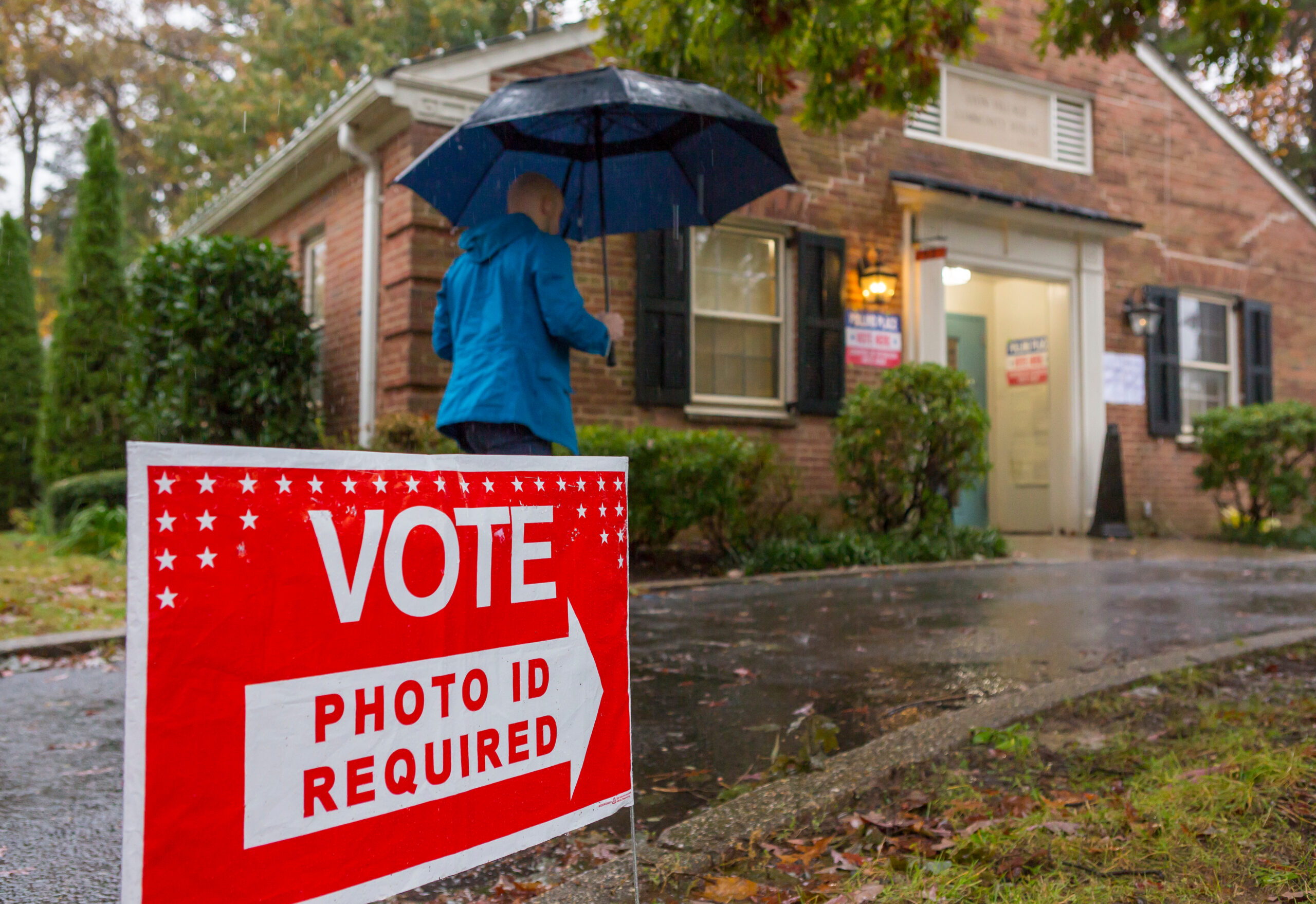
Virginia voters said yes on April 21, 2026. The redistricting referendum, a ballot measure asking whether the state’s Democratic-controlled General Assembly should have the temporary power to redraw Virginia’s congressional districts, passed, with the Associated Press and NBC’s Decision Desk calling the race just before 8:50 p.m.
With an estimated 95 percent of results in, the yes side was ahead by nearly three percentage points.
That margin tells a story. Democratic Gov. Abigail Spanberger won her race last fall by 15 points.
Kamala Harris carried Virginia by nearly 6 points over Donald Trump in 2024. The redistricting referendum passed by 3. It was a win, but a narrow one, and what happens next depends less on the vote itself than on what the Virginia Supreme Court decides to do about it.
What Does The Redistricting Do In Virginia?
Virginia currently sends 6 Democrats and 5 Republicans to the U.S. House from its 11 congressional districts.
The proposed new map, released in February 2026, would give Democrats a competitive advantage in 10 of those 11 districts. That is a potential net pickup of four seats, not guaranteed wins, but districts drawn to lean Democratic rather than competitive.
Four seats would be meaningful in a House where Republicans currently hold a 218-213 majority.
The amendment passed Tuesday authorizes the Democratic-controlled General Assembly to draw those new lines.
The power is explicitly temporary, it expires October 31, 2030, after which the state’s bipartisan redistricting commission takes responsibility back in 2031.
The boundaries would govern Virginia congressional elections in 2026, 2028 and 2030.
Supporters described it as a defensive move. “It’s directly in response to what other states decide to do and a president who says he’s entitled to more Republican seats before this year’s midterms,” Gov. Spanberger said in a campaign ad. “Our approach is different. It’s temporary. It preserves Virginia’s fair redistricting process into the future.”
Why The Legal Fight Is Not Over
Virginia’s Supreme Court gave the referendum a green light to proceed in March, after a lower court judge, Tazewell County’s Jack Hurley Jr., had blocked it twice, first on January 27 and again on February 19.
Each time, the state Supreme Court intervened to allow the process to continue. But the court made something explicit when it cleared the way for Tuesday’s vote. It would make its final ruling on the pending legal challenges after the election results were in.
That final ruling has not yet come. Multiple lawsuits remain active, filed by national and state Republicans, including by Republican members of Congress whose seats are directly threatened by the new map.
The suits challenge both the legislative process used to pass the amendment and the wording of the ballot question itself, arguing that the framing was misleading to voters.
Opponents also argued that passing the amendment represents a betrayal of the 2020 referendum that created the bipartisan redistricting commission, a measure that Virginia voters approved by 66 percent less than six years ago.
Republicans indicated Tuesday night they would continue pursuing those legal challenges regardless of the vote outcome.
The Virginia Supreme Court’s decision, when it comes, will determine whether Tuesday’s yes vote actually results in new district lines being drawn.
How The Campaign Was Fought
The campaign to pass the referendum was a multimillion-dollar operation driven primarily by outside national money.
The pro-redistricting group Virginians for Fair Elections dramatically outraised its opponent Virginians for Fair Maps, beginning with a 17-to-1 spending advantage before Republicans closed the gap to roughly 3-to-1 in the final month, according to ad-tracking firm AdImpact.
The yes campaign’s most prominent face was former President Barack Obama, who recorded a video released the Friday before the election, the eve of the final day of early voting.
“By voting yes, you have the chance to do something important, not just for the commonwealth, but for our entire country,” Obama said. “By voting yes, you can push back against the Republicans trying to give themselves an unfair advantage in the midterms. By voting yes, you can take a temporary step to level the playing field.”
House Minority Leader Hakeem Jeffries held a rally in Henrico County on April 12. Spanberger campaigned in support.
Democrats framed the referendum entirely as a response to Republican redistricting moves in other states, a defensive counterstroke rather than an unprovoked power grab.
The no campaign had its own prominent voices. Former Republican Gov. Glenn Youngkin and former Republican Gov. George Allen both opposed the measure.
House Speaker Mike Johnson publicly opposed it. Trump held a tele-rally on the evening before the vote, a last-minute addition to his schedule, and called into a conservative radio show urging voters to reject the referendum.
The no side ran ads that prominently featured Obama’s own past quotes opposing gerrymandering, alongside his image supporting the referendum, a tactic that racial justice groups criticized as deliberately misleading.
Republicans concentrated their efforts on driving rural turnout. Early voting numbers through April 20, approximately 1.4 million ballots cast, had suggested high engagement on both sides, approaching the total cast in last November’s regular state election.
The National Redistricting Race
Tuesday’s Virginia vote did not happen in isolation. It is the latest move in what NPR and others have described as a national redistricting arms race that began in July 2025 when Trump pushed Texas Republicans to redraw their congressional map to create five additional GOP-leaning seats.
California responded with a voter-approved plan to create five Democratic-leaning seats. Missouri and North Carolina Republicans approved new maps.
Florida has moved toward redistricting under Gov. Ron DeSantis. Maryland has been weighing its own move.
The Virginia result, if it survives legal challenge, would theoretically give Democrats up to four additional House seats.
NPR reported that Republicans’ math on the overall redistricting battle may end up close to a wash, the gains in Texas were largely offset by California’s response, and Virginia’s contribution, while meaningful, does not by itself swing the House majority.
What the Virginia result does signal, combined with Democrats’ consistent overperformance in special elections throughout 2025 and 2026, is a political environment that is trending in a direction that concerns Republicans heading into November.
Brian Kirwin, a Republican strategist in Virginia, put a defiant face on it: “This basically says, ‘Hey, Republican Party, we’re not dead yet. Reports of our demise have been exaggerated.'” That is a notable thing to say after losing.
What Virginia’s Map Has Looked Like Until Now
The current 6-5 Democratic advantage in Virginia’s congressional delegation was drawn by the state Supreme Court in 2023 after the bipartisan redistricting commission, created by that 2020 referendum, repeatedly deadlocked.
The court appointed two experts, Bernard Grofman and Sean Trende, to draw maps after the commission failed to reach consensus. That process produced a competitive map with a modest Democratic lean.
The new map released in February 2026, and subsequently amended to strengthen Democratic prospects in the 2nd congressional district, was drawn by Democratic legislators to produce a 10-1 Democratic advantage.
The geographic shape of those districts has drawn criticism even from some Democrats, the map features districts described as jagged lines radiating from Northern Virginia throughout the rest of the state, the kind of shape that has historically been associated with the gerrymandering both parties claim to oppose.
The Virginia Supreme Court will now decide whether any of that matters legally. Tuesday’s vote settled the political question. The legal question is still open.