
By Ralph Cipriano
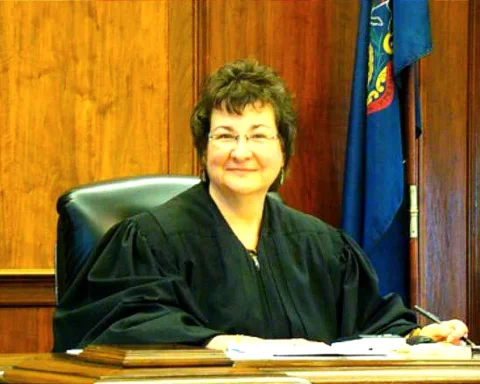
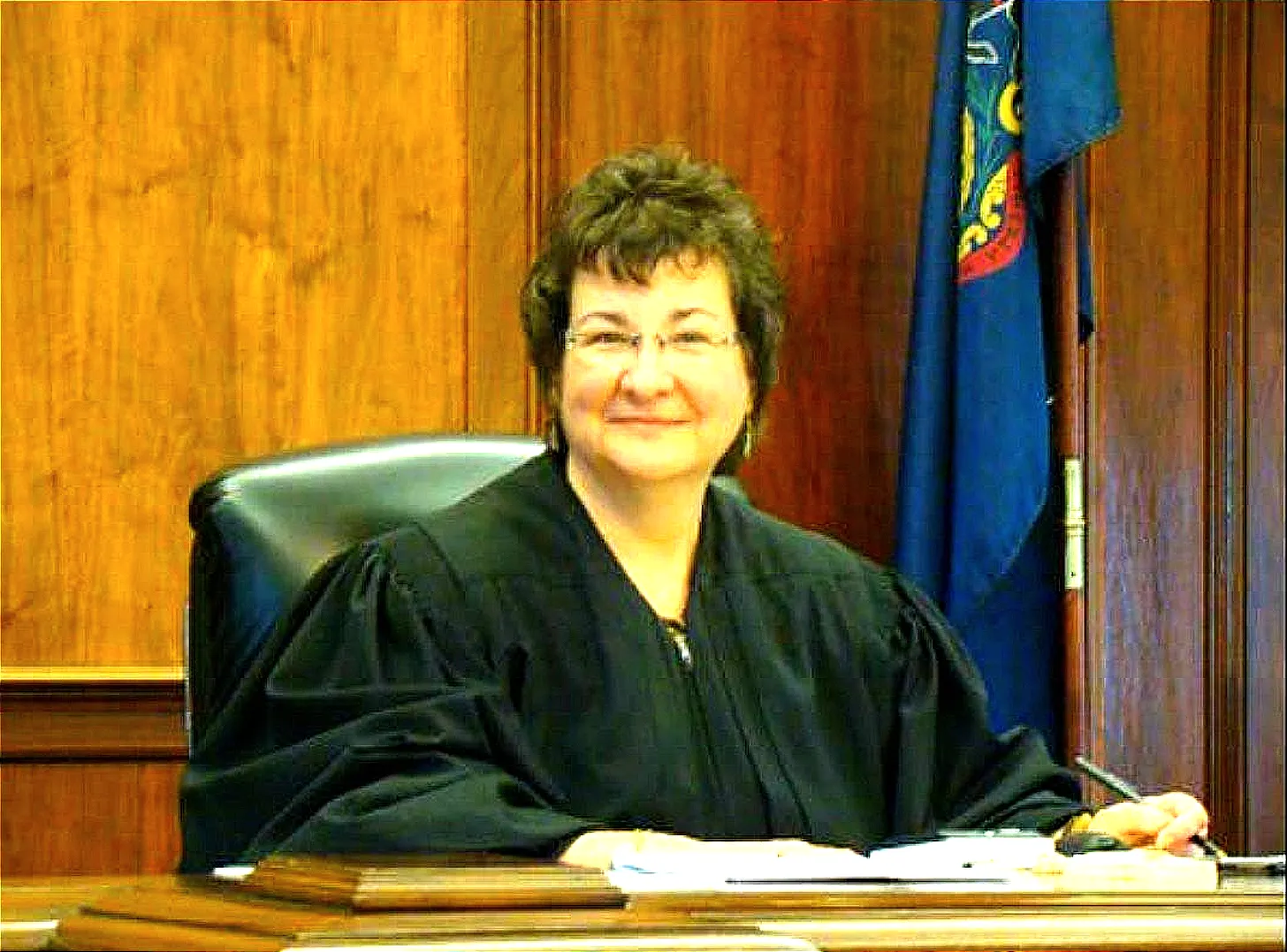
In the Penn State sex abuse case, Senior Judge Maureen Skerda is resolutely engineering a cover up.
But last week because of a procedural error, the Honorable Judge Skerda was forced to reverse herself. And in the process, perhaps out of concern that her extreme bias was showing, she threw the defense a bone.
Here’s the scandal that Judge Skerda is still laboring to cover up.
In the Penn State sex abuse case, a bombshell court filing last September revealed that the two top prosecutors who sent Jerry Sandusky to prison secretly took control of a $20 million trust fund set up for the alleged victim at PSU who pocketed the most cash.
Sandusky’s lawyers went to court, seeking an evidentiary hearing to compel former deputy attorney generals Frank Fina and Joe McGettigan to appear in court under oath, to explain their apparent conflict of interest. And how they allegedly had profited from sending Sandusky to prison, essentially for life.
McGettigan died last Dec. 31st, at 76, so he’s escaped justice on this planet, but the ethically-compromised Fina’s still around.
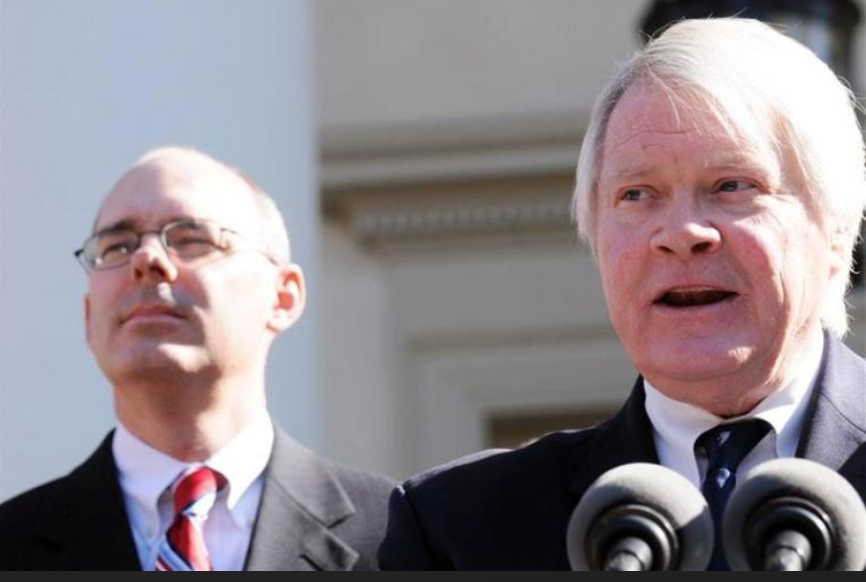
On Feb. 27th, however, Judge Skerda decided to cover up the scandal involving the prosecutors by turning down Sandusky’s appeal, and denying him an evidentiary hearing.
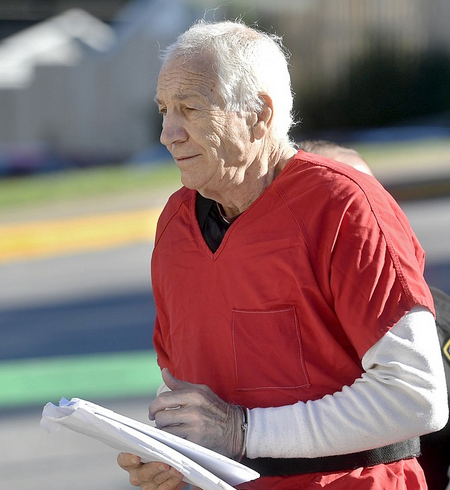
The judge appeared to be operating under the theory that the 82 year-old Sandusky, who still professes his innocence, will hopefully die in prison without ever having his day in court.
In denying the hearing, however, Judge Skerda screwed up. Under the Pennsylvania Code of state statutes, Rule 907, she was required to “give notice to the parties of the intention to dismiss the petition” that sought the evidentiary hearing.
According to Rule 907, Judge Skerda was also required to “state in the notice the reasons for the dismissal,” and give the defendant 20 days to respond.
But when she denied the request for an evidentiary hearing, Judge Skerda never gave the required notice. Nor did she give Sandusky and his lawyers 20 days to respond.
According to Frank Parlato, an investigative reporter who’s been working on the Sandusky case for nearly three years, that boneheaded decision prompted the state attorney general to write a letter to the judge that wasn’t posted on the court docket.
The letter, Parlato said, supposedly warned the judge that because she never gave the required notice, her order might be overturned on appeal.
Senior Deputy Attorney General Cari Mahler did not respond to a request for comment.
So on April 15th, Judge Skerda issued her order that threw a bone to the defense. But in her one-page order, the judge made her ultimate intentions clear — she still wants to cover up that scandal involving the two top prosecutors who were caught with their hands in the cookie jar.
“This Court finds that an evidentiary hearing is necessary on the sole issue of the recantation of the testimony of R.R.,” the judge wrote, while underlining the words “sole issue.”
The judge further stated, “With the exception of the recantation of R.R.’s testimony, which requires an evidentiary hearing, there are no genuine issues concerning any material issues of fact, the defendant is not entitled to post-conviction collateral relief, and no legitimate purpose would be served by any further proceedings.”
R.R. is Ryan Rittmeyer, who, in the Sandusky case is known as Victim “No. 10.”
The eight accusers who testified against Sandusky at trial told improbable and escalating tales of abuse. All of the alleged victims were represented by civil lawyers; many of them had attorney-referred therapists.
After Sandusky was convicted, seven of the eight trial accusers wound up as multi-millionaires. The eight accuser was only rewarded $1.5 million, but that’s because he testified that Sandusky only have him a hug.
After Sandusky was convicted, more civil claims poured in. The university did nothing to vet their stories, or run background checks on any of the accusers. University officials eventually awarded a total of 36 claimants more than $100 million.
Sandusky’s defense team believes that Rittmeyer is proof of a pattern among the eight original alleged victims that demands a new trial. Namely, that all trial accusers were disadvantaged youths living in poverty. Accusers who were coached by prosecutors to fabricate expanding tales of abuse that fit a common narrative.
On November 29, 2011, Rittmeyer, a troubled 23-year-old who did time after being convicted of burglary and assault, called the Pennsylvania state attorney general’s sex abuse hotline, to put in a claim so he could get in on the Penn State gravy train.
When police came to see him, Rittmeyer claimed two incidents of alleged abuse — that Sandusky had groped him at a swimming pool. And that Sandusky had attempted to have oral sex with Rittmeyer while driving him around in a silver convertible.
Rittmeyer further claimed that while Sandusky was driving him around in that silver convertible, he supposedly threatened Rittmeyer that if he didn’t submit, he would never see his family again.
On December 5, 2011, Rittmeyer testified before the grand jury, and expanded his tales of abuse. This time, Rittmeyer claimed he saw Sandusky once or twice a month during 1997, 1998, and part of 1999. And that something sexual occurred almost every time, usually oral sex.
At Sandusky’s trial, Rittmeyer told the story about how, after Sandusky picked him up in his silver convertible and attempted to engage in oral sex, that Sandusky had threatened him.
On the witness stand, Rittmeyer then proceeded to entertain jurors by telling some new stories. About how in Sandusky’s basement, Sandusky had allegedly pulled down Rittmeyer’s pants and started performing oral sex on him. And how, after a trip to the Nittany Mall, he and Sandusky went to Sandusky’s house and supposedly engaged in mutual oral sex.
The problems with Rittmeyer’s stories start with the car.
“Jerry Sandusky never owned a silver convertible,” Dick Anderson, a retired coach who was a colleague of Sandusky’s for decades on the Penn State coaching staff, and has known Sandusky since 1962, when they were Nittany Lions teammates, told Big Trial in 2018. “He drove Fords or Hondas.”
Booker Brooks, another retired assistant coach who was a colleague of Sandusky’s, told Big Trial that when he first heard about the silver convertible, “I laughed out loud.” Because, Brooks said, nobody on the PSU coaching staff drove a convertible.
Assistant coaches at PSU drove big cars donated by local dealers, Brooks said. That’s because the assistant coaches frequently had to pick up star high school recruits at airports, as well as their families. The cars the assistant coaches drove, Brooks said, had to come equipped with four doors and a big trunk for luggage.
In spite of his criminal record and expanding tales of abuse, Penn State didn’t subject Rittmeyer to a deposition with a lawyer, or an evaluation from a psychiatrist.
Instead, after reviewing the paperwork for his claim, the university in 2013 rolled over and awarded the 26-year-old Rittmeyer $5.5 million.
When Judge Skerda first dismissed Sandusky’s claim for an evidentiary hearing regarding Rittmeyer’s recantation, the judge ruled that Sandusky hadn’t exercised “due diligence” in reporting the recantation.
Why? Because, the judge complained, Sandusky’s lawyers waited until 13 years after his 2012 trial was over to file the claim about Rittmeyer’s recantation.
But, as Sandusky’s lawyers pointed out to the judge in a filing last month, “Sandusky is not permitted to contact his alleged victims. And only when a witness is willing to come forward can one obtain an affidavit including a recantation.”
“The Court offered no analysis for how Sandusky could have compelled a witness recantation by R.R. earlier,” wrote Sandusky’s legal team, composed of Jerry Russo, Barbara Zemlock, Heidi Freese, and J. Andrew Salemme.
Since Rittmeyer blew through his money, however, he’s telling a different story.
Sandusky’s lawyers wrote that in an affidavit, Rittmeyer “recants his claim that Sandusky abused him, and he indicates that he was improperly coached by Joseph McGettigan.”
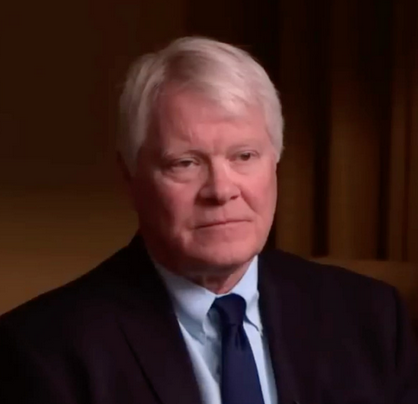
“R.R. specifically indicated that, ‘throughout the pretrial process, I was told — both directly and indirectly — that trauma may have fragmented my memory, and that I could safely affirm details I did not fully recall. I was assured this was common and even expected.’ ”
Recovered memories of past sex abuse that allegedly were blocked out by the alleged victims was a big theme at Sandusky’s trial.
But as Sandusky’s lawyers wrote last month, “there is no scientific support for the idea that seven men would forget or push aside memories of homosexual abuse and come to remember and report the details as the result of therapy.”
“According to R.R. [Rittmeyer], he was coached extensively [by the prosecutors] and asked to revisit and reframe his allegations,” Sandusky’s lawyers wrote. In his affidavit, Rittmeyer states he “was misled repeatedly during the process, particularly by prosecutor Joe McGettigan.”
In another affidavit, Jasmine Rittmeyer, Rittmeyer’s estranged wife, stated that “During our relationship, Ryan voluntarily confided to me that he had been sexually abused as a young boy by a half-uncle.”

When she asked whether Sandusky had abused him — on the same day he called in on the sex abuse hotline — his estranged wife stated that Rittmeyer responded by telling her, “No, never. He’s the most wonderful person I’ve ever met. He’s just the greatest guy.”
“Ryan and I were subsequently taken to Harrisburg, Pennsylvania, for a meeting with the prosecution team, including lead prosecutor Joseph McGettigan,” Jasmine Rittmeyer stated in her affidavit of Oct. 8, 2025.
“Ryan’s allegations became significantly more severe and detailed after this period of contact with the prosecution, culminating in his trial testimony.”
After Penn State wrote him a check for $5.5 million, Jasmine Rittmeyer stated, her husband’s share amounted to $3 million.
“The receipt of this money dramatically changed his personality and our marriage,” Jasmine Rittmeyer wrote.
After Rittmeyer was contacted in 2024 by Parlato, and urged to tell the truth, Jasmine Rittmeyer stated, “for the first time in over a decade, Ryan told me that the prosecution had ‘pressured’ him” into telling his stories of alleged abuse.
“It is my firm belief that Ryan Rittmeyer was never sexually abused by Jerry Sandusky and that his trial testimony was not truthful,” Jasmine Rittmeyer concluded.
“Though Ryan and I are separated and planning to divorce, I make this affidavit not to support Ryan, but to help right a terrible wrong,” she stated.
“Having studied the Sandusky case and what I now know, I am convinced that Jerry Sandusky is the victim of a grave injustice, in which my husband at the time participated.”
Even though Judge Skerda has slammed the door on an evidentiary hearing regarding the alleged misconduct of the prosecutors, in their filings last month, Sandusky’s lawyers continue to assert that the judge had made another mistake.
“It is unprecedented in Pennsylvania for prosecutors to financially profit after a criminal trial via controlling a trust from an alleged victim,” Sandusky’s lawyers wrote.
“But according to the Commonwealth and Court, this is of no moment because the Trusts were not established until after trial.”
“This Court erred in denying an evidentiary hearing as to Sandusky’s claim related to the prosecution financially benefitting from the allegations of S.P.,” Sandusky’s lawyers wrote in a filing last month.
After Sandusky was convicted, Sabastian Paden, AKA “Victim No. 9,” hired a civil lawyer, Dennis McAndrews, a former fellow prosecutor and a future civil law partner of McGettigan’s, to sue Penn State for damages.
Paden subsequently collected the highest payout of any of Sandusky’s alleged victims, $20 million.
And who wound up controlling the distribution of all that money? Why Gay Warren, Joe McGettigan’s future wife, and former deputy attorney general Frank Fina.
According to Sandusky’s post-conviction appeal filed last September, Fina and McGettigan had “a financial incentive to induce allegations made” by Paden, and that according to Paden’s mother, “critical aspects of his [Paden’s] testimony were false.”
In an affidavit filed in support of Sandusky’s petition, Parlato stated that according to Paden’s mother, around the time of the Sandusky trial, the prosecutors assured her son, “You will never have to work a day in your life.”
In Parlato’s affidavit, he explained that Paden’s mother told him that Paden’s civil lawyers bought her son “expensive gifts, moved the family to a Bryn Mawr condo, then to multiple homes in Malvern, and provided cash on request.”
Paden’s mother, Parlato’s affidavit stated, later learned that these funds were borrowed against a future settlement, including hundreds of thousands of dollars at 27% APR (monthly compounding) from US Claims, used for living expenses and numerous paid ‘therapists/professionals.’ ”
Trust committee members, the PCRA petition stated, were paid an annual $5,000, plus “reasonable hourly compensation.’ ”
But Judge Skerda didn’t see a problem with the prosecutors cashing in on convicting Sandusky.
“There is no evidence that any of the prosecutors were actively engaged in the civil litigation nor had a financial interest while prosecuting the defendant in 2012,” Judge Skerda wrote.
According to the Judge Skerda, in order to hold an evidentiary hearing on the conduct of the prosecutors, in ensuring that Paden would become a multi-millionaire, Sandusky needed to establish a likelihood that the outcome of his trial would have been different.
But according to Sandusky’s lawyers, “This is the wrong standard.”
“The correct standard is whether there is a reasonable probability of a different outcome,” Sandusky’s lawyers wrote in their filings last month.
“A reasonable probability ‘is a probability sufficient to undermine confidence in the outcome,’ ” Sandusky’s lawyers wrote, quoting prior case law, and adding, “the ‘reasonable probability’ test is not a ‘stringent one.’ ”
Skerda is the president judge on the Warren-Forest County Court of Common Pleas. She took over the Sandusky case in October 2019, after the previous judge, John Foradora, had to recuse himself at the direction of the state attorney general’s office, for reasons that were never made public.
In her new role, Skerda has consistently denied Sandusky’s post-conviction appeals. And when Sandusky’s original sentence was overturned on procedural grounds, in November of 2019, Skerda decided to give Sandusky the exact same original sentence — 30 to 60 years in prison.