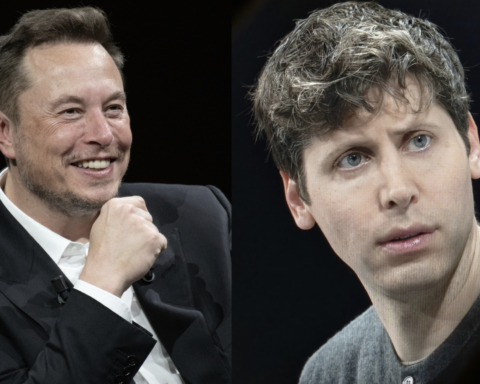

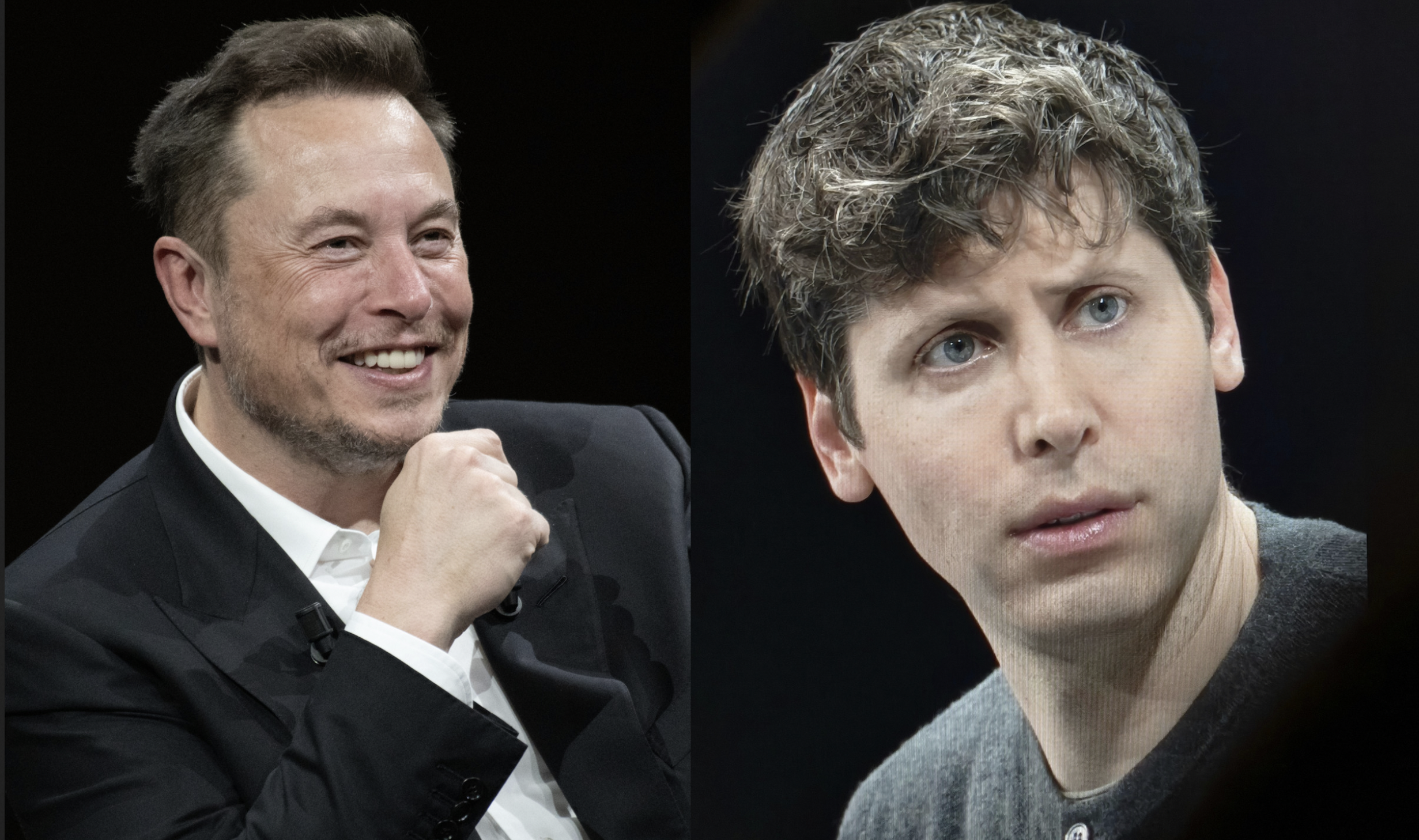
Jury selection in Elon Musk’s lawsuit against Sam Altman and OpenAI begins Monday, April 27, 2026, in federal court in Oakland, California.
Opening statements and witness testimony begin Tuesday. Both Musk and Altman are expected to take the stand. The trial is scheduled to last approximately four weeks.
The case centers on one of the most significant corporate disagreements in the history of Silicon Valley and involves a company that now has a valuation of $852 billion and nearly one billion weekly active users, a company that Musk helped create and now says was stolen from its founding mission.
What Is Elon Musk Alleging?
OpenAI was founded in 2015 as a nonprofit. The founding group included Musk, Altman and a handful of others who had a shared view of what artificial intelligence could become and a shared conviction that the development of it should be guided by something other than the profit motive.
The founding mission was to create artificial intelligence “to benefit humanity,” free from the pressures of shareholders and financial returns.
The technology was also supposed to be open-sourced, made publicly available so that the world could benefit from it rather than any single company control it.
Musk contributed approximately $44 million to OpenAI from December 2015 through May 2017.
Those contributions, his lawsuit argues, were charitable donations made in reliance on the nonprofit structure and the founding commitments.
In 2019, OpenAI created a for-profit subsidiary. Technically it is a subsidiary of the still-existing nonprofit OpenAI Foundation, but by every meaningful measure the for-profit operation has eclipsed the charity.
ChatGPT launched in late 2022 and became a global phenomenon. OpenAI is now valued at $852 billion, recently closed a $122 billion funding round, and is reportedly planning an initial public offering later in 2026.
Musk’s lawsuit, filed in August 2024, alleges that this transformation was a betrayal, that Altman and OpenAI co-founder Greg Brockman converted the company into a profit-making venture against the founding agreement, behind Musk’s back, and in violation of the laws that govern nonprofit corporations.
His lawyers described the alleged conduct in court filings with language that will be difficult to forget, “The perfidy and deceit are of Shakespearean proportions.” They characterized Altman’s behavior as a “long con.”
Musk is seeking an unspecified amount of money to be paid to OpenAI’s charitable nonprofit arm, he is not seeking the money for himself, a detail his side has emphasized repeatedly.
He is also seeking the removal of Altman and Brockman from their positions at both the for-profit company and the nonprofit board.
He is asking the court to in some form restore the nonprofit structure that he says was supposed to govern the company.
Microsoft is a co-defendant. Musk alleges the company aided and abetted Altman’s breach of charitable trust when it became OpenAI’s biggest investor following Musk’s departure.
OpenAI’s Defense And What They Say About Musk
OpenAI has called the lawsuit unfounded and characterized it as “sour grapes” from a man who left the company, founded a direct competitor and now wants to use the courts to hobble a rival.
The company says Musk was well aware that OpenAI needed to transition toward a for-profit structure in order to raise the capital required to compete in the AI race, and that he was part of those discussions before his departure.
His claims, in OpenAI’s telling, are not about nonprofit principles. They are about xAI.
The timeline is worth understanding. Musk left OpenAI’s board in 2018 — he says it was because he became aware of deceptive conduct.
OpenAI says it was because his work at Tesla on self-driving AI created an irreconcilable conflict of interest with OpenAI’s mission.
Either way, he stopped being a financial contributor in May 2017 and stopped being a board member in 2018. In 2023, OpenAI’s board fired Altman as CEO, a decision that sent shockwaves through Silicon Valley.
Altman returned to the role days later with a reconstituted board. Later that same year, Musk founded xAI as a direct OpenAI competitor.
In 2023, Musk also filed an early version of this lawsuit. The current case was filed in August 2024.
What Is At Stake?
The trial’s outcome could alter the balance of power in artificial intelligence in a way that very few legal proceedings ever could for a technology industry.
If Musk wins and the court accepts his proposed remedies, OpenAI’s for-profit structure is threatened, its planned IPO could collapse, and the court could theoretically constrain the company’s ability to develop future models.
Casey Newton, the tech journalist who founded the Platformer newsletter, described the thrust of it, “to try to stop OpenAI in its tracks. Prevent them from developing future models and essentially knock one player out of the AI race.”
That player would be removed while Musk’s own AI company, xAI, continues operating without legal constraint.
If OpenAI wins, Altman and Brockman retain their positions, the company proceeds with its IPO plans, and the for-profit conversion is validated by a federal court.
The damages originally sought were more than $100 billion — but a series of pre-trial rulings went against Musk, and the damages now at issue are significantly smaller.
Whatever amount the jury recommends will be advisory only, Judge Yvonne Gonzalez Rogers, who is presiding, will determine any actual remedies herself.
Who Will Testify?
The witness list reads like a roster of the most powerful people in the technology industry. Musk will testify. Altman will testify.
Brockman will testify. Microsoft CEO Satya Nadella is expected on the stand. Shivon Zilis, a former OpenAI board member who is also the mother of several of Musk’s children, is among the expected witnesses.
The evidence includes hundreds of pages of emails, texts and personal writings from the same people.
Analysts who have reviewed the litigation have noted that both sides carry genuine vulnerabilities.
The winning side, in the assessment of legal observers, will be the one that makes the documentary record fit into a coherent human story that a jury can believe.
For Musk, there are real risks beyond the question of whether his legal theory is sound.
He was held liable by another jury last month for defrauding investors during his $44 billion acquisition of Twitter in 2022.
SpaceX is planning an IPO this summer. Damaging testimony or embarrassing documentary evidence about his business conduct could carry consequences well beyond this particular courtroom.
The judge has already made several pre-trial rulings that shape what the jury will hear.
Musk cannot be questioned during the trial about his suspected use of ketamine. He can be questioned about his attendance at the 2017 Burning Man festival. He can be questioned about his relationship with Zilis.
Finding impartial jurors for this trial was itself a challenge. The judge convened a jury pool approximately three times larger than typical for a civil case, recognizing that virtually every adult in the country has heard of Elon Musk and formed some view about artificial intelligence.
The Larger Question This Trial Represents
The specific legal claims involve breach of charitable trust, fraud and unjust enrichment.
The question underneath all of them is more fundamental: when a group of people create an institution around a shared mission, and the institution becomes extraordinarily valuable, and some of those people want to change its fundamental character to capture that value, what does the law say? What does the original agreement mean?
OpenAI went from a nonprofit charity to a company valued at $852 billion in roughly a decade.
Along the way it arguably changed what it was, from an organization committed to open-sourcing AI for humanity to one of the most valuable and guarded AI companies on earth.
Musk says that change was illegal. OpenAI says it was necessary, consensual and legal.
A federal jury in Oakland, advised by one of the country’s most experienced judges, is now going to start working through the evidence and deciding what actually happened.