
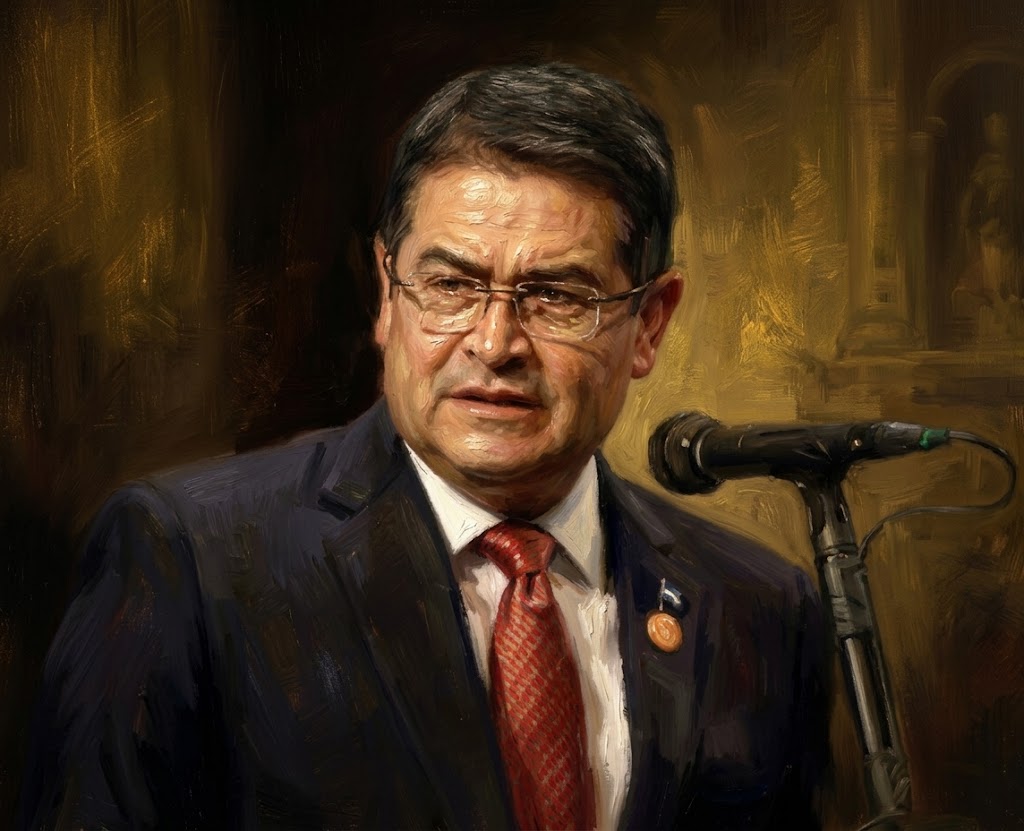
Part 1 made the geopolitical argument for Trump’s pardon of former Honduran President Juan Orlando Hernandez.
Part 2 examined the case the Biden Department of Justice put on.
Part 3 examined how the prosecutors lied to secure the trial before a biased judge and an uninformed jury.
Part 4 showed how the prosecutors coached cooperators to lie about ledgers and radar that did not exist.
Part 5 examined the four cooperators — 134 murders between them, 700 tons of cocaine trafficked, whose uncorroborated testimony was the basis for Hernández’s 45-year sentence.
This is Part 6.
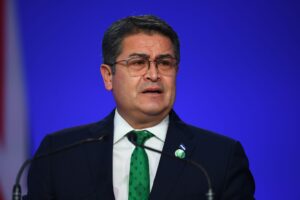
The United States government told two different stories about Juan Orlando Hernández.
In the first version, Hernández was one of America’s great anti-drug allies in Latin America.
In the second story, told by the Biden administration’s Department of Justice, Hernández ruled Honduras as a narco-state, accepted bribes from cartels, and used the authority of the Honduran presidency to shield cocaine shipments moving toward the United States.
Both stories originated from the United States government.
One of them is a lie.
The Calendar
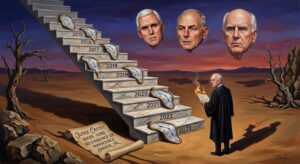
For eight years, while Juan Orlando Hernández served as president of Honduras, the praise directed toward him by the United States government came from the agencies responsible for monitoring narcotics trafficking.
Either they were all fooled for nearly a decade, or something stranger happened.
Apparently, everybody in charge either thought he was helping stop trafficking, or the greatest intelligence failure in modern hemispheric history lasted nearly a decade.
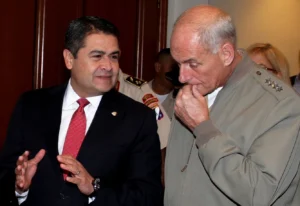
In March 2015, General John F. Kelly, then commander of United States Southern Command, testified before the Senate Armed Services Committee that drug-trafficking flights into Honduras had fallen from nearly 300 in 2011 to almost none. He described it as a 98 percent reduction and attributed the result to Hernández’s government.
In May 2015, General Kelly told the Honduran newspaper El Heraldo that, within little more than a year of Hernández’s presidency, Honduras had declined from the number one transit country for South American cocaine to the fifth.
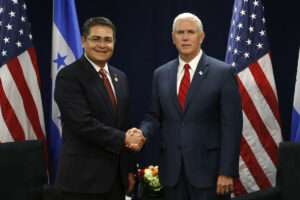
In 2017, Vice President Mike Pence met Hernández at the White House and publicly described him as “a good friend & key ally on promoting security, stability, & democracy in Central America.”
In 2017, General Kelly, then serving as Secretary of Homeland Security, publicly referred to Hernández as “a great guy, good friend.”
On June 7, 2018, the official social media account of the Drug Enforcement Administration announced publicly: “DEA met with President Hernandez of Honduras today. Critical to reducing violence and addiction caused by drug trafficking that afflicts both our nations.”
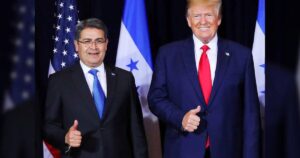
In 2019, Hernández stood beside President Donald Trump at the White House while Trump told reporters, “President Hernandez is working with the United States very closely. Through this partnership we’re stopping drugs at a level that has never happened.”
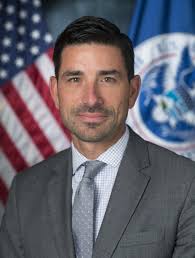
In 2020, Acting Secretary of Homeland Security Chad Wolf told Hernández: “We are committed to continuing our support as you continue to do more to secure your borders and dismantle gangs and cartels.”
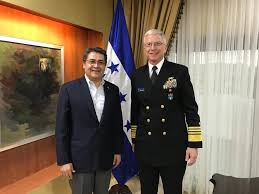
In 2020, Admiral Craig S. Faller, commander of United States Southern Command, stated publicly: “In 2020 already, Honduras has taken more drugs off the streets and has more prosecutions than in 2019 combined.”
In 2021, the State Department’s International Narcotics Control Strategy Report — the INCSR — stated that the Honduran government had seized 14.2 metric tons of cocaine in the first nine months of the year alone.
The figure was four times the total number of seizures reported for 2020.
On January 27, 2022, Hernández left office as president of Honduras.
Three weeks later, the Biden administration’s Department of Justice indicted him in the Southern District of New York.
In April 2022, the newly elected government of Xiomara Castro extradited Hernández to the United States.
Then came the trial.
The Exclusion
Renato Stabile, Hernández’s defense counsel, moved to admit the State Department’s annual certifications recognizing Honduras as a counter-narcotics partner.
The prosecution opposed the request.
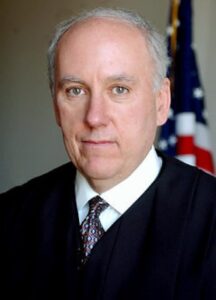
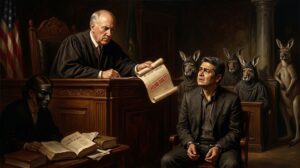
Judge P. Kevin Castel granted the government’s motion to exclude the evidence.
The government’s star witnesses were four cooperators.
Together, they admitted involvement in 134 murders and the trafficking of 700 tons of cocaine. Each testified under a cooperation agreement, under which federal prosecutors sought reduced sentences in proportion to the assistance their testimony provided the government.
The jury was presented with the government’s theory that Hernández had governed Honduras as a narco-state.
The jury was not informed that, for eight consecutive years, the United States government’s agencies had publicly documented the opposite conclusion.
Judge Castel prohibited the defense from placing that record before the jury.
The DEA Agent Who Said the Opposite
Judge Castel did more than exclude the documented record showing decreases in drug trafficking during Hernández’s presidency.
The prosecution was also permitted to present testimony from a Drug Enforcement Administration agent, Jennifer Taul, who testified that cocaine trafficking through Honduras increased between 2014 and 2019, covering five years of Hernández’s presidency.
For eight consecutive years during Hernández’s presidency, the State Department’s International Narcotics Control Strategy Report — the INCSR — documented decreases in cocaine trafficking through Honduras.
The same agency that published reports documenting decreases in cocaine trafficking through Honduras sent an agent to testify that trafficking had increased.
Only one version reached the jury.
The Same Prosecutors. The Opposite Expert.
The prosecutors from the Southern District of New York who tried Hernández in 2024 had previously presented a different expert witness in an earlier case.
Dr. Darío Euraque, an expert in Honduran history and political systems, had previously testified in a related federal narcotics case that cocaine trafficking through Honduras had decreased during Hernández’s presidency.
Five years later, the same Southern District of New York office presented Agent Taul to testify that trafficking had increased during those same years.
The Sidebar
During the jury-instruction phase of the trial, defense counsel Stabile informed Judge Castel that DEA Agent Taul’s testimony was false.
Stabile wanted the jury informed that cocaine trafficking through Honduras had decreased during Hernández’s presidency and proposed to introduce the DEA’s International Narcotics Control Strategy Reports.
Castel denied the motion.
The jury deliberated without having access to the DEA’s published record.
The Ruling
After the conviction, Hernández moved for a new trial. He argued that the prosecution had presented false testimony to the jury regarding cocaine trafficking trends during his presidency.
On May 9, 2024, Judge Castel acknowledged that a conflict existed between Agent Taul’s testimony at Hernández’s trial and Dr. Euraque’s testimony in an earlier trial.
Castel nevertheless ruled that even if Taul’s testimony had been false, the contradiction would not have altered the result.
Castel said that even if trafficking did decrease during Hernández’s presidency, that proved Hernández was using anti-trafficking policies as cover for trafficking.
In a trial concerning whether Hernández had protected cocaine trafficking, evidence that he had publicly and measurably opposed trafficking was likely to suggest innocence.
In a trial about whether a president protected cocaine trafficking, evidence that the president spent years fighting cocaine trafficking was considered too favorable to the defense.
Hernández in His Own Words
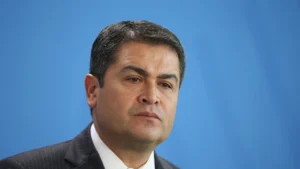
At sentencing on June 26, 2024, Hernández spoke in front of the judge who had kept it from the jury, the record that had been excluded.
“Three agencies, the DEA, the State Department, and three presidencies — Barack Obama, Donald Trump, and Biden — informed the United States Congress during every year of my presidency that the passage of drug was being reduced from 90 percent that was traveling through Honduras and coming to the United States, down to 4 percent. But you were not able to hear that, nor was the jury. So the witness presented by the DEA is saying that the DEA lied and those three presidents and all of them lied?”
Castel told Hernández the courtroom was not a public forum. He was not welcome to make a speech.
Castel Explains
Judge Castel then explained why he had excluded the U.S. government’s record.
“In a political environment in which the public sentiment in Honduras and its allies, including the U.S., was vehemently opposed to drug trafficking,” Castel said, “it was necessary for Hernandez to maintain the public image of being an anti-drug crusader while secretly aiding select drug traffickers.”
The extraditions Hernández authorized, the anti-narcotics laws he enacted, the cooperation extended to American agencies, and the praise he received from United States presidents and senior military officials were, in Judge Castel’s reasoning, not evidence of innocence.
They were evidence of concealment.
If the jury had seen the eight years of certifications, the SOUTHCOM testimony, and the Army War College endorsement, the jury might have asked the inverse question.
Not whether Hernández’s counter-narcotics work was the cover for hidden trafficking —but whether Judge Castel’s framework was the cover for a Biden-era political decision to dispose of a Trump-allied Honduran ex-president. The cover for a diplomatic gift to the leftist Castro government that had just turned Honduras toward Beijing.
Castel sentenced him to 45 years.
The Pardon
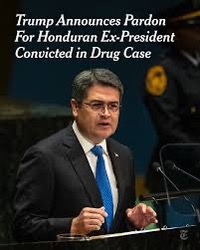
When President Donald Trump pardoned Hernández, he characterized the prosecution as a setup orchestrated by the Biden administration.
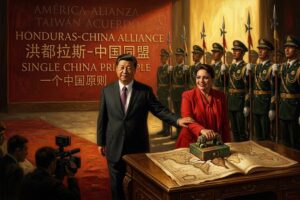
The prosecution began three weeks after Hernández left office and proceeded with the cooperation of the newly installed government of Xiomara Castro, which had shifted Honduras’s political orientation toward China.
What Happened to Honduras After Hernández
Under Hernández, in the first nine months of 2021 alone, the Honduran government seized 14.2 metric tons of cocaine.
Under Castro, in all of 2023, the Honduran government seized less than half a ton.
The first coca plantations in Honduras were discovered in April 2017, during Hernández’s tenure. They were minor. They were eradicated.
Under Castro, coca cultivation expanded into a national phenomenon. Honduras stopped being a transit point. It became a cocaine producer.
There is a lot of money paid to a lot of people in the world of drug trafficking. Following the money in drug trafficking is hard.
Cocaine trafficking through Honduras went down under Juan Orlando Hernández.
It went up after him.
Maybe that was the point.
ARTVOICE ART