Gene Shalit, Film Critic, Dies At 100
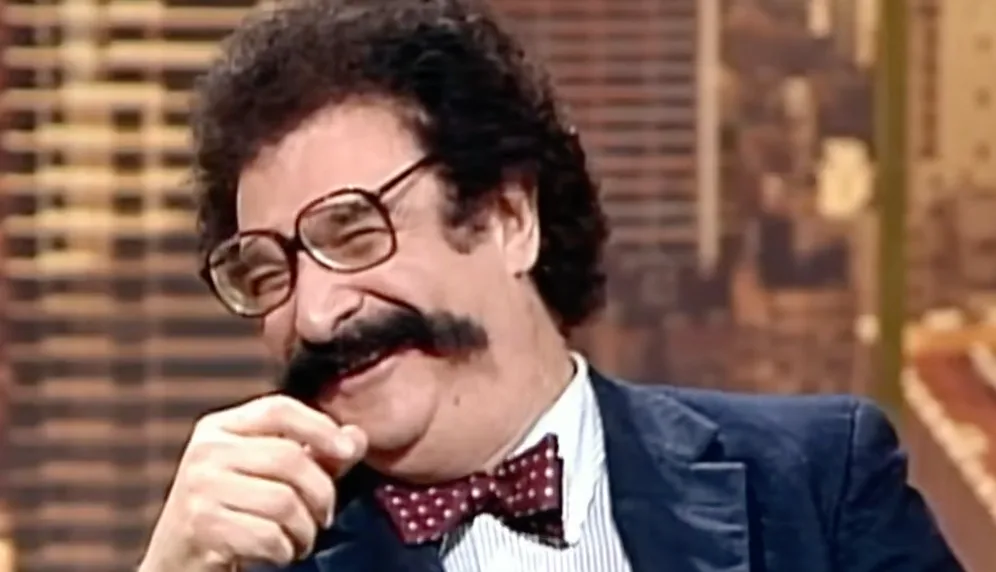
Gene Shalit spent 40 years on NBC's Today show telling millions of Americans what to think about the movies they were about to see or had just seen, and he did it with a handlebar mustache so spectacular it could have its own Wikipedia page, a collection of bow ties whose brightness was calibrated to be visible from a moving vehicle, and a devotion to the pun that his professional peers openly mocked and his audience genuinely loved.
He died on Friday at the age of 100. His family told NBC News he had "passed away peacefully today after 100 years of an amazing life."
He turned 100 on March 25, 2026, three months before he died. Al Roker marked the occasion on Today with a personalized Smucker's jar, the birthday tradition the program has maintained for decades, and called Shalit a Today show legend.
Shalit told his family he was looking forward to watching his New York Mets.
The Man Who Showed Up In Elementary School With A Fedora
Eugene Shalit was born in New York City on March 25, 1926, a century ago on the day he died, and grew up in Newark and Morristown, New Jersey, where his father ran a drug store.
He was, from the earliest available evidence, always himself. When he was in elementary school, he created the school's first newspaper, which he named The Spotlight, and then purchased a fedora so that he would look the part.
He was in elementary school. He bought a fedora for journalistic credibility. The rest of his career tracks directly from that decision.
He went to the University of Illinois at Urbana-Champaign, where he wrote for the Daily Illini, the same campus newspaper that Roger Ebert, a far more demanding film critic than Shalit, would write for years after him.
He started his professional career as a press agent for Dick Clark, which ended when a Congressional investigation into radio payola swept up the industry around him.
He pivoted to writing about entertainment, which turned out to suit him considerably better than the publicity business.
Through the 1960s he wrote for Look magazine, where he was the senior film critic, and spent 12 years writing the "What's Happening?" page for Ladies' Home Journal. He wrote for the New York Times, Cosmopolitan, TV Guide, Seventeen, Glamour and McCall's.
He published four books of humor. From 1969 to 1982 he composed and broadcast a daily "Man About Anything" essay on the NBC Radio Network coast to coast.
He was a regular panelist on the game shows What's My Line? and To Tell the Truth.
He was, in other words, a working media person in the fullest sense, someone who had been writing and broadcasting and appearing on screens and in print for decades before he became famous. The fame came from Today.
The Mustache That Arrived In 1970
Shalit joined Today in 1970 as a part-time book reviewer and became the program's full-time film and book critic in 1973.
He occupied the segment called "Critic's Corner" for four decades, until he retired in November 2010 at the age of 84, working alongside a rotating cast of co-anchors that over the years included Barbara Walters, Jane Pauley, Bryant Gumbel, Katie Couric, Matt Lauer, Al Roker, Willard Scott and John Palmer. The Today show changed around him many times.
The mustache did not change.
The physical description that every obituary leads with is accurate and almost insufficient to the reality.
The walrus mustache was not merely large, it was architectural. The hair was not merely bushy, it was what would happen if someone asked a cartoon character to demonstrate maximum hair.
The bow ties were not merely colorful, they were a communication strategy. Gene Shalit walked into millions of American living rooms every morning looking like nobody else on television had ever looked, and the contrast between his appearance and the seriousness with which he took his opinions was the specific quality that made "Critic's Corner" work.
He was not a rigorous critic in the analytical tradition of Pauline Kael or Andrew Sarris or his Today show contemporaries Siskel and Ebert. He liked movies.
He liked finding puns in their titles and their plots. He liked interviewing the people who made them, Steven Spielberg, Helen Hayes, Sophia Loren, the Grateful Dead.
He was warm toward the things he covered in a way that his peers found professionally suspect and that his audience found like a relief. Katie Couric, upon his retirement in 2010, said:
"It was always magical for me to see Gene on the screen. I think Gene was a master at doing celebrity interviews."
Siskel and Ebert parodied him. Jon Lovitz played him on Saturday Night Live with enough specificity that the parody required no introduction. Horatio Sanz played him after Lovitz. Eugene Levy played him on SCTV. The Critic referenced him. Family Guy referenced him.
The Muppet Show got there first. The people who parodied Gene Shalit were not wrong about what he was, a critic who was easier on films than the films deserved and whose puns were designed to make you groan rather than think.
They were also not wrong that he was interesting enough to be worth parodying, which is a different category of recognition than being taken seriously.
The Berkshires And The Mets And The End
Shalit retired in November 2010 after 40 years on Today. He was 84.
He spent the following 16 years in the Berkshires of Massachusetts, quietly, by accounts, surrounded by family, following his beloved Mets and living the specific late life of a person who had spent four decades being recognized everywhere he went and had earned the right to be recognized nowhere in particular.
He turned 100 on March 25. Today celebrated it. Al Roker called him a legend, which he was. He said he was looking forward to the Mets. He died on June 12. He was 100 years and 79 days old.
His survivors include a son and a daughter. Another daughter and his wife Nancy Lewis predeceased him.
The puns were terrible. They were magnificent. Nobody's mustache will ever look like that again.
He was one of a kind in the specific way that only people who are completely themselves manage to be, and he managed it for a hundred years.