Somoza Part 2: The Insurance Worked. That Was the Problem

Somoza Part 1 2,500 Black Churchgoers Got Free Insurance; He Got 25 Years
In Part 1, we explained:
In 1955, the Rev. Dr. J. Benjamin Hardwick founded Praises of Zion Missionary Baptist Church in South Los Angeles. Nearly 50 years later, his people were dying. There were funerals all the time. The church passed the plate to bury its dead.
When one of their own was gone, the others gave what they could, so that the dead might be buried with dignity.
In 2003, two insurance agents took Hardwick to a Beverly Hills financier named Curtis D. Somoza.
Corporations had insured their workers for years. They insured janitors and cashiers. When the worker died, the corporation collected.
A church could do the same thing.
Hardwick's church had only one problem. It could not afford the premiums.
Somoza saw the answer.
If investors paid the premiums, Hardwick's church could own the policies.
The church could benefit. The insured could benefit. The investors could make money.
But there was one condition.
The insurer had to misunderstand the risk.
If the insurance company priced the congregation correctly, there was no opportunity. If it priced the congregation incorrectly, there was.
A MAN WITH FUNERALS TO PAY FOR
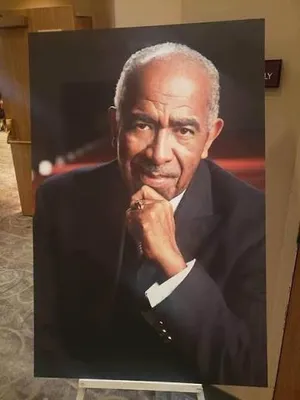 Rev. Hardwick
Hardwick came to Somoza's home perhaps half a dozen times. Sometimes he came alone. Sometimes people from the church came with him.
Somoza was a Beverly Hills financier who had never buried a member of Praises of Zion. Hardwick had buried hundreds. Each needed something the other had.
Hardwick wanted life insurance for members of the congregation, for the same reason anyone wants it: so that when someone died, the family would not be left with nothing.
And he wanted something for the church as well, because the work of the living does not end when the dead are buried.
There was nothing complicated about the purpose. The complication was paying for it.
There was another fact.
People in South Los Angeles died younger.
The area had among the lowest life expectancy and highest mortality in Los Angeles County, according to the county health department. Its homicide rate was more than twice the county rate.
Those were terrible numbers if you lived there.
They were important numbers if you were pricing life insurance.
What looked like hardship to the people living there looked like risk to an insurer. And if that risk got priced incorrectly, it looked like opportunity.
THE ARGUMENT FOR INSURING THEM
Those conditions were not an argument against insuring the congregation. They were the argument for insuring it.
The equation was brutally simple:
Higher mortality. Lower income. More funerals, and less money with which to pay for them.
That was South Los Angeles in three lines.
And between those facts stood the family with a funeral to pay for.
Life insurers looked at age. Sex. Smoking. Medical history. Family history. Occupation. Dangerous hobbies. Sometimes they looked at driving records.
They did not price people's lives by their zip code or the number of murders in their neighborhood.
There was a second issue, a market issue.
Insurers had little reason to develop group-life pricing for poor congregations because poor congregations were not buying group life insurance.
A market that does not exist does not generate much pricing experience. No one asks for the quote. And because they did not ask, the companies had little reason to learn what the risk truly cost.
The insurer would likely price Hardwick's congregation as though it were something it was not.
THE TABLE BELONGED TO ANOTHER WORLD
The industry's group-life rates had been built around American companies and their employees. Those employees generally had more money. They generally lived longer.
The actuarial tables came from corporate America. The table was not false. It simply belonged to another world.
There was something else.
The company could not charge more because the congregation was Black. It could not charge more because of where the members lived. The law did not permit it.
The very factors that might reveal additional mortality risk were factors the law restricted the insurer from using in that fashion.
A company could not decide that a Black life should cost more to insure because it was Black. Nor could it simply turn a neighborhood into a substitute for race.
ONE DEATH PAYS FOR THE OTHERS
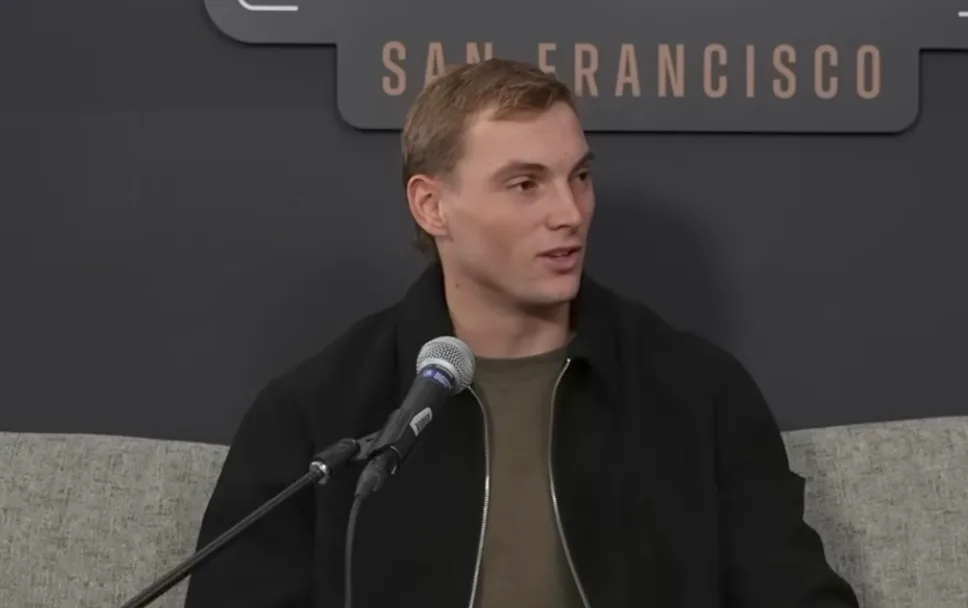
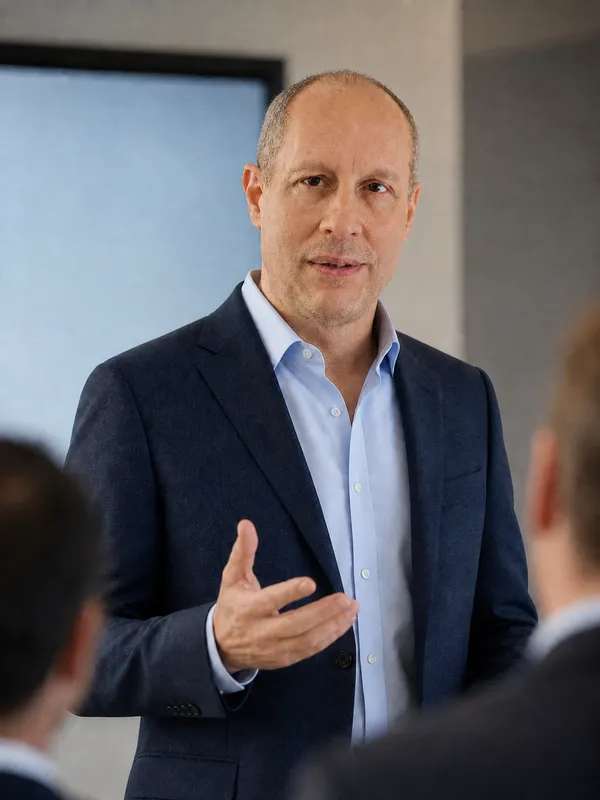 Somoza
Somoza worked out the plan.
There was only one way to provide group death insurance for a poor Black church: When someone died, most of the insurance money had to pay the premiums on the people still alive.
The death proceeds were therefore not merely the product of the system. They were also its fuel.
In this strange arithmetic, one death would help protect those who remained.
The rest of the death benefits, when they came, would be split three ways. Some went to the family. Some went to the church. Some went to the investors.
The investors were putting up the cash to keep policies in force. They weren't passing the collection plate. They had entered the arrangement because they expected something in return.
The families wanted benefits. The church wanted money for its mission. The investors wanted a return.
Each wanted something different from the arrangement, yet all required the same thing for it to succeed.
There was one party left.
The insurance company.
For three parties to be right about the price, the fourth one had to be wrong.
WHAT INSURANCE IS
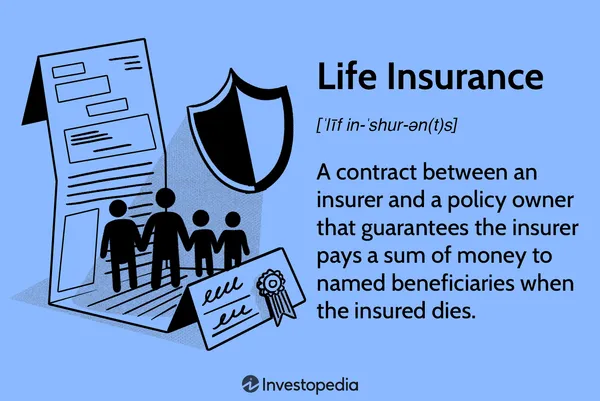
A life insurance company is not a charity.
It hires actuaries to estimate when people will die. It collects premiums while they live and pays when they die. Its profit depends upon the difference between what it takes in and what it pays out.
If the people with the calculators did their jobs right, there is money left over. That is the life insurance business.
Every life insurance policy is a wager on a human life.
Sometimes the company loses. A man buys insurance at 38 and dies at 40. He paid two years of premiums. The company pays the full death benefit.
But there are enough other men who live to seventy, eighty, and ninety.
The insurer does not need to win on every life. It needs the mortality assumptions to be correct across the pool. Get enough people into the pool and the bad bets disappear into the good ones.
That's what the actuaries are for.
The insurer does not depend upon knowing the fate of one man. It depends upon knowing the fate of thousands.
Somoza saw what he needed.
He needed a pool drawn from the poor Black Baptist community of South Los Angeles. There, people died younger.
If that population died sooner than the pricing assumptions predicted, the usual spread would reverse. The insurer's statistical advantage would become the pool's advantage.
Somoza would insure the people the actuarial tables had missed.
The insurer would use its ordinary group rates. It could not charge more because the people were Black. It could not charge more because of the neighborhood.
A DIFFERENCE BETWEEN PRICE AND RISK
Somoza was a trained financial analyst. He says he spent about 600 hours building the model.
What he found was an arbitrage. The insurer would charge one price. The actual risk was something else. Between the two lay the possibility of profit.
Somoza believed selection mattered. He would have to choose carefully.
He estimated that some members of Hardwick's congregation would die at two to three times the rate assumed by a typical insurer.
If he was right, the insurance company tables were badly wrong.
He didn't need everyone to die young. He needed enough of them.
You couldn't just insure everybody and hope. The pool had to be built.
HOW IT WAS BUILT
The investors could not simply take out life insurance on the congregants. California law voids a life insurance policy taken out on a stranger.
Somoza and his investors had no insurable interest in the members of Praises of Zion.
They could finance the idea. They could study the numbers. They could not insure one congregant themselves, however attractive the economics might have been.
The church could.
A charitable organization could insure a consenting person, and the members of Praises of Zion gave that consent on their own insurance applications.
Somoza hired Loeb & Loeb, a large Los Angeles law firm, to draft the agreements. The lawyers had to reconcile two facts.
The church was permitted to own the policies. The investors were not. Yet if the investors were going to supply the capital, there had to be a lawful process for returning money to them from policies they did not own.
The lawyers treated the investors' money as financing.
Somoza's companies would fund the premiums. Instead of receiving conventional interest on that money, they would be entitled to a portion of the death proceeds when claims were paid.
In plain terms: the investors were lenders, not owners. They put up cash and were repaid out of what the policies produced. A bank that finances a building does not own the building.
The policies were owned through the Personal Involvement Center. Rev. Hardwick had founded the nonprofit in 1971. It was part of the church's social work.
The policies therefore were within an existing charitable entity rather than with Somoza or his investors.
WHERE THE MONEY ACTUALLY WENT
A typical policy was worth $275,000 at death.
According to the Justice Department, which later charged Somoza, when a member died and a $275,000 policy paid, the family received $15,000. The Personal Involvement Center received $20,000. Somoza's companies received the remaining $240,000.
That final number appears enormous until one asks what happened to it next.
By Somoza's account, roughly $210,000 of that $240,000 went straight back out as the next year's premiums on everyone still living.
Most of the money attributed to his companies was not profit. It was the capital required to keep the remaining policies extant.
After the premiums were funded, approximately $30,000 remained. That amount, according to Somoza's account, represented the investors' return on the capital they had supplied.
About $30,000. Not $240,000.
PANCAKE BREAKFASTS
There were about 25,000 applications. Somoza could not raise enough money to pay premiums on all of them.
Somoza says his longer-term plan was to bring approximately half of the 25,000 applicants into the program.
The smaller beginning was not meant to be the end.
Somoza began with two pools containing a total of approximately 2,500 insureds.
They collected applications at pancake breakfasts. Somoza paid for the food. The insurance agents and the pastors ran the breakfasts. They explained the program.
People ate pancakes and filled out life insurance applications.
Then Somoza screened each application individually. Name by name, application by application, he ranked them according to the likelihood that death would come sooner rather than later.
In conventional insurance, a good risk is someone expected to live. In this arrangement, the best risk was the one most likely to die.
THE SCREEN
At first, Somoza used more factors. Smoking. Weight. Blood pressure.
Then he discarded them.
With only a few thousand people, he said, there were too many variables and not enough lives. More information did not necessarily produce greater accuracy.
A large insurer can afford dozens of variables because it has millions of lives to average them across. With 2,500, each additional factor split the pool into groups too small to mean anything.
What Somoza used instead was age and sex, sometimes weight, run against national mortality tables, matched against the mortality of the zip codes where the applicants lived.
Age and sex are what every insurer uses, because they predict death better than anything else on an application. The zip code was the addition. It was the one number the insurer's own pricing did not take into account.
He did not simply choose the oldest people.
Their premiums were high. A pool concentrated among the elderly would be extraordinarily expensive to maintain and would leave less economic margin on each policy.
DEATHS HAD TO COME IN INTERVALS
Somoza wanted the pool to last. He wanted claims coming for thirty years. The pool had to last long enough to make money, keep the insurance going, and keep sending something to the church and the families.
He selected people he judged would die at intervals rather than all within a few years. Some would die early. Some later.
He needed young people too. People in their twenties. Their thirties. Their forties. And older people.
Each age belonged in the pool in the right proportion. The trick was not merely who would die. It was when.
If Somoza was right, the insurer would eventually see it too. Then it would stop issuing the policies.
But Somoza believed the company could not cancel the policies already in force simply because it disliked the bargain.
That was the calculation. Put as many policies in force as possible before the insurer understood the mistake. After that, rely on the contracts.
RACE WAS NOT ON THE FORM
Most of Hardwick's people were Black, though Hispanic and White members applied as well. Somoza says race itself was not part of the screening process. The system recorded age, sex, and zip code. His screen did not ask a person's race.
It also did not matter much.
The zip code carried much of the same information. He didn't need a box marked Black.
Somoza put it simply: "We would just insure the ones that were the most profitable."
Profitable had a precise and uncomfortable meaning. It meant death arriving sooner than the insurer had priced it to arrive.
WHERE THE REAL MONEY WAS
The greatest profit was not in the old.
It was in the young.
A 72-year-old in South Los Angeles might be ten or fifteen percent more likely to die in a given year than another 72-year-old elsewhere in Los Angeles County.
The life insurance company already knew a 72-year-old might die soon. It charged high premiums because of it. Perhaps it expected 12 years of premiums before paying the death claim.
Thus a fifteen-percent mortality advantage was being purchased at the highest premium rates in the pool. There was money there. Just not much.
A 32-year-old was different. He was cheap to insure. The tables might give him until 77. The company therefore priced the policy expecting roughly 45 years of premiums.
The streets did not always honor the tables.
Somoza's model said young men in those zip codes would die at two or three times the rate assumed in the insurance company's price.
That was the spread.
It was not mainly a bet on illness. It was a bet that young men in those neighborhoods got shot. It was a bet that young men and women used drugs and sometimes died from them. It was a bet that the insurer would price those lives as though they lived somewhere safer.
THIRTY-THREE MILLION DOLLARS
There were about 25,000 applicants. Somoza selected 2,500. Their policies were placed into pools.
Somoza raised the money through private placements called Persistence Friends and Persistence Family. More than 50 people invested, many drawn from his circle of friends, relatives, and their acquaintances. Together they put in about $33 million.
The people whose lives were insured contributed no money at all. Their cost was nothing. The church paid nothing either.
Whatever they received was a gain.
WHAT THE INVESTORS BOUGHT
Somoza says the investors did not buy the insurance. They bought access to his model. The valuable part was knowing which people to insure.
Somoza says he did not intend to hold the policies forever and wait for people to die. He intended to build the pools. Calculate the expected claims against the expected premiums. Then sell each pool to an institutional investor.
He valued them at roughly $20 million each, with an annual return of about eight percent.
A mortgage banker originates loans, bundles them, and sells the bundle. This was to work the same way.
THE DEATHS BEGAN
One died of a heart attack. One overdosed. A man in his twenties was killed in a drive-by shooting. All five of the first deaths were people under fifty.
The mortality advantage was appearing among the young, precisely where Somoza’s model had predicted it.
And he still had 1,300 more people to insure.
Somoza did not submit the death claims immediately. There was no deadline requiring him to do so. The premiums had already been paid for the year. The delay did not cost the insurer additional money.
Five deaths in five months would get an underwriter's attention. The company might stop writing the policies.
Somoza wanted the second pool in force first.
INSIDE THE CHURCH
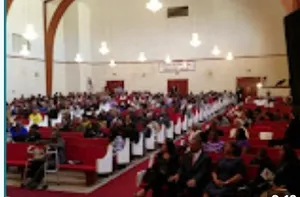 Inside Rev. Hardwick's church
It is possible to describe what Somoza designed in language that makes it sound like predation. It could sound like people making money from the deaths of poor church members.
From the church's side, the calculation looked different.
The church had come to Somoza because every death brought another funeral. Almost every funeral meant passing the plate to raise perhaps $10,000.
Hardwick didn't need a mortality table. He had funerals. Then another member died. And the plate went around again.
That was the problem. Not mortality tables. The plate. Again and again.
For Hardwick, mortality was not a percentage. The dead had to be buried. No one else was paying for it. The state was not paying.
Somoza brought insurance to people who could not afford to buy it themselves. The family paid nothing. When the insured died, the family received $15,000.
The dead didn't disappear because somebody disliked the deal.
Young men were going to be shot whether the insurance existed or not. The spreadsheet didn't sell the drugs.
Young people were already dying in those streets. Somoza figured out that it would happen. He didn't make it happen. And he couldn't make it stop.
Rev. Hardwick had a mortality table too. It was not printed. It was hospital visits. Funerals. Empty seats in church.
Hardwick measured the distance between a family and the next funeral. Somoza measured the distance between the premium and the death benefit.
They were measuring different things.
They found the same people.
The Result
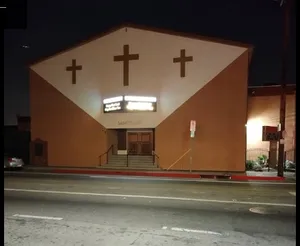
The life insurance pools survived. And year after year, they continued to pay claims.
When an insured member of Praises of Zion dies, the family receives $15,000. Hardwick's nonprofit gets $20,000.
More than twenty years later, the money Hardwick went to Beverly Hills seeking continues to arrive.
Death by death.
Check by check.
Measured by those terms, the agreement did what it promised to do.
Rev. J. Benjamin Hardwick died on June 13, 2025.
He was 93. He had led Praises of Zion for seventy years.
He had buried more of his people than he could count.
By the time Hardwick died, Somoza had been released from federal prison.
The policies are still paying.
Coming up next in the series:
The two numbers that made the business work.
Then the story of the insurance company, Transamerica, when it understood what it had sold. There was money due on people who were already dead. What happened to that money came next.
Then why did the government prosecute the man who found the pricing error rather than the company that made it?