
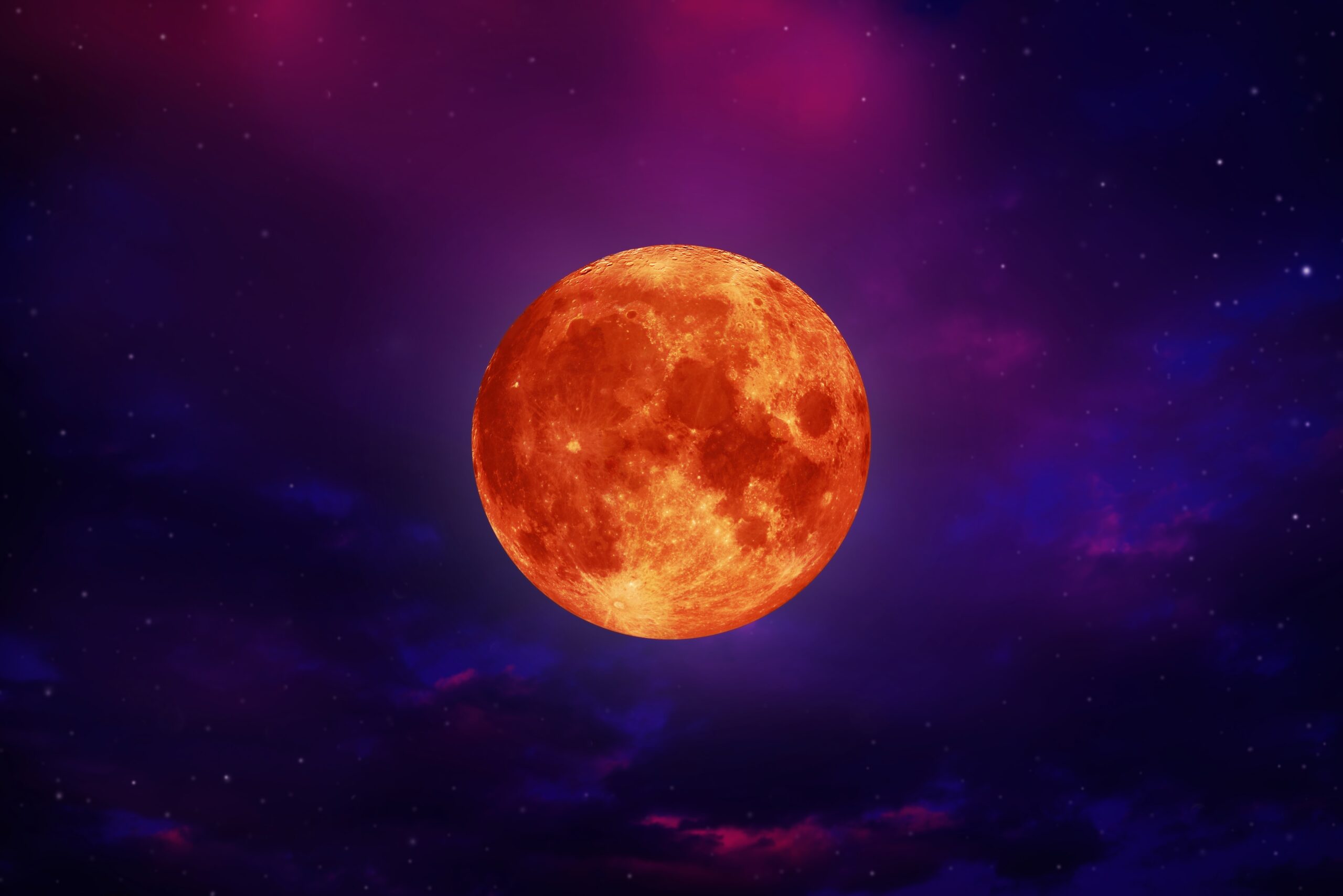
March 3, 2026 brings a full moon, but not just any full moon. Tonight’s lunar event coincides with a total lunar eclipse, transforming the moon into what astronomers and skywatchers call a Blood Moon.
The result is a coppery red glow visible to billions of people across North America, Australia, New Zealand, and eastern Asia.
It is the last total lunar eclipse until New Year’s Eve 2028. If you miss tonight, you are going to have to wait nearly three years for another chance to see it.
What Kind Of Moon Is It Tonight?
Tonight’s full moon is the Full Worm Moon, the traditional name for the March full moon in North America.
It signals winter loosening its grip, even when the temperatures have not quite caught up.
This year the Worm Moon carries an additional name. Because it coincides with a total lunar eclipse, it is being called the Blood Worm Moon, an informal but widely used nickname for the rare combination of a March full moon and a lunar eclipse happening simultaneously.
The full moon reaches its peak at 6:38 AM ET on Tuesday, March 3. Totality, the window when the moon turns fully red, begins at 6:04 AM ET and peaks at 6:33 AM ET, lasting approximately 58 minutes.
For viewers in the eastern United States, the moon will be setting near the horizon during totality, which creates a dramatic low-sky view but a narrow window.
Western states have the best conditions, with the moon higher in the sky and more time to observe the full eclipse.
No special equipment is needed. The Blood Moon is completely safe to watch with the naked eye, binoculars, or a telescope.
When Was The Last Full Moon?
The last full moon before tonight was the Snow Moon on February 12, 2026.
Full moons occur approximately every 29.5 days, meaning they shift slightly in date from month to month.
February’s full moon carried no eclipse, making tonight’s event a significant step up in terms of spectacle.
The Snow Moon was preceded two weeks earlier by an annular solar eclipse on February 17, 2026, meaning skywatchers have had a remarkable run of celestial events in a short window.
Tonight’s Blood Moon is the second eclipse in the same eclipse season.
Is This The Only Full Moon In March 2026?
Yes. March 2026 has only one full moon, peaking on March 3. The next full moon after tonight will be the Pink Moon in April.
Some months experience what is called a Blue Moon, a second full moon within a single calendar month, but March 2026 is not one of them.
With the full moon arriving on March 3, there is not enough time in the remaining days of the month for a second one to occur before April begins.
The March equinox falls on March 20, 2026, meaning tonight’s Worm Moon arrives just over two weeks before the official start of astronomical spring in the Northern Hemisphere.
What Is A Blood Moon?
A Blood Moon is a total lunar eclipse, the moment when the Earth moves directly between the Sun and the Moon, casting its shadow fully across the lunar surface.
During a total lunar eclipse, direct sunlight is blocked from reaching the moon.
However, sunlight passing through Earth’s atmosphere bends around the edges of the planet and still reaches the lunar surface in filtered form. Blue light scatters easily in the atmosphere and disappears.
Red and orange light scatters less and passes through, bathing the moon in a warm, coppery glow. The exact shade, anywhere from bright orange to deep blood red, depends on the conditions in Earth’s atmosphere at the time of the eclipse.
“During a total lunar eclipse, Earth’s shadow gradually moves across the full moon, causing it to darken and take on a warm, coppery glow,” the Old Farmer’s Almanac explains. “This color change happens slowly and can be safely watched with the naked eye.”
Tonight’s totality lasts 58 minutes. After that the moon gradually brightens as it exits Earth’s shadow, with the partial eclipse phase ending at 8:17 AM ET.
The next total lunar eclipse after tonight will not occur until December 31, 2028, nearly three years away.
After that, two more follow in quick succession on June 26, 2029, and December 20, 2029.