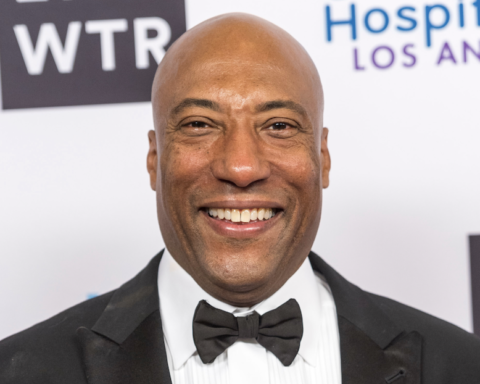

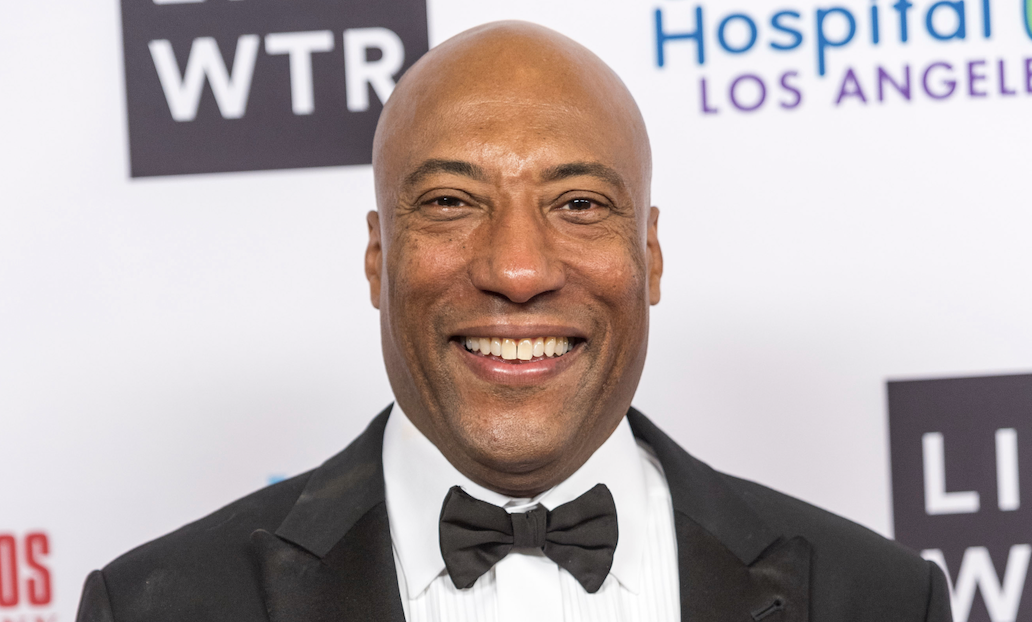
Byron Allen is taking over the 11:35 p.m. slot on CBS. Beginning May 22, the night after Stephen Colbert’s final Late Show, Allen’s comedy talk show Comics Unleashed will move into the timeslot that has belonged to The Late Show franchise for 33 years.
A second Allen-produced program, the comedy game show Funny You Should Ask, will fill the 12:37 a.m. hour.
Two hours of late night on CBS, five nights a week, owned and operated by one man who has been working toward this specific moment for his entire professional life.
“I created and launched Comics Unleashed 20 years ago so my fellow comedians could have a platform to do what we all love, make people laugh,” Allen said in a statement. “I truly appreciate CBS’s confidence in me by picking up our two-hour comedy block. Because the world can never have enough laughter.”
What makes the deal structurally unusual is how Allen is getting the time. He is not being hired by CBS to produce a show for the network.
He is paying CBS to lease the slots.
Allen Media Group will buy the airtime from CBS and sell the advertising inventory itself.
For CBS, this means the network will turn a profit in late night instead of absorbing the losses that traditional late-night production generates.
Allen called it “zero cost” to CBS in an interview with the Los Angeles Times last August. For Allen, it means owning the commercial inventory entirely, the same model he has used to build his media empire from scratch.
He had been lobbying for this publicly and explicitly since The Late Show cancellation was announced.
“If they’re looking for a show, my hand is already up,” he said at New York’s Advertising Week in October 2025. “Fifty years, I’ve been waiting for this moment. Definitely, I’m going for it. I’m investing millions and millions of dollars to prove myself.”
What Is Comics Unleashed?
Comics Unleashed is a roundtable comedy talk show that Allen created and launched in 2006. The format is straightforward: Allen sits with four comedians who draw from their stand-up material, riff on topics, and work the room.
There is no desk, no band, no celebrity interview couch in the traditional sense.
The guests are working comedians who bring their own material. Over its run the show has featured Sebastian Maniscalco, Tiffany Haddish, Gabriel Iglesias, Cedric the Entertainer, and Nate Bargatze, among hundreds of others.
The show originally ran in syndication from 2006 to 2016 and produced 233 episodes. Allen resumed production on new episodes for the 2025-2026 CBS season.
Because the show is designed to be evergreen, built around stand-up material rather than topical political humor, episodes can be repeated without dating badly.
Some of the episodes that aired at 12:35 a.m. this season were originally filmed more than a decade ago.
That model, which allows Allen to amortize production costs across years of airings, is central to why the economics work the way they do.
Funny You Should Ask, which will take the 12:37 a.m. slot, is a comedy game show hosted by Jon Kelley in which stand-up comedians answer trivia questions. It has been running in syndication since 2017.
Why Is The Late Show Ending?
The Late Show with Stephen Colbert ends its run on May 21, 2026, after eleven years on the air.
CBS announced the cancellation in July 2025, citing financial reasons and the difficult economics of late-night television in the streaming era.
The official statement said it was “purely a financial decision against a challenging backdrop in late night” and that it was “not related in any way to the show’s performance, content or other matters happening at Paramount.”
That explanation was widely rejected. CBS’s parent company, Paramount Global, was at the time in the process of completing its acquisition by Skydance Media, a deal requiring regulatory approval from a federal government led by Donald Trump, who had spent years publicly attacking Colbert and late-night television broadly.
Just days before the cancellation announcement, Colbert had gone on air to call a $16 million settlement between Paramount and Trump a “big fat bribe.”
Within hours of the cancellation being announced, Trump posted on social media that he “absolutely loved” that Colbert had been fired.
Colbert remained on the air for the full final year of his contract and continued to criticize both Trump and Paramount management throughout. His final episode airs May 21.
The Late Show franchise has occupied the 11:35 p.m. hour on CBS since 1993, when David Letterman launched it after leaving NBC’s Late Night.
Colbert took over from Letterman in 2015. Thirty-three years of uninterrupted late-night television at that hour on that network ends this spring and is replaced, starting the very next night, by Byron Allen.
Who Is Byron Allen And How Did He Make His Fortune?
Byron Allen Folks was born April 22, 1961, in Detroit, Michigan. He is 64 years old. His parents divorced when he was seven, and he moved to Los Angeles with his mother, Carolyn Folks, who had taken a job as a publicist at NBC Studios in Burbank.
Allen spent his childhood on those lots watching soap operas, newscasts, and talk shows being produced.
He understood from an early age that television was something you could make, not just something you watched.
He started performing stand-up comedy at fourteen. At that age he was discovered by comedian Jimmie Walker of Good Times fame, who brought him into a writing room alongside two other young comics who were pitching jokes for $25 each: Jay Leno and David Letterman.
Allen was eighteen when he appeared on The Tonight Show Starring Johnny Carson, the youngest comedian ever to perform on that stage.
He worked the stand-up circuit and toured as an opening act for Dolly Parton, Gladys Knight, Lionel Richie, and the Pointer Sisters. He hosted the syndicated late-night talk show The Byron Allen Show from 1989 to 1992.
Then he pivoted. In 1993, working from his dining room table, Allen founded what would become Allen Media Group.
His initial model was to produce syndicated programming and offer it to television stations for free in exchange for a split of the commercial inventory.
He called every one of the 1,300 television stations in the country.
He estimates he received roughly 50,000 rejections before accumulating about 150 acceptances, enough to cover every major market. He produced from his dining room table until he could afford an office.
From that foundation he built one of the largest independently owned media companies in the United States.
In 2018 he purchased The Weather Channel for approximately $300 million, the first mainstream television news network owned by an African American.
Allen Media Group now owns ten 24-hour cable networks, 36 local television stations, a stake in Starz acquired in March 2026 for $25 million, and a syndication library exceeding 5,000 hours of content.
The company reaches approximately 220 million subscribers across its platforms.
Allen has also pursued a series of high-profile acquisition bids over the years, the Denver Broncos, BET, ABC, Paramount Global itself, none of which were ultimately completed, but each of which signaled his ambition and his understanding of the value of Black ownership in major media.
He has been a vocal and consistent advocate for Black ownership of media infrastructure, filing racial discrimination lawsuits against Comcast, McDonald’s, and others, arguing that systemic exclusion of Black-owned media from advertising and carriage deals constitutes economic harm at scale.
His Comcast lawsuit, which he pursued for five years including a Supreme Court appeal, resulted in a private settlement in 2021 that included carriage agreements for three of his cable channels.
His net worth is estimated at approximately $1 billion. He is married to television producer Jennifer Lucas, who is also an executive producer on Comics Unleashed and Funny You Should Ask. They have three children.
What This Means For Late Night
The CBS announcement represents the clearest signal yet of where late-night network television is going.
The traditional model of a high-profile host, a live band, a large writing staff, nightly production costs that can reach into the hundreds of thousands of dollars per episode, is no longer economically sustainable for broadcast networks competing against streaming, podcasts, and YouTube.
Colbert’s Late Show, which Variety recently described as out of step with everyday Americans and too focused on celebrity guests, was the last of the legacy political talk-show hosts at the network level.
What replaces it is not a competitor in that format. It is a different format entirely.
Comics Unleashed does not do political humor. It does not have a desk or a house band. It does not chase daily news cycles. It runs on stand-up and conversation and repeats cleanly.
For CBS, it costs nothing. For Allen, it is the culmination of five decades of building toward exactly this.