Pantheon Tickets Are Going Up To €7 In July And Here Is Why
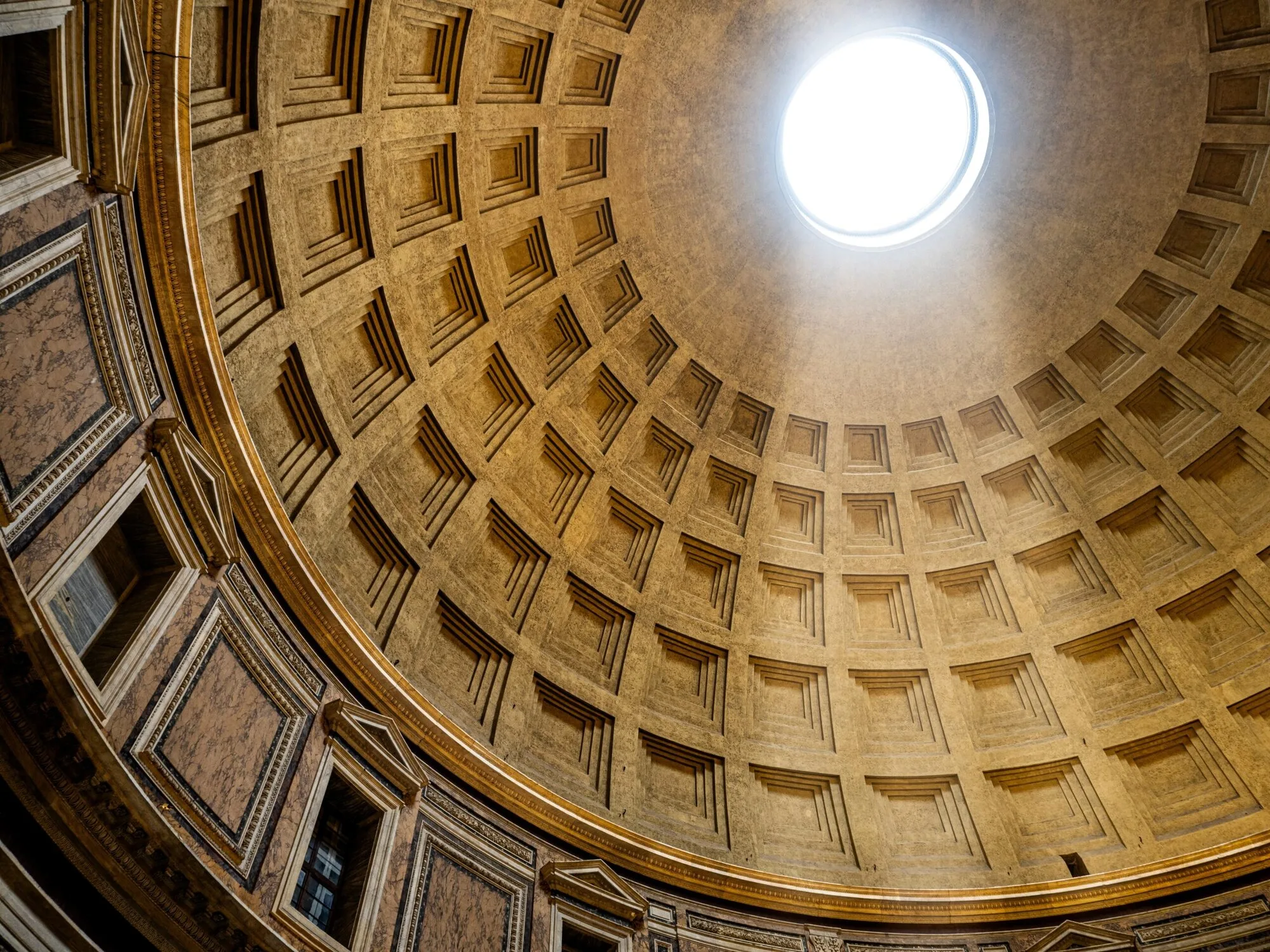
The Pantheon in Rome is raising its tourist entry fee from €5 to €7, effective July 1, 2026.
Italy’s Ministry of Culture announced the change following a new agreement with the Diocese of Rome, the two institutions that jointly manage one of the most visited monuments on earth.
If you are planning a trip to Rome this summer or later this year, this is what you need to know.
What Is Actually Changing?
The price increase applies to the standard full-price adult tourist ticket only. Every other admission category stays exactly as it was.
Rome residents enter free. Visitors under 18 enter free. People with disabilities and their companions enter free.
Visitors between the ages of 18 and 25 continue to pay a discounted rate of €2, which has not changed.
On the first Sunday of each month, entry remains free for everyone. Anyone attending a religious service, and the Pantheon is an active Catholic church as well as a national monument, also enters without charge.
The practical impact for most international tourists is straightforward. A trip to the Pantheon that cost €5 per adult before July 1 will cost €7 after it.
That is a 40 percent increase in the headline ticket price, though in absolute terms it is a €2 difference.
The Pantheon remains one of the more reasonably priced major attractions in Rome, the Colosseum and Vatican Museums charge multiples of that amount.
Heritage experts have described the €7 price as a fair contribution to the maintenance of a building that has been standing for nearly 2,000 years.
What Is The Extra Money Being Used For?
This detail matters and is worth understanding before the narrative around the price hike gets reduced to a simple story about tourists paying more.
The additional €2 per ticket is specifically earmarked for the Piano Olivetti per la Cultura, a state programme named after the Italian industrialist and social thinker Adriano Olivetti, focused on supporting community libraries in disadvantaged areas across Italy.
The Ministry of Culture stated that the new funds “will help support initiatives aimed at strengthening access to culture, promoting cultural and artistic production, enhancing libraries and cultural centres, and incentivising social regeneration projects in marginalised areas.”
The revenue split between the Ministry of Culture and the Diocese of Rome remains at 70 percent and 30 percent respectively, the same structure established when paid entry was first introduced in 2023.
The new agreement between the Ministry and the Diocese formalizes an updated framework for the ongoing management and upkeep of the monument itself, with the additional revenue directly tied to cultural access programs in communities that benefit least from Rome’s tourism economy.
A tourist paying €7 to see the Pantheon in July is, in a small way, funding a library in a disadvantaged Italian neighborhood.
That context does not appear in most of the coverage of the price increase.
How Ticketing Works
The Pantheon does not require the kind of advance planning that Rome’s other major sites demand. Unlike the Colosseum or the Vatican Museums, where booking weeks in advance is often necessary during peak season and entry is timed to specific slots, the Pantheon operates on a more accessible basis.
Tickets can still be purchased on site. Online booking is available through official platforms but functions as a convenience rather than a requirement. There are no timed entry windows for general visitors.
The monument is open daily from 9:00 a.m. to 7:00 p.m. Last admission is at 6:30 p.m. Visitors need to cover their shoulders and knees, clothing deemed disrespectful to the site’s religious character can result in denied entry.
This dress code has been in place for years and is consistently enforced.
The July 1 effective date is important for anyone booking summer travel. If you visit before July 1, you pay €5.
If you visit after July 1, you pay €7. The change is fixed and already announced, there is no ambiguity about timing.
How The Pantheon Got A Ticket Price In The First Place
For most of its nearly 2,000-year existence, the Pantheon was free. Walk up, walk in. No ticket, no queue management, no fee.
That changed in July 2023, when former Italian culture minister Gennaro Sangiuliano negotiated the first-ever entry fee with the Diocese of Rome.
The initial price was set at €5. Revenues were split 70 percent to the Ministry of Culture and 30 percent to the Diocese.
The introduction of that fee in 2023 generated significant criticism at the time, both domestically and internationally, from people who argued that one of humanity’s greatest surviving architectural achievements should not be behind a paywall.
The counterargument from Italian cultural authorities was that maintaining a nearly 2,000-year-old unreinforced concrete dome, managing several million visitors a year, and ensuring the building’s survival for future generations all require resources that the monument cannot generate without an entry fee.
That argument won. The fee stuck. In 2025, approximately 4.5 million people visited the Pantheon, making it one of the most visited monuments in all of Italy, and the revenue from their €5 tickets funded both monument maintenance and the Diocese’s charitable and religious work.
The July 2026 increase is the first upward revision since that original 2023 agreement, and it comes with the new Olivetti cultural funding component that did not exist before.
The Pantheon Itself
The building that tourists are now paying €7 to enter was completed around 125 AD under the Emperor Hadrian, on the site of an earlier structure from 27 BC commissioned by Marcus Agrippa, whose name remains on the inscription above the entrance portico, which is one of the reasons the building was historically attributed to him rather than Hadrian.
It has been in continuous use for nearly two millennia. It was a Roman temple to all the gods, then was consecrated as a Christian church in 609 AD, becoming the Basilica of Santa Maria ad Martyres, the name it still carries officially today.
Its defining architectural feature is the dome: a perfect hemisphere 43.3 meters in diameter, with an oculus, an open circular hole, at its apex, also 43.3 meters above the floor.
The relationship between diameter and height creates a space in which a perfect sphere could be inscribed.
The oculus is the only source of natural light in the building, and when it rains, the rain falls through it onto the slightly convex floor, which drains through hidden channels.
The dome is the world’s largest unreinforced concrete structure, no steel rebar, no modern reinforcement, and it has been standing for 1,900 years.
The Pantheon contains the tombs of the Italian kings Vittorio Emanuele II and Umberto I, and of the Renaissance painter Raphael, whose marble epitaph reads:
“Here lies Raphael, by whom the mother of all things, Nature, feared to be outdone while he lived, and when he died, feared she herself would die.”
Mass is still held in the building on Sundays and on feast days.
Rome And The Overtourism Problem
The Pantheon fee increase is one piece of a larger shift in how Rome is managing the pressure of its own popularity. In 2025, the city introduced a €2 entry fee at the Trevi Fountain, a move that reignited the same debate about charging tourists for access to monuments that were historically public space.
Venice has implemented day-tripper fees and visitor caps. Florence has experimented with reservation systems for popular streets and neighborhoods.
Cities across Europe are grappling with the same fundamental tension. The cultural and economic value of mass tourism versus the physical and social cost of having millions of people flood historic urban centers every year.
Rome attracted over 50 million tourists in 2024 and the numbers continue to grow.
The infrastructure of the ancient city, its streets, its monuments, its sewer systems, its social fabric, was not built to absorb that volume. The ticket price at the Pantheon will not solve that problem.
It does represent a policy stance. That the people who come to consume Rome’s cultural inheritance should contribute to its maintenance and to the broader cultural ecosystem of the country they are visiting.
At €7, the Pantheon remains dramatically more accessible than comparable monuments.
The argument that charging tourists slightly more than the price of a coffee to see one of the greatest buildings in human history constitutes an affront to cultural access is a difficult one to sustain.