Jared Verse Is Headed To Cleveland And Here's Why The Browns Wanted Him
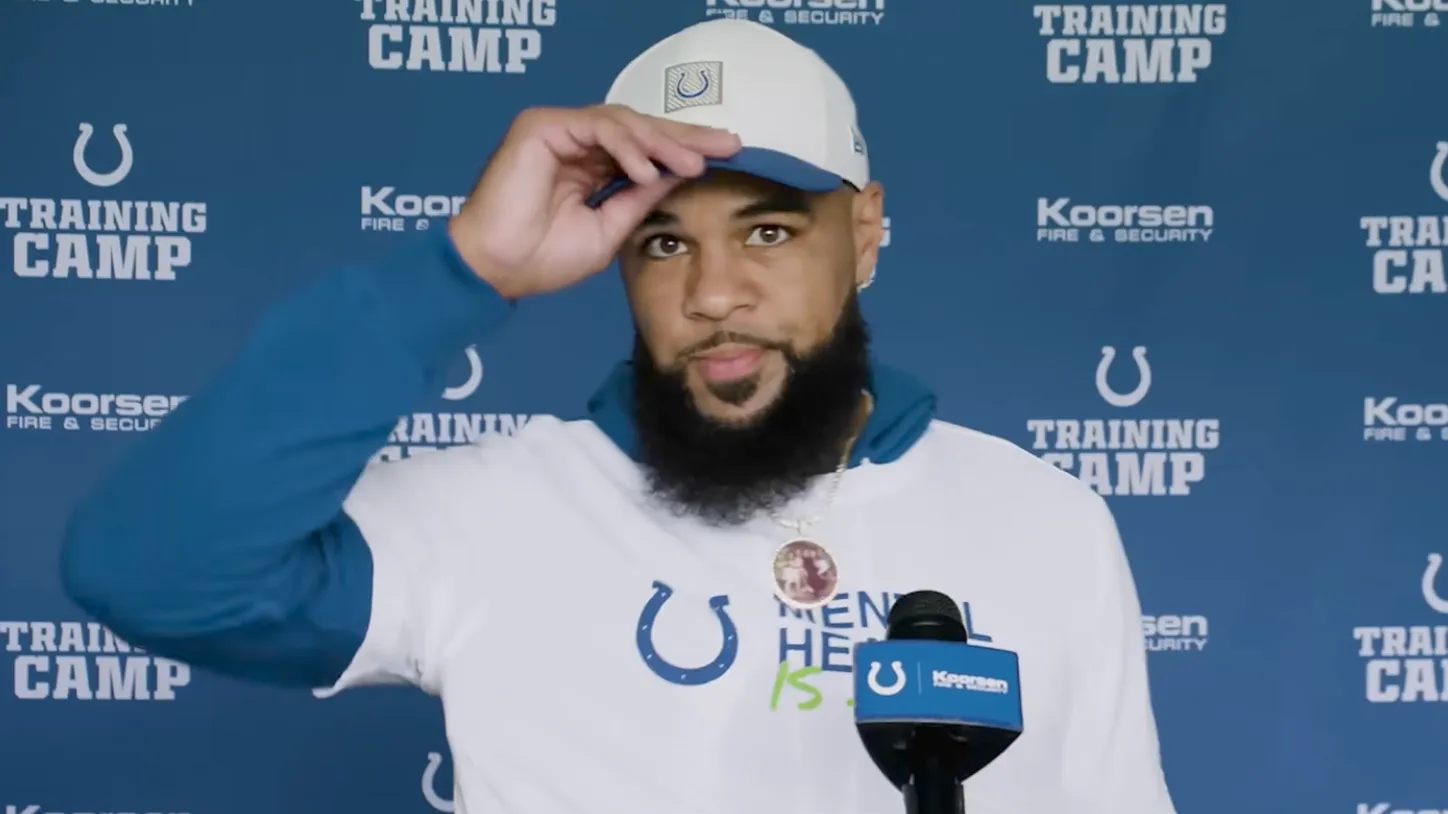
Andrew Berry stood in front of reporters in Berea, Ohio on Tuesday morning and did the thing that general managers who make stunning reversals must eventually do, he explained himself.
For 16 months, Berry had been among the most emphatic voices in professional football on a single subject. Myles Garrett was not available and would not be traded. He said it at the NFL Combine. He said it at press conferences. He called Garrett a career Brown. He said he would not trade him for two first-round picks.
He traded him for Jared Verse and three draft picks.
"I didn't have it on the bingo card, and I realize how strong I've been with Myles," Berry said Tuesday in his first public comments since the deal was completed Monday night.
Then he explained the one thing that changed his mind.
"The [trade] wasn't something that we anticipated, certainly coming into this year or coming into the spring or quite honestly coming out of the draft. But the reality is when you have an opportunity to do something that has strong both short- and long-term benefits, we have to be flexible with it."
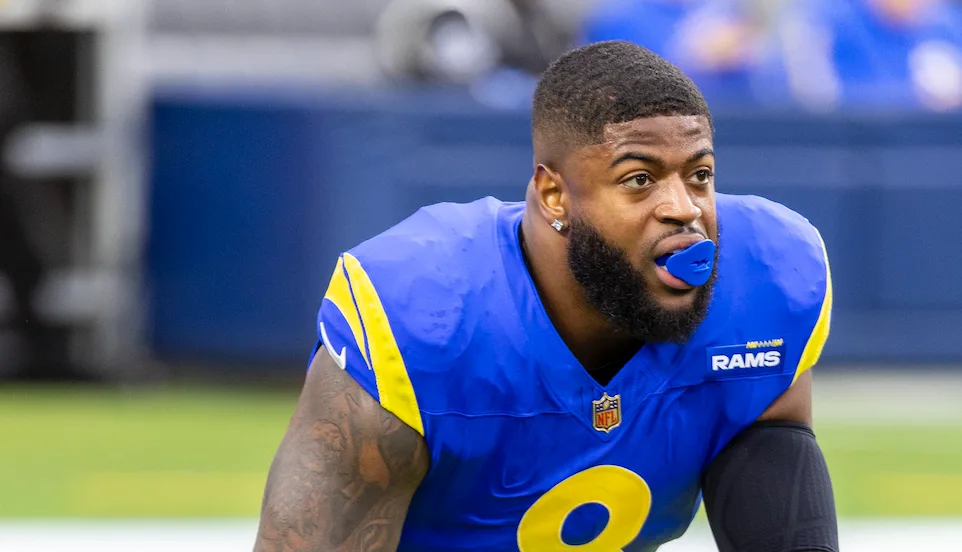
The thing with strong short-term benefits was Jared Verse, the 25-year-old Defensive Rookie of the Year and two-time Pro Bowl pass rusher who was born in Dayton, Ohio, and is now a Cleveland Brown on a $4.1 million cap hit.
"Chief among the considerations to make the decision was the inclusion of Jared Verse, a player our fan base will love," Berry said. "He's a perfect DNA match for our attacking front."
The Player The Rams Did Not Want To Give Up
The specific dynamics of how the Myles Garrett trade got done are what make the Jared Verse piece so important to understand. The Rams had been calling Cleveland about Garrett for months, since early 2025, through the NFL Combine, through the draft. Each time, Berry rebuffed them.
The Browns' March 2026 restructure of Garrett's contract, pushing option bonus payments to just before the regular season to split the dead cap across two years, was publicly presented as a routine financial move, though it was widely interpreted as an opening to a potential deal.
After the draft, talks began to intensify. The Rams wanted Garrett badly enough to keep calling. But there was a specific obstacle in the negotiations that sources told ESPN took weeks to resolve: the Rams were not willing to include Verse in the package.
From the Rams' perspective, giving up Verse was an enormous ask. He had been their 19th overall pick in 2024, had won Defensive Rookie of the Year in his first season, had made two consecutive Pro Bowls and was entering 2026 on a rookie contract cap hit of $4.1 million.
He was, in the language that NFL executives use internally, a cost-controlled star at a premium position, exactly the kind of asset that teams hoard and build around. The Rams had invested a first-round pick in him. They were not interested in moving him.
Eventually, after weeks of negotiation, they agreed, but only if the draft pick compensation was adjusted.
The deal that got done was Verse plus a 2027 first, a 2028 second and a 2029 third. If Verse had not been in the package, Berry said Tuesday, there was no deal.
"He's a huge part of this return," Berry said specifically of Verse.
Why Berry Finally Said Yes
Berry's public posture for 16 months was about as firm as a public posture gets in the NFL. He said he would not trade Garrett for two first-round picks.
He said there was no situation in which Garrett not being a Brown was best for the franchise. He said Garrett would go from Cleveland to Canton when his career was over.
His statement explaining Monday's decision laid out a framework for understanding how a general manager reaches a different conclusion than the one he had been defending publicly. "When the Rams first approached us with the possibility of trading Myles, we remained convicted in our beliefs, but as discussions intensified we were stuck at a legitimate crossroads: do we hold on to a truly generational player who has become the identity of our team, or do we make the difficult decision that we think is best for the organization over the long run? In that framework, the decision became clear, although our emotions were muddled."
The emotional muddling Berry acknowledged is the honest part of the statement. Nobody at the Browns wanted to trade Myles Garrett.
He is the best defensive player in the modern history of the franchise, a two-time Defensive Player of the Year, the holder of the NFL's single-season sack record with 23 in 2025 and a player who has represented the organization with consistency, professionalism and excellence across nine seasons. Trading him is not a thing anyone wanted to do.
But the decision Berry describes reaching was a specific calculation: generational player now versus asset base for the future. The Browns went 4-13 last season. They do not have a franchise quarterback.
They have been in a rebuild that has not yet produced the foundation it was supposed to build. And the Rams were offering Verse — a 25-year-old who can contribute now — plus three premium draft picks in a two-year window when the Browns will be selecting high in the order.
The calculus of what Garrett's contract runs through his age-35 season at $40 million per year versus what three draft picks and a cost-controlled star pass rusher can build came out in favor of the trade.
Who Is Jared Verse?
Verse was born in Dayton, Ohio. He played his college football at Albany, a Division I school without the national profile of Florida State, before transferring to Florida State for a final college season that produced the NFL Draft profile that made the Rams spend the 19th overall pick on him in 2024.
He won Defensive Rookie of the Year in his first professional season, producing at a level that validated the pick immediately. His second season produced 11 sacks, 18 tackles for loss and a second consecutive Pro Bowl selection.
He is 25 years old, a physically gifted edge rusher with the burst and bend to win on the outside and the power to be effective on the inside in specific situations.
He is not Myles Garrett, nobody currently playing football is Myles Garrett, but he is a legitimate starting edge rusher with Pro Bowl credentials on a contract that costs the Browns $4.1 million against the cap in 2026.
He is eligible for a contract extension after this season. Berry signaled Tuesday that the Browns are prepared to pay him. "He's a perfect DNA match for our attacking front," he said, the language of an organization that sees a player as a building block rather than a stopgap.
The homecoming dimension matters in a specific way. Ohio players who return to Ohio are different than Ohio players who leave.
Verse grew up in Dayton, will play in Cleveland and carries a connection to the state that the Browns' fan base will receive immediately. Berry used the phrase "a player our fan base will love" with awareness that the fanbase will need something to love after watching their franchise defensive player leave.
The Draft Capital And The Long Game
Verse is the short-term piece. The draft capital is the long-term piece. Cleveland enters the rest of the process holding two first-round picks in the 2027 NFL Draft, their own pick, which will be high given their 2025 record, and the Rams' pick, which will be lower given Los Angeles is now a Super Bowl contender with Myles Garrett. The 2027 class will produce two players drafted in the first round by the Cleveland Browns.
The 2028 second-round pick from the Rams and the 2029 third-round pick extend the asset base further.
The organization that has been searching for a franchise quarterback since Baker Mayfield departed now has the draft resources to spend the premium capital necessary to find one — without mortgaging the future to do it.
Berry's crossroads framing, generational player now versus asset base for the future — resolved in favor of the future. Jared Verse is the bridge between the two.