
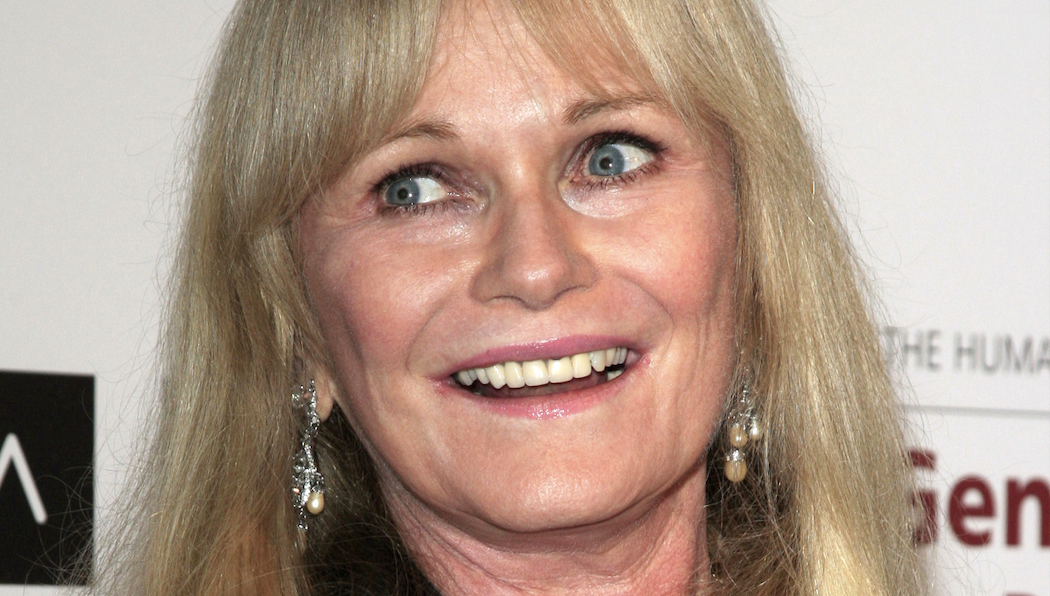
Valerie Perrine, the actress who earned an Oscar nomination for Lenny, won Best Actress at Cannes, and became beloved by a generation of moviegoers as Miss Eve Teschmacher in Superman and Superman II, died Monday at her Beverly Hills home. She was 82.
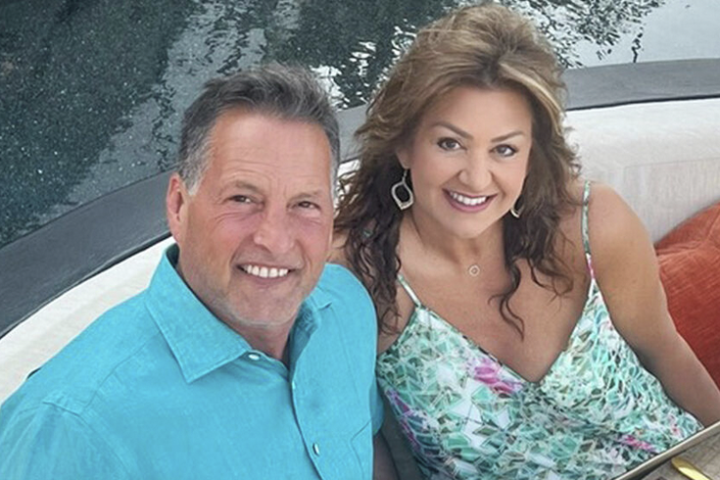
Her death was announced by close friend and caretaker Stacey Souther, who had looked after Perrine for years as she battled Parkinson’s disease.
She was diagnosed in 2015, and the illness eventually robbed her of her mobility and much of her ability to eat and speak. She had been largely bedridden for the past decade.
On Sunday, the day before she died, she spent the afternoon watching all of her old movies.
“She faced Parkinson’s disease with incredible courage and compassion, never once complaining,” Souther wrote.
“She was a true inspiration who lived life to the fullest, and what a magnificent life it was. The world feels less beautiful without her in it.”
The timing carries its own sadness. Gene Hackman, who played Lex Luthor opposite Perrine’s Eve Teschmacher in both Superman films, died in February 2026.
The two had remained close friends since their time on those movies, and people who knew her said his death took a significant toll on her. She was gone within weeks.
Perrine is survived by her brother Kenneth, who is also battling Parkinson’s. He said in a statement, “She lived an extraordinary life most of us can only dream of. She fought till the end and never gave up.”
How Did Perrine Become A Star?
Valerie Ritchie Perrine was born on September 3, 1943, in Galveston, Texas, the daughter of a U.S. Army lieutenant colonel and a mother who had been a professional dancer.
The family moved constantly with her father’s career. She eventually attended the University of Arizona and the University of Nevada Las Vegas, and by 1968 was working as a Las Vegas showgirl.
She became an actress entirely by accident. At a dinner party, an agent overheard something about her and liked what he heard. He asked if she’d ever acted. She said no.
He asked if she could. She said yes. Her only headshot was a topless photo from her showgirl days. She sent it anyway.
She got the part, Montana Wildhack, an adult film actress abducted by aliens, in George Roy Hill’s 1972 adaptation of Kurt Vonnegut’s Slaughterhouse-Five. “That’s how I became an actress,” she said in a 2025 interview.
She had no acting classes, no technique, no method. What she had was instinct. When Bob Fosse cast her as Honey Bruce, Lenny Bruce’s drug-addicted stripper wife, in Lenny (1974) alongside Dustin Hoffman, she found her emotional truth the same way she found everything else.
She thought about a boyfriend who had once broken her heart, and she let that happen in front of the camera. The result was one of the most praised performances of that decade.
What Awards Did Lenny Win?
Lenny earned six Oscar nominations, including Best Picture, Best Director for Fosse, and Best Actor for Hoffman. Perrine’s nomination for Best Actress put her alongside some of the most acclaimed performers of her generation.
She lost to Ellen Burstyn for Alice Doesn’t Live Here Anymore, which is not a disgrace. She also took home the Best Actress prize at the Cannes Film Festival and the BAFTA Award for Most Promising Newcomer.
A year before Lenny, Perrine had made a different kind of history.
In a 1973 PBS broadcast of Steambath, she became the first actress to intentionally expose her breasts on American network television, a moment that said something about who she was… A woman who made bold choices and didn’t particularly apologize for them.
Perrine As Miss Teschmacher
In 1978, Richard Donner’s Superman introduced her to a much wider audience. As Eve Teschmacher, Lex Luthor’s assistant, accomplice, and the woman who ultimately rescues the Man of Steel from Luthor’s trap in exchange for a promise that he will save her mother, Perrine brought warmth and humor to a role that could have been pure decoration.
Christopher Reeve was Superman. Gene Hackman was Luthor. And Valerie Perrine was the woman whose conscience made the whole thing work.
She reprised the role in Superman II (1980). For the rest of her life, strangers would shout “MISS TESCHMACHER!” at her in the street, Gene Hackman-style, and by all accounts she took it in stride.
The Detour
Also in 1980, Perrine appeared in Can’t Stop the Music, the Village People film that is credited, along with one other picture, with inspiring the creation of the Razzie Awards.
She received a Razzie nomination. She was not philosophical about it at the time. “It ruined my career,” she said flatly, more than once. “I moved to Europe after, I was so embarrassed.”
She was not entirely wrong, the film stalled her momentum in major studio productions, but she kept working anyway, appearing opposite Jack Nicholson in The Border (1982), Robert Redford in The Electric Horseman (1979), and Mel Gibson in the 2000 hit What Women Want, where Variety described her small role as one of the film’s funniest moments.
On television she appeared in Northern Exposure, ER, Nash Bridges, The Practice, Just Shoot Me!, and Third Watch, among many others. Her final screen appearance was in Silver Skies in 2014.
In 2020, Souther directed a 36-minute documentary simply called Valerie, which chronicled her career and her battle with Parkinson’s.
Her final wish was to be buried at Forest Lawn Cemetery in Los Angeles. Souther has set up a GoFundMe titled “Help Us Give Valerie Perrine the Farewell She Deserves,” noting that after more than 15 years of fighting the illness, her finances were exhausted.
She wanted a proper sendoff. The people who loved her are trying to give her one.