
Great Value, Walmart’s flagship private brand and the largest food and consumables label in the United States, is getting its first full redesign in more than a decade.
Walmart announced the overhaul on April 15, 2026, describing it as the most extensive private brand update in the company’s history. Nearly 10,000 products will get new packaging.
The price and contents of every one of those products will stay exactly the same.
The rollout begins in May, starting with salty snacks and moving category by category over the next 18 to 24 months.
Cereals, cream cheese and sour cream follow the snack rollout. By the time it is complete, the new look will cover everything from LED lightbulbs to gallons of milk to frozen chicken nuggets, the full scope of a brand that sits in nine out of ten American households and saves an average family 35 percent per year compared to national brand equivalents.
What Is Changing For Great Value?
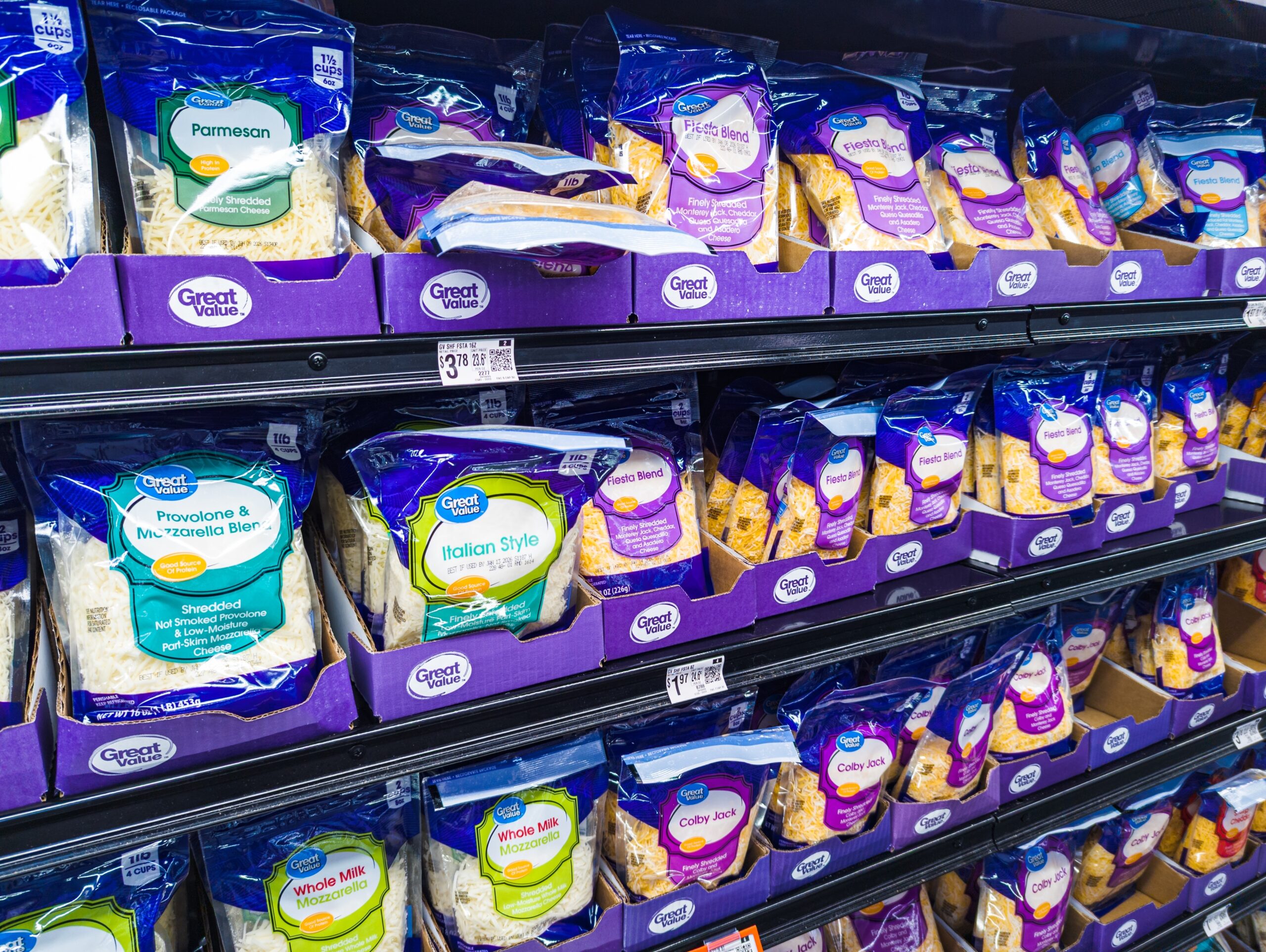
The old Great Value packaging was built to communicate one thing: cheap. Generic fonts, white backgrounds, minimal design investment.
The message was functional and direct, this product costs less than the brand-name version next to it. For 33 years, that was enough.
It is not enough anymore, and Walmart knows it. The new design replaces the small denim-blue oval logo with an oversized navy rectangle.
Graphics are larger. Colors are bolder. The overall aesthetic is described by the company as clean, confident and modern, language that would have felt out of place in a Great Value press release a decade ago but lands differently now that Walmart is competing for customers who earn six figures and still choose to shop there.
David Hartman, Walmart’s Vice President of Creative, said in an interview with CNBC that customer research revealed a specific problem with the existing packaging. Shoppers liked the quality. They liked the price. But they “didn’t particularly feel very proud to display it in their home or with their families.”
That is a frank admission from one of the largest retailers on earth, and it explains the entire logic of the redesign. The goal, Hartman said, is for customers to “want to be proud to have it in their home, to share it with their friends and family.”
A brand that has been in nearly every American household for decades is now trying to be a brand those households want to show off.
The functional improvements are real as well. Nutrition information and benefit claims will be placed in consistent positions across all Great Value food items, making it faster to compare products.
Visual cues for identifying items have been standardized, which matters both for shoppers navigating shelves and for associates picking orders.
Hartman described the goal as building a system that works “clearly and intuitively across thousands of individual items, so customers can find what matters, faster.”
At the scale Walmart operates, 10,900 stores across 19 countries, serving approximately 280 million customers weekly, consistency in packaging is not just an aesthetic choice, it is a logistics decision.
Why Private-Label Sales Are Exploding
The timing of this overhaul is not accidental. Private-label sales in the United States reached $330 billion in 2025, accounting for roughly a quarter of the entire consumer packaged goods market, according to research firm Circana.
Store brands are growing nearly three times faster than national brands.
The Private Label Manufacturers Association has documented a structural shift in how American consumers think about store brands, from a fallback option to a deliberate choice made by shoppers who have tried the products and decided they do not need to pay more for the name on the label.
Multiple forces are driving this. Financially stretched consumers have been choosing store brands out of necessity, but they are staying with them out of preference.
Trust in the quality of private label products has risen steadily. And younger shoppers, particularly Gen Z, are coming of age with store brands as a default rather than a fallback, Numerator’s research projects that Gen Z will become the most loyal private label shoppers in the country by 2026.
Equally significant is the movement in the other direction, higher-income households are now showing up at Walmart in meaningful numbers.
Shoppers with household incomes above six figures have become a major market for the retailer, which means Great Value’s audience has changed.
A brand that was once primarily competing for budget-constrained consumers now needs to hold the attention of customers who have the option to buy the national brand but are choosing not to. That requires a different kind of package.
Who Is Walmart Competing With?
The competitive environment for private label has changed dramatically. Aldi, the fastest-growing grocery chain in the United States, runs its operation on an almost entirely store-brand model, and its success has demonstrated that consumers will choose a well-made store brand over a national brand even without a major price gap.
Costco’s Kirkland Signature has built one of the most trusted labels in American retail.
Amazon launched its own private grocery label in October 2025, adding a direct competitor with deep logistical infrastructure and an enormous customer base.
The upscale end of the market has also applied pressure in ways that might seem distant from a $1.50 box of Great Value cereal but are not. Direct-to-consumer food brands like Brightland, Fishwife and Fly by Jing built loyal followings largely on the strength of their packaging, proof that design can drive purchase decisions in grocery aisles the same way it does in higher-end retail categories.
Walmart has taken note. The Great Value redesign borrows from that playbook: bolder graphics, cleaner systems, packaging that communicates confidence rather than just cost.
What Will Stay The Same?
Scott Morris, Walmart’s Senior Vice President of Private Brands, was direct in his statement about what the redesign does not touch.
“Great Value has earned customers’ trust over decades, and while the brand is getting a fresh, modern look, what’s inside isn’t changing. Customers will continue to find the same trusted products at the same Every Day Low Prices they rely on.” The formulas are unchanged. The prices are unchanged. The only thing moving is the box.
Walmart also tied the redesign to a broader quality commitment. The company announced last fall that it intends to remove synthetic dyes from all of its food private brands by January 2027.
The new design system will incorporate reduced packaging where possible as part of Walmart’s sustainability goals.
A standardized approach to nutrition labeling across all Great Value food products means that the redesign is also, in a practical sense, a health information initiative, making it easier for shoppers to read and compare what they are buying.
The rollout will be visible on shelves starting in May 2026, though the full transition across nearly 10,000 items will take the better part of two years to complete.
By the end of that process, every Great Value product, from the jalapeño kettle chips to the laundry detergent to the buttermilk pancake mix, will carry the same visual identity.
For the largest private brand in American food retail, it is the first time that has ever been true.