
The American Customer Satisfaction Index released its annual airline rankings on April 21, 2026, and for the first time in two years there is a new airline at the top.
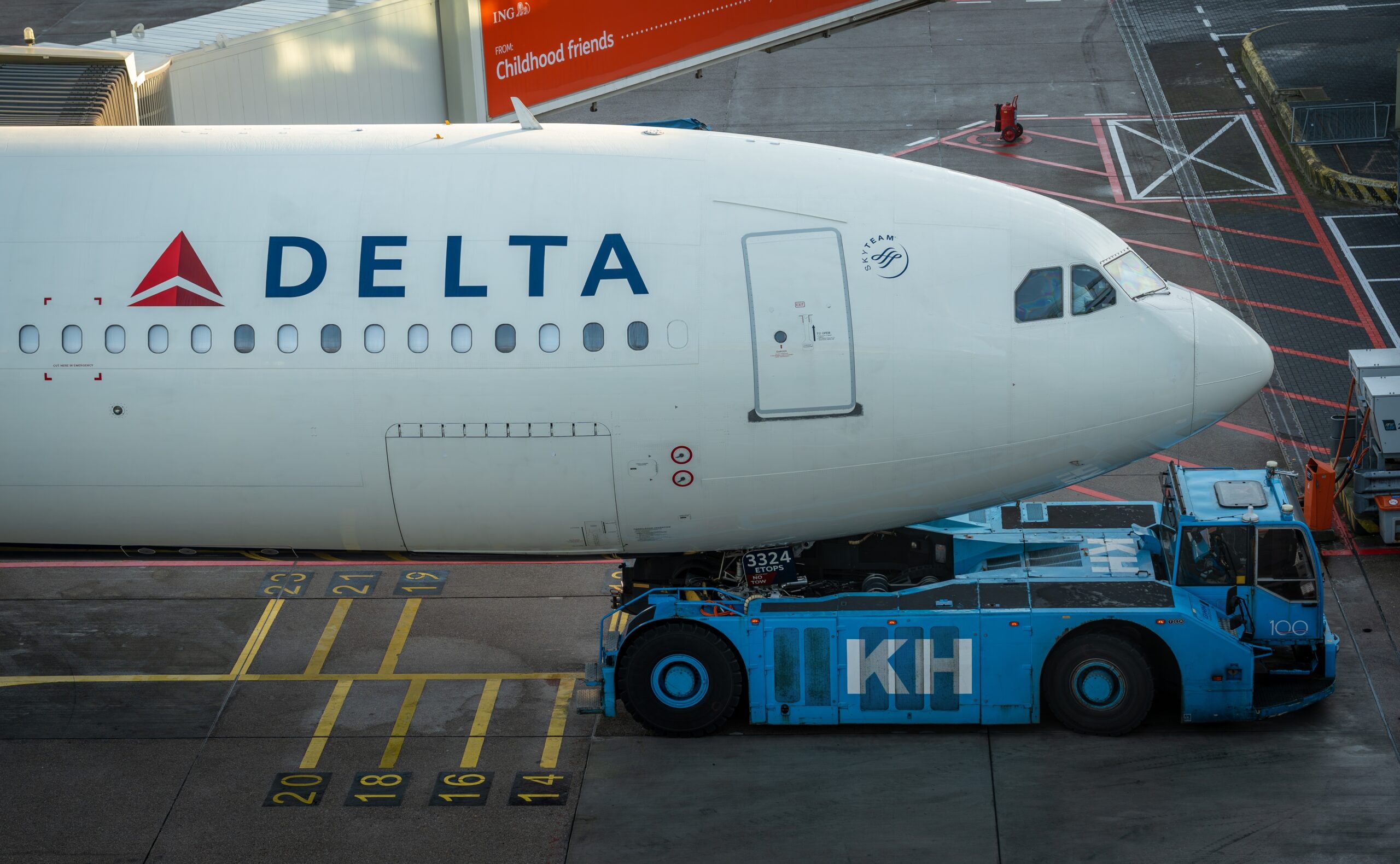
Delta Air Lines replaced Southwest Airlines as the nation’s most satisfying carrier according to customers, ending Southwest’s brief run at the summit after only one year and reclaiming territory Delta had held for four consecutive years before that.
The full rankings, based on 14,910 surveys collected from randomly selected travelers between April 2025 and March 2026, tell a story about what passengers are rewarding right now, and what they are punishing.
Here is the complete breakdown.
Delta Comes In At #1… Again
Delta Air Lines earned a score of 79 out of 100, up 3% from 2025, putting it back in the top position it held from 2020 through 2024.
The airline had ceded that ground to Southwest in last year’s study and has now reclaimed it.
Delta’s improvement was broad-based rather than driven by any single factor, the airline benefited from the same industry-wide technology gains that lifted scores across the board, including improvements in free in-flight Wi-Fi and better communication around delays and cancellations.
Delta had told the Wall Street Journal in January 2026 that it planned to reclaim the top spot. It did.
American Airlines Had The Biggest Turnaround
The most striking number in this year’s rankings is not Delta’s score. It is American’s.
American Airlines posted a 7% improvement, the largest gain of any major carrier, bringing its score to 78 and putting it in a tie for second place with JetBlue.
That improvement almost completely reverses a steep decline American suffered in the prior year’s study.
The driving force was the AAdvantage loyalty program. American made significant changes to AAdvantage in early 2025 that were initially met with resistance, particularly from frequent flyers and business travelers who felt the program had become less generous.
A year later, those same customers appear to have come around. The ACSI study found that AAdvantage ratings rose substantially in 2026, with business travelers specifically citing the program’s perceived simplicity, generosity, and utility compared to its major competitors.
American’s improvement is concentrated among business travelers — a segment the airline has historically struggled to retain in competition with Delta and United.
If that trend holds, it represents a meaningful shift in how premium customers view the carrier.
JetBlue Holds Steady At Second
JetBlue earned a score of 78, up 1% from 2025, tying American for the second spot.
The airline’s score reflects consistent if unspectacular performance across the categories the ACSI measures.
JetBlue’s hybrid model, it does not offer a domestic premium cabin product in the traditional sense, though that is expected to change in 2026, limits its ceiling in certain satisfaction categories, but the core customer experience remains competitive with the full-service carriers.
Southwest‘s Rough Year
Southwest Airlines held the No. 1 position in the 2025 ACSI study. In 2026 it fell to No. 4 with a score of 77, down 4%.
The drop is not entirely surprising given the number of structural changes the airline made over the past 18 months, each of which moved it away from the policies that had defined it for decades.
Southwest began charging for checked bags in mid-2025, ending the free bags policy that had been the cornerstone of its customer proposition for more than 50 years.
Then, in January 2026, it implemented assigned seating, a fundamental change for an airline whose open seating model was embedded in its brand identity.
The ACSI also found that Southwest required larger passengers to purchase more than one seat, a policy that generated significant negative press.
The specific areas where Southwest’s scores declined tell the story clearly. Customers rated the airline lower on flight crew courtesy, gate staff courtesy, and call center experience, the human touchpoints of the Southwest experience that had historically been its differentiator.
The ACSI described customers “feeling less of the ‘LUV’ than before,” a reference to Southwest’s NYSE ticker symbol and longtime brand positioning around warmth and friendliness.
Southwest is still a well-regarded carrier by industry standards. A score of 77 would have placed it at or near the top in most prior years.
The distance between where it was and where it is now reflects the cost of changing what your customers loved about you.
United And Alaska
The ACSI study did not break out specific scores for United and Alaska Airlines in its public release summary, though both airlines appear in the broader rankings below the top four.
United has been focused on its premium cabin expansion and the Polaris business class product internationally, while Alaska, now operating Hawaiian Airlines under its group umbrella following the 2026 integration, is building out a new loyalty program called Atmos Rewards that launched in August 2025.
Neither airline made headlines in this year’s ACSI study.
Frontier Made The Biggest Improvement Among Budget Carriers
Among the ultra-low-cost carriers, Frontier Airlines was the standout with a 6% improvement bringing its score to 69.
The ACSI attributed the gain to better performance in the areas of trip planning, flight schedules, reservations, and in-flight services, the operational basics that budget airline customers care most about when they strip away everything else.
Frontier’s consistent focus on running clean operations without dramatic policy changes appears to be paying off in how customers experience the airline.
Spirit Comes In Dead Last
Spirit Airlines landed at the bottom of the 2026 rankings with a score of 66, down 4%.
The ACSI cited “ongoing reputational challenges” as a factor. Those challenges are not abstract, Spirit filed for bankruptcy and has been publicly uncertain about its ability to fulfill its financial obligations.
The airline ceased service at Phoenix Sky Harbor International Airport in January 2026. Customers appear to be incorporating that uncertainty into how they rate their experience, which makes sense, confidence in an airline’s future is not entirely separable from how you feel about flying on it today.
Why The Industry Is Improving
Despite the movement within the rankings, the most significant number in this year’s ACSI study is the industry average.
Airlines as a whole scored 76 in 2026, up 3% from 2025 and just one point below the all-time high of 77 set in 2024. That broad improvement has two primary drivers.
The first is free in-flight Wi-Fi. Most major airlines now offer complimentary internet access as a benefit of membership in their loyalty programs, which are free to join.
Customer satisfaction with in-flight internet access rose 20% year-over-year, the largest single-category jump in the study.
For a generation of travelers who expect connectivity everywhere, the shift from paid to free Wi-Fi is a meaningful quality-of-life improvement.
The second is better communication around disruptions. Airlines have invested significantly in systems that notify passengers earlier and more accurately about delays and cancellations.
Customer ratings for the usefulness of flight information rose 15% year-over-year.
The ACSI described both of these as a “significant milestone” in airlines using technology to improve the customer experience.
For passengers who have spent years being blindsided by last-minute gate changes and cryptic delay announcements, clearer real-time information genuinely changes how a disrupted flight feels.
Business travelers are seeing the sharpest improvement of any segment, with complaint rates dropping significantly compared to leisure passengers.
When complaints do happen, satisfaction with how they are handled is substantially higher than it was in 2025.
The overall picture is an industry that has recovered meaningfully from the chaos of the post-pandemic years, and that is, slowly and unevenly, getting better at the parts of flying that make passengers choose one airline over another when they have a choice.