
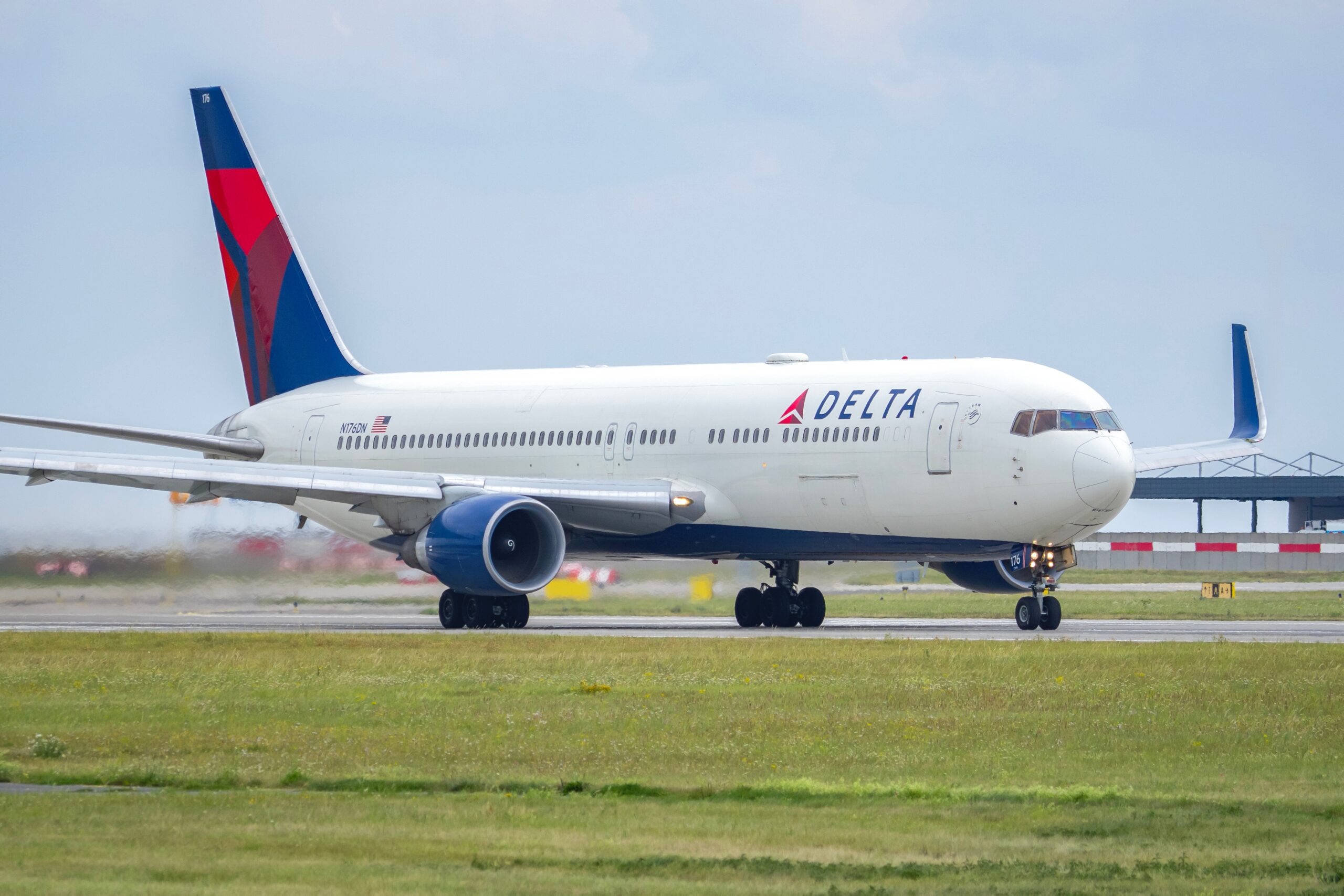
Delta Air Lines is changing what you get for free on its flights, and whether that change is good news or bad news for you depends entirely on how far you are flying.
Starting May 19, 2026, Delta is eliminating all complimentary snacks and beverages on flights under 350 miles for passengers in Main Cabin and Delta Comfort+.
At the same time, approximately 600 daily flights that previously received only a limited express drink service will be upgraded to full snack and beverage service.
Two changes happening simultaneously. One takes something away. The other gives something back. Which one affects you depends on your route.
Here is what is changing, which routes are affected and what to do if your flight is one of the 450 that will no longer have a drink cart.
How Do You Know If Your Plane Will Have Snacks?
Delta is replacing a complicated tiered service structure with a simpler one. Under the old system, flights under 250 miles had received no service since 2015, flights between 251 and 499 miles received what Delta called Express Service, water, coffee and tea but no snacks, and flights 500 miles and above received full service.
That middle tier, Express Service, is being eliminated.
Under the new system that takes effect May 19, the rule is straightforward. Under 350 miles, no service at all. At or above 350 miles, full beverage and snack service.
Delta First Class is entirely unaffected. Regardless of flight distance, First Class passengers continue to receive full service on every flight.
Which Flights Are Losing Service?
Approximately 450 daily Delta flights will go from receiving Express Service, that limited round of coffee, tea or water, to receiving nothing at all.
The cutoff is 349 miles, meaning any flight shorter than 350 miles operated in Main Cabin or Comfort+ becomes a no-service flight on May 19.
The specific routes that fall below the threshold include some of the busiest short-haul corridors in the United States.
Los Angeles to San Francisco, a route that sees enormous business travel volume between two of the country’s largest cities, falls well under the cutoff. New York JFK to Boston falls below it.
Atlanta to Charlotte falls below it. Passengers on any of these flights who were accustomed to at least receiving a cup of coffee or a bottle of water during their short hop will need to get that drink before they board starting May 19.
Delta recommends grabbing food and drinks at the terminal before short-haul flights.
Airport concessions, grab-and-go retailers and coffee kiosks inside the security checkpoint are the practical options.
Travelers are also permitted to bring their own food and non-alcoholic beverages through TSA security as long as any liquids meet the standard 3.4-ounce carry-on rule.
Beverages purchased from airport concessions past the security checkpoint can also be brought on board.
Which Flights Are Getting An Upgrade?
The part of this story that has received less attention is that the same policy change that eliminates service on the shortest flights is also upgrading service on a significant number of longer ones.
Approximately 600 daily Delta flights that had been receiving only Express Service, the limited water, coffee and tea offering, will now receive full beverage and snack service.
These are flights in the 350 to 499 mile range that were previously caught in a middle tier that gave passengers some service but not the full menu.
Under the new policy, those flights get the complete beverage cart with soft drinks, juices, the full snack selection and everything else that comes with the standard Delta domestic service.
If your flight falls in that 350 to 499 mile range, say Atlanta to Nashville, or Los Angeles to Las Vegas, or New York to Washington DC, you may actually find yourself getting more on May 19 than you got before.
This is the detail Delta emphasized in its official statement, “Customers traveling in Delta Comfort and Delta Main on flights 350 miles and above will now receive full beverage and snack service.”
The upgrade for those 600 flights is as real as the elimination for the 450.
Why Is Delta Doing This?
Delta’s stated reason is operational consistency and the practical realities of what cabin crew can actually accomplish on very short flights.
On a flight under 350 miles, the time between when the fasten seatbelt sign turns off after takeoff and when descent preparation must begin can be as little as 15 minutes.
In that window, flight attendants are expected to move through the entire aircraft with a beverage cart, serve every row and collect trash, all while managing their other safety responsibilities.
That is an extremely compressed timeline that forces crew to rush, creates stress and produces the kind of inconsistent service experience where some passengers get served and others do not, simply depending on where in the cabin they sit.
The rear of the aircraft on a short flight could be waiting for service that never arrives because descent has already begun.
Aviation insider JonNYC, who first posted the internal service documents showing the changes on April 30, noted that Delta’s decision reflects operational challenges that flight attendants face on short flights rather than straightforward cost-cutting.
Delta’s own statement framed it similarly:
“Even on the small number of flights without beverage service, our crew will continue to be visible, available, and focused on caring for our customers.”
Whether passengers accept that framing depends on their particular experience.
The TikTok reactions that followed the announcement were not particularly sympathetic to the operational argument.
One user summed it up in a comment that has circulated widely, “Ticket is $476 but I can’t get a $1.75 pack of Cheez-Its.”
Others compared it to the broader industry trend of reducing service while maintaining or increasing prices, with one post reading, “And this is why competition should exist.”
Where Delta Sits Compared To Its Competitors
The May 19 change makes Delta the most restrictive of the three major legacy US carriers in terms of where complimentary service begins.
United Airlines currently begins snack service on flights of 300 miles or more. American Airlines begins at 250 miles.
Southwest Airlines also begins around 250 miles. Delta’s new 350-mile threshold is higher than all of them.
For context, Delta’s shortest eligible routes, those right at the 350-mile threshold, are roughly equivalent to the distance from New York to Detroit or Los Angeles to San Francisco.
Below that, passengers are now in the same territory as budget carriers. Allegiant and Frontier have never offered complimentary snacks on their flights, instead operating a buy-on-board model where passengers pay for everything beyond a seat.
Delta in Main Cabin on a 300-mile flight will now function the same way, nothing included.
The policy does not appear to introduce a formal buy-on-board option on the affected short-haul flights, meaning the choice is not between paying and not paying but between bringing your own and going without.
How To Know If Your Flight Is Affected
The rule is the distance. Any Delta flight under 350 miles in Main Cabin or Comfort+ is a no-service flight starting May 19. Any Delta flight at 350 miles or more receives full service.
The simplest way to check is to look at your booking confirmation and find the route distance, which is typically listed on airline websites and apps.
If you are flying a short domestic segment, particularly if you are connecting through one of Delta’s hubs in Atlanta, New York, Los Angeles or Minneapolis on a short regional leg, check the mileage of that specific segment before assuming a drink will be available.
Passengers whose flights are affected and who want something to drink have two options: purchase something at the airport before boarding, or bring something through security.
The 3.4-ounce liquid rule applies to anything you pack before reaching the security checkpoint. Beverages bought past security, water bottles from the airport shops inside the terminal, can come with you on board.
The policy takes effect May 19. If you have a short Delta flight before that date, service continues as it does today.