
Andy Reid told reporters on Saturday May 2, 2026, that Patrick Mahomes is on track to participate in the Kansas City Chiefs’ first organized team activities later this month, the clearest positive signal yet about the three-time Super Bowl champion’s recovery from the torn ACL and LCL he suffered in December.
“He is in a good position to be able to do some things,” Reid said, per ESPN’s Nate Taylor.
“If he can do some things, [he’ll do it]. Phase 2, remember, there’s no contact and there’s no offense versus defense. It’s Phase 3 that you get into that. He’s in a position where he can do everything, I think.”
The Chiefs’ first OTAs are scheduled for May 26-28, with a second window running June 1-3. A mandatory minicamp follows. Contact practices do not begin until training camp in July.
For Mahomes, the fact that he could be participating in any team football activities less than six months after ACL surgery is the kind of positive update that Chiefs fans and NFL observers were hoping for but not counting on.
The Injury That Changed The Chiefs’ Season
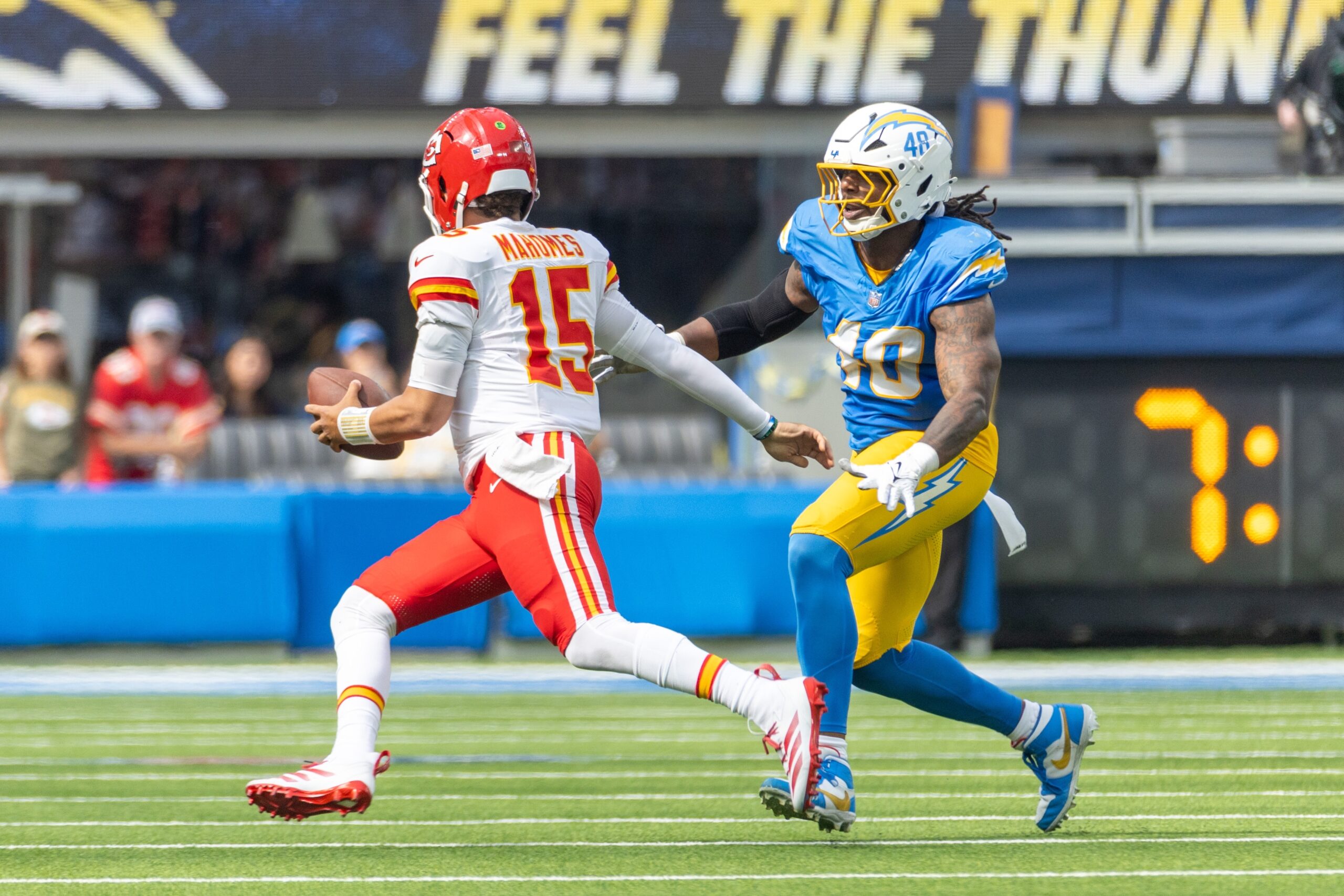
Mahomes suffered a torn ACL and LCL in his left knee on December 14, 2025, during a Week 15 game against the Los Angeles Chargers.
He was injured and underwent surgery the following day. The loss to the Chargers was doubly damaging, it also sealed the Chiefs’ fate as a team that would miss the postseason, ending the most remarkable run of consecutive playoff appearances the sport had seen in generations.
In the Mahomes era, missing the playoffs had simply not happened. From the moment he became the full-time starter in 2018 through the 2024 season, the Chiefs had appeared in the AFC Championship Game every single year without exception, a streak that included three Super Bowl titles.
The 2025 season ended without a postseason appearance, making it the first time in eight seasons as a starter that Mahomes had not reached at least the conference championship.
The injury itself, a torn ACL and torn LCL in the same knee, is among the most serious that a skill position player can sustain.
ACL tears alone carry a standard recovery timeline of 9 to 12 months. The LCL component adds complexity.
The surgery that Mahomes underwent on December 15 was the beginning of what was always projected to be a long road.
How The Recovery Has Progressed
The early timeline established by the medical team, 9 to 12 months, set Week 1 of the 2026 regular season as a best-case target.
For context, Week 1 falls in early September, roughly nine months after the December surgery. That window was always the optimistic end of the projection, not the baseline.
In late March 2026, ESPN’s Adam Schefter reported that Mahomes was “progressing” in his rehabilitation and was “tracking” to be ready for the start of the 2026 campaign.
The report was encouraging but appropriately hedged, tracking in the right direction and confirmed ready to play are different statements.
Reid’s Saturday comments advance the picture meaningfully. Telling reporters that Mahomes is in a position to do things at OTAs, and that he might be able to do everything, reflects a medical and conditioning assessment that is measurably more positive than where the recovery stood in early spring.
ACL rehabilitation follows a relatively predictable progression of milestones, range of motion, strength rebuilding, return to movement patterns, return to running, return to sport-specific activity, and the ability to participate even in a limited capacity at May OTAs suggests Mahomes has been moving through those milestones on schedule or ahead of it.
Mahomes himself stated in January 2026 that his goal is to be ready for Week 1 with no restrictions.
His doctor indicated that was a possibility. Reid’s update is consistent with that goal remaining realistic.
What Will Mahomes Be Doing At OTAs?
One of the most important contextual details in Reid’s statement is the phase structure of the NFL offseason program.
The OTAs Mahomes is being cleared to participate in fall under Phase 2 of the program, a period in which there is no contact and no offense versus defense work.
The football activities are structured, organized and supervised but they carry none of the physical risk of full-speed team periods.
Phase 3, which comes later and involves more advanced team drills, introduces a different level of complexity and load.
Mandatory minicamp and training camp bring progressively more intensity.
Reid was specifically noting that the Phase 2 OTAs are a much safer environment than Phase 3, and that Mahomes being able to participate in Phase 2 is encouraging without requiring him to absorb any of the stress that would come later.
“Phase 2, remember, there’s no contact and there’s no offense versus defense,” Reid said. “It’s Phase 3 that you get into that.”
The framing matters because it clarifies what participation at these OTAs actually means.
Mahomes will not be taking live snaps against a defense. He will not be making cuts at full speed.
He will be working through routes and throwing mechanics in a structured, non-contact environment that gives the coaching and medical staff information about his recovery status while exposing him to minimal risk.
If his elbow tolerates the throwing load and his knee tolerates the movement patterns, it provides real data about where the recovery actually is.
Even limited participation, showing up, throwing passes, engaging with the offense in the structure of team practice without contact, is a meaningful development for a quarterback who had major knee surgery less than six months ago.
The Justin Fields Equation
The Chiefs’ offseason moves were shaped directly by the uncertainty around Mahomes’ health.
The most significant addition was the trade for Justin Fields, a mobile, experienced NFL starting quarterback who can step in as the full-time starter if Mahomes is not ready for Week 1 or suffers a setback during the recovery.
Fields provides the Chiefs with something most teams cannot have: a credible backup plan at quarterback.
He has started games, experienced playoff pressure, and demonstrated the kind of athleticism that fits the modern NFL.
He is not a replacement-level player filling a spot. He is someone the Chiefs could genuinely build a game plan around if the situation required it.
The presence of Fields on the roster also changes the risk calculus for Mahomes’ recovery. The Chiefs do not need to rush him.
They have a safety net that allows the medical team to make decisions based on what is genuinely best for Mahomes’ long-term health rather than what the team needs him to do by a specific date.
Reid’s comments about prioritizing Mahomes’ long-term health over short-term participation reflect exactly that dynamic.
Chris Oladokun and seventh-round rookie Garrett Nussmeier round out the quarterback depth chart.
Between the four players on the roster, the Chiefs have prepared thoroughly for the possibility that Mahomes is not at full strength or available immediately.
The Week 1 Goal And What Comes Next
Mahomes has been clear about where he wants to be when the regular season begins.
His goal is Week 1 with no restrictions, not a limited version of himself managing through pain, but the full quarterback that has won three Super Bowls and changed the standard for what NFL offenses can do.
His doctor confirmed that is a possibility. The late March tracking report confirmed the trajectory is positive.
Reid’s Saturday update confirms that trajectory has continued through five months of rehabilitation.
The OTAs at the end of May will provide the next concrete data point, actual on-field participation from a quarterback who is trying to beat one of the most demanding recovery timelines in professional sports.
The Chiefs’ full schedule for 2026 had not yet been announced as of Reid’s comments.
Week 1 opponents are typically released alongside the full schedule announcement in late May. When that schedule is released, the Chiefs and everyone watching will know exactly what game Mahomes is targeting for his return.
The organization that has won three Super Bowls in four years, that went to the AFC Championship Game every single season of the Mahomes era, that watched its dynasty derailed by a torn ACL in December, now gets to watch that quarterback work his way back toward what he was before the injury and what he intends to be again.
Reid’s assessment on Saturday was “he’s in a position where he can do everything, I think.” For a franchise whose entire identity is built around what Patrick Mahomes can do, everything is exactly what they need.