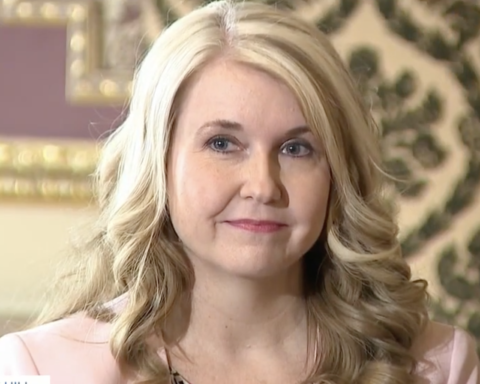

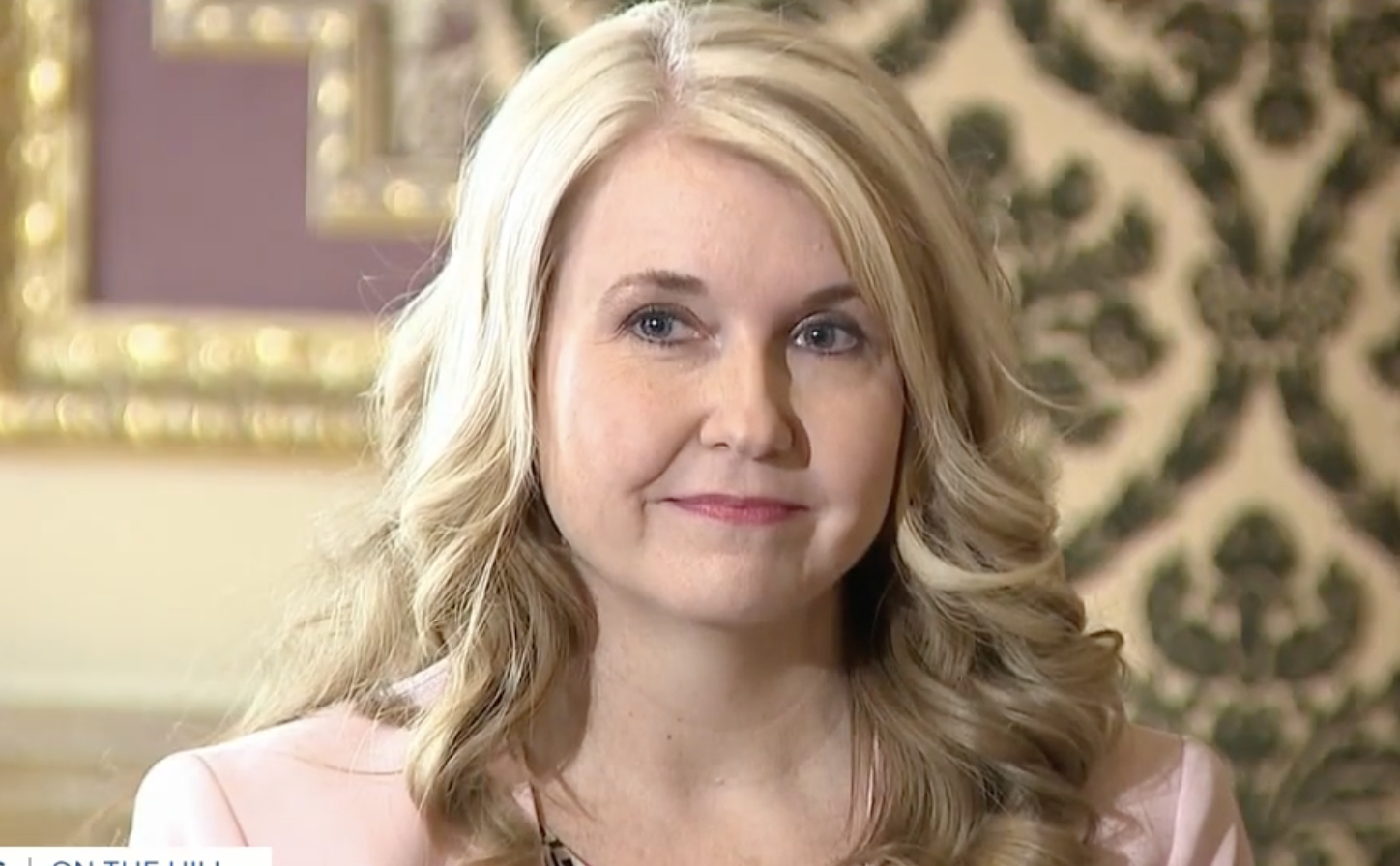
Utah Supreme Court Justice Diana Hagen submitted her resignation to Gov. Spencer Cox effective immediately on Friday May 8, 2026, ending her four-year tenure on the state’s highest court before a planned independent investigation into allegations about her personal life could begin.
She denied wrongdoing. She denied adultery. She denied that her personal relationships ever compromised her judicial duties.
Then she resigned anyway, to protect her family, she wrote, from the exposure of what she described as the painful dissolution of a thirty-year marriage.
“My family and friends did not choose public life,” Hagen wrote in her resignation letter.
“They do not deserve to have intensely personal details surrounding the painful dissolution of my thirty-year marriage subjected to public scrutiny. I would love nothing more than to continue serving the people of Utah as a Supreme Court Justice, but I cannot do so without sacrificing the privacy and well-being of those I care about and the effective functioning and independence of Utah’s judiciary.”
The allegations against her, an alleged improper relationship with an attorney who represented plaintiffs in Utah’s high-profile redistricting case, were investigated by the state’s Judicial Conduct Commission, found to lack credibility and dismissed in preliminary proceedings.
That dismissal was not enough for Utah’s Republican leadership, who announced an independent investigation anyway. Three weeks later, Hagen was gone.
The Allegation And Where It Came From
The complaint that set this in motion was filed in December 2025 by a Provo-based attorney who submitted it to Chief Justice Matthew Durrant and the Judicial Conduct Commission.
The attorney was acting on information provided by Tobin Hagen, Diana Hagen’s ex-husband, who had described his suspicions about his estranged wife’s relationship with David Reymann, an attorney who had represented the League of Women Voters of Utah and other plaintiffs in Utah’s redistricting lawsuit.
Tobin Hagen told the filing attorney that Diana Hagen and Reymann had exchanged text messages that started as “silly” and became “more suggestive” over time.
He did not approve of the complaint being filed but acknowledged that the details it contained were accurate. Diana Hagen denied the adultery allegations directly and specifically in a letter she submitted to the Judicial Conduct Commission.
“My ex-husband’s accusations of adultery are false,” she wrote. “The insinuation that I was ethically compromised while carrying out my official duties is patently false.”
She added:
“I was faithful to my ex-husband for more than 30 years. I never engaged in extramarital sex with anyone prior to our separation.”
Reymann also denied the allegations, calling them false.
State Sen. Todd Weiler, a Republican from Woods Cross, offered a more grounded characterization of how the relationship between Hagen and Reymann was perceived within Utah’s legal community.
He said the friendship between them was well known, that Hagen had not tried to hide it at multiple social gatherings, and that it was being characterized as something more scandalous than those who had actually observed it believed it to be.
The Judicial Conduct Commission
The Judicial Conduct Commission, described on its website as an independent body comprising state lawmakers, judges and members of the public, conducted a preliminary investigation based on the December 2025 complaint.
A preliminary investigator concluded that the complaint lacked credibility. The full commission voted not to pursue the matter further.
That finding should, under normal circumstances, have ended the public proceedings.
The independent oversight body had looked at the allegations and determined they did not warrant full investigation. In most circumstances, that is where the process stops.
Utah’s Republican leadership decided to keep going anyway. In April 2026, Gov. Cox, Senate President Stuart Adams and House Speaker Mike Schultz announced they would conduct an independent investigation, separate from the commission’s process, because they were not satisfied with how the commission had handled the matter.
Gov. Cox articulated the standard he was applying at a monthly press conference in April.
“When you sign up to be a judge in this state, you get held to a higher standard, period,” he said. “Everyone knows this. This is part of the deal. If you want your personal life to always be personal, then don’t be a judge.”
The Utah Supreme Court pushed back publicly on how the process had been handled, specifically condemning the Utah House’s decision to publicly release the complaint records, which the court characterized as potentially unlawful.
Chief Justice Durrant and the full court had defended Hagen’s conduct and clarified that an investigation had already been completed when the political leaders announced they would conduct their own.
The tension between the judicial and legislative branches of Utah government was not new.
Utah’s judiciary has been in the political crosshairs of Republican legislators over decisions in cases involving abortion and redistricting, a context that shaped how Hagen’s situation was interpreted by observers on all sides.
The Redistricting Case That Made This Political
Understanding the political temperature surrounding Diana Hagen’s situation requires understanding the redistricting case that put her name in headlines before any allegations were made.
Utah’s Republican-controlled Legislature drew congressional maps that maintained four solidly Republican seats, maps that effectively ensured GOP dominance across the state’s congressional delegation.
Utah voters had approved a ballot proposition establishing an independent redistricting commission to draw those maps rather than having the Legislature control the process.
The Legislature moved to override that commission, attempting to amend the state constitution to grant lawmakers the authority to repeal voter-approved propositions.
The case wound through Utah’s courts. Hagen’s last direct involvement came in October 2024, when she authored a unanimous Utah Supreme Court ruling that voided Amendment D, the ballot measure the Legislature had placed before voters to give itself the power to repeal the independent commission. That ruling kept the independent redistricting process alive.
In spring 2025, as her personal life was changing, her thirty-year marriage dissolving, her friendship with Reymann renewing, Hagen voluntarily recused herself from all cases involving Reymann and the redistricting matter.
That recusal was formally reflected in the court’s September 2025 opinion. She was not part of the February 2026 ruling in which the Utah Supreme Court rejected the Legislature’s final appeal and allowed the new congressional map to be used in the 2026 midterm elections.
The new map created a congressional district that is more competitive than its predecessor, a development that Republican observers interpreted as a political loss and that created the political context within which every subsequent development in the Hagen story was understood.
Who Is Diana Hagen?
Diana Hagen had given 26 years to public service by the time she submitted her resignation on Friday.
After graduating from the University of Utah’s S.J. Quinney College of Law in 1998 with honors, she clerked for a federal judge, joined private practice and then became an Assistant United States Attorney for the District of Utah, eventually rising to First Assistant US Attorney.
As a federal prosecutor, she handled cases that brought her national attention.
She was part of the prosecution of Brian David Mitchell in the Elizabeth Smart kidnapping case, one of the most widely covered criminal trials in Utah history.
She moved to the Utah Court of Appeals in 2017, where she served for five years before Gov.
Cox nominated her to the Utah Supreme Court in March 2022. She was confirmed by the Utah State Senate on May 18, 2022.
She received the Federal Bar Association Distinguished Service Award, four US Attorney’s Awards and an FBI Award across her career.
In her resignation letter, she described the specific pain of reaching the end of that career in this way.
“It is with deep sadness that I tender my immediate resignation as a Justice of the Utah Supreme Court,” she wrote. “I do this with profound love and respect for my colleagues on the court, who are not only brilliant jurists but also dedicated, hard-working public servants. I sincerely regret the disruption my sudden departure will cause the Court and the parties who come before it.”
What Comes Next?
Gov. Cox will appoint Hagen’s replacement on the Utah Supreme Court. The governor’s office said that information about the process for filling the vacancy would be announced in the coming days.
Speaker Schultz and Senate President Adams issued a joint statement declaring the Hagen-specific matter closed.
“We appreciate Justice Hagen’s resignation and her willingness to step aside in the best interest of the institution,” they wrote. “We consider this matter related to Justice Hagen concluded and will not conduct any further investigations related to these specific allegations.”
The broader institutional question remains open. Cox, Adams, Schultz and Chief Justice Durrant issued a joint statement committing the three branches of Utah government to work together on potential reforms to the Judicial Conduct Commission, acknowledging that the process that produced this outcome, whatever one thinks of the underlying facts, did not reflect well on any of the institutions involved.
The investigation that precipitated Hagen’s resignation will not happen. The subject of that investigation is gone from the bench.
The congressional map that was at the center of the story will be used in the 2026 midterms.
David Reymann has denied wrongdoing and remains practicing. Tobin Hagen filed for divorce and expressed that what he disclosed to another attorney was accurate, while not approving of the complaint being filed.
Diana Hagen, who spent 26 years in public service and eight years on Utah’s appellate courts, is no longer a justice.