
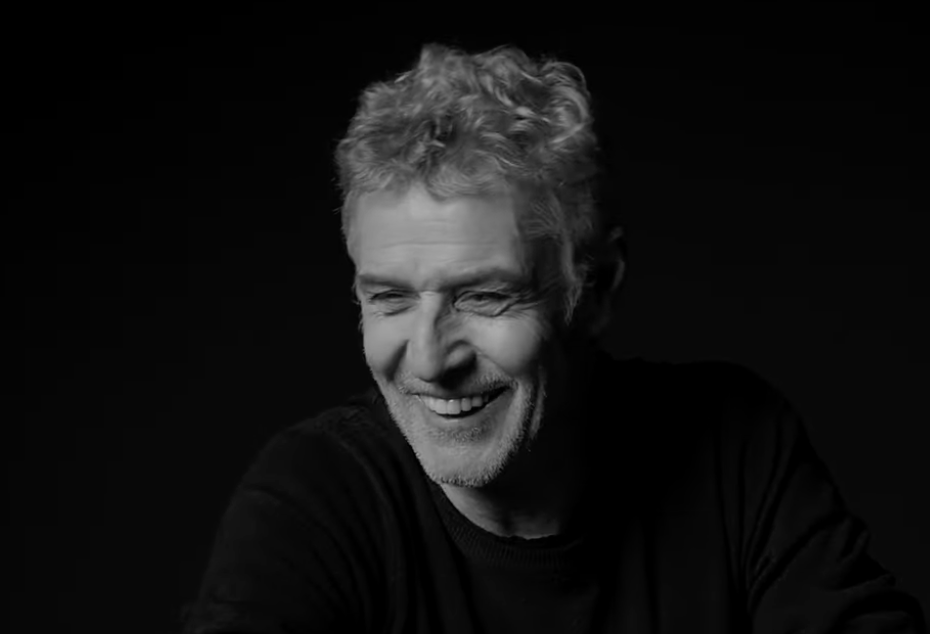
Pierre Deny, the French actor who brought Louis de Léon, the imperious CEO of luxury fashion house JVMA, to life across Seasons 3 and 4 of Netflix’s Emily in Paris, died on Monday May 25, 2026. He was 69 years old.
His daughters confirmed his death in a statement to the French news agency AFP on Wednesday.
The cause was ALS, amyotrophic lateral sclerosis, which his daughters described as arriving with a sudden and severe intensity.
“It is with deep emotion that we announce the passing of Pierre Deny, which occurred this Monday following a sudden and severe case of ALS,” they wrote.
For the English-speaking audience who encountered Deny through Emily in Paris, the statement is the introduction to a career that had been building in French television for more than four decades before Lily Collins’ series brought it to a global audience.
He appeared in more than 100 French TV films and series. He spent seven years on Tomorrow is Ours, the French daytime soap opera in which he played Dr. Dumaze across more than 500 episodes.
He began on stage in the 1980s and kept working until the disease that ended his life had already started to take hold.
The Character That International Audiences Knew
Emily in Paris introduced Louis de Léon as a specific kind of French power, the patriarch of a legacy fashion dynasty, the chairman of JVMA, a man whose approval and disapproval shaped the professional fates of everyone around him.
The character arrived in Season 3 as both an obstacle and an authority, the kind of figure whose presence reshapes the dynamics of every scene he enters.
Deny played him with the particular quality of French screen authority that comes from decades of practice, contained, precise, capable of communicating volumes with minimal visible effort.
Louis de Léon was also the father of Nicolas (played by British actor Paul Forman), who became the love interest of Mindy, played by Ashley Park, giving the character a personal dimension alongside his professional authority.
The relationship between the imperious father and the romantic subplot connected Louis de Léon to the emotional heart of the show’s ensemble rather than leaving him as purely a dramatic obstacle.
Deny appeared in Seasons 3 and 4, and his work on the show reached an audience that his four decades of French television work had never touched directly.
Emily in Paris generates extraordinary viewership numbers on Netflix globally, the kind of reach that a French actor doing excellent work in French-language television does not typically access.
The international attention was a late-career recognition that the French industry had been providing in a more localized form for years.
The Career That Built The Performance
Deny began performing on stage in France in the 1980s, the grounding in live theatrical work that shapes the specific kind of screen presence he brought to every role.
The transition to television brought him into the French productions that made him a recognizable figure to French audiences across a span of four decades.
Tomorrow is Ours is the show that represents the sustained center of his television career.
The French soap opera, known in France as Demain nous appartient, airs on TF1 and is one of the most-watched daytime programs in French television.
Deny played Dr. Dumaze across more than 500 episodes, a number that reflects the kind of sustained presence in a production that builds genuine relationships between actors and between actors and their audience. Seven years of shared daily work.
His co-star on Tomorrow is Ours, Luce Mouchel, described those seven years in the tribute she posted after his death, a tribute that was addressed to him directly in the intimate second person that grief sometimes produces.
“Pierre, 7 years of filming together, taking the train together, having lunch at the canteen together,” Mouchel wrote. “Sometimes confiding, inviting each other from time to time and congratulating you for your hidden cooking talent, meeting our girls, clapping at the theater, calling each other ‘Doctor’ usually, and I forget. A short decade of shared life that should not have ended so quickly and so brutally. I’m thinking of your daughters and their exceptional courage. Thinking of you, my last visit and your sparkling eyes, rest in peace, Dr. Dumaze.”
The detail about his cooking talent, “congratulating you for your hidden cooking talent,” is the kind of specific personal fact that only someone who actually knew someone would include, and it turns the tribute from a professional eulogy into a portrait of a person.
Sylvie Vartan, the Bulgarian-French singer and actress who worked with Deny on stage, described him as “a generous actor and a sensitive and funny man,” the three qualities that people who actually knew someone reach for when they want to describe who that person was rather than what they accomplished.
ALS And The Year That Has Brought It Into Focus
The ALS that killed Pierre Deny has been present across the entertainment world’s 2026 in a way that feels almost impossible to summarize without the weight of repetition.
Eric Dane, the actor known for Grey’s Anatomy and Euphoria, died from ALS in February 2026 at the age of 53. That was three months before Deny’s death. Russell Andrews, the Better Call Saul actor, revealed an ALS diagnosis in May 2026, describing it publicly for the first time.
Jenny Slatten, the 90 Day Fiancé star, disclosed in May 2026 that she had been diagnosed with ALS in December 2025.
Four prominent entertainment figures, one death, three diagnoses, connected to the same disease across five months of a single year.
The convergence has no causal explanation beyond the statistical reality of how often ALS occurs, it affects approximately 30,000 Americans at any given time and kills approximately 5,000 people in the United States each year.
The visibility of the specific cases in 2026 does not reflect an outbreak. It reflects the random distribution of a disease that strikes without patterns of risk that prevention can address.
ALS is a progressive neurodegenerative disorder that destroys the motor neurons that control voluntary muscle movement.
The progression leads to paralysis of the limbs, then of swallowing and speech, then of breathing.
There is no cure. There is no treatment that reverses the damage or stops the progression.
The most optimistic prognosis, the cases where people live for decades, as Stephen Hawking did, are the exceptions that the statistics do not describe as typical. Deny’s daughters described his case as “sudden and severe,” a characterization that suggests a rapid progression rather than the slower course the disease occasionally takes.
He was 69 years old. He died at his family home. His daughters were there. His co-stars, who took the train with him and had lunch with him and called him Doctor, are mourning someone whose sparkling eyes they had been thinking about since the last visit.
If you or someone you know has been diagnosed with ALS or is supporting someone with ALS, the ALS Association can be reached at 800-782-4747 or alsa.org. The ALS Network provides free support and resources at als.net.