The French Village That Billionaire Vitek Could Not Buy

Czech Billionaire Loses Fight Over Unauthorized Palace in Protected French Village
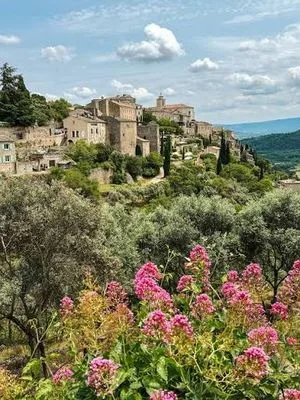
Gordes, a hilltop village of about 1,600 people in Provence, is one of France's officially designated plus beaux villages. Travel + Leisure magazine recently named it the most beautiful village in the world.
Honey-colored stone buildings and views of the Luberon, the range of limestone hills, lavender fields, olive groves, and ochre cliffs.
To this place, Radovan Vitek came to build a small palace.
Vítek, with the money to build.
Gordes lies within the Parc naturel régional du Luberon, a designation that protects the area's landscape, natural environment, and architectural heritage.
It protects the hills and forests, and the stone traditions of the villages built among them.
Its purpose is to prevent the kind of development that can permanently alter the character of a place.
It is the reason the village's building rules are strict.
And it works.
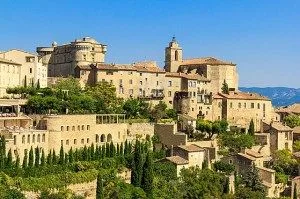
Medieval builders used local stone, quarried from the slope, cleared from the fields, lifted from the ground, and made into walls, giving the village the appearance of rising from the cliff.
The dry-stone shepherds' huts below, known as bories, were built the same way, with stone pulled from the land and stacked without mortar.
The requirement that new construction use stone reflects the village's historic building practice of stone of a color between honey and old gold.
Tourists come away believing they have seen something timeless - a village built from its own hill.
A Latecomer
 Vitek
VitekVitek had his own method of construction. It was new and emblematic of the man.
Only he came to Gordes, where he suspected that they might not appreciate him as much as he thought they should. He maintained ownership of a 17-acre farm through a shell company, keeping his name out of the public record for years.
A Village Built to Last

He was only a late arrival to Gordes.
Gordes had existed for centuries before him.
The site itself is ancient. The rocky spur above the Calavon valley was occupied in prehistoric times and later held a Roman fort. Men had wanted that hill long before they wanted views.
The village name traces to the Vordenses, a Celto-Ligurian tribe whose fortified settlement became Gordenses and then Gordes.
An abbey had been founded nearby in the eighth century on the ruins of a Roman temple. A castle was built in 1031. Sénanque Abbey, the Cistercian monastery whose lavender fields are now central to the image of Provence, was founded in 1148.
The château that still crowns the village was rebuilt in Renaissance style in 1525 on the footprint of the earlier feudal keep, retaining its fortress character during the French Wars of Religion, the Catholic-Protestant civil wars of the late sixteenth century.
During the 17th and 18th centuries, Gordes had about 3,000 residents, mostly peasants and craftsmen.
No billionaires then.
Many of the extant hillside dwellings date from the medieval period through the 18th century, built of limestone with terracotta roofs connected by steep stone lanes known as calades.
After a population decline in the 19th century and losses during World War I, the village fell below 1,000 residents.
Houses emptied and deteriorated, and went back to stone.
The village suffered damage in 1944, when German forces destroyed more than 20 houses in reprisal for resistance activity. Gordes later received the Croix de guerre.
Tourism in the 1960s helped finance the restoration of damaged and abandoned homes.
That approach — restore rather than replace — is reflected in local laws.
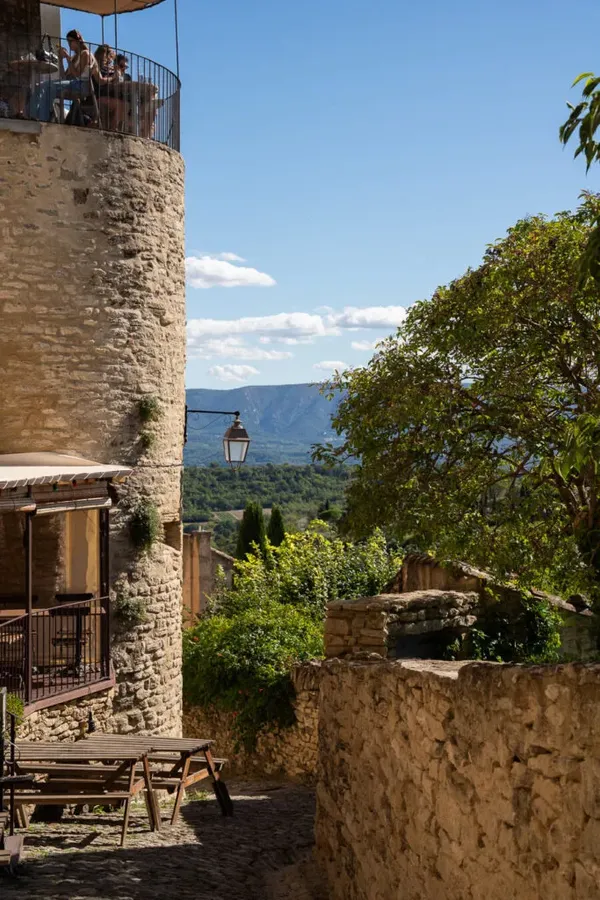
New buildings in Gordes must be made of stone and have terracotta roof tiles.
Fences are prohibited; only stone walls are allowed. Electrical and telephone cables are placed underground, and streets are preserved in their historic form.
The Rules of Stone
That history is what Vitek knew and accepted as he planned his 14,000-square-foot (1,300-square-meter) residence.
His project included the removal of an old farmhouse and the demolition of some of the bories where shepherds once lived in their stone huts.
He built a mansion six times the size of the farmhouse.
Vitek, or rather his agents, were clever. They told the village they were renovating the old farmhouse, a 2,200-square-foot (200-square-meter) dwelling, not actually demolishing it.
This is a village where zoning control is so bent on preservation that a skylight can be refused, where a garden wall must comply with traditional dry-stone requirements.
Vitek had to be coy about what he really intended.
Vitek used a shell company and then built 1,300 square meters on a permit for 200.
It has been more than 14 years since Vítek came. He has yet to occupy his palace here.
But it was not intended to be his full time home either.
Vítek is a Czech real estate billionaire and head of CPI Property Group, one of Central Europe's largest commercial landlords.
He built his initial wealth after the fall of communism, buying stakes in former state companies during Slovakia's privatization and later expanding into offices, shops, and hotels across Europe.
He lives in Switzerland and owns a Surrey manor that was once owned by Ringo Starr.
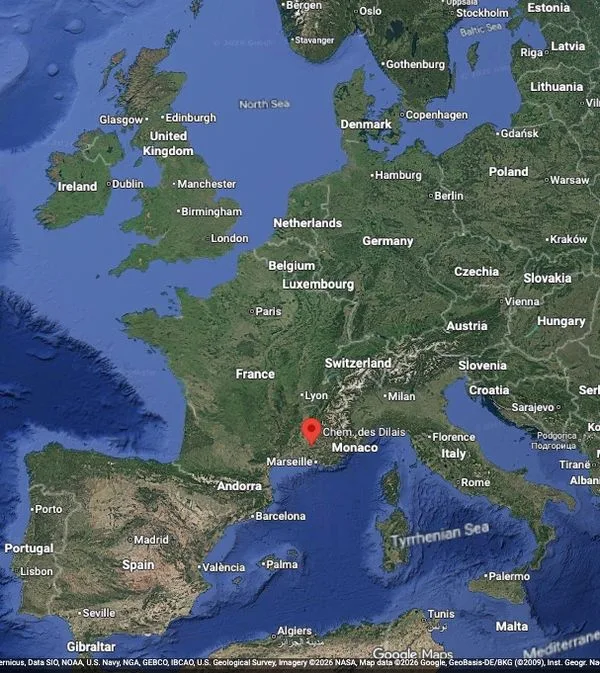
What he wanted in Gordes was a country estate he wanted to call Les Dilais, a 17-acre estate, below the village, down a rough road in a valley of its own on the site of an old sheep barn and farm.
He bought it through a Monaco shell company called Ciskey.
In October 2012, his agents went to the authorities with a modest request: permission to renovate the existing 200-square-meter building. It was approved.
The property was taxed as a farmhouse.
Five Years of Construction
From 2012 to 2017, construction went on at the site.
The resulting structure was not the 200-square-meter renovation authorized by the permit, but a 1,300-square-meter residence across two floors and a basement. It included suites, salons, an indoor swimming pool, a wine cellar, annexes, and terraces overlooking the valley.
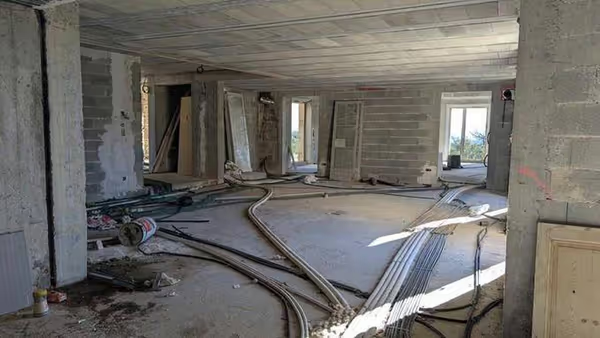
It remains unfinished and unoccupied.
The construction cost about €6 million. If the property were complete and legal to occupy, it would have been valued at nearly €20 million or, as the Czech press preferred to say, "half a billion crowns."
How a Billionaire Gets Caught
The neighbors were upset that the old Poncet farm had been demolished. And a country road running through the land had been closed off.
An illegal, non-stone fence made the place look to some like a prison from the road.
They went to the mayor. It ended up in court.
A lower court in Avignon ordered the building demolished in 2022 and imposed a €500 daily penalty for delay.
To a man worth seven billion dollars, €500 a day is not a deterrent to stop his progress. The building remained.
In January 2025, the Court of Appeal in Nîmes upheld the demolition order and ruled that the work could not be legalized after the fact. It fined Vítek's architecture firm, At Home Architecture, €100,000, and another company involved €250,000.
Vitek, through Ciskey, appealed to France's highest court, the Court of Cassation.
On June 2, 2026, the court's criminal chamber dismissed his appeal, imposed an additional fine, and made the judgment final.
The Missing Name
For years, the public record did not identify the owner behind Ciskey. French media reported on the case without naming the billionaire, and the name did not appear in the Nîmes appeal judgment.
But then the name came out.
According to Gordes Mayor Richard Kitaeff, the owner's lawyers admitted in open court that Mr. Vítek controlled the company responsible for the illegal construction.
Czech outlets, including the news service Seznam Zprávy, have since confirmed independently that the Gordes villa belongs to Vítek.
CPI Property Group Spokesman Jakub Velen said Vitek's company would not comment. His response contrasts with the company's more detailed public responses to other allegations involving Vítek.
"Absolutely Scandalous"
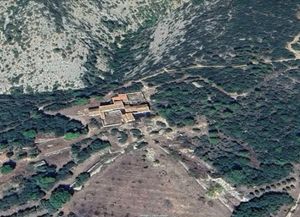 Aerial view of Vitek'd palace
Olivier Morice, the lawyer for the municipality of Gordes, called the case "absolutely scandalous."
He said he was shocked when the mayor showed him the file. The building, he said, was a small palace.
Morice alleged "complicity and collusion" between business interests and local politicians responsible for enforcing the rules.
How does a 1,300-square-meter palace go up over five years, in a protected zone, with only a permit to renovate a farmhouse, without someone in authority looking the other way?
Asked whether the former mayor might have been bought, Mayor Kitaeff declined to rule it out.
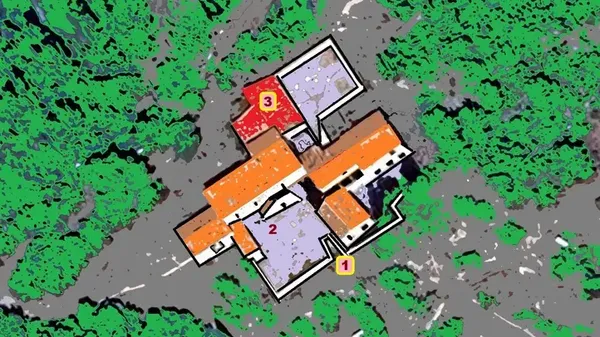 1. the old driveway (now gone)2. the old entrance staircase (now gone)3. the large garage, which became the main entrance
A Bill of Particulars
The demolition order was the headline. The final judgment contained more.
Vitek's villa had been built inside a natural-risk-prevention zone — wooded and rated red for fire danger.
In 2012, the Vaucluse fire service had warned that its fire engines could not access the property. The access track averaged only three meters wide.
Vitek kept building after he was told to stop.
When the permit was suspended, work carried on anyway.
At one point, a trench was cut for heating and air-conditioning lines, drawing another fine payable to the village.
The roundabout at the end of the municipal Chemin des Dilais vanished under the construction, and the builders blocked the public road, for which he was fined again.
The court noted that commercial buildings on the site had been converted to living space. He had bought the empty neighboring parcel, placing his villa at its northern edge, so that no neighbor could see him.
The court ordered Vitek to pay to publish his own conviction — posted on the notice boards of the Gordes town hall for two months, and printed in an issue of La Provence, the regional paper.
The man who arranged not to be named would have to pay to have the conviction displayed in the village.
Magnificent, some said. Medieval in the best way.
"You won't buy Gordes," said Morice, who called Vítek "a billionaire who thought he could do anything."
Ghost Villa
The bumpy chemin des Dilais seems to lead nowhere — a track lost in the garrigue. At the end of it, behind an unpadlocked gate, stands the villa: 1,300 square meters of dry stone facing the Luberon, magnificent and dead, unfinished, unoccupied.
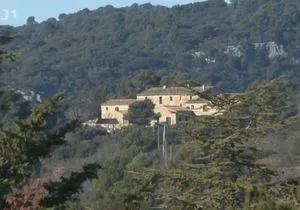
From across the valley, it looks like it has stood for centuries — a great honey-stone mas with terracotta roofs, wings stepping along the hillside, the picture of an old Provençal estate.
The rooms are vast but have bare floors, unpainted walls, wide door openings where the glass was never set, exposed wiring, and construction dust everywhere.
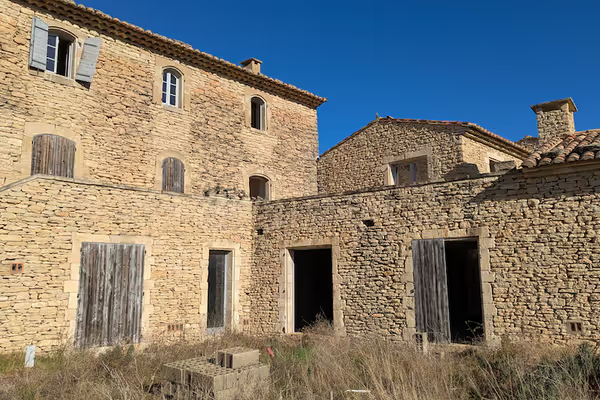
In the basement is a dry concrete basin intended as an indoor swimming pool.
The Rascal in Miniature
The Gordes palace is but a minor story compared to the rest of Vítek's career.
But it has everything. The man, reduced to stone.
The shell company in Monaco. The dishonest paperwork.
The heritage destroyed to suit himself, just as Prague's seventh district once accused his CPI of demolishing protected old workshops at the Bubny rail lands.
The contempt for the local authority.
The same instinct that made him switch off the ski lifts in the Swiss resort of Crans-Montana in 2018, at the height of the season, when the town wouldn't pay what he demanded.
And assets that glide out of reach before legal consequences arrive.
In his famous divorce, he moved his wealth to his mother before the courts could touch it.
Just days before the Cassation ruling, reports say, he moved his villas on the French Riviera into a trust for his children.
And the taking of what isn't his.
In Gordes, it was on an old farm and sheep barn.
But the source of his billionaire status, the takeover of ORCO, a billion-euro company through deception, happened on the same principles.
Luxembourg's financial regulator found that Vítek seized control of ORCO Property Group through a secret, illegal conspiracy — a maneuver it valued at roughly €1 billion in ill-gotten gain to him.
He paid a €1 million fine for the €1 billion alleged theft.
American investors who lost most of their stakes, including a Manhattan hedge fund, accused him in court of running a decade-long fraud.
The case was dismissed on jurisdictional grounds, not on the facts.
Gordes was the same story, told in stone rather than in shares.
This time it was not dismissed.
Partners Left With Nothing

And it is not the only time.
Two Czech investors, Marek Čmejla and Jiří Diviš, say they bankrolled Vítek's rise — more than €320 million, invested in over eight years on nothing but a handshake.
When the time came to split the rewards, Vítek told them there had never been a deal at all.
They sued him in Czechia, in Luxembourg, in the United States, and lost each time. Then, in November 2024, a court in Cyprus did what the others wouldn't: it ordered Vítek to ringfence €537 million of his assets while their claim is heard.
Courts do not freeze half a billion euros on a whim. They do it when a claim looks serious, and the money looks like it might move.
Such orders are generally issued when a court finds a serious claim.
Gordes may mark a minor defeat in a larger war, now going badly for Vítek.
HIs business empire is under pressure.
Squeezed by the debt from his costly 2022 takeover of two Austrian property giants, Vítek's CPI — which reports €20 billion in assets, a valuation critics say is inflated, against €9 billion in net debt — has become a forced seller.
The corporate raider who conquered through concealed buying is now surviving through open selling.
In Gordes, there is a final twist, the one that tells you exactly who you are dealing with. The judgment is final. Every appeal is exhausted.
The palace still stands, abandoned and unfinished.
The order condemns Vítek to tear it down at his own expense.
The betting in the village is that he won't, and that the French state will have to send the bulldozers.
Morice has asked the prefecture to take charge of the demolition.
"You cannot buy the town of Gordes," Morice said.
A Man's Word
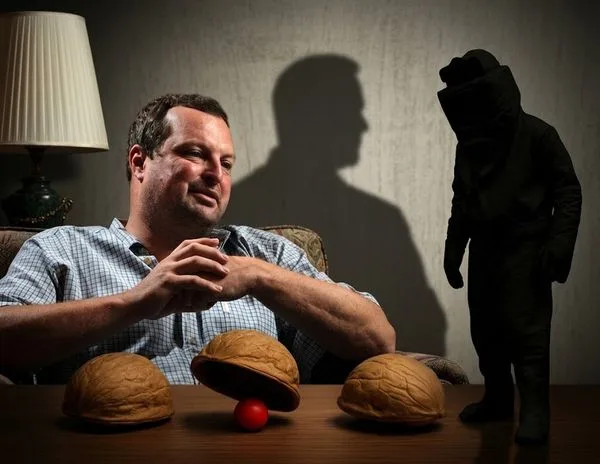
For as long as people have traded with one another, the best business has rested on the plainest thing: a man's word. A handshake meant something.
A signature was a kind of oath — your own name, set to a promise, binding you to it.
For thousands of years, that is how honest men built their fortunes: the merchant who delivered what the contract said, the craftsman who stood behind his work, the neighbor whose yes was yes.
Commerce, at its root, is trust made durable.
And then there is the other kind. The Ponzis and the Madoffs — the men for whom the contract is not a bond, the signature not an oath but a lure.
They do not build trust. They harvest it.
They take what thousands of years of honest dealing produced — the human willingness to believe a promise and spend it like found money.
Radovan Vítek, his critics say, belongs to that lineage.
Gordes is the same small proof, crime written small, but in stone.
He meant to take advantage of what the village protected. The same move as the handshake denied, and the company seized in secret.
The advantage taken from trust.
Here, the victim was neither an investor nor a business partner. It was a village.
Vítek declined to enter the village's bargain. He tried to profit from it without obeying what the others did to give it to him.
He tried to enjoy it without joining it. He sought the benefit of a preserved village without accepting the obligations that preserved it.
Editor's Note:

Europe discovered Vitek's violations and fined him. The United States is a different jurisdiction. The pattern of conduct alleged against Vítek falls under American fraud, money-laundering, and self-dealing statutes.
Under federal law, the United States can prosecute conduct that occurs abroad whenever the dishonest deal results in money passing through the U.S. financial system — through a New York correspondent bank, through a dollar account, into a dollar-denominated asset.
Concealment is the heart of the offense: the crime is making criminally derived money appear to come from a legitimate source.
Vítek's method — the Monaco shell company at Gordes, the offshore structures named in the Pandora Papers, where he allegedly used a complex scheme to buy property in France. A €6 million palace built through a Monaco holding company on contested money.
The exposure is wire fraud and racketeering.
Wire fraud requires only that a deceptive scheme be transmitted across email or files into the United States: a false statement to an American investor, a misrepresentation transmitted to a U.S. bank or rating agency.
 Vitek
VitekRacketeering law, the RICO statute, was built to take a sprawling, years-long pattern of deception and charge it as a single criminal enterprise.
American investors have framed Vítek's conduct in those terms: a Manhattan hedge fund that lost most of its stake accused him in a U.S. court of running a decade-long fraudulent scheme. An untold number, maybe tens of thousands or pensioners lost money in the Orco takeover.
The roadmap is already filed in an American courthouse in a civil case.
The third concept is the one that the looting allegations evoke: the misappropriation of money by someone entrusted to safeguard it. In Europe, the law calls a controlling owner's plundering of his own company abus de biens sociaux — the misuse of corporate assets.
American law prosecutes the same conduct under fraud statutes when the victims are investors, as short-seller Muddy Waters alleged in accusing Vítek of "brazenly looting" CPI Property Group by overstating the value of its assets.
At least one source close to the Trump administration has told this publication that a racketeering enterprise investigation into American investors defrauded by Vitek is currently being seriously discussed.
We have not been able to independently confirm this.