Trump's DOJ Defends a Removal Trump's Rules Forbade: Frank Rose

A Federal Judge Refused to Dismiss Frank Rose's Case.
Trump's Justice Department Is Defending It Anyway.
In January, U.S. District Judge Paul L. Friedman denied the government's motion to dismiss Frank Rose's lawsuit against the Department of Energy and the National Nuclear Security Administration.
His case will proceed to discovery.
Rose had worked for the NNSA, an agency under the Department of Energy.
Rose was the No. 2 official at the NNSA.
Judge Friedman ruled that Rose had plausibly alleged that DOE and NNSA deprived him of a constitutionally protected liberty interest — his reputation and his ability to work in his field — without due process.
The Charges He Was Never Told
Rose claims that no one told him any specifics. He was given only categories of the complaints — "harassment" and "hostile work environment."
No one told him who had complained or what they alleged.
Seventeen days after Rose learned of the complaints — on March 12, 2024 — NNSA Administrator Jill Hruby told him the investigation was complete. He would not be interviewed.
Christopher Davis, the chief of staff to Jennifer Granholm, the Secretary of Energy, "explicitly stated he wanted Rose 'out' of the NNSA," the DOE admitted in court filings.
This was a message from the office of Secretary Granholm, through her chief of staff Davis, to Hruby, the head of NNSA, and finally to Rose, delivered by the person directly above him.
The Voluntary-Resignation Defense
DOE’s defense is that Rose retired. By leaving voluntarily, they argue, he gave up his right to a hearing.
The judge noted a problem with that argument in declining to dismiss the case.
If the investigation was active, as DOE claims, and capable of producing a fair outcome, how come its outcome had already been decided?
Davis had named the month he wanted Rose gone. Hruby had told him he would not be interviewed.
Rose faced the choice of resigning quietly or being fired publicly.
Either way, he was out.
When a Resignation Is Not Voluntary
The law does not treat every resignation as voluntary.
Judge Friedman noted that a resignation is not voluntary "if a reasonable person in the plaintiff's position would have felt compelled to resign under the circumstances."
So the question before the court and, ultimately, a jury, is whether a reasonable person, told by the head of his agency that the investigation was complete, that he would not be interviewed, and that the Secretary's chief of staff wanted him gone by the end of the month, would have understood that staying was not an option.
If it was not a choice, then it was a removal — carried out without due process, as the Constitution requires.
Trump Irony
 US Attorney for the District of Columbia, Jeanine Pirro
The office defending the removal of Biden's Energy Department is the U.S. Attorney's Office for the District of Columbia, led by Jeanine Pirro, a Trump appointee.
That alone is unremarkable; the Justice Department routinely defends the government across administrations.
What makes it striking is that if Rose's account is true, the Biden Energy Department did to him precisely what the Trump administration built its second-term identity on condemning.
Trump campaigned against people being pushed out for the wrong reasons, judged by category instead of competence.
On his first day back in the office, Trump signed orders to dismantle DEI programs across the government.
Frank Rose, by his account, refused the diversity plans, declined the training, insisted that a nuclear agency be judged by competence alone, and was removed on an anonymous accusation by a department that no longer wanted him.
A Rule the Trump Administration Wrote
In its first term, the Trump administration rewrote the federal rules on how accusations are judged — the 2020 Title IX regulations — around a single principle: that no one's life should be destroyed by a process that never tells him the charge, never lets him answer, and never gives him a hearing.
Tell the accused what he is accused of. Show him the evidence. Let him respond. Do not simply believe the accuser and act.
The Trump administration told the country that this was a matter of law and basic fairness.
The Trump administration made "hear the accused before you ruin him" a signature principle. Through its Department of Justice lawyers, led by Pirro, it is now defending a case in which a man was ruined without being heard.
Frank Rose Qualifications
 Frank Rose
The DOE never alleged that Rose was incompetent for the job. His career was an unbroken record of trust and advancement.
Under Clinton, Rose entered the Defense Department as a presidential appointee.
Under Bush, he served on the professional staffs of the House Intelligence and Armed Services committees.
Under Obama, he served as Deputy Assistant Secretary of State for Space and Defense Policy, then was confirmed by the Senate as Assistant Secretary of State for Arms Control, Verification, and Compliance.
He was the lead U.S. negotiator on the 2011 missile defense basing agreement. The Defense Department awarded him its Medal for Exceptional Civilian Service. The State Department gave him its Superior Honor Award.
In August 2021, President Biden nominated Rose to be Principal Deputy Administrator of the NNSA, the agency's chief operating officer.
In that role, Rose oversaw the weapons labs, the production plants, the nonproliferation and naval-reactors programs, a $24 billion budget, and 60,000 people.
Before he got the job, the FBI conducted a full background investigation. The Senate confirmed him by voice vote. No senator objected.
Diversity Issues
 Jennifer Granholm had her priorities.
Rose came to Biden’s NNSA with a non-political, single-minded idea: keep the nuclear arsenal safe, reliable, and out of the wrong hands.
He found the department had a competing priority.
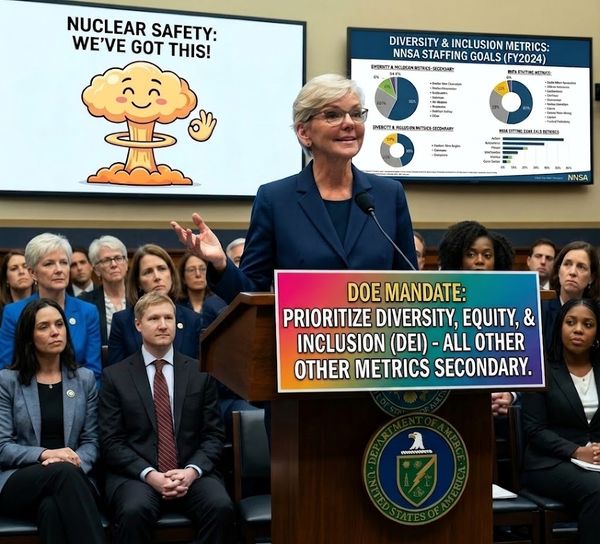
Under Secretary Granholm, the Energy Department had made diversity and inclusion a central objective.
According to Rose, every office at NNSA was directed to produce a diversity plan, even the offices charged with the arsenal.
To Rose, that meant the department wanted identity — gender, race, orientation — treated as a factor in who got hired and advanced, in a field where he believed the only thing that mattered was competence.
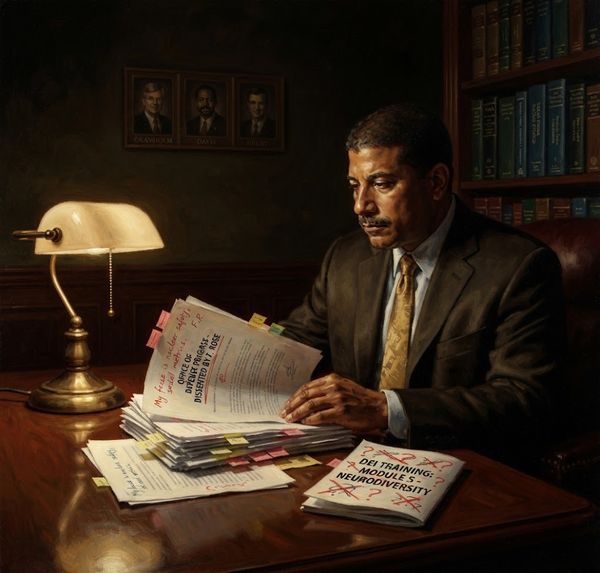
In the nonproliferation directorate, he says, officials added pronouns to their email signatures and sat through training on subjects like "neurodiversity" — matters, in his view, with no bearing on the security of a warhead.
Refusing the Plan
 DEI did not come first for Frank Rose
Rose did not go along.
He sent the diversity plan back uncompleted. He declined the training. He put no pronoun before his name. He recalls circulating a Wall Street Journal editorial critical of DEI programs at other federal agencies, passing it to his staff as a warning.
Nuclear safety, in his view, should not weigh gender, orientation, or race; the only question that mattered was who was most capable of doing a job that leaves no room for error. (Rose himself is Black.)
NNSA's job was building and maintaining nuclear weapons, not advancing social causes.
Everything else was a distraction. In his field, a distraction could be fatal.
On the other hand, Davis, the underling to Granholm, a man with no nuclear background and no national security credentials, announced a slate of DOE hires, boasted that the team was "57 percent women, 56 percent people of color, and 24 percent identifying as LGBTQ+."
The NNSA, Rose feared, was drifting away from warhead readiness. Not stockpile stewardship.
But headcounts.
In an institution increasingly attentive to language and training, Rose kept insisting on competence at the mission, and nothing else.
That made him the dissenter.
What Happened
 Jill Hruby, NNSA administrator and DOE under secretary for nuclear security, told Rose the investigation was finished.
On Feb. 24, 2024, while on official travel in Hanoi, Vietnam, NNSA Administrator Jill Hruby called Rose. She told him she had received complaints about his workplace behavior. She used the words "hostile work environment" and "harassment."
She did not tell him what he had allegedly done.
Hruby told Rose that DOE's Office of Hearings and Appeals would conduct an investigation.
Rose said he would cooperate fully and confirmed it in writing that day.
He reiterated his willingness on Feb. 27.
On March 4, he told OHA directly that he was available for an interview.
On March 5, OHA Deputy Director Matthew Rotman replied: "We will certainly reach out to you if we need anything."
Rose acknowledged the email and, for the fourth time, offered to sit for an interview.
By March 12, 2024, he had not been interviewed. That day, Hruby called again. She told Rose the investigation was complete. He would not be interviewed.
She also delivered a message from Davis, the DOE chief of staff: Granholm wanted Rose gone by the end of April.
Rose agreed to resign, effective April 30, 2024.
Post-Decision Issues
 Christopher Davis, Chief of Staff for Granholm.
Before Rose resigned, he tried to find out what he was accused of.
On April 4, 2024, his attorney, Mark Zaid, emailed three senior DOE officials — Deputy Secretary David Turk, Samuel Walsh, and Chief of Staff Davis.
Zaid wrote that Rose had never been given specific details or a chance to respond, "as any federal employee should be permitted as a matter of law and simple common decency."
The record contains no response.
What the Accusations Amounted To
The next day, Rose finally learned some of the accusations, but not from the department.
Politico's story relied on eight anonymous current and former officials "familiar with the matter."
There were not eight accusers.
As the story made clear, most of the eight anonymous sources were familiar with the matter rather than witnesses to it.
Some women had felt "uncomfortable." One had warned another to "be cautious" around Rose, without saying why.
There was a joke. Rose had recounted one at a meeting once. After a foreign official praised NNSA, he replied, "I love you, will you marry me?"
The remark was not directed at anyone in the room or anyone who worked under him.
It was Rose quoting himself, describing an exchange with an allied counterpart who said she admired NNSA's work. The foreign official did not complain. What drew the furor was Rose repeating the line at a meeting.
Some laughed; some did not.
The Brookings Line
The most damaging part of the Politico story was one sentence near the end. The article reported that Rose had delayed extending the Pentagon detail of an NNSA employee "who had lodged a sexual harassment complaint against him when they previously worked together at the Brookings Institution."
Politico reported it as a settled fact: Rose had been accused of harassment at Brookings and had retaliated at NNSA years later.
Publicity and Anonymity
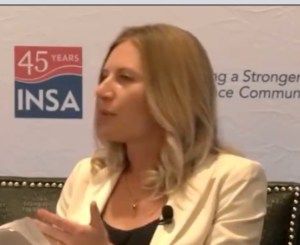 Kate Hewitt says women don't have to play by the rules. Translation: They can lie.
The anonymous accuser is identifiable because Rose later sued her for defamation.
The anonymous accuser at the root of this is Kathryn "Kate" Hewitt, his former research assistant at Brookings.
Politico reported, as established history, that an anonymous woman (Hewit)t had "lodged a sexual harassment complaint" at Brookings.
When Rose sued, her attorney conceded in writing that Hewitt "did not file a formal complaint of discrimination." There was no harassment complaint on file. No record.
Politico had reported it as fact.
Politico branded him, in print and to his entire professional world. He was a nuclear official accused of sexual harassment.
It was through the Politico story, not through the DOE, that he learned the accusation against him.
The Email Chain
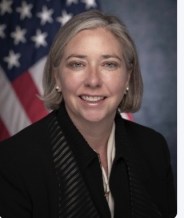 Deputy General Counsel Jocelyn Richards
Five days after the publicity, on April 10, 2024, with Rose still employed, on approved leave, DOE Deputy General Counsel Jocelyn Richards emailed Zaid.
She wrote:
"In mid February of 2024, NNSA received several complaints outlining allegations of harassment or hostile work environment by Frank Rose, the Principal Deputy Administrator of NNSA.
"NNSA management promptly requested that DOE's Office of Hearings and Appeals (OHA) conduct an independent internal fact-finding review into allegations regarding potential inappropriate workplace conduct by Mr. Rose. The fact-finding commenced in early March 2024. The fact-finding has not been completed, as Mr. Rose is expected to leave the Department in late April 2024."
Zaid replied that day.
"Mr. Rose had been led to believe the investigation had been completed, which of course made little sense to me given he had not yet been interviewed."
He then asked Richards: "Does the investigation nonetheless continue or does OHA lose jurisdiction?"
Richards did not answer.
Three weeks after Rose's retirement, Zaid followed up.
He asked: "Is there still an active investigation? Was there a completed investigation and final report?"
On May 29, 2024, Richards replied:
"Any further pursuit of the inquiry was rendered moot by Mr. Rose's retirement. No further action was taken."
The Government's Three Versions
At the January 21, 2026, hearing before Judge Friedman, DOE’s counsel at the Department of Justice told the court that the investigation "was not completed."
The judge pressed: "This statement from the deputy general counsel — said we are not going to complete the investigation because he is leaving?"
Government counsel confirmed: "Correct."
That matched the April 10 email. The fact-finding had not been completed. Rose was leaving.
The two were presented as connected. The DOE did not finish its investigation because Rose was resigning.
In a sworn interrogatory response verified under penalty of perjury, DOE gave a different version on June 22, 2026.
The investigation, it now said, had been "active" throughout, and a subject interview had been "planned."
Rose's retirement, DOE now claimed, meant "the planned opportunity for a formal investigative interview was never reached because Plaintiff chose to terminate his federal employment."
There are now three different DOE versions of one investigation.
In the first version that Hruby gave Rose, the investigation was complete.
In the second, it was incomplete because Rose was leaving.
In the third, it was active but interrupted by his retirement.
Complete, incomplete, active, interrupted.
Each version arrived exactly when the government needed it.
"Complete" to push Rose out.
"Incomplete" to explain why he never got a hearing.
"Active" to argue that he abandoned the investigation.
What the Judge Found
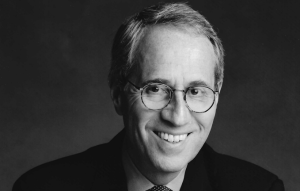 U.S. District Judge Paul L. Friedman
Judge Friedman did not rule on the truth of Rose's claims. At this stage of the lawsuit, a judge decides only a threshold question: whether the allegations, taken as true, are sufficient to warrant discovery.
Friedman found that Rose had plausibly alleged constructive discharge: that a reasonable person in his position would have felt forced to resign, and that the contradiction between what Hruby told Rose in March and what Richards told Zaid in April was something the case would have to resolve.
At the hearing, Rose's counsel told the court: "Someone is lying. That was a misrepresentation and not a small one. It was a material misrepresentation, because it went to the heart of whether Rose was going to resign or continue on and get that hearing and get that interview and have the investigation conclude."
Trump DOJ Defense of Biden
Before Trump's first term, Title IX enforcement under Obama pushed schools toward low evidentiary standards and shortened procedures.
The accused often did not see the full allegations, could not meaningfully respond, and faced life-altering consequences from a process that leaned toward believing the accuser.
The Trump administration's Title IX rewrite, finalized in 2020 under Education Secretary Betsy DeVos, was built to end that.
Its guarantees were simple: tell the accused the specific charges, show him the evidence, let him answer, and hold a hearing before reaching any finding.
It rejected the presumption of guilt, one where the accuser is automatically believed.
The principle behind it was a single sentence: no one's future should be destroyed by a process that never hears him.
Point for Point
Now compare Rose's case.
Notice of the specific charges?
DOE told him only the category — "hostile work environment and harassment" — never the specific conduct. He learned what he was accused of from Politico.
A chance to respond?
He offered to be interviewed four times. He was never interviewed.
The evidence, the accuser?
He never saw the evidence, and did not know for certain who had accused him until a news story gave him the clues.
A presumption against automatic belief?
Rose alleges the opposite: the department believed the woman and removed the man.
A hearing before he lost his job?
None.
The forced departure came before any proceedings he could have participated in.
Rose is the federal-employment version of the campus injustice the Trump administration said it was trying to end.
If the Title IX reform stood for one sentence, it was this: hear the other side before you ruin someone.
Rose says the Energy Department did the opposite.
And here is the twist.
The Trump administration that wrote that rule into federal regulation is now, through its Justice Department, defending the removal that broke the rule.
The Biden department denied Rose the process. The Trump department is in court fighting to keep that denial from being examined.
The Trump administration, which told the country "hear the accused before you destroy him," is now arguing, through US Attorney Pirro’s lawyers, that a man destroyed without being heard has no case.
Discovery
DOE's responses to Rose's first interrogatories and requests for production run 76 pages. Pirro’s assistant US attorneys have objected to nearly every request. The department has withheld investigative materials, interview records, and internal communications, citing privilege and the Privacy Act.
But the DOE's "he simply retired" story is now on the record and will have to be defended.
Ahead are the depositions of Hruby, Davis, Richards, Rotman, and Granholm.
Under oath, on the record, and subject to cross-examination, they will be asked to reconcile the three versions of what happened to Rose.
They will be asked why Zaid's April 10 question — whether the process continued or OHA had lost jurisdiction went unanswered during the three weeks Rose was still their employee.
They will be asked what, if anything, Davis said in response to Zaid's April 4 letter, which called the denial of process a violation of law and common decency.
Cost
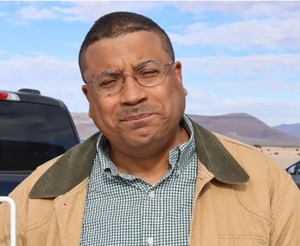 Frank Rose
What did this cost Frank Rose that he is now suing the DOE and the NNSA?
He was the second-ranking official at the agency that maintains the American nuclear arsenal, a position he reached after 30 years, two Senate confirmations, and an FBI background check.
He lost the job. He lost his income. A presidential appointee at his level draws a senior federal salary; a man forced out at fifty-one, mid-career, loses not only that salary but the years of earning still ahead.
The Reputation
On April 5, 2024, Politico told the national-security world — the agencies, the Hill, the contractors, the think tanks, the world Rose had spent his career in — that he was a top nuclear official accused of sexual harassment.
It surfaces when anyone in his field searches his name.
Since leaving, Rose has applied for more than 20 positions for which he was qualified. He was hired for none.
A man who spent three decades as one of the country's arms-control specialists cannot get arms-control work.
No Forum to Answer
Through all of it, he was never given a chance to say what he says now in court: that none of it was true.
The accusation ended his career and was never tested.
A charge that is never adjudicated is never dismissed.
That is the harm.
Not a reprimand, a demotion, not a bad year.
A 30-year career ended on a label, a reputation broadcast to the industry he knows, a livelihood foreclosed. No forum in which to answer — all done without the process the government legally owed him.
None of it is yet undone.
Rose is waiting for a single official in any administration to answer one question: by what authority, by what process, was his reputation destroyed?
That is the lawsuit.
The irony is that the Trump administration, which promised to end injustices like his, is now fighting to keep him from getting an answer.
ARTVOICE ART