The Grynberg Fortune Stayed in the Family. The Father Did Not.
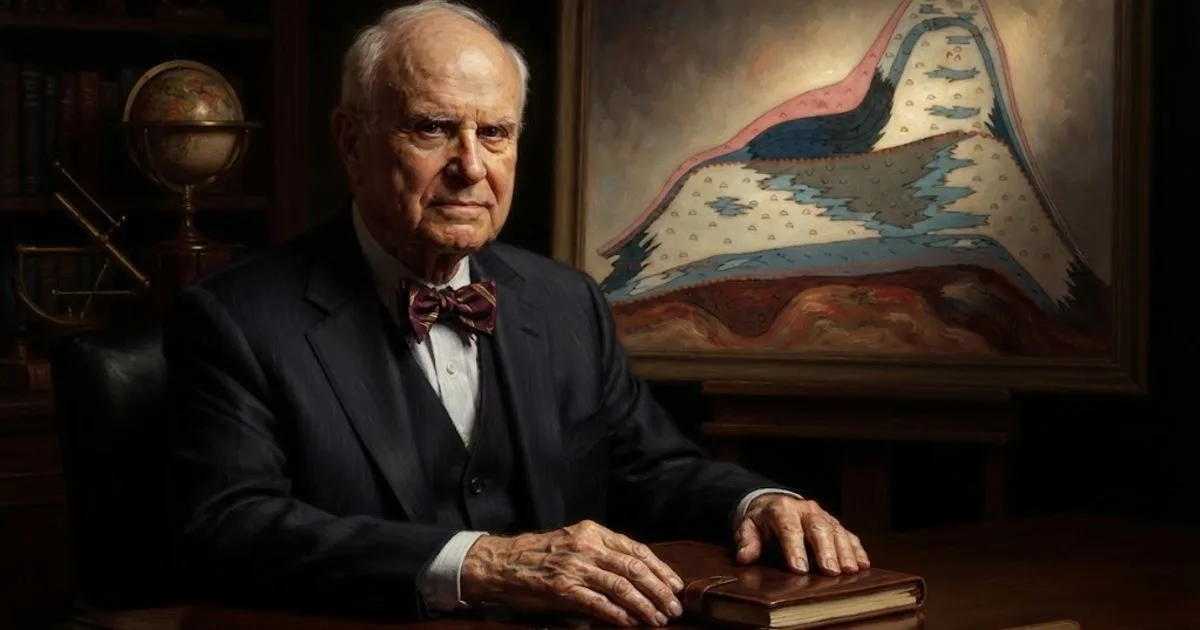
Grynberg, Part 4: How a Family Took a Billion-Dollar Empire From the Man Who Built It
If I had been asked to speak at Jack Grynberg's funeral service, this is the eulogy I would have said.
A Eulogy I Was Not Asked to Give
Jack Grynberg died on October 11, 2021, at 89.
He was the man who found one of the largest oil and gas fields discovered in half a century.
At the end of his life, Jack lived on a Social Security check.
He discovered the Karachaganak field in Kazakhstan. It paid his family between $100 and $250 million per year.
He ended up living on a government check of less than $4,000 a month. His children, conversely, received $16 million a month from his work.
What the Father Built

He was a Jewish boy in Brest when the Nazis came. His mother, Fania, was a pediatrician. A family whose children she had treated hid the Grynbergs in a barn for two years.
Jack joined the Polish partisans at 12 and lived in the forests of Belarus. There had been 23,000 Jews in his city. When the war ended, only a few dozen were alive.
Jack, his parents, and his two older brothers were among the survivors. Another brother had escaped to Palestine. When he learned they were alive, he brought them there in 1947. The family had survived because its members found one another again.
At 17, Jack came to Denver in 1949 with $27 in his pocket. He won a foreign-student scholarship to the Colorado School of Mines. He completed the petroleum and geophysical engineering program then earned a master's degree in petroleum engineering and refining.
He served in the U.S. Army.
Then he became a pioneer in interpreting seismic data and well logs. He was a wildcatter: a man who risked his own money on what he believed lay beneath the ground.
The First Strike
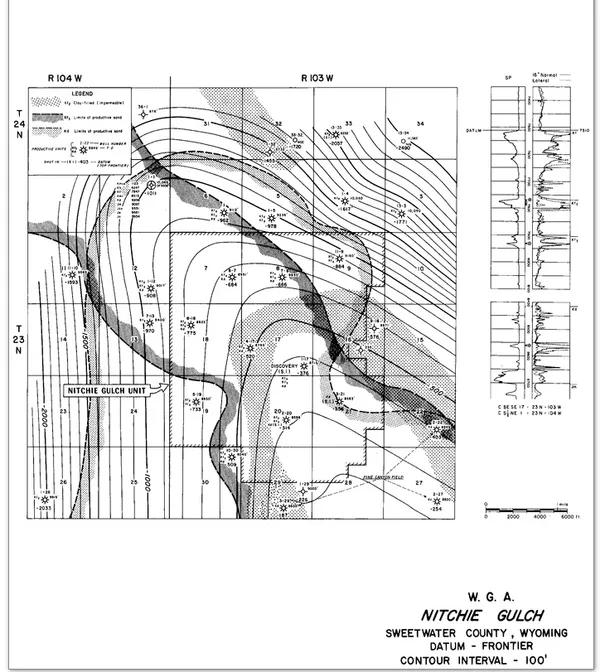
In 1962, at thirty, Grynberg gambled on a Wyoming gas well that Amerada Hess had drilled, declared worthless, and walked away. Grynberg studied the measurements looking for what other men had missed. He reworked the abandoned well. The Nitchie Gulch field made him his first million.
He drilled in Colorado, Wyoming, and North Dakota. There were more dry holes than wet, but the good wells gave him steady, modest production, enough to keep the rigs moving and the next hope alive.
His company discovered the Prinos field off Greece. It produced the only oil ever sold commercially in that country. The wildcatter's improbable judgment had again become an established fact.
Prinos was only a modest producer; it didn't produce until 1981, after Jack lost control of the company that controlled the Prinos field in the mid-1970s.
He sued to take the company back. The Delaware Supreme Court ruled against him in 1981.
But Jack went on. He did business on five continents. He made money and often lost it. There were dry holes in Belize and lost concession fights in Grenada and Cameroon.
This is the arithmetic of wildcatting: many losses are not proof of failure but the cost of finding one success.
Dig a hundred dry holes. The next one may pay for them all.
Kazakhstan
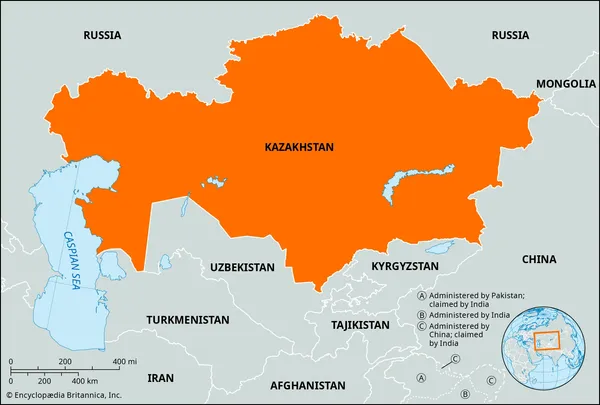
In the early 1990s, the Soviet Union collapsed and its buried wealth opened to the West. Grynberg was there. He built a relationship with Kazakhstan's president, Nursultan Nazarbayev. He knew him well enough to call him by his first name, and he entered doors no American oilman had opened.
In August 1990, Grynberg and British Gas signed an "Area of Mutual Interest" agreement for Kazakhstan. British Gas would receive 15 percent of any opportunity there. Grynberg would receive 20 percent. Other parties would divide the rest.
That was the promise before they knew what lay beneath the ground.
Through his contacts with Kazakh officials, Grynberg learned about a little-known prospect called Karachaganak.
As per the agreement, he told British Gas what the field might hold. Then he went to the Kazakhs and told them British Gas was the company to bring it out of the earth.
The Kazakh government approved the formation of the consortium.
He found the field. He brought the oil company and the government together. He did it with relationships and knowledge no other Western oilman had.
His contribution was not the drilling. It was making the drilling possible.
The Suit That Made Him Rich

Then British Gas cut him out. It made its own deal, brought in Eni and outbid BP. It used the confidential field assessment Grynberg had given it.
He sued. The case was Grynberg Production Corp. v. British Gas. He filed it in federal court in Texas in 1992.
In July 1993, the case settled. British Gas agreed to pay Grynberg $50 million — $3 million immediately and the remainder in 40 quarterly installments. It also agreed to give him 15 percent of its net profits from Kazakhstan production.
Grynberg, whose propensity was to describe things in grandiose terms, had declared (it is what got the deal put together) that Karachaganak was one of the largest gas-and-condensate fields on earth.
His claim attracted billions in investment. A global consortium drilled the wells, ran the plant and sold the gas. It included British Gas, later Shell, with Eni, Chevron, Lukoil and the Kazakh state company.
The gas lay nearly three miles underground in microscopic pores, cavities and fractures within an ancient reef complex. Marine organisms built the reef about 300 million years ago. It later hardened into limestone and was sealed beneath impermeable rock that prevented the gas from escaping.
They drilled through that lid and brought the gas up from the darkness into the markets of the world.
Once Jack's grand claim produced billions, it ceased to seem grandiose. Karachaganak became one of the largest gas-and-condensate fields on earth with aggregate sales over the decades (and decades still to come) likely to be a trillion dollars.
He took his 15 percent. Four times a year. Those checks ran between $25 and $60 million a quarter.
He Kept Wildcatting
 Jack Grynberg
Instead of resting on his laurels, as many men might have done, he went back to wildcatting. He made more deals and fought more large companies. The strike had given him the means to keep searching.
Jack was practical in some things and completely impractical in others. He knew he could lose everything in a lawsuit or a bad deal. He knew he could die.
In 1993, he put the companies in the names of his wife and children.
Then he went on being a wildcatter who fought as readily in court as he drilled in the field. He filed more than 70 royalty actions and approximately 400 lawsuits, accusing BP, Exxon, Conoco and foreign governments of withholding royalties or excluding him from what he was owed.
The energy trade press had a name for him: "Jack the Suit."
The majors had size and patience. Jack had fury. He lost more cases than he won. But when he won, he won big.
By his own count, he collected more than $800 million in settlements and court rulings over his career.
Kinder Morgan disclosed in a 2002 filing that it had paid him $16.8 million, and in 2009, according to a person familiar with the company's legal strategy, BP settled a U.S. claim with him for $200 million.
Jack Grynberg became rich: not through consistent success, but through a few successes large enough to make the failures irrelevant.
He inherited nothing. He made every dollar himself.
The One Thing He Never Counted as a Risk

His family was the one thing he did not consider a risk. The wells might run dry and deals might fail, but blood, he thought, would never fail.
He came from an old world of terror and flight, where a child honored his parents above all others. He believed this as firmly as he believed the earth concealed riches.
He intended to run his company until he died. Then it would belong to his children and to his wife, if she survived him.
Grynberg decided to place the shares of his companies in his wife and children's names.
He filed lawsuits against companies and governments. Some sued him back. He lost more than he won. If he were to die, creditors and the government could have divided tens of millions from his estate before his family received it.
His family were not tough wildcatters. To protect them above all else, was his goal.
In 1993, he acted. He put the companies and the Kazakhstan interest in the names of his wife and children. On paper, Jack owned nothing.
The distinction between actual control and legal ownership appeared, for the moment, protective.
He then ran the company. It grew and his family grew rich.
His wife and children owned the wealth on paper. Jack controlled the money. Over the years, he handed them millions. They took their share of the profits but showed little interest in the wells, the contracts or the fights.
Jack decided how much profit went into new projects. To him, a share of the income financed future work. To him, a fortune was seed for the next field.
To his children, it was a harvest ready to be divided.
What the Children Had

Rachel Grynberg (above)
Rachel and Miriam each had only about $40 million when they decided to take it all.
Stephen, the youngest, had merely $10 million. He had spent the difference making financially unprofitable documentaries.
His father's successful work financed Stephen's unsuccessful work. His father's wells paid for his dreams.
When Stephen ran short, Jack simply handed him a million or two.
The Kazakhstan money accounted for about 90 percent of the profits. It came year after year, tens of millions each quarter.
It required nothing from the children beyond noticing that the payment had been made. This was the sum total of the labor required of them by the fortune their father had made.
Rachel became a noted philanthropist in Denver. She gave to the Colorado Ballet, Jewish Family Service, and private schools. The city learned her name through the money her father's work provided.
There was money for Rachel's house too, charity having begun at home. Jack gave her $3 million in cash. She bought the house outright.
The Calculation
As the children entered middle age, and a little beyond it, and Jack entered his early eighties, they made a calculation. It was not about what their father needed. It was about how much longer they should permit him to control what they expected to inherit.
They looked at their father, looked at the money, and began to count the years. They had lived like millionaires. They could live closer to billionaires if their father stopped investing the money in new ventures.
If they stopped reinvesting the Karachaganak profits, each child could receive approximately $50 million a year. The field would continue producing. Only the work of searching for another one would end.
This would replace the relative austerity of living on $5 million or $10 million a year. Rachel could give more to charity. Stephen could make more documentaries and spend more making them.
Personal appetite could thus be described as public generosity and artistic ambition.
Their father had made his great strike. It was enough.
His children now regarded his new wildcatting and investment proposals as excessively speculative. The methods that created the fortune became unacceptable, and the fortune belonged, on paper, to them.
The children wanted no more dry holes in North Dakota and no more lost concession fights in Africa.
They wanted the checks in full. It was time to put their father out to pasture.
The Taking
Only one obstacle remained between the children and the full income: the man who had created it.
They could wait for their 80-year-old father to die and inherit the fortune, or they could take it while he still lived.
Between the autumn of 2015 and the spring of 2016, the children took the company from their father while he was alive.
They rose up in an act of defiance, and with a battery of lawyers, caused the board of directors to strip their father of his signature on the bank accounts — including a Deutsche Bank account holding more than $161 million.
He had controlled these accounts solely for years.
In February, they removed him as president of the company he had built. In March, they reduced the board from five seats to four. Then they voted him off.
The subtraction of one seat accomplished the subtraction of one father.
Jack fought. But he had no money for the fight. Everything was in the names of his wife and children.
They Said He Had Lost His Mind
The takeover required a respectable justification. Children cannot simply say they want the money their father made. They must say they are protecting him.
The act of taking becomes an act of care.
The children supplied the necessary explanation: Jack Grynberg had lost his mind. Once the father was declared irrational, the children's appetite could be presented as responsibility.
Rachel testified that by 2015 her father had become delusional and had lost tens of millions of dollars to scammers. Jack was no longer merely speculative. He was dangerous to the fortune.
The man who had outbargained oil companies, she said, could no longer protect himself.
They said Jack claimed to own a Wyoming well containing 30 billion barrels of oil, more than the entire U.S. reserve. They also said he falsely told the president of Botswana that he had $2 billion in a bank there.
They said he tried to buy $100 million in generators for a Nigerian power plant that did not exist.
Stephen testified that Jack wrote to Japan's prime minister claiming he had leased 7.6 million hectares of sugar fields. He had leased none.
The family's court papers listed more. Jack claimed to own $1 trillion in oil and gas in the Aegean Sea.
He emailed bank information to a Gmail account he believed belonged to a Brazilian princess who had been dead for 10 years. He exchanged a copy of his passport for a forged bank note.
A Catalog Built to End Inquiry
The catalog was designed to make examination unnecessary. Once enough absurdities had been assembled, any act of resistance could be dismissed as another one.
The claims sounded crazy.
Records and witness testimony showed the children's claims were untrue.
A false boast is not the same thing as a financial loss, and eccentricity is not a legal finding of incompetence.
Jack bragged. But the record does not show that scammers or a Brazilian princess took his money. His grandiosity may have produced imaginary deals and outlandish claims. It was the same grandiosity that led him to say Karachaganak held a trillion dollars in gas.
When the claim made money, it was vision. When the children wanted control, it became madness.
Jack understood the distinction between a wildcatter's boast and an executed contract. His children's case depended on erasing that distinction.
Three children seeking a far larger share of the income had reason to describe these traits in the most alarming terms available. Eccentricity could become incapacity, and their desire for money could become concern for their father.
Every boast their father had made could be gathered up and made to look like proof that the old man had gone mad.
A Story to Sleep By
The company was in their names. They did not think they owed the old man an explanation. The dementia story served a purpose: it made the exercise of power appear virtuous.
The explanation was needed less for the law than for themselves. Even a child holding the deed may want a story that lets her sleep.
Their father was crazy, they said, so they had to take the company. But dementia was not the legal issue on which control of the companies depended.
No court found Jack incompetent. The official record, when it finally addressed his capacity, contradicted the story used to justify removing him.
The children nevertheless retained a geriatric psychiatrist who testified that Jack had been demented since 2014. The diagnosis arrived from an expert selected by the people who benefited from it.
The date conveniently preceded the removal of his authority.
The children's portrait was vivid, and, in fairness, it may not have been entirely invented.
Jack Grynberg made grandiose statements. He had done so throughout his life. His children were not alone in describing him as delusional. Terrence Burns, a company executive, used the word under oath. The question was not whether the trait existed, but whether it meant what the children needed it to mean.
Jack was delusional, Burns testified, "but also well-versed in legal matters and knew contracts."
The Contradiction Was the Character
That was the man Jack had always been. He spoke grandly about distant ventures. He was sharp about the contracts and money before him.
The children converted the first characteristic into proof that the second had disappeared.
His mind could race across oceans after impossible schemes, but put a contract and a dollar before him and he became sharp as a blade.
Gene Webb, one of Jack's top executives, saw the same distinction. He said the children constructed the dementia case dishonestly.
"They hired this psychiatrist quack," Webb said, "whose testimony has been thrown out of many courts."
The psychiatrist diagnosed Jack without ever speaking to him.
"He was a very brilliant man and very knowledgeable," Webb said. "A lot of things he did didn't make sense. He didn't have a lot of common sense sometimes."
He forgot names. He made bad bets. He chased wild pitches that came through the door.
None of this was new. None of it established that he could no longer understand contracts or money.
He had done those things for 40 years. It was the man he had always been. It was how he made the family rich.
The Harm That Wasn't
The claim of actual harm was that scammers had taken tens of millions from Jack. It was the claim that transformed eccentricity into danger.
Those were not scams in the sense the children implied. They might have been dubious opportunities, but they were not instances in which Jack surrendered millions to con artists.
They were private-placement solicitations. This was a legal and common method of raising money. A wealthy man showed that he had funds and was promised a return for lending his name to the transaction.
Showing money is not the same as surrendering it. No money changes hands.
Webb completed the forms himself. He said Jack did not lose a cent.
The Two-Hundred-Million-Dollar Proof
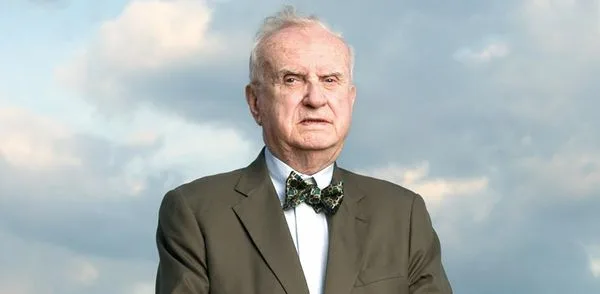 Jack Grynberg
There is further proof that he was far shrewder than the crazy man his rapacious children made him out to be.
According to Webb, around 2014, the IRS came after the family over the Kazakhstan income. It wanted more than $200 million. The family's tax accountant, Webb says, advised them to settle for $200 million or something close and make it disappear.
Jack was sure the government was wrong. He would not let his children hand over a fortune they did not owe. With Webb and the company lawyer, they fought it — deducting the business expenses against the Kazakhstan income, documenting the transfers the IRS had disallowed, all of it legal, all of it defensible.
In the end, according to Webb, the family paid less than $20 million on a bill north of two hundred million.
Jack was right. The old man the children were later describing to a court as too addled to run his own company had just overruled the professionals and saved the better part of two hundred million dollars.
That was the man. Grandiose about far-off schemes and dead-sharp about the money in front of him.
His children needed the world to see only the first. They had good reason not to mention the second.
It is not that the children invented a lunatic. It is worse than that. They took a real trait — the lifelong grandiosity of a wildcatter who believed there was "a pony buried in every pile of manure," the same instinct that had found Nitchie Gulch and Karachaganak — and they reframed it, with a hired expert, as the senility of a man who had to be saved from himself.
No Court Ever Said It
No jury ever found Jack Grynberg demented. The trial that decided the companies turned on a single question — whether there was any contract with his children that gave him lifetime control.
The court said there was none.
A judge addressed Jack's mental capacity only later. It happened in a separate dispute over a lawyer the children did not want to pay.
The judge agreed that Jack spoke grandly about his schemes. But "when it came to the engagement of attorneys," the judge found, "he did not suffer at all."
Jack understood lawyers. He understood contracts. He knew what he signed.
Which is the quiet absurdity at the center of it. The children needed their father too far gone to keep his company. But the one faculty a man must have to be stripped of everything in a courtroom — the capacity to understand what is being done to him — is the very faculty the judge found intact.
At 80, he was the same man he had been at 40.
What had changed was the usefulness of that man to his children.
The Divorce

Celeste Grynberg (above)
After they took the company from him, Jack Grynberg did what he had always done when someone cut him out of a deal.
He fought. "When someone has stolen from you," he told a reporter that same year, "you try to get it back, and you don't give up."
Then a rather ugly event took place in a series of ugly events that shows that the children of Jack Grynberg put money as their one idol.
And before that idol they were prepared to lay father, mother and marriage alike.
Celeste, Jack's wife and the children's mother, owned 25 percent of the company.
Webb said the sworn testimony showed what the children had used to bring their mother over to them.
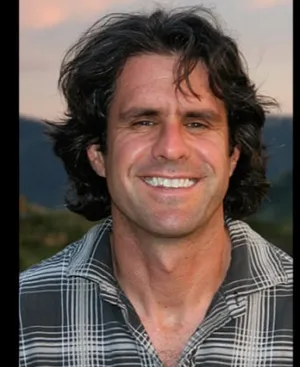 Stephen Grynberg
Stephen told Celeste that if she did not side with the children, she would never see her grandchildren again.
They used the grandchildren against her. After 60 years of marriage, Celeste sided with the children against Jack.
Jack lost the last person who might have stood beside him.
At 86, Jack divorced Celeste so he could claim his marital share. The marriage had not failed. He divorced his wife to defend himself against his children.
But it was too little, too late. And so the old wildcatter fought his last battle alone.
Jack Grynberg lived about two years after they took everything. He died on October 11, 2021, at the age of eighty-nine, in the big house in Cherry Hills — one of the few things still in his own name.
He had his Social Security check. In the end, he had little else.
Jack arrived in America with $27 and ended his life with approximately the same amount. Between those two points, he created a billion-dollar fortune and gave it to three children who never had to earn any part of it.
The symmetry would have been elegant if it were not obscene.
What They Said at His Funerl
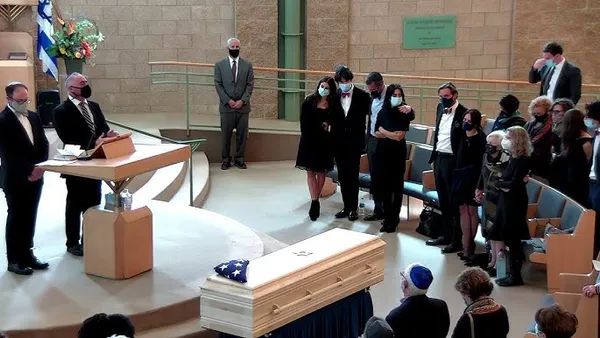
In October 2021, the Grynberg children buried their father.
Rachel gave the eulogy. She described him as having a towering intellect, excessive chutzpah, and absolutely no fear.
She told the mourners a saying her father lived by: "They can take away your home, they can take away your money, but no one will ever take away your education."
She said this at his funeral, having taken his money.
There is no charitable reading. The woman quoting his line about people who strip a man of his money was the person who had stripped him of his.
She had locked him out of a $161 million account that bore his name. She had left him, at the end, on a Social Security check. And she stood at his grave and recited his proverb about the one thing no one could take. She had taken the rest.
She said one more thing. She said her father had protected her, "ensuring my future would not be his past."
Jack had succeeded. His daughter would never be poor, displaced, or powerless. She had transferred those conditions back to him.
His past was $27 and no country.
She made sure his future matched his beginning.
Then Jack's nephew spoke by recording.
Ami quoted Jack's creed: "The one who has the gold makes the rule."
He also repeated his mother's warning: "Never do business with your family, or you may end up with neither."
Ami said he had ignored the advice and paid for it.
He did not gesture at the front row. He did not have to. The children who had done business with their father, and left him with neither gold nor family, were sitting right there, being honored.
They spoke of his brilliance, his fortune and the fierceness with which he had protected them. They praised the empire he built from nothing and the billion dollars he gave his family.
They knew exactly what the man had done. They knew it when they took his companies. They knew it when they locked him out of his accounts. They knew it when the old man had to divorce his wife to get money for a lawyer.
They buried him with honor. They had denied him honor while he lived.
Jack came to America with $27. He made one of the country's last great oil fortunes. He gave it to his three children because he believed they would honor their father.
They took the gift and broke the commandment. Then they praised him, which cost nothing, and buried him, and went home to the money.
Honour thy father and thy mother, as the Lord thy God hath commanded thee; that thy days may be prolonged, and that it may go well with thee, in the land which the Lord thy God giveth thee.
Thy days may be long, the commandment promises.
Jack Grynberg's children got the days and the money both. Whether that is the same as the final reward, the commandment does not say.
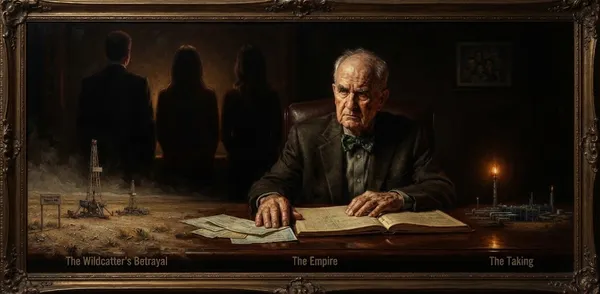
See also: The Grynberg Inheritance (Part 1),
Hurricane Rachel (Part 2),
Honor Thy Father (Part 3).