Honor Thy Father: How the Grynberg Children Took Everything

Hurricane Rachel, Part 3
The Daughter Who Went to Court
The Grynberg siblings — Rachel, Stephen, and Miriam — had owned various family oil-drilling companies since the early 1990s, when their father put them in their names.
In 2015, the siblings, led by Rachel, went to court to remove their father from any control of those companies. Jack Grynberg, the father, had built and run the companies for decades.
He was the president and controlled the bank accounts. Every year, $100 to $250 million in profits from one field, the Kazakhstan oilfield, came into one of the company accounts. That is a lot of money. Enough money to make people forget who made it.
Jack controlled the money. He had earned that control.
To turn that ownership into real money, Rachel Grynberg, Jack's daughter, led her brother and sister in taking control of Pricaspian Development Corporation — the company that held the rights in Kazakhstan and therefore the family's real fortune.
In 2015, the board took her father's authority over the bank accounts, removed him as president, and voted him off the board. It had, if one has a delicate sense of smell, the odor of ingratitude. Faint perhaps at first, but unmistakable to anyone with a nose for family money.
But actually, one does not need a delicate nose for that. You only need to know what a father is.
But it has been said, Rachel, herself may have said it, if one loses a father, one can always find another. But there is only one Kazakhstan oil field.
Jack Built It
Jack Grynberg came to Denver in 1949 with twenty-seven dollars. It is the kind of origin detail wealthy families like to preserve until it becomes inconvenient.
He built an oil fortune, largely because he found the Kazakhstan oil field. He made a fortune. He did not inherit it. He made it.
His children were babies when he was out wildcatting and fighting. He had a style. It was not gentle. He drilled. He fought. He was not an easy man. But easy men do not build fortunes from nothing.
He lived by the lawsuit. Seventy-plus royalty suits, ~400 lawsuits in his career. It earned him something a federal judge once reportedly said: that his litigation exploits verged on the legendary. It was not praise exactly. But Jack may have taken it as such.
He was the kind of man who fought even when fighting made no sense to anyone else. Every dollar his children got, and it was, in the end, more than a billion, Jack earned and fought to keep it.
Jack’s labor, Jack’s risk, Jack’s quarrels, Jack’s stubborn life. Jack’s appetite for risk and his refusal to go quietly when larger men told him no.
The children did not make that money. He made the money. They took it.
Three children, Rachel foremost, Miriam and Stephen behind, took the work of his life and left him, in spirit, with the twenty-seven dollars he had carried into Denver. But an old man cannot begin again.
A Man of the Old World
Jack Grynberg died on October 11, 2021, at 89. His obituary listed things that had nothing to do with oil and lawsuits: He spoke six languages, loved to ski, play backgammon, go to the theater, drink milkshakes, and he loved his grandchildren.
Menachem Begin, the Irgun commander, had been a friend of the Grynbergs of Brest had once babysat Jack as a boy.
Begin was Jack’s hero.
And the family who took it from him, now as rich as Croesus, asked at the bottom of his obituary that donations go to the care of elderly Holocaust survivors. It was a tasteful request. It was also remarkable.
A family that had taken the wealth of its own aging father asked the public to show compassion for elderly Holocaust survivors.
Before He Knew Business
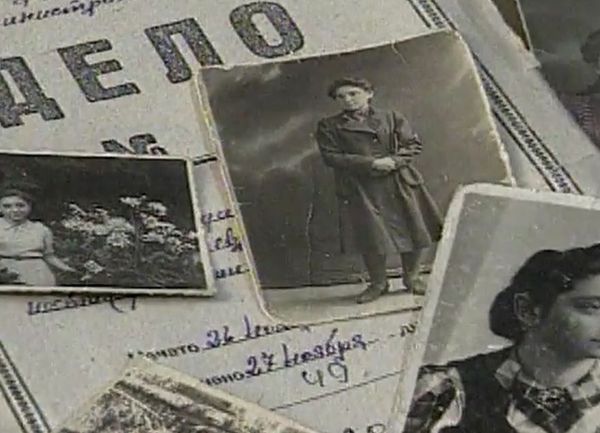
Jack Grynberg was seven when the Germans came.
He survived the Brest Ghetto, escaping before it was liquidated, hid in a barn for two years, and lived in the forests with partisans.
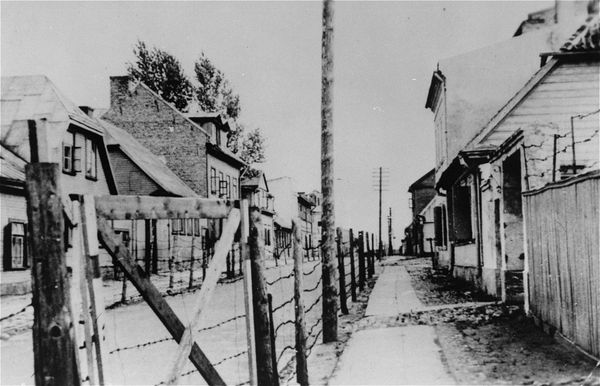
Before he knew business, he knew terror. Before he knew courts, he knew flight.
It was a childhood made of fear, silence, and hunger. That is not a childhood. That is survival. He came out learning what children in such circumstances learn: that the law will not save you.
Sometimes the state is the thing coming for you.
When the world is against you, you have family.
That is what Jack learned. The family hides together. The family keeps its word. There is no contract. The word is the contract. That is what he believed. He brought it with him to Denver.
He spent his life fighting in court and trusting almost no one. The exception was his children.
He trusted his children. That was the whole trouble. So he gave them everything. And his children took it away in a way that he had always feared his enemies might. In a courtroom.
His obituary belonged to the old world. But he lived long enough to learn that his children belonged to another world entirely.
The Word Was the Contract
He was not blameless. His kids were young adults when he made the decision in 1993.
He formed Pricaspian and, somehow stupendously it seems in retrospect, he recorded the shares in his children's names — not in a trust he controlled, but outright, in their names.
There was no contract. Jack saw the world as he knew it: lawsuits, oil fields, territorial quarrels, rough men in foreign lands, the constant possibility that fortune or death might come suddenly.
He wished to protect what he had made for those he loved best. So he gave the children the legal title. It was a practical decision. He wanted his children to keep what he had earned if something happened to him. That was all. A father thinking of his children. That was his thought. It was old. As old as mankind. Older than America. It was the law beneath the law. Older than Moses. Honor your father. Not because a court says so. Because if that is gone, what is left?
Maybe the old precept is what separates mankind from the beasts. Maybe that is what makes us human. Maybe not money. Maybe not law. Maybe honoring the ones who gave us life.
So he made his children the owners and ran the company. He’d run it til he died, after which they would get it all anyway. It was a father’s plan, simple and doomed.
He did not understand that his children did not inhabit his world. They lived in Colorado. More specifically, they lived in the world of Colorado corporate law, where sentiment has no standing unless reduced to writing. That is not the same as a family table.
In it, a father's understanding is worth nothing. Billions split three ways, taken from their dad who made them, if the law permits it. They live for today in Colorado.
The old man lived somewhere else, even when he was there.
By the Caspian
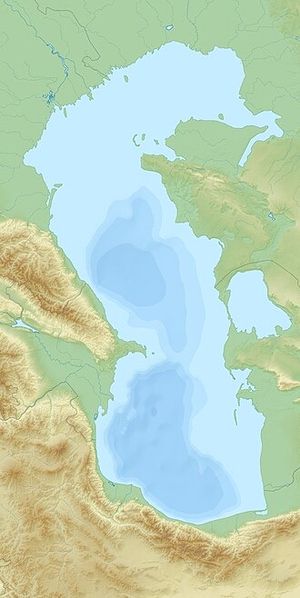
The principal company was a Texas corporation called Pricaspian Development Corporation. The name means “by the Caspian,” because the oil fields were near that sea.
Pricaspian held the Kazakhstan rights — the source of the royalty that paid for everything worth taking from an old man.
Jack Grynberg, a wildcatter, made a hundred bets and lost most of them — dry holes in Belize, lawsuits in Grenada, schemes that went nowhere. But he had the one thing a wildcatter needs: he was right about the big one. Kazakhstan paid for every dry hole he ever drilled. Whoever controlled Pricaspian controlled the family fortune. In 2015, Jack controlled it. By the spring of 2016, his children did.
The School That Said Yes
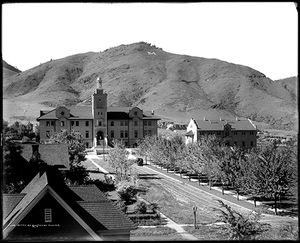 Colorado School of Mines
Jack Grynberg was educated.
The Colorado School of Mines awarded him the only scholarship for an international student. A school looked at this refugee boy and said yes. He graduated from the Engineering School in two and a half years with degrees in Petroleum and Geophysical Engineering.
He later received a Master’s in Petroleum Engineering and Refining.
He was not merely driven. He was technically formidable.
Afterward, Jack served in the United States Army, where his knowledge of Russian was helpful in the Army’s combat against the Soviet radioactive-warfare program. The refugee became useful to his new country.
As for the Colorado School of Mines, he repaid his debt for the rest of his life. He served on the school's board. It honored him for a lifetime of achievement. He gave money again and again like a man who remembers the place that believed in him when he was nobody.
There was supposed to be one final gift.
Gene Webb, who worked beside Jack for fifteen years, says Jack’s will directed up to $40 million to the School of Mines, to place his name on a new building. It was vanity, perhaps, but also gratitude. The school never got it.
After the children had Jack declared incompetent, Webb says, the lawyers went to probate court, argued he had not been of sound mind when he signed the will, and had the gift revoked. The $40 million remained inside the family. The school that believed in a refugee with twenty-seven dollars was told, in effect, that the old man had not known his own mind when he tried to thank it. It is a hard ending to a beautiful beginning.
He Could Read the Earth
For a long time, long enough to make his children rich, Jack Grynberg was not incompetent. He was good, and he was good for a long time.
He made his first million in the early 1960s in Wyoming, on a gas well that the Amerada Hess Corporation had drilled, written off as worthless, and abandoned. He saw something there. He was right.
The Nitchie Gulch field made him rich and made him, from then on, an independent. From then on, he was a man who trusted his interpretation of the rock more than the judgment of companies a thousand times larger.
He found oil in Greece, the Prinos field. He drilled producing wells across Colorado, Wyoming, and North Dakota. He was a pioneer in reading seismic data and well logs. He could read the earth. That was his gift.
He did business on five continents.

Then he found Kazakhstan. Kashagan. The big one. The royalty from Kazakhstan - $100 to $250 million a year - was 90 percent of the family's wealth. That is not just money. That is the whole family story.
The same courage that made him rich also made him lose. He drilled two dry holes in Belize. He sued the government of Grenada twice over an oil concession and lost. He fought for a gas field in Cameroon and lost on a technicality. He sued the major oil companies many times. He said they cheated the government on royalties. He lost most of those cases.
Jack's motto was that in every pile of manure there is a pony somewhere, so he kept digging. Most were just manure. But Jack didn't drill the dry holes because he was a fool. He drilled them because the only way to find the one well that pays for everything is to keep drilling after the failures.
Jack ran it that way for 60 years. Kazakhstan paid for every dry hole. It was also, in the end, the well his children took from him.
One Year
On September 8, 2015, the Pricaspian board met in Denver, voted to strip Jack of his authority to sign the bank accounts, appoint the children as signatories in his place, and then wrote to the banks.
Deutsche Bank, where Jack had been the sole signatory on an account holding more than $161 million, removed him. Imagine being the man who made the money and being told you cannot touch it. Forty years, and then no.
Citibank and TD Ameritrade froze him out as well.
On February 24, 2016, the board met again and removed him as president, naming Rachel and Stephen co-interim chief executives. They gave their father a title: Chairman Emeritus. That is a nice title for a man who has been put out. It sounds respectful. It means finished.
One month later, on March 24, 2016, the board met a third time, voted to cut its size from five seats to four, and used the vacancy to remove Jack from the board entirely. In the summer of 2015, Jack Grynberg ran a billion-dollar empire. By the spring of 2016, he was locked out of the accounts and off his own board. The transformation took less than a year. A lifetime’s work can be taken quickly.
Was He Unfit?
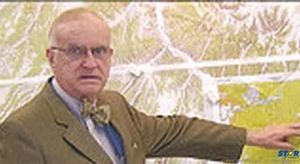 Jack Grynberg
He sued.
Jack filed in Texas, where Pricaspian was incorporated. The children moved to throw the case out and move it to Colorado. They won.
Rachel emerged holding the power. Stephen lived in California, making documentaries that lost money. Miriam stayed in the background.
Rachel became chief executive. Her justification was that her father's judgment was failing — that he had become a danger to the business. Maybe she believed it. Maybe she also saw the money.
Rachel testified that her father lost tens of millions to scammers, claimed to own a Wyoming well holding more oil than the entire national reserve, and tried to buy $100 million in generators for a Nigerian power plant that did not exist.
Stephen testified that Jack told the president of Botswana he had $2 billion in a bank there.
But the same judge who said Jack was delusional about his grand business schemes found that "when it came to the engagement of attorneys, he did not suffer at all." It is an important distinction. He could be grandiose without being legally blind.
That means he still understood lawyers. He understood contracts. He knew what he signed. Jack was not a child.
The children's argument for removing their father was that he was too far gone to be trusted with the company.
But no jury ever ruled on it. The trial turned on a narrow question — whether there was any contract that gave Jack control. There was none.
The children were the owners. That was the law.
The One He Had to Win
By their father’s lawyer’s estimate, the children received roughly a billion dollars they had not earned. There are cleaner ways to inherit. There are not many colder ones.
Jack earned it. They got it.
Jack died - six years after having lost it all in his 400th plus lawsuit, the one that mattered the most. At the end, he fought his children and lost. This was the one he had to win. He lost it. Then he died.
The Frank Report invites Rachel Grynberg to respond. Phone 305-783-7083 / email [email protected].


