
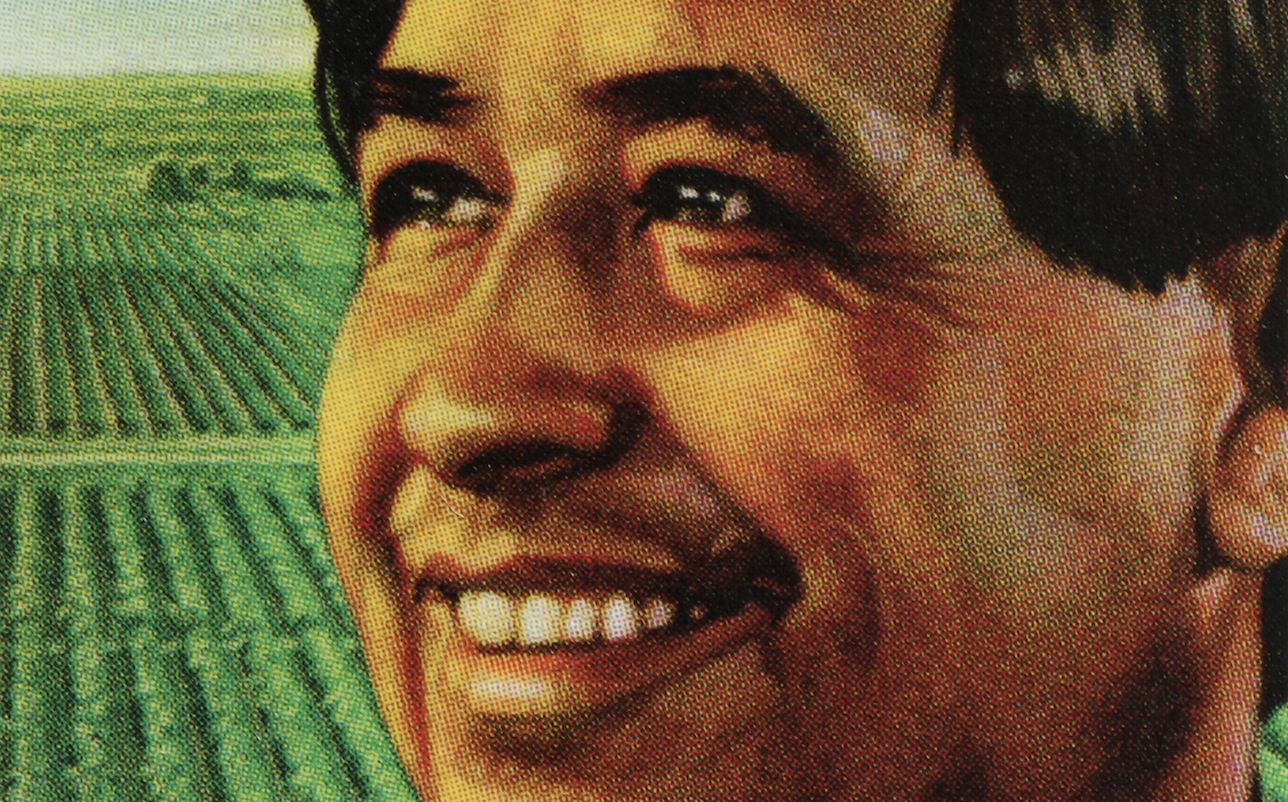
Cesar Chavez Day celebrations are being canceled across the United States this year after the United Farm Workers and the Cesar Chavez Foundation issued statements Tuesday acknowledging deeply troubling allegations that Chavez sexually abused women and minors during his time as president of the UFW.
The announcements arrived on a symbolically freighted day, Tuesday, March 17, marks exactly 60 years since the famous 1966 march from Delano to Sacramento.
This was the moment Chavez’s movement burst into national consciousness and began reshaping American labor history.
The allegations concern events that allegedly occurred decades ago, during the early years of the UFW.
The source of the allegations has not been publicly identified. Neither the UFW nor the Cesar Chavez Foundation has stated who brought them forward, and both organizations say they have not received direct firsthand accounts.
Nevertheless, both called the allegations serious enough to act on immediately.
What Did The UFW Say About Cesar Chavez?
The United Farm Workers published a formal statement on Tuesday that was unsparing in its language. “The UFW has learned of deeply troubling allegations that one of the union’s co-founders, Cesar Chavez, behaved in ways that are incompatible with our organization’s values,” the statement read.
“Some of the reports are family issues, and not our story to tell or our place to comment on. Far more troubling are allegations involving abuse of young women or minors. Allegations that very young women or girls may have been victimized are crushing.”
The union said it had not received direct reports and had no firsthand knowledge of the allegations, but was treating them as serious enough to warrant immediate action.
In response, the UFW announced it would not participate in any Cesar Chavez Day activities, a significant and extraordinary step for an organization that has built much of its identity and public presence around the annual observance of its co-founder’s birthday.
“Over the coming weeks, in partnership with experts in these kinds of processes, we are working to establish an external, confidential, independent channel for those who may have experienced harm caused by Cesar Chavez during the early days of the UFW’s history,” the statement continued.
“This channel is for those who wish to share their experiences of harm, to identify their current impacts and needs, and, if desired, to participate in a collective process to develop mechanisms for repair and accountability.”
The statement closed with a note that the allegations had been “profoundly shocking” and encouraged community members experiencing distress to seek mental health support.
What Did The Cesar Chavez Foundation Say?
The Cesar Chavez Foundation issued a parallel statement Tuesday saying it had “become aware of disturbing allegations that Cesar Chavez engaged in inappropriate sexual behavior with women and minors during his time as President of the United Farm Workers of America.”
The Foundation said it was “deeply shocked and saddened” by what it was hearing and committed to working with UFW leadership to respond to the allegations, support those who may have been harmed, and establish a safe and confidential process for people to come forward.
“In addition, we are investing time and resources to ensure the Foundation promotes and strengthens a workplace culture that is safe and welcoming for all,” the statement said.
Celebrations Canceled Across The Country
The institutional response has set off a wave of cancellations at the local level. In Tucson, organizers dropped Chavez’s name from the annual celebration entirely and canceled a planned march, citing “sensitive information” from his past.
The César E. Chávez Legacy and Educational Foundation in San Antonio had already notified the city on March 6 that it was canceling the annual César E. Chávez March for Justice, one of the city’s largest annual community events, citing a “sensitive matter” at the time without elaborating.
That cancellation, made nearly two weeks before the UFW’s public statement, suggests the allegations were circulating within the farmworker movement well before Tuesday’s public disclosures.
Events in other cities across California, Texas, and Arizona are also affected. Cesar Chavez Day is observed as a formal state holiday on March 31 in California, Arizona, Washington, and Utah, and as an optional holiday in Colorado and Texas.
Who Was Cesar Chavez?
Cesar Chavez was born March 31, 1927, in Yuma, Arizona. His family lost their farm during the Great Depression and became migrant farmworkers, and Chavez spent much of his childhood moving between labor camps in California.
He served in the United States Navy at 17, then returned to California and began organizing with the Community Service Organization in the early 1950s, where he worked to fight racial and economic discrimination against Latino residents.
In 1962, Chavez co-founded the National Farm Workers Association with Dolores Huerta, which later merged with other groups to become the United Farm Workers of America.
Working out of California’s San Joaquin Valley, he organized some of the most consequential labor actions in American history, the Delano grape strike beginning in 1965, a 340-mile march from Delano to Sacramento in 1966, and a nationwide grape boycott in 1968 that drew millions of American consumers into solidarity with farmworkers.
His 36-day fast in 1968, which ended with Robert F. Kennedy breaking bread with him publicly, became one of the most iconic images of the civil rights era.
He was awarded the Presidential Medal of Freedom posthumously by President Clinton in 1994, a year after his death.
President Obama established the César E. Chávez National Monument at the UFW’s California headquarters in 2012 and declared March 31 a national day of service in his honor in 2014.
Schools, streets, and parks across California and the Southwest bear his name. He remains one of the most significant labor and civil rights figures in American history.
What Happens Now?
The UFW statement is careful to note that it has not verified the allegations and has not received direct testimony from anyone who claims to have been harmed.
What it has done is publicly acknowledge that the allegations are serious enough to require a formal independent process, an acknowledgment that, given the organization’s central role in Chavez’s legacy, carries enormous weight.
The source of the allegations remains unknown publicly. It is unclear whether they originate from a forthcoming book, documentary, journalistic investigation, or private disclosures within the farmworker movement.
Neither the UFW nor the Foundation has provided any additional detail on that question, and as of Tuesday no individuals have come forward publicly.
What is clear is that the institutions built around Chavez’s legacy, the union he co-founded, the foundation bearing his name, have concluded that the allegations are credible enough to act on before they have been confirmed, investigated, or publicly attributed.
That is a significant institutional judgment, and it is one that will reshape how Chavez’s legacy is discussed, taught, and commemorated going forward.
This is a developing story. Artvoice will update as more information becomes available.