
On March 2, Justin Timberlake’s legal team filed a lawsuit in Suffolk County Supreme Court to prevent the release of police body camera footage from his 2024 arrest in Sag Harbor, New York.
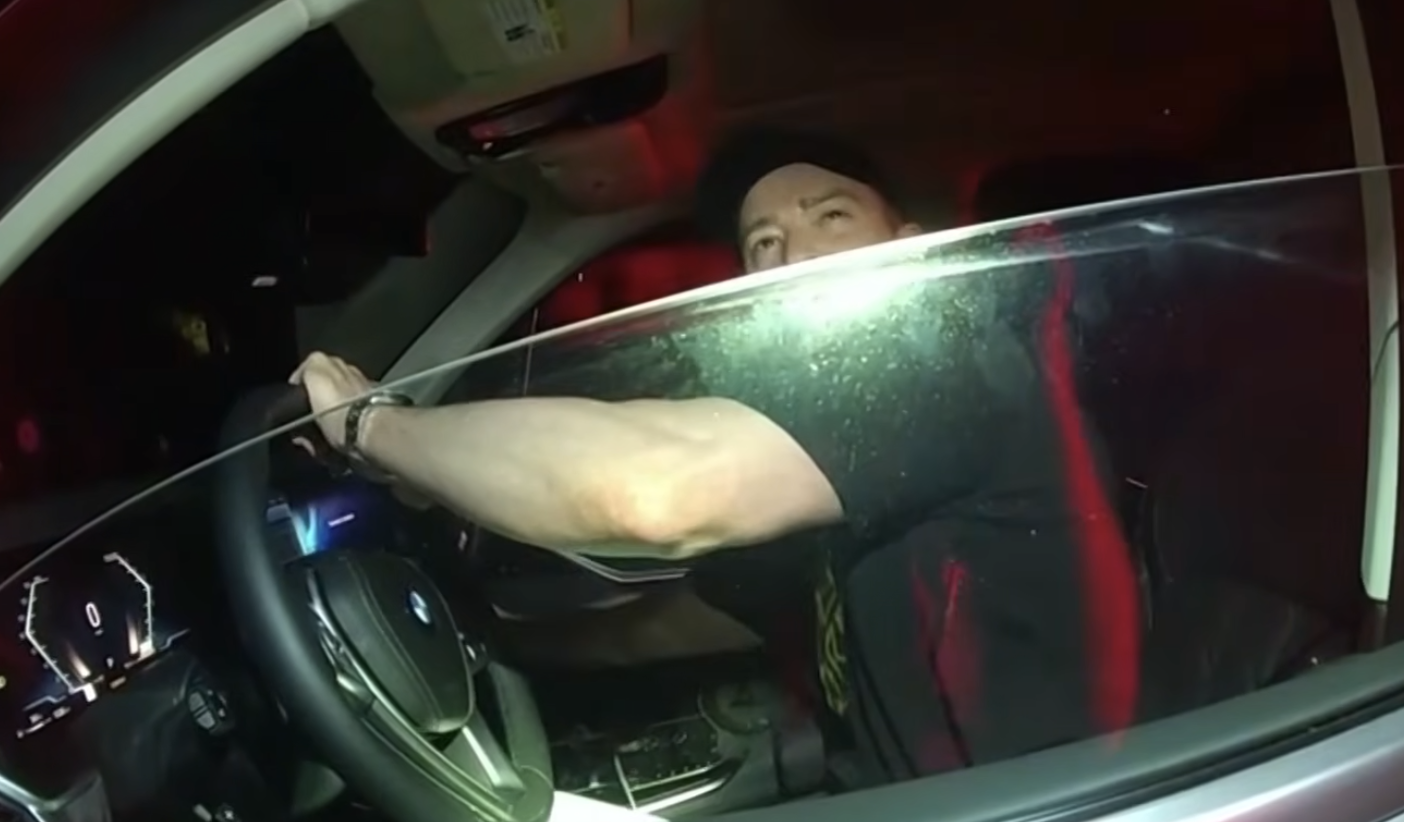
On March 20, just eighteen days later, Timberlake agreed to its release. The footage was published the same day by the Sag Harbor Express.
What Happened That Night?
The arrest took place on the morning of June 18, 2024. Timberlake had been out that night at the American Hotel in Sag Harbor with his friends Estee Stanley and Bryan Furst.
He was driving a BMW rental car when Sag Harbor police pulled him over. Officers said he ran a stop sign, veered out of his lane for several blocks, and exited the vehicle smelling of alcohol.
His eyes were described in the arresting officer’s report as bloodshot and glassy. Officers also noted slowed speech, a strong odor of alcoholic beverage emanating from his breath, and that he was unsteady afoot.
When an officer asked why he was in town, Timberlake said, “I’m on a world tour.”
The officer asked, “Doing what?”
Timberlake replied, “Hard to explain.” Then he added, “World tour. I’m Justin Timberlake.”
Officers asked him to step out of the vehicle and perform a series of field sobriety tests. The footage shows him attempting to follow the instructions, walking heel-to-toe in a straight line, standing on one leg, while struggling to complete them.
He told officers, “My heart’s racing.” He said he was “a little nervous.” At one point he paused and observed, “By the way, these are, like, really hard tests.”
He declined to take a breathalyzer test. He said he had had one martini that night.
When officers told him he was being placed under arrest, a female friend who had arrived on the scene, Estee Stanley, became distressed and asked officers to let her give Timberlake his phone.
When they declined, she appealed to a different authority, “Can you guys please just do me a favor ’cause you loved ‘Bye Bye Bye’ or ‘Sexyback?’ Do me one favor!”
According to TMZ’s account of the footage, it worked, officers allowed her to briefly speak to Timberlake before transporting him to the station.
In the back of the police car, Timberlake asked, “Why are you arresting me?”
When told he would be held overnight at the Sag Harbor police station, he replied, “I’m going to be here all night? You guys are wild, man.” He was booked and released the following morning.
The Plea Deal And The Apology
The June 2024 arrest was Timberlake’s highest-profile legal matter in years and landed in the middle of his Everything I Need world tour.
His mugshot circulated widely. His lawyer Edward Burke Jr. initially said the police had made “significant errors” and that Timberlake “was not intoxicated and should not have been arrested for DWI.”
In September 2024, Timberlake entered a plea deal. The original charge, a misdemeanor count of driving while intoxicated, was reduced to driving while ability impaired, a non-criminal traffic violation in New York.
He was fined $500 plus a $260 surcharge and ordered to perform 25 hours of community service at a nonprofit of his choice.
Outside the courthouse he addressed the cameras, “Even if you had one drink, don’t get behind the wheel of a car. There are so many alternatives. This is a mistake that I made, but I’m hoping that whoever’s watching and listening right now can learn from this mistake. I know that I certainly have.”
Most people assumed that was the end of it. It was not.
Timberlake’s Lawsuit To Block The Footage
Multiple news organizations, including NBC News and the Associated Press, had filed Freedom of Information Law requests with the Sag Harbor Village Police Department seeking access to the body camera footage.
The police department notified Timberlake’s legal team on March 1, 2026 of its intention to release the footage with limited redactions. Sag Harbor Mayor Thomas Gardella said the village was trying to be as transparent as possible.
On March 2, Timberlake’s lawyers filed suit against the Village of Sag Harbor, the Sag Harbor Village Police Department, and Police Chief Robert Drake, seeking to block the release entirely.
The court documents argued the footage would cause “severe and irreparable harm” to his personal and professional reputation and would “subject him to public ridicule and harassment.”
His lawyers argued that the roughly eight hours of footage contained personally identifying information and private details not relevant to any public law enforcement interest, as well as footage of other individuals who retained their own privacy rights.
The media organizations pushed back. Body camera footage from a DWI arrest of a public figure on a public road resulting in criminal charges is exactly the kind of government record Freedom of Information laws were designed to make accessible.
The argument made explicitly in this case was that if courts allow public figures to block arrest footage on the grounds that release would be embarrassing, the precedent extends well beyond celebrity cases to politicians, executives, and anyone else with the resources to litigate.
Suffolk County Acting Supreme Court Justice Joseph Farneti granted a temporary restraining order on March 5, giving the village until April 9 to respond. For two weeks, the footage stayed blocked.
Then the parties reached an agreement. In a joint filing, Timberlake’s lawyers and the village confirmed that the redacted footage “does not constitute an unwarranted invasion of personal privacy” under state law. The judge lifted the block. The footage was released March 20.
Where Do Things Currently Stand?
The video is consistent with what law enforcement described at the time of the arrest. The body camera does not contain new revelations, it confirms the existing record.
What it does is put a face and a voice on events that until now existed only in paperwork, a mugshot, and a courthouse statement.
Timberlake’s lawyers initially argued that releasing it would constitute an unwarranted invasion of privacy. They ultimately agreed it did not.
The reversal is notable not because it changes the legal case, closed since September 2024, but because three weeks spent fighting the release and then agreeing to it anyway suggests the calculus shifted rather than the principle.
What it does do is close the loop on a story that never fully closed, and ensure that whatever version of events Timberlake would have preferred people to hold is now competing with the version on camera.
He has not commented on the video’s release.