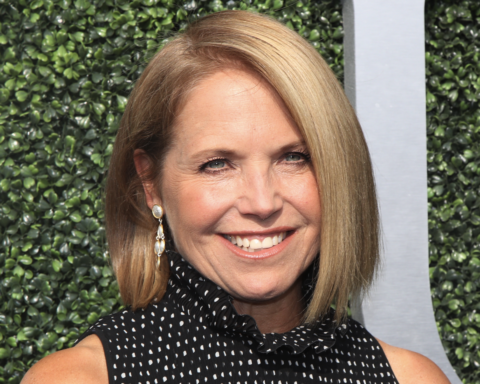

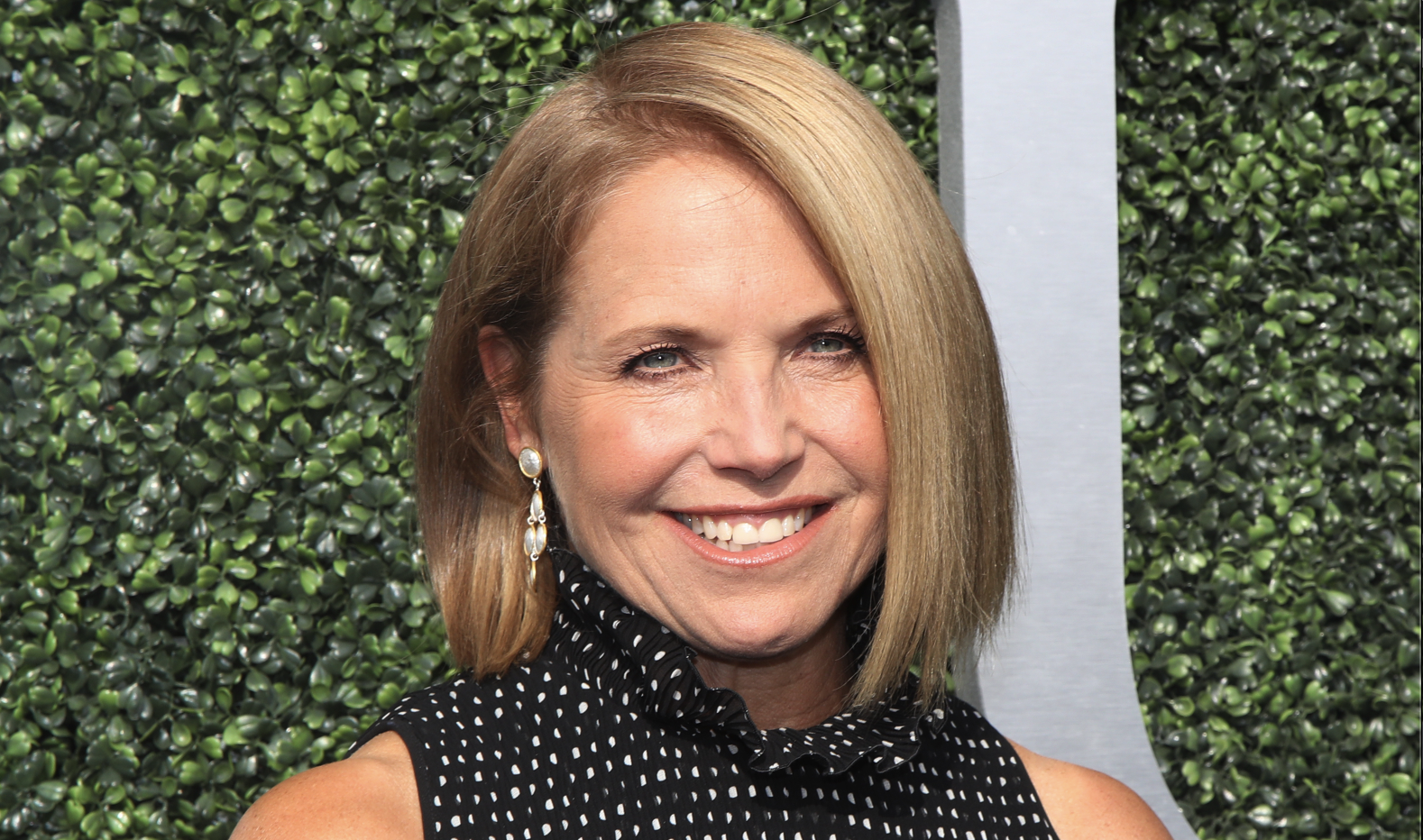
Katie Couric’s first husband, Jay Monahan, was diagnosed with stage IV metastatic colon cancer in 1997. He was 41 years old.
He died nine months later on January 24, 1998, at 42. Their daughters were two and six at the time. Couric was 40 and a co-host of TODAY, one of the most watched morning programs in the country.
In the nearly three decades since, she has turned that loss into one of the most sustained public health advocacy campaigns in American media history. ‘
She spoke about it again this week in an exclusive interview with The Healthy at the PGA Cologuard Classic in Tucson, her fourth consecutive annual conversation with the outlet during Colon Cancer Awareness Month, and what she said was as direct as anything she has said in 28 years of talking about this.
The regret she returned to was not about the medical decisions. It was about the emotional ones.
The Conversation Couric Never Had
“I did everything I could to keep Jay alive,” Couric wrote in her 2021 memoir Going There. “Looking back, I wish I had done a better job helping him die.”
In interviews promoting the book and in subsequent conversations, she has been consistent about what that means. During Jay’s illness, she could not bring herself to accept what was coming.
The fear of abandoning hope made it impossible to have the conversations that might have let him face death with more peace.
“I was so worried about letting go of hope, because I didn’t want Jay to spend whatever time he had left just waiting to die,” she has said. “I think it takes extraordinary courage to be able to face death, and I think I was too scared, honestly.”
The work, two hours of live television every morning, became, in her words, both a burden and a shelter.
“Sometimes it felt like it would be impossible to be a cheery morning television co-anchor,” she has said, “and other days doing two hours of live TV was a welcome distraction from the constant fear and worry.”
She called the work her “salvation” but has also acknowledged it created distance between her and Jay during months when presence mattered most.
What she did not do, and what she now wishes she had, was sit with him in the reality of what was happening, to grieve alongside him, to talk about dying, to help him move toward the end with dignity rather than simply fighting it.
Couric’s Colonoscopy On Live Television
Two years after Jay died, in March 2000, Couric underwent a colonoscopy that was filmed and broadcast on TODAY.
It was an audacious decision, colon cancer was still shrouded in embarrassment, the word “colonoscopy” was not something morning television routinely discussed, and plenty of people around her thought it was undignified.
She did it anyway. The University of Michigan subsequently documented a 20 percent increase in colonoscopies nationwide in the months following the broadcast.
Researchers named the phenomenon the “Couric Effect.” She has called it the thing she is most proud of in her entire career, more than any news story she broke, any interview she conducted, any anchor chair she occupied.
“Of everything I’ve done in my career, here is the thing of which I’m most proud: the University of Michigan reported a 20% jump in colonoscopy screenings as a result of my airing the procedure,” she wrote in Going There. “They called it the Couric Effect.”
She also co-founded the National Colorectal Cancer Research Alliance in 2000, established the Jay Monahan Center for Gastrointestinal Health at NewYork-Presbyterian/Weill Cornell Medical Center in 2004, and co-founded Stand Up To Cancer in 2008.
Why She Is Still Talking About It In 2026
The numbers are the reason she keeps going. Colorectal cancer has become the number one cancer killer for adults under 50 as of 2025.
One in five diagnoses now occurs in someone under 55. The screening age was lowered from 50 to 45 in 2021, but fewer than one in five Americans between 45 and 50 have actually been screened since the change.
“It’s been 26 years since I did that colonoscopy on the TODAY Show, and it really wasn’t a one-and-done effort,” she told The Healthy this week.
“Colorectal cancer has been near and dear to my heart after losing my husband, Jay, in 1998 when he was just 42 years old. And I think because I took on this issue before talking about colorectal cancer had really been normalized, there was still a lot of stigma around the disease.”
That stigma, she argues, is still costing lives. Jay himself had almost no symptoms before his diagnosis.
He was tired, they attributed it to a busy job, young children, the pace of their lives. “We had no idea what was going on in his body,” she has said.
“This cancer is so insidious.” A colonoscopy a few years earlier, had he been screened, would almost certainly have caught it at a treatable stage.
What Is Katie Couric’s Advice?
At the Cologuard Classic this weekend, Couric outlined three specific actions she urges Americans to take. The first is to talk to a doctor at 45 — the new screening age.
The second is to factor in family history. Anyone with a first-line relative who was diagnosed with colorectal cancer should be screened ten years before the age at which that relative was diagnosed.
The third is to pursue genetic testing if it is available, since certain mutations significantly elevate risk.
She also urged anyone experiencing symptoms, unexplained weight loss, fatigue, changes in bowel habits, or rectal bleeding, to push their doctors for screening rather than accepting a default assumption of hemorrhoids.
Too many younger patients, she said, have their symptoms dismissed because physicians do not think of cancer in someone their age. That delay is dangerous.
Her message on the reluctance to get screened, “If you want to be around, if you want to live a long, healthy life, not only for yourself, but for the people who love you, I think it’s kind of selfish to not get screened. I hate to put people on a guilt trip, but get your butt to the doctor.”
Her Own Diagnoses And Her Family Now
Couric has since been touched by cancer in additional ways. Her sister Emily Couric, a Virginia state senator, died of pancreatic cancer in 2001.
In 2022, Couric publicly disclosed a breast cancer diagnosis of her own, having previously aired her mammogram on TODAY in 2005. She underwent treatment and has continued working.
She married John Molner, a banker, in 2014. Their relationship has remained a private one by her standards, though they have appeared publicly together on occasion.
She has one grandchild, a boy named John Albert, nicknamed Jay in honor of his grandfather, born to her daughter Ellie in March 2024.
Ellie Monahan is a television writer whose credits include The Boys and Mr. Robot. She wore her mother’s original engagement ring from Jay at her own wedding in 2021.
Carrie Monahan, Couric’s younger daughter, works as a producer. The two sisters host a podcast called All Each Other Has.
The daughters, Couric has said, are the living proof of what the advocacy is for. Jay was gone before either of them had real memories of him.
The work she has done in the 28 years since is, in part, so that fewer families end up making the same calculation.