
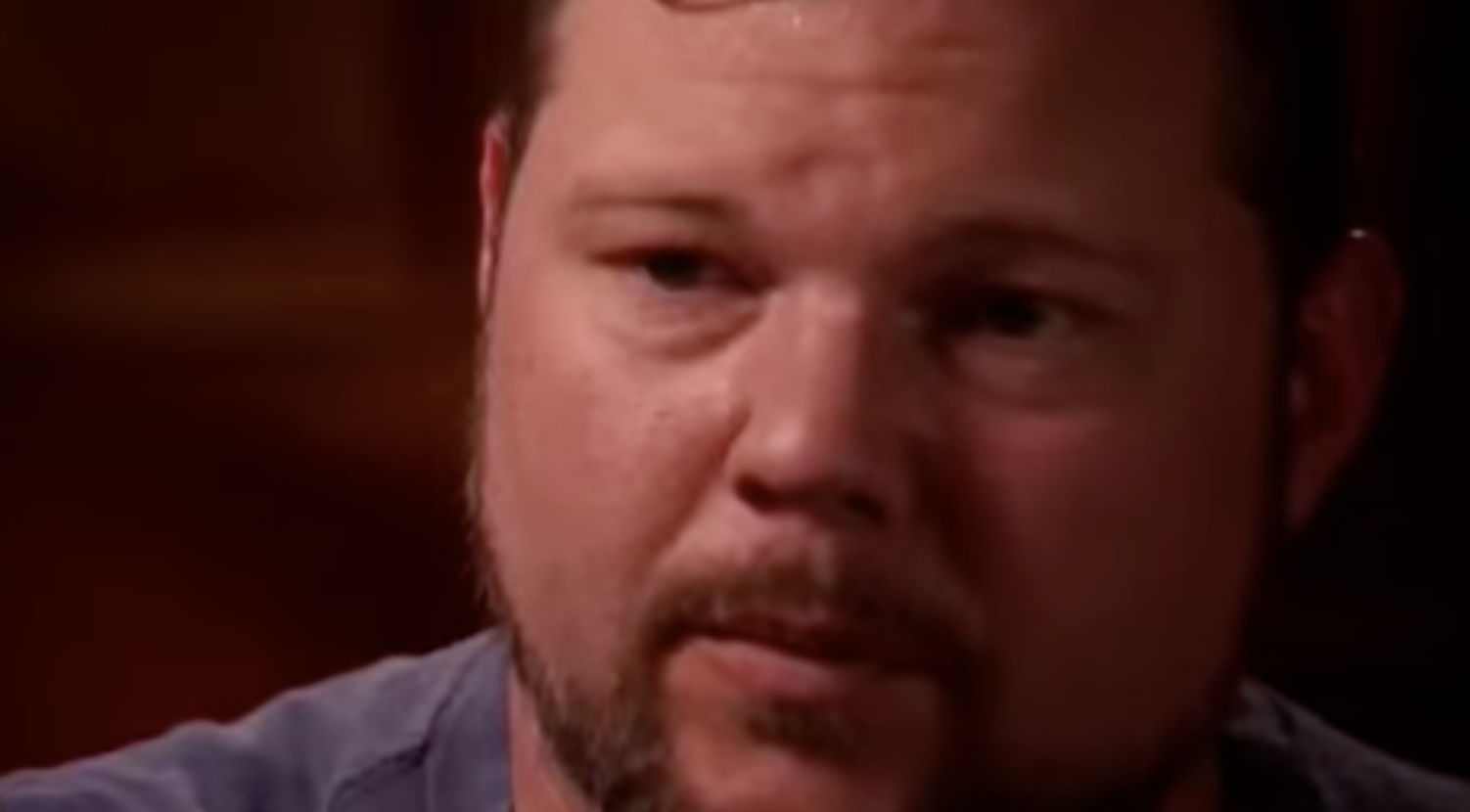
Barret Robbins, the former Oakland Raiders All-Pro center who disappeared the night before Super Bowl XXXVII and never truly found stable ground again, died peacefully in his sleep on March 26, 2026. He was 52.
The news came from Hall of Fame wide receiver Tim Brown, who announced it on X after receiving a call from Robbins’s wife, Marissa.
“It’s with great regret I tell you I just received a call from Marissa Robbins informing me that Raiders All-Pro center Barret Robbins passed away overnight,” Brown wrote. He added,
“Thankfully, he passed peacefully in his sleep. Please pray for their girls, his family and tons of teammates who will be affected by this. It’s unfortunate that his life was never the same after he was not allowed to play in the Super Bowl. Rest Peacefully BR, you deserve it.”
No cause of death was released. The Las Vegas Raiders confirmed his passing in a statement,
“The Raiders Family is deeply saddened to learn of the passing of Barret Robbins. The thought and condolences of the entire Raider Nation are with Barret’s family and friends during this difficult time.”
Who Was Barret Robbins?
Barret Glenn Robbins was born August 26, 1973, in Houston, Texas. He grew up in Houston, attended Sharpstown High School, and earned a scholarship to Texas Christian University, where he earned First-Team All-SWC honors in 1994.
The Oakland Raiders selected him in the second round of the 1995 NFL Draft, 49th overall, out of TCU. Standing 6-foot-3 and 320 pounds, he was a center built for the grind of the offensive line.
Smart, physical, the kind of player who calls protections before the snap and holds everything together.
He did not start a single game as a rookie. By his second season, he was in the starting lineup and never left it.
He played nine seasons in the NFL, all with the Raiders, appearing in 121 games and starting 107.
During the 2000 season under Jon Gruden, he was part of an offensive line that helped Oakland score 479 points, third in the league.
He was instrumental in the Raiders winning three consecutive AFC West titles from 2000 to 2002.
His peak came in the 2002 season, Bill Callahan’s first as head coach. Robbins started all 16 regular season games as the Raiders went 11-5 and put up the second-highest scoring offense in the league.
He earned a Pro Bowl selection and was named first-team All-Pro. Oakland demolished the New York Jets in the divisional round and beat the Tennessee Titans in the AFC Championship.
They were headed to Super Bowl XXXVII against the Tampa Bay Buccaneers. Robbins was 29 years old, at the absolute height of his career.
The Night Before Super Bowl XXXVII
What happened in the days before January 26, 2003, in San Diego is one of the most discussed and misunderstood stories in Super Bowl history.
Robbins had been diagnosed with depression while at TCU, but the full picture, that he was living with bipolar disorder, was not yet known. The night before the game, after not taking his medication, he slipped into a manic episode that had in fact been building for two weeks.
He disappeared from the team hotel. Nobody knew where he was. He missed team meetings, walkthroughs, and all scheduled obligations.
He crossed the border into Tijuana, Mexico, and was seen drinking heavily at a bar.
He later told ESPN that he had convinced himself the Raiders had already won, that he was celebrating. He could not recall why he went to Tijuana. He had no memory of large portions of those hours.
When Robbins finally surfaced late Saturday night, returning to the team hotel hours before kickoff, he was incoherent. He did not know where he was. Coach Bill Callahan had held out hope of playing him.
He made the decision that Robbins was not fit to play. Adam Treu started at center instead. The Raiders lost 48-21, one of the most lopsided Super Bowl defeats in history.
Robbins watched Super Bowl XXXVII from a hospital bed.
“I mean, this was the biggest game of my life,” Robbins later told ESPN. “This was everything I had worked for as a child, as a young man, as a collegiate athlete and going into the pros, this is everything I had worked for.”
In a 2009 interview on HBO’s Real Sports with Andrea Kremer, Robbins was more explicit about the full scope of what he had been managing. Before being diagnosed as bipolar, he said, he had dealt with his mood swings by self-medicating with alcohol, cocaine, marijuana, and steroids, a cycle of substance use that tracked back through his college years.
He also revealed he had been in a manic state for both Raider playoff games leading up to the Super Bowl, not just the night he disappeared. His ex-wife Marisa told the program there were days before the diagnosis where he would have breakfast and go right back to bed.
The pain of a foot injury going into the Super Bowl, he described needing acupuncture and injections, had acted as a trigger. “Pain is a big trigger when it comes to bipolar,” he said.
After the game, the Raiders were furious. Some teammates did not want him back. He spent 30 days at the Betty Ford Center, where he was formally diagnosed with bipolar disorder.
He returned to the Raiders for the 2003 season and started all nine games he played, showing the kind of determination that anyone who watched him up close said was central to who he was.
Why His Life Never Got Back On Track
The Raiders released Robbins in July 2004 after he tested positive for THG, a steroid linked to the BALCO scandal that had also ensnared Olympic sprinter Marion Jones. His name appeared on the client list.
His NFL career ended at 30.
What followed was a decade and a half of legal trouble, hospitalization, and a life struggling to find footing outside of football. On Christmas Eve 2004, he was arrested in San Francisco for punching a security guard who tried to stop him from entering a bar after hours.
Three weeks later, in January 2005, he was shot three times, twice in the chest and once in the lung, during a brawl with Miami Beach police investigating a reported burglary.
He was in a coma for nearly two months. He pleaded guilty to five charges, including attempted murder, and was sentenced to five years’ probation, ordered to receive treatment for his bipolar disorder and to avoid alcohol.
In 2010, a traffic stop near Dallas turned up crack cocaine in his car. In 2011, a Miami-Dade County judge sentenced him to five years in a Florida prison for the probation violation.
He was released September 25, 2012. “I’m happy to have a resolution,” Robbins told reporters as he was fingerprinted after sentencing. “It’s kind of a relief to be honest with you.”
In August 2016, he was arrested on charges of felony battery after an alleged altercation outside a Florida hotel. A 2018 arrest followed on cocaine and drug paraphernalia charges.
Throughout all of it, Robbins gave interviews. He did not hide from the story. He spoke candidly about bipolar disorder, about what it cost him, about the regret that never left him.
“I get depressed on Super Bowl Sunday,” he told Sports Illustrated. “It’s hard for me to watch. I think about it all the time. I hit myself in the head and say, ‘Damn, if I just could have done this or would have done that.'”
Tim Brown, in a Sports Illustrated profile from years before Robbins’s death, captured the way teammates eventually came to understand what he had been carrying. He said,
“A lot of guys thought what Barret did was unforgivable at the time, but as the years pass you come to realize that he had serious issues, that not everything was under his control. Everyone knew Barret was unstable even then, but I think now everybody has a much better understanding of the things he was dealing with.”
The End
Barret Robbins died overnight between March 25 and 26, 2026. He passed peacefully in his sleep. He is survived by his wife Marissa and their daughters Marley and Madison.
Tim Brown’s announcement on X, one of the most emotionally direct things Brown has ever posted, did not reach for distance or careful phrasing.
He asked people to pray for the girls. He said it was unfortunate Robbins’s life was never the same. He said: rest peacefully.
He deserved it.