

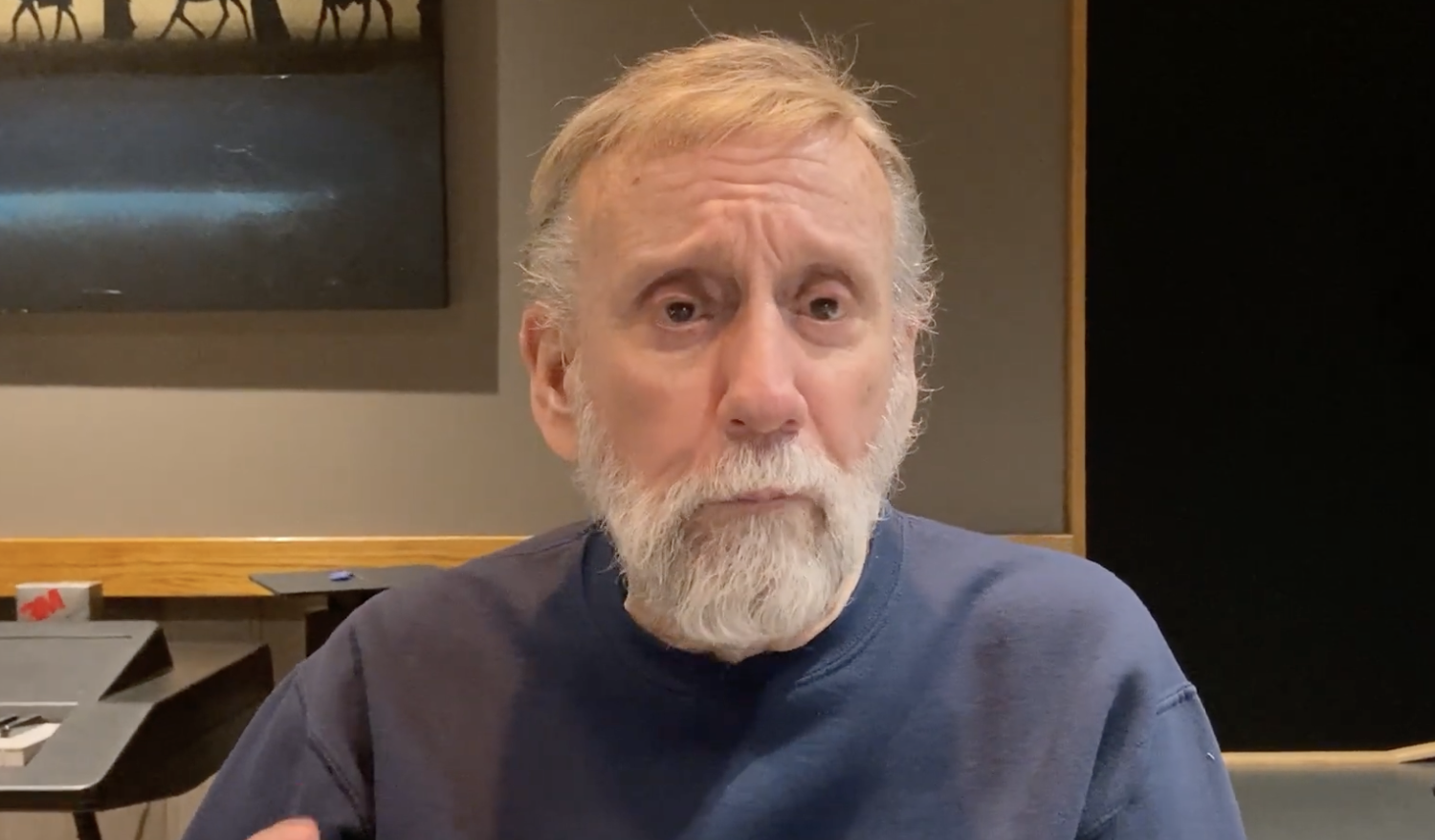
Ray Stevens broke his neck last week. The 87-year-old country music legend fell on March 30 in Tennessee, was hospitalized in Nashville, and was diagnosed with a broken neck.
He is now home recovering, wearing a neck brace for several weeks, and his representative says he is fully mobile and in good spirits.
His new album, Favorites Old and New, is still scheduled to drop this Thursday, April 10.
The fall comes less than nine months after Stevens survived a heart attack that required surgery and a stay in a rehabilitation facility.
At 87, he has now survived a heart attack and a broken neck in the span of a year.
His representative’s description of him as being in good spirits is either the most remarkable thing about this story or the most predictable, depending on how well you know Ray Stevens.
What Do We Know Right Now About The Fall?
Stevens fell on March 30. Doctors diagnosed him with a fracture in his neck and he was hospitalized in Nashville for evaluation and treatment. He is now at home, which means the injury, while serious, does not require ongoing inpatient care.
The neck brace he is wearing is standard treatment for a stable cervical fracture, it immobilizes the injury and allows the bones to heal over time without surgical intervention, which the information available does not indicate was required.
His representative confirmed the diagnosis and said Stevens is “fully mobile and in good spirits.”
He posted to X on April 1, maintaining communication with fans through the injury.
Well-wishes can be sent to Stevens at 5724 River Road, Nashville, TN 37209, the same address he has used for fan correspondence for years.
The album coming Thursday, Favorites Old and New, proceeds on schedule.
Stevens’ Health Picture Over The Last Year
Monday’s news lands against a background of serious health events that have tested Stevens repeatedly over the past twelve months.
On July 4, 2025, Stevens complained of chest pain and was admitted to a Nashville hospital. A heart catheterization revealed he had suffered a mild heart attack.
He underwent minimally invasive heart surgery on July 8. He was released from the ICU and began walking the hospital halls with a nurse’s assistance by July 9, the speed of that recovery prompting his team to post on Instagram, “Ray is very grateful for all of the cards and get-well messages. Everything Is Still Beautiful!!!!”
He had two stents placed later in July to clear additional blockages, spent time in a Nashville rehabilitation facility, and returned home to finish recovery.
In August 2025, he announced he was putting the CabaRay Showroom, the 35,000-square-foot entertainment venue he had built in West Nashville in 2018, on the market.
“At 86 and with my recent health problems, it’s probably time to slow down, and selling CabaRay is the first step,” he said in a statement.
He was careful to add that he intended to return to the CabaRay stage to perform his previously scheduled concerts once his health allowed, and that his music was not going anywhere.
By December 2025, his team confirmed his recovery from the heart attack was progressing positively.
He had returned to working full-time in his recording studio. A new single, “Savannah,” was released via Curb Records on February 12, 2026. The album Favorites Old and New is the next step.
A broken neck from a fall on March 30 is the latest complication in what has been a sustained period of physical difficulty for a man who, well into his ninth decade, has refused to stop working.
Who Is Ray Stevens?
Harold Ray Ragsdale was born January 24, 1939, in Clarkdale, Georgia. His mother recognized his musical ability early and enrolled him in piano lessons as a child.
By age seven, he later said, it all made sense. He attended Georgia State University and showed enough talent quickly enough that Capitol Records signed him at eighteen years old in 1957.
He took the stage name Ray Stevens and began recording in Nashville, where he became known not just as a performer but as a producer and studio musician.
Stevens is one of the behind-the-scenes figures who helped shape the Nashville sound of the 1960s and 1970s before his performing career took its own distinct and unusual trajectory.
That trajectory is unlike almost any other in American popular music. Stevens built a catalog that spans genuine emotional depth and shameless comic novelty, and he was taken seriously in both.
His 1962 recording of “Ahab the Arab” reached number five on the pop charts and introduced him to a national audience as a comedic performer willing to commit fully to absurdist material. “Gitarzan” followed in 1969.
Then came “Everything Is Beautiful” in 1970, a warm, sincere, gospel-inflected pop song that became a genuine standard, reaching number one on the Billboard Hot 100 and winning him the Grammy for Best Contemporary Male Vocalist in 1971.
The range between “Ahab the Arab” and “Everything Is Beautiful” is not something most artists even attempt to occupy simultaneously. Stevens made it his home.
“Misty,” his version of the Erroll Garner jazz standard, earned him the Grammy for Best Arrangement Accompanying Vocalists in 1976.
“The Streak,” released in 1974 and built around the cultural moment of streaking, hit number one in both the United States and the United Kingdom and became one of the defining novelty songs of the decade, earning CMA nominations for Single of the Year and Song of the Year.
“The Mississippi Squirrel Revival” followed in 1985 and became a staple of country radio, a deadpan comic narrative about a squirrel loose in a Baptist church on Sunday morning that remains one of the funniest country songs ever recorded by anyone.
He has released 45 albums across his career and sold more than 40 million records. He has received eleven Grammy nominations and won two.
In 2019, the Country Music Hall of Fame inducted him, recognition of a career so diverse and so long that it can be difficult to categorize except by saying that Ray Stevens has been making people feel things, laugh, and occasionally both at once, for nearly seven decades.
He is also a member of the Nashville Songwriters Hall of Fame, the Georgia Music Hall of Fame, the Musicians Hall of Fame, and the Christian Music Hall of Fame.
In 2018, he opened the CabaRay Showroom on River Road in West Nashville, a 35,000-square-foot venue with seating for over 700, a full bar and kitchen, backstage production space, and a recording studio.
His television series CabaRay Nashville, taped at the venue and featuring performances by Stevens and guests, aired on PBS stations.
He ran the venue and performed there regularly until the health events of 2025 forced him to pause.
The decision to sell CabaRay was described in his own statement as a practical one. He wanted to slow down.
That is what he said. What he did was release a single in February, record an album, and schedule it for release the week after he broke his neck.
What Comes Next For Stevens?
The neck brace stays on for several weeks while the fracture heals. His representative has said he is fully mobile, which removes the most frightening element of a neck injury diagnosis.
Broken necks range enormously in severity, from the catastrophic injuries that cause paralysis to stable fractures that heal with immobilization and time.
Stevens’s situation appears to be in the stable category, given that he is home, mobile, and described as being in good spirits rather than in critical condition.
Favorites Old and New drops Thursday April 10 on whatever platform you use.
The man who recorded “Everything Is Beautiful” in 1970 has a new album coming out fifty-six years later, the week after he broke his neck at 87.
That is either a testament to the stubbornness of genuine artistic compulsion, or proof that Ray Stevens is constitutionally incapable of stopping.







Why do I have the feeling a song will come out of this?
Get well, Ray. We miss you.