

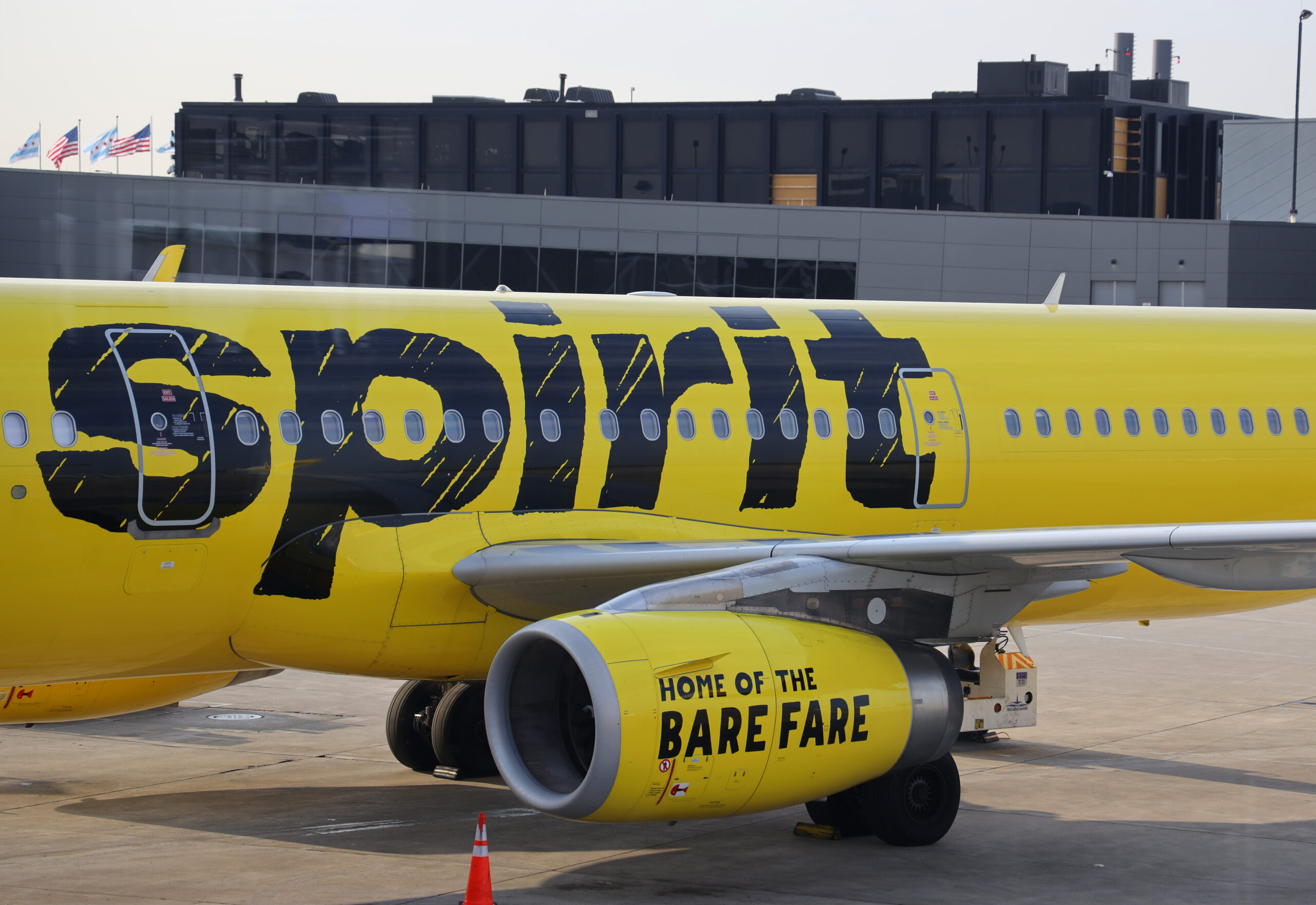
Spirit Airlines could be gone by the end of this week.
The budget carrier, which filed for Chapter 11 bankruptcy protection in August 2025, the second time it had done so in less than a year, is now facing a potential liquidation that could come as soon as this week, according to reporting from Bloomberg and CNBC citing people familiar with the matter.
The company is still flying. A decision has not been announced. Spirit said in a statement it does not comment on market rumors and speculation.
Reporting from multiple credible outlets, all citing independent sources, describes a situation that has moved from fragile to potentially terminal, and the culprit is not difficult to identify.
Jet fuel is nearly twice as expensive as it was six weeks ago, and Spirit does not have the cash to absorb the difference.
How Did Spirit Airlines Get Here?
Spirit Airlines has been in trouble for the better part of three years, and understanding what is happening now requires a brief walk through how a budget airline goes bankrupt twice in the same calendar year.
The story goes back further than that. Spirit built its business on the ultra-low-cost carrier model, strip out every amenity, charge for everything separately, and offer base fares so cheap that the price comparison to competitors is unavoidable.
It worked, for a while. The airline grew to operate more than 500 daily flights to over 60 destinations, became one of the dominant presences at Fort Lauderdale-Hollywood International Airport and Miami International Airport, and served the segment of the traveling public for whom the difference between a $49 fare and a $149 fare is the difference between flying and not flying.
The pandemic cracked the model. Rising costs, fleet problems, a recall of Pratt & Whitney GTF engines on its Airbus A320neo aircraft took planes out of service at a critical moment, and an inability to generate the revenue needed to service its debt put the airline in a position where a sale looked like the only realistic exit.
In 2024 JetBlue tried to buy it. A federal judge blocked the deal on antitrust grounds. The merger with Frontier was revived and then stalled. In late 2024 Spirit filed for its first Chapter 11 bankruptcy.
It emerged, or tried to. Then it filed again. August 29, 2025. Chapter 11 for the second time. Market observers started calling it Chapter 22. The airline had $407.5 million in cash and $2.689 billion in debt.
It was losing between $67 and $83 million per month. The company issued a going concern warning, the formal accounting signal that a business is not sure it can continue operating.
Pilots and flight attendants agreed to pay concessions to keep the airline alive. The fleet was trimmed. Unprofitable routes were cut.
Bigger seats and bundled fares were introduced in an attempt to attract passengers willing to spend more. Spirit said in February 2026 that it was on track to exit bankruptcy as early as this spring.
Then the war started.
How The Iran War Has Nearly Bankrupted Spirit
On February 27-28, 2026, the United States and Israel began military operations against Iran. Tehran responded by closing the Strait of Hormuz, the narrow passage between Iran and Oman through which approximately 20% of the world’s traded oil flows on any given day.
The closure sent energy markets into immediate shock. Jet fuel, which is refined from crude oil and is the single largest expense for most airlines after labor, spiked.
By April 2, the average price of jet fuel at major US airports, New York, Houston, Chicago, and Los Angeles, had reached $4.88 a gallon.
That is approximately 95% higher than it was when the war began five weeks earlier.
President Trump then announced a naval blockade of the strait as a retaliatory measure, adding a second layer of uncertainty to when and how the chokepoint might reopen.
The International Energy Agency’s executive director Fatih Birol described the situation as “the largest energy crisis we have ever faced” and told the Associated Press that Europe could run out of jet fuel within six weeks.
Normalization, even after Hormuz reopens, is expected to take months.
For a carrier like Delta, which is the only American airline that operates its own fuel refinery, the shock is manageable, painful, but manageable.
For Spirit, which has approximately $337 million in cash, JPMorgan analyst Jamie Baker ran the math and it does not work.
Baker wrote in a note last week that if jet fuel stays at approximately $4.60 a gallon for the year, Spirit’s forecast operating margin deteriorates from negative 7% to negative 20%, and the airline faces approximately $360 million in additional costs.
That is more than the company’s entire cash balance. The creditors who agreed to a restructuring plan that made sense when fuel was cheaper are now looking at a plan built on assumptions that no longer exist.
What Would Liquidation Mean For Spirit?
Liquidation is different from bankruptcy. Bankruptcy, Chapter 11, is a reorganization.
The company keeps operating while it negotiates with creditors, cuts costs, and works out a plan to become viable.
Airlines have emerged from Chapter 11 before, American, Delta, United, US Airways all went through it and came out the other side. Chapter 11 is the version where the story does not necessarily have to end.
Chapter 7 liquidation is the version where it does. The airline stops flying. Assets, planes, gates, slots, maintenance equipment, the brand itself, are sold off to satisfy creditors. Employees lose their jobs. Passengers with existing tickets need to find another way to get where they were going.
For Spirit’s customers, most of whom chose the airline specifically because no one else was offering the same price, liquidation means the cheapest option disappears.
Competitors have already been adding flights to some of Spirit’s destinations in anticipation of exactly this scenario, the routes will still exist, but the $49 base fares that made Spirit useful to a specific kind of traveler will not.
Fort Lauderdale and Miami, where Spirit has significant operations, would see the most immediate disruption.
Spirit’s Troubles Are Not An Isolated Incident
Spirit is the most vulnerable airline in the current environment but it is not the only one under pressure. United Airlines has warned about rising fuel costs and announced fee increases.
Southwest has done the same. The entire industry built its 2026 projections on fuel assumptions that the Iran war has demolished in a matter of weeks.
Spirit’s situation is acute because it arrived at this crisis with essentially no margin.
The company had used up its reserves in two bankruptcies, made concessions from its labor unions that left those unions with little more to give, and was counting on a successful restructuring exit before the summer travel season to generate the cash flow that would keep it solvent.
The Hormuz closure arrived at exactly the wrong moment, not that there would have been a right one.
The situation remains fluid, as the sources quoted by Bloomberg put it. Spirit is still in talks with creditors.
The plan could still change. A last-minute deal, a white knight acquirer, a ceasefire that reopens Hormuz faster than anyone expects, any of these could change the calculus.
The trajectory as of Thursday, April 17, 2026, is toward an airline that may not be flying by the end of next week.
Spirit’s statement, “we don’t comment on market rumors and speculation,” is the kind of statement companies make when the rumors are accurate and they have nothing better to say.