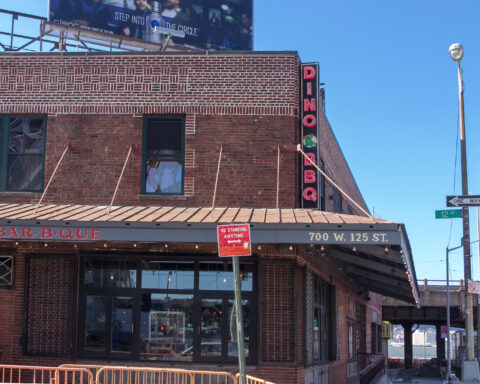

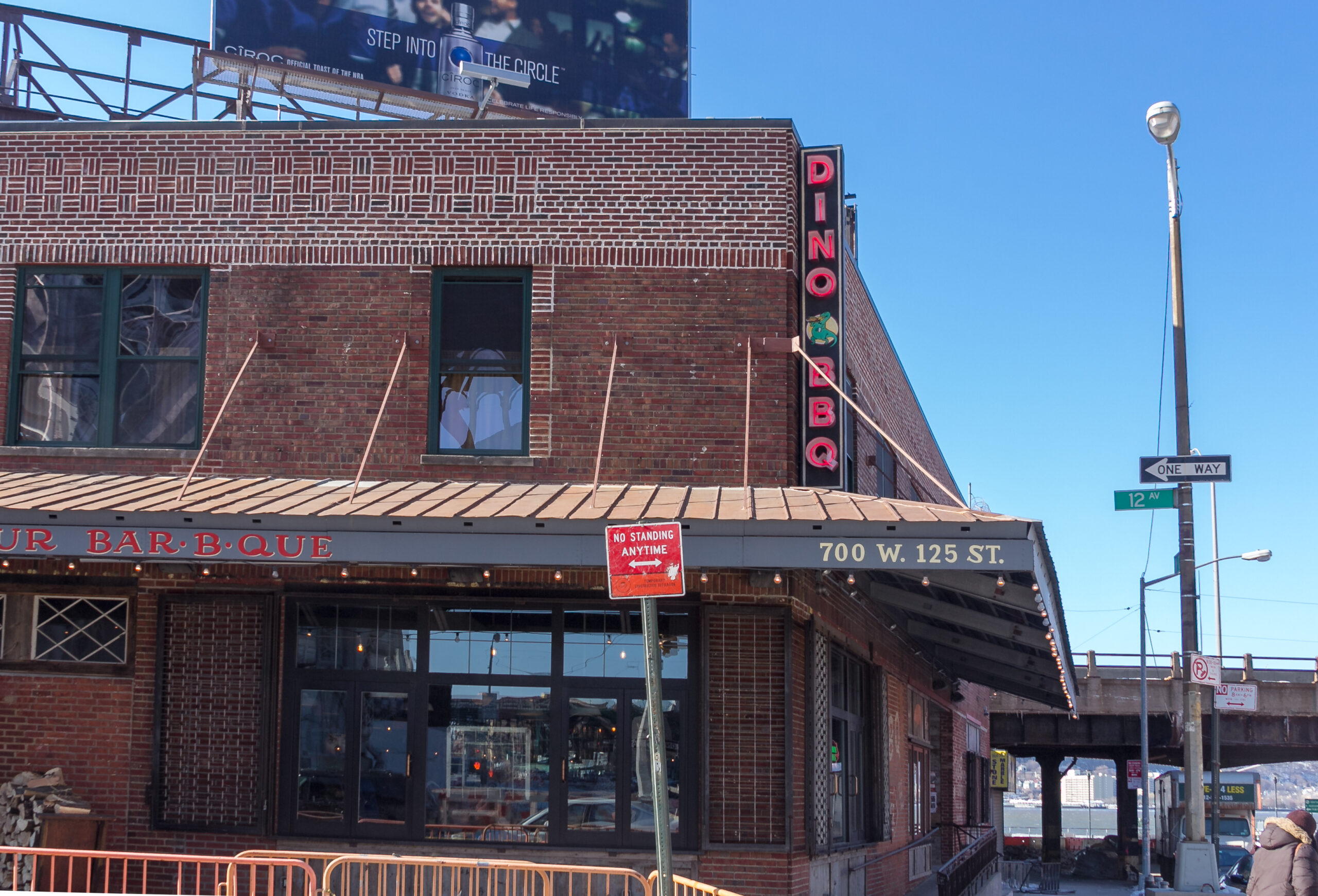
Dinosaur Bar-B-Que, the 42-year-old barbecue chain that started as a mobile concession at motorcycle rallies and eventually grew to 10 locations across the Northeast, is losing its Brooklyn restaurant later this spring, and that closure will bring the chain down to exactly half of what it once was.
The announcement came via the restaurant’s Facebook page:
“It is with a heavy heart that we announce the closure of our beloved Brooklyn store later this spring. After 15 wonderful years, our lease has ended, and the building will be demolished to make way for new apartments.”
Five locations will remain. Harlem, Syracuse, Rochester, Troy and Buffalo. The Brooklyn closing follows the shuttering of locations in Stamford, Connecticut, and Newark, New Jersey, both in 2023.
The chain that once had 10 restaurants across the region now has five, and the story of how it got there says something true about what happens when a pioneering restaurant does its job too well.
How Dinosaur Bar-B-Que Started
John Stage founded Dinosaur Bar-B-Que in 1983, not as a restaurant, but as a mobile concession operation serving food at motorcycle events and festivals.
The food was built around the biker community that surrounded it: Southern-style barbecue, house-made sauces, and a live music atmosphere that matched the culture of its original audience.
It was not trying to be a chain. It was trying to feed people at rallies.
The first permanent restaurant opened in 1988 in Syracuse, which remains the flagship location today.
What Stage built over the following decades, a reputation for serious barbecue in a region where barbecue had no deep roots, served in spaces that felt nothing like conventional restaurants, was genuinely unusual for the Northeast.
The Brooklyn location took over a former tool and die shop. Other locations did similar things with industrial and commercial spaces that other restaurateurs overlooked.
The formula worked. At its peak, Dinosaur Bar-B-Que operated 10 locations.
Stage also expanded the brand into retail, selling Dinosaur Bar-B-Que branded sauces and rubs nationwide, the kind of product line that builds name recognition beyond whatever city has a physical restaurant.
The Soros Partnership
In 2008, Stage sold a 70 percent stake in Dinosaur Bar-B-Que to Soros Strategic Partners. The infusion of capital drove rapid expansion.
It was the kind of deal that gets a regional chain from a handful of locations to something approaching a national footprint quickly, and it came with the costs that those deals always come with.
Stage has been candid about what he learned. “Access to capital and resources is what’s gained,” he told Entrepreneur. “Culture and freedom to operate as you did in the past can be lost.”
By 2019 he had bought back controlling interest in the company. The expansion phase was over.
The philosophy shifted entirely. “We’re focusing within and examining every detail internally to make the foundation as good as it can be,” he said after regaining control. “We don’t want to open new stores, but rather focus on what we have and how to make it all better without distractions.”
That statement, made in 2019, reads differently now that the chain has lost half its restaurants. The contraction was already underway. Stamford closed in 2023.
Newark closed in 2023. Brooklyn is closing this spring. What Stage described as a back-to-basics focus has also been, in practice, a significant retreat from the footprint the Soros expansion created.
The Brooklyn Story
The Brooklyn closure is not a story about a restaurant that ran out of customers. The official explanation is a lease ending and a building being demolished for apartments.
That is a specific and familiar New York story, and in this case it contains an irony that the chain is not in a position to find funny.
Dinosaur Bar-B-Que Brooklyn opened 15 years ago in a neighborhood that was not yet fully transformed.
It took a former tool and die shop, an industrial space with no previous restaurant life, and turned it into a destination. People came.
The neighborhood changed. Property values went up. The building became more valuable as residential than as commercial.
A restaurant that helped make a Brooklyn block desirable enough to attract apartment development could not afford to stay once the apartments arrived.
This is not an unusual story in New York, but it is particularly pointed here. The chain’s model, finding raw, industrial, non-restaurant spaces and bringing them to life, was exactly the activity that accelerates neighborhood transformation.
Dinosaur Bar-B-Que Brooklyn became a victim of the process it helped start.
The Harder Problem
Beyond the lease and the Brooklyn-specific dynamics, there is a structural challenge that has faced Dinosaur Bar-B-Que for a long time. Ron Paul, then-president of restaurant consulting firm Technomic, identified it as far back as 2010 when the chain was still growing.
“Barbecue is really a niche opportunity,” he said in a Nation’s Restaurant News interview. “Is it a menu item or a concept?
Does the American public need a place for just ribs when you can get baby-back ribs at Chili’s? It’s a self-limiting category, and we’ve seen that it’s tough to create a national chain.”
What Dinosaur Bar-B-Que did in the Northeast was pioneering. When it opened and expanded, serious barbecue was not widely available in New York, Connecticut or New Jersey.
The chain built an audience and a reputation in a region that had no existing barbecue culture to compete with.
That was the opportunity. The problem is that successful pioneers create markets, and markets attract competition.
In the years since Dinosaur established that there was an audience for serious barbecue in the Northeast, smaller and more focused operations opened across the region, restaurants drawing on specific regional barbecue traditions from Texas, the Carolinas, Kansas City and beyond.
These places did not have the overhead of a 10-location chain. They could be more specialized, more consistent and more responsive to what serious barbecue customers actually want.
The chain that made the category viable in the Northeast has spent the past several years competing against the category it created.
Add to that the cost pressures that have hit the entire restaurant industry since the pandemic, labor costs, the price of meat specifically, shifting dining patterns, and the combination creates a difficult environment for any large-format barbecue operation to maintain a wide footprint.
What Will Remain Of Dinosaur Bar-B-Que?
Five locations. Harlem, Syracuse, Rochester, Troy, Buffalo. These are the restaurants that Stage’s back-to-basics approach is now focused on.
The branded sauces and rubs continue to sell nationally. The Syracuse flagship, the restaurant that started everything in 1988, is still there.
The Brooklyn closure, officially “later this spring,” ends a 15-year run in a location that became genuinely beloved in its neighborhood, whatever the complicated economics of that relationship turned out to be.
For the people who spent years eating there, the announcement hit the way these announcements always do.
For the chain, it marks the moment the contraction from 10 to 5 becomes official.
Whatever Dinosaur Bar-B-Que becomes from here, it will be a different-sized thing than it was at its peak, regional rather than expanding, focused rather than growing, built around what survived rather than what was possible.
The building will be apartments. The former tool and die shop that became a barbecue restaurant that helped transform a neighborhood will become housing for the people who live in the neighborhood it helped transform.