

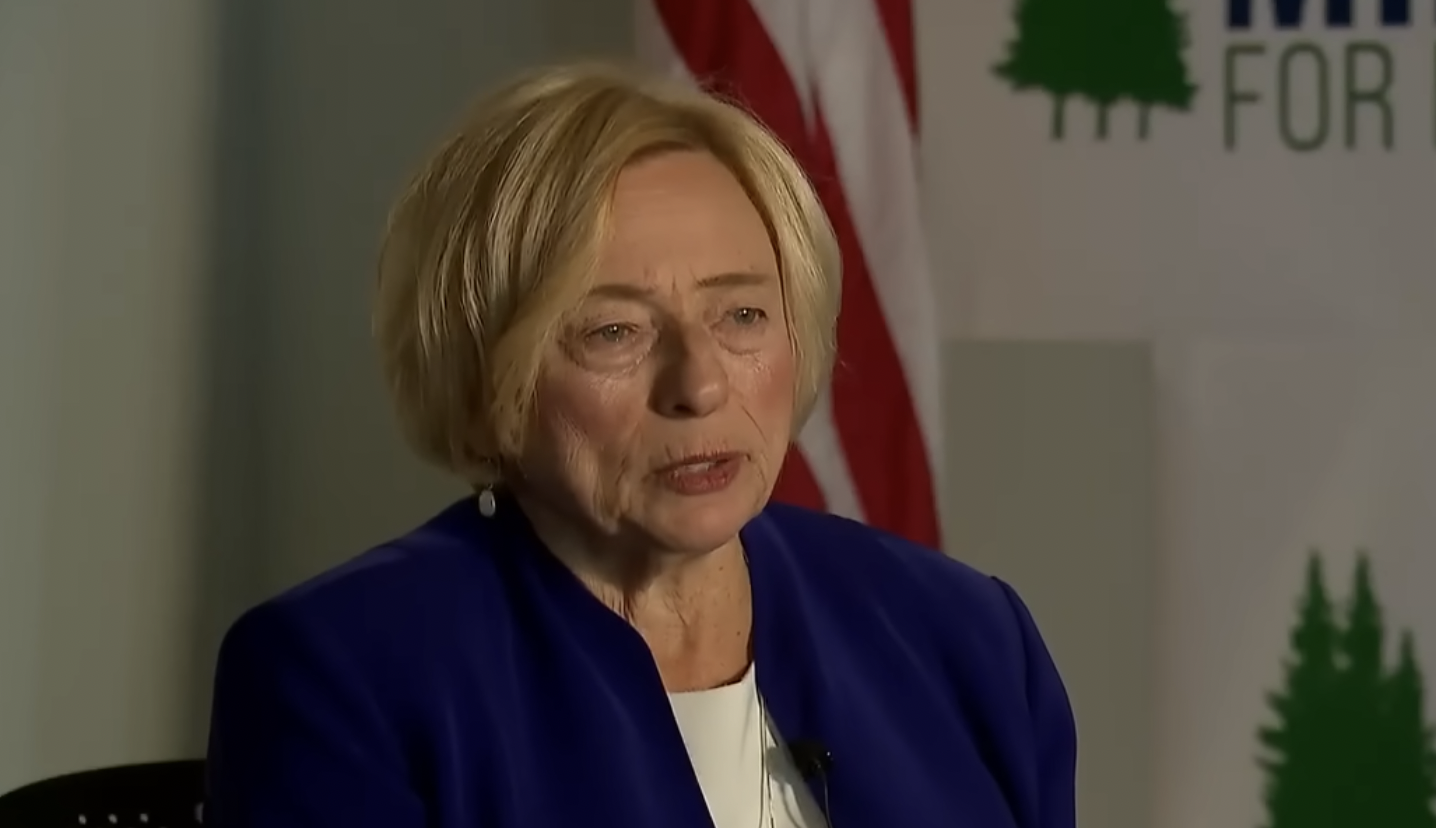
Maine Governor Janet Mills announced Thursday, April 30, 2026, that she is suspending her campaign for the United States Senate, withdrawing from the Democratic primary five weeks before the June 9 vote.
The decision clears the path for Graham Platner, a 41-year-old oyster farmer and political newcomer, to become the Democratic nominee in what is widely regarded as one of the most consequential Senate races of the 2026 midterm cycle.
“While I have the drive and passion, commitment and experience, and above all else, the fight, to continue on, I very simply do not have the one thing that political campaigns unfortunately require today: the financial resources,” Mills said in a statement. “That is why today I have made the incredibly difficult decision to suspend my campaign for the United States Senate.”
Mills, 78, will serve out the remainder of her term as governor. She did not endorse Platner in her suspension announcement.
Why The Maine Senate Race Carries Extra Weight
The Maine Senate seat is among the most closely watched in the country heading into November 2026.
Republican Senator Susan Collins, now in her fifth term, is the only Republican senator representing a state that former Vice President Kamala Harris carried in the 2024 presidential election.
That geography makes the seat a prime Democratic target in the party’s effort to reclaim the Senate majority.
Collins, 73, is one of the Senate’s most durable political survivors, she has won reelection in a state that trends increasingly blue by running as a moderate willing to break with her party on selected issues.
Democrats have tried and failed to unseat her before, most notably in 2020 when Sara Gideon lost a heavily funded campaign.
The 2026 race is viewed as Democrats’ strongest opportunity yet, given the political environment surrounding President Trump’s second term.
Why Mills Struggled
Mills was a deliberate recruitment. Senate Minority Leader Chuck Schumer identified her as the ideal candidate because she was, by one measure, irreplaceable. The only Democrat to have won statewide in Maine in 25 years.
Her two terms as governor, combined with her prior career as Maine Attorney General and as a former prosecutor, gave her a record of institutional credibility that Democratic strategists believed was essential to defeating Collins in a general election.
Schumer’s backing was unusually direct and public for a sitting Senate leader, an intervention that he calculated would help clear the primary field for the candidate he believed gave Democrats the best shot.
The calculation did not produce the outcome he anticipated.
Mills entered the race in October 2025, after Platner had already been campaigning for months and building grassroots support.
Her campaign prioritized small gatherings with established Democratic constituencies and Zoom meetings with local party committees. Platner was holding open town halls and drawing thousands of people.
Her age became a persistent factor in how voters and activists evaluated the race. At 78, she will be 79 on Election Day in November.
Democrats across the country have been actively wrestling with questions about candidate age following the events of the 2024 presidential cycle, and that conversation found its way into the Maine primary with unusual force.
Organized labor, a key constituency in Democratic primaries, mobilized aggressively for Platner. Mills’ moderate record, which had helped her win two gubernatorial elections, drew skepticism from the same activists who were turning out for Platner in large numbers.
Schumer’s visible involvement in the primary also generated an unintended backlash.
Platner incorporated opposition to Democratic Party leadership as a core element of his campaign message, and in a primary electorate that was already skeptical of establishment figures, that message found significant traction.
Schumer’s backing of Mills, intended to consolidate the field, may have contributed to the dynamic it was designed to prevent.
Who Is Graham Platner?
Platner is 41 years old, a military veteran, and an oyster farmer. He had never run for elected office before entering this race.
He entered the primary before Mills did, and he spent the months during which Mills was declining to commit to the race building the organization and small-dollar fundraising base that ultimately proved decisive.
In the first quarter of 2026 alone, Platner raised $4 million, a figure that significantly outpaced Mills. He maintained a consistent double-digit lead in primary polling throughout the race.
The same polls that showed him ahead of Mills also showed him defeating Collins in a general election matchup, which removed one of the central arguments Mills’ campaign had used to justify her candidacy.
Platner’s campaign was not without controversy. He has a tattoo on his chest that is widely recognized as a Nazi symbol, which he has said he received during a night of drinking while on military leave in Croatia.
He has said the tattoo has since been covered so it no longer reflects that image. He has also faced scrutiny over inflammatory comments in old online postings, which he has disavowed.
His handling of both issues, acknowledging them directly rather than deflecting, contributed to what polls showed was a strong and durable favorability rating among Democratic primary voters.
He will still need to defeat David Costello in the Democratic primary on June 9. Polling gives him a significant lead in that matchup as well.
The Party Establishment Response
Schumer and Democratic Senatorial Campaign Committee Chair Senator Kirsten Gillibrand issued a joint statement Thursday that acknowledged Mills while quickly pivoting to Platner.
“Janet Mills is a formidable governor who has broken barriers and never hesitates to stand up to bullies to fight for Maine. We are grateful for her hard-fought and principled campaign, and we respect her decision to continue her service to Maine as Governor,” the statement read.
“Democrats are dedicated to fighting back against the chaos of the Trump administration by defeating the Republicans who enable his harmful agenda and that includes Susan Collins. After years of allowing Trump’s abuses of power, Senator Collins has never been more vulnerable and we will work with the presumptive Democratic nominee Graham Platner to defeat her.”
The shift from Schumer’s active recruitment of Mills to an endorsement of the candidate who spent months positioning himself against Schumer represents a significant recalibration for Democratic Senate leadership, one that reflects the outcome the party establishment was trying to avoid when it recruited Mills in the first place.
How Does This Change The General Election
Collins enters the general election as the incumbent in one of the most challenging political environments Republicans have faced in years.
The combination of Trump’s second-term controversies, Maine’s leftward demographic drift, and the national political mood heading into November gives Democrats a genuine opportunity they have not had in prior cycles.
Platner, however, is an unconventional nominee. His controversies, the tattoo, the old online posts, will be central to Republican campaign attacks in a general election.
He has never run a statewide campaign. He is an oyster farmer with no prior elected experience going up against a five-term incumbent who is one of the most experienced campaigners in American politics.
The polling data available as of Mills’ withdrawal showed Platner competitive against Collins.
Whether a first-time candidate who built a grassroots insurgency in a Democratic primary can translate that approach into a winning coalition in a general election is the question the next six months will answer.
Mills said she would remain in the governorship through the end of her term, defending the Constitution and democracy in that capacity. She stopped short of asking her supporters to back Platner.
The Maine Democratic primary is June 9. The general election is November 3, 2026.