California DMV Data Sharing Plan Could Expose One Million Undocumented Immigrants
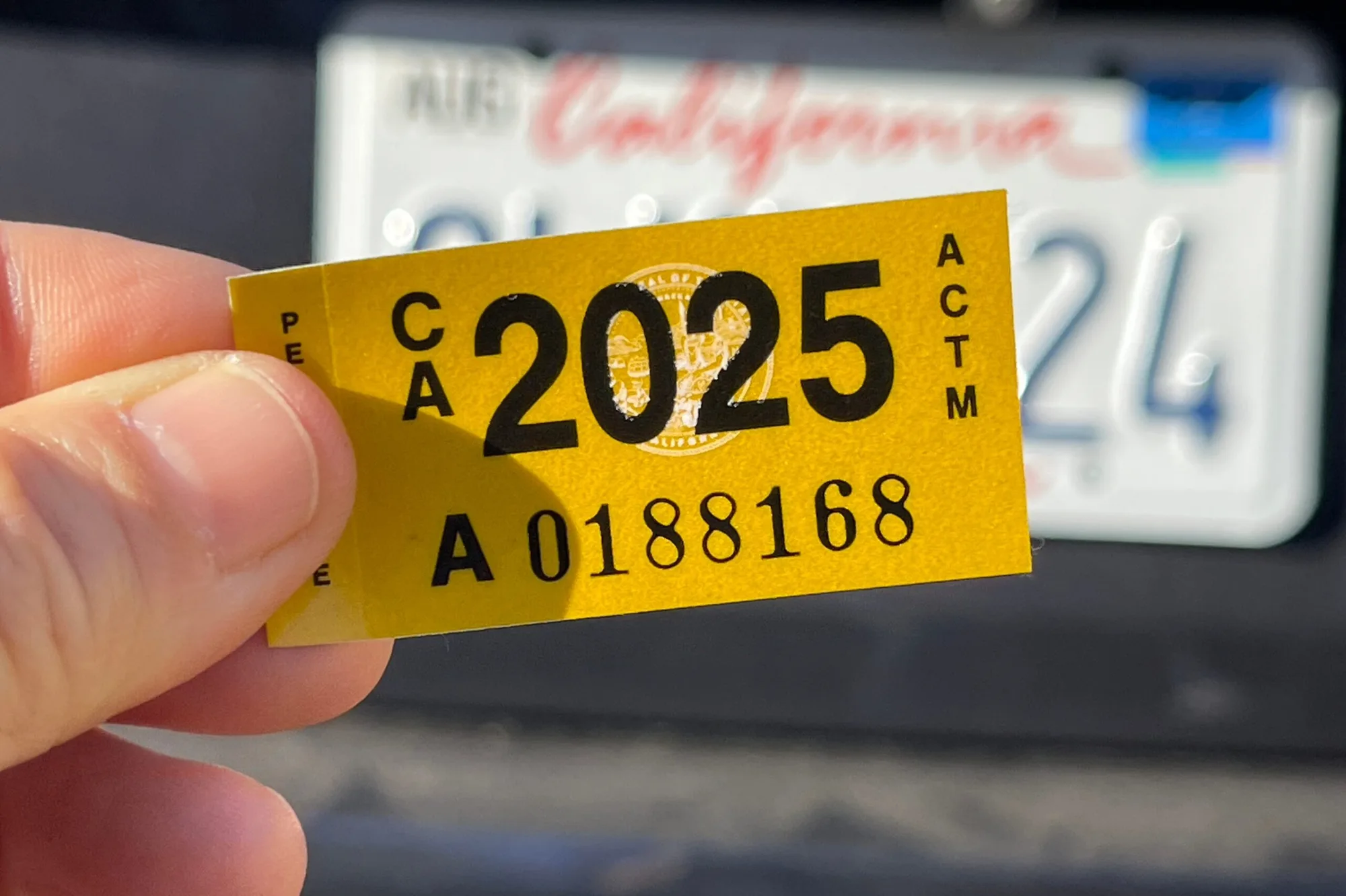
California is preparing to share detailed information about more than one million illegal immigrants who hold driver’s licenses under Assembly Bill 60 with a national database, a move immigration advocates are describing as a direct betrayal of the promises made when the program was created more than a decade ago.
The disclosure came after representatives from four privacy and immigration advocacy groups were briefed by the California Department of Motor Vehicles and the office of Governor Gavin Newsom earlier this month.
The reporting was first published by CalMatters on April 28.
The data will go to the American Association of Motor Vehicle Administrators, a nonprofit organization whose governing board is made up of DMV officials from across the country.
The California DMV has asked for $55 million to implement the data-sharing infrastructure.
Tracy Rosenberg, head of advocacy at Oakland Privacy, who was on the briefing call, did not choose her words carefully:
“It’s unclear how extreme the danger people are being put into by this decision but there’s no doubt we told people with AB 60 licenses this would never happen, but it’s happening, and that’s a direct betrayal.”
What Is AB 60?
Assembly Bill 60 was passed by the California legislature in 2013 and signed into law by then-Governor Jerry Brown.
It allowed illegal immigrants, people living in California without legal permission to be in the United States, to apply for and obtain a standard California driver’s license.
California was one of 19 states across the country that enacted similar laws.
The policy was built on a specific argument, allowing undocumented people to obtain driver’s licenses improves public safety because people without authorization to be in the country can feel more comfortable reporting criminal activity without fear that a routine traffic stop will lead to immigration consequences.
Economists also cited tangible benefits, billions of dollars in additional tax revenue, increased economic activity, a more integrated workforce.
The law contained an explicit prohibition. Information gathered during the AB 60 licensure process could not be used to consider or determine a person’s citizenship or immigration status.
That prohibition was the foundation of the program’s promise to the more than one million people who came forward, provided their personal information, and received a California driver’s license in reliance on that guarantee.
What they were told, unambiguously, was that this data would never be used against them.
What Is Being Shared?
The multistate verification system California plans to join will include each license holder’s last five digits of their Social Security number.
For people who do not have a Social Security number, which describes the majority of people who obtained licenses under AB 60, since Social Security numbers are generally issued only to those with legal immigration status, the database uses a placeholder value of “99999.”
The significance of that placeholder is not subtle. The “99999” entry functions as a marker.
Anyone accessing the database and searching for a specific individual would be able to determine from that field whether the person has a Social Security number.
If the field shows “99999,” the data effectively indicates the person is likely in the country without legal status. The data technically does not say “undocumented,” but it does say the equivalent.
This is what advocates mean when they say the sharing violates the spirit and potentially the letter of AB 60.
The law says the information cannot be used to determine citizenship. The system being joined would allow exactly that inference.
Why Is California Sharing This Data?
The state’s stated reason for sharing the data is compliance with the Real ID Act of 2005, federal legislation that set minimum standards for state identification to be accepted at federal facilities, primarily airports.
The Trump administration has been applying pressure on states to comply with Real ID requirements, and advocates who attended the briefing believe that if California does not provide the data, the Department of Homeland Security will refuse to accept California driver’s licenses and IDs at airport security checkpoints.
That would create a significant practical problem for California residents, not just the one million with AB 60 licenses but potentially all Californians holding standard state IDs, who would be unable to use those IDs to board domestic flights.
The TSA would reject the license at the checkpoint. You would need a passport or another accepted form of federal ID to fly.
Becca Cramer-Mowder, who attended the briefing representing the Electronic Frontier Foundation, asked the question that frames the entire situation.
Why is California in a rush to comply with a law that has been on the books for two decades, specifically now, under the current administration’s pressure?
The Real ID Act was passed in 2005. California has been in partial or non-compliant status for years without the consequences DHS is now threatening.
The urgency appears to be politically driven rather than legally required at this particular moment.
The Private Entity Problem
One of the less-discussed dimensions of the risk involves where the data is actually going.
The American Association of Motor Vehicle Administrators is a nonprofit organization, not a government agency. That distinction carries significant legal weight.
Government agencies that hold sensitive data are subject to Freedom of Information Act requests, open meeting laws, and a range of transparency and accountability mechanisms designed to allow the public to scrutinize how their data is being used.
Private organizations are not. AAMVA has no FOIA obligation. Its meetings are not subject to open meeting requirements.
Its data sharing arrangements are not subject to public disclosure in the way a government agency’s would be.
J. Hasbrouck, a privacy expert cited in the CalMatters reporting, went further.
He said the DMV and governor’s office “must have known” the reassurances they received from AAMVA about data security and access controls were “hollow given the possibility of gag orders.”
A private entity can be served with a court order, a subpoena, or a national security letter requiring it to share data with federal agencies, and depending on the circumstances, it may be legally prohibited from disclosing that it has done so.
That is the scenario that Hasbrouck believes California should have thought more carefully about before agreeing to route sensitive data through a private intermediary rather than a government system.
Ian Grossman, AAMVA’s chief executive, told CalMatters that participation in the verification system is voluntary, that only authorized state employees or contractors have access, that bulk searches are not currently permitted, and that any search requires specific identifying information about an individual such as their name and date of birth.
Those are the current rules. Rules can be changed. Court orders can override them.
What Are Immigration Advocates Calling For?
The advocates who attended the briefing have not accepted the state’s framing that the choice is simply between sharing the data and losing airport access.
Rosenberg of Oakland Privacy put a specific alternative on the table.
“I just wonder what would happen if the state asked Californians to get a passport in order to fly for a couple of years in order to protect one million Californians with AB 60 licenses,” she said.
She noted that more than 60 percent of Californians already have passports.
Her argument is the state could temporarily opt out of the Real ID system and ask residents to use passports at airports while a more protective solution is worked out, rather than immediately capitulating to the data-sharing demand.
The DMV spokesperson offered a grim alternative in the other direction: Californians who hold AB 60 licenses can request to surrender or cancel the license. Driving without a license is illegal.
The California legislature, through Assembly Speaker Robert Rivas’s office, signaled it is still working on the policy question.
“Protecting immigrant communities from the Trump administration’s relentless attacks, and ensuring Californians are empowered and defended, continues to be a top priority for the Speaker,” spokesperson Nick Miller told CalMatters.
The Delicacy Of Data In The Age Of Information
Linda Nguy of the Western Center on Law and Poverty drew a specific comparison that places California’s decision in context.
Last summer, Health and Human Services Secretary Robert F. Kennedy attempted to share data about millions of non-citizens with federal immigration agencies.
Department officials later concluded in a memo obtained by the Associated Press that this was a violation of federal law.
The same administration that produced that data-sharing attempt is now the external pressure driving California’s decision.
Pedro Rios of the American Friends Service Committee, who was not on the briefing call but reviewed the situation for CalMatters, called the plan what Rosenberg called it:
“A betrayal of California’s commitment to protect and defend all its residents, especially those who have an AB 60 driver’s license.”
Those one million people provided their information to California’s government in reliance on a specific, explicit legal promise. The law said it would never be used this way. The state is now preparing to use it this way.