
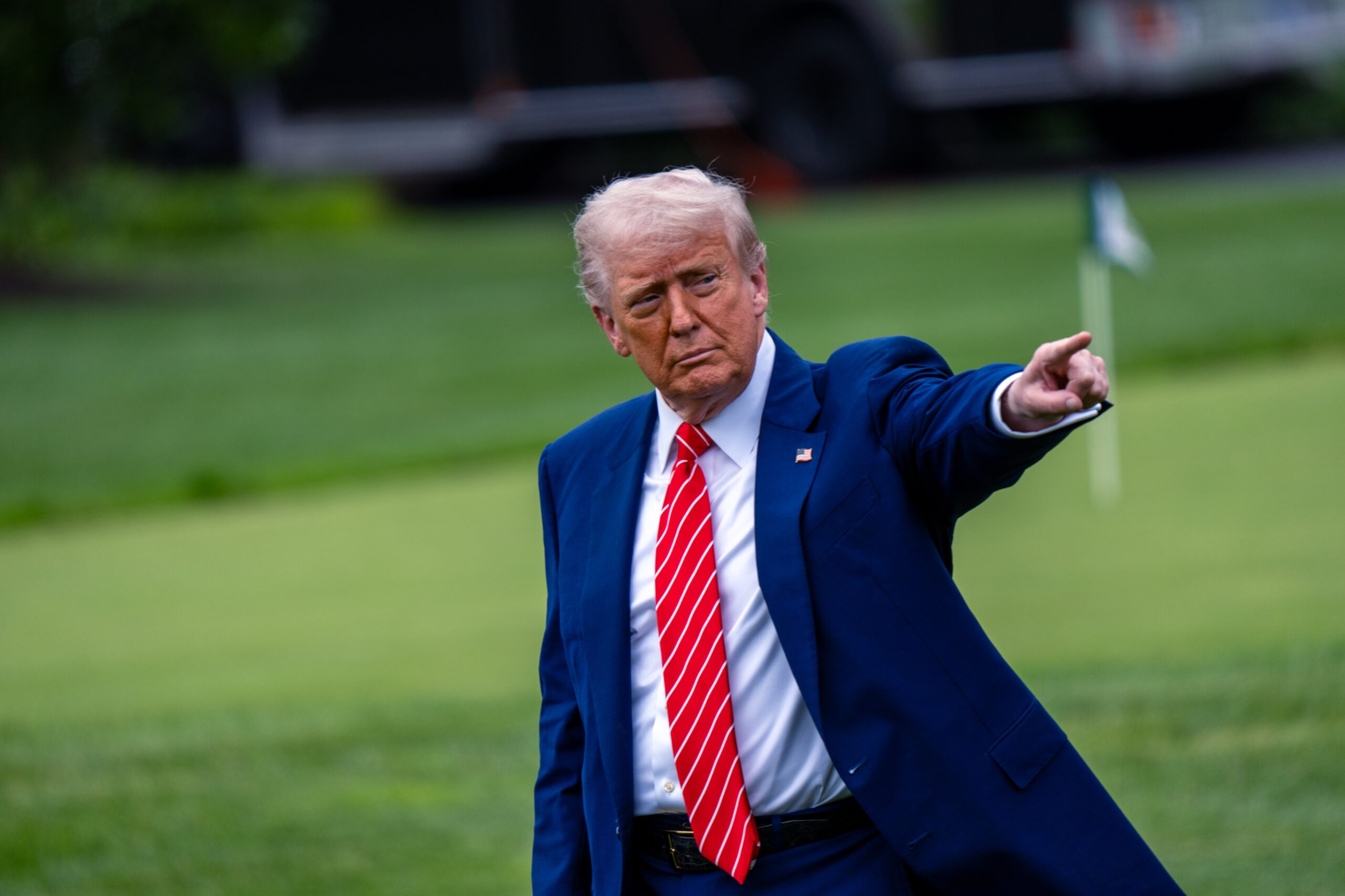
President Trump signed an executive order on Thursday, April 30, 2026, directing the federal government to create a new website called TrumpIRA.gov where the approximately 54 million Americans who do not have access to an employer-sponsored retirement plan can research and enroll in private-sector IRA accounts.
The website will be operational by January 1, 2027.
The order also directs the Treasury Department to ensure that eligible workers who open accounts through the site can receive the Federal Saver’s Match, a government matching contribution of up to $1,000 per year for qualifying low-to-moderate income workers that was passed by Congress in 2022 under the Biden administration and goes into effect in tax year 2027.
“Beginning at the start of next year, every American will be able to go to TrumpIRA.gov and open a new low-cost IRA account,” Trump said during an Oval Office signing ceremony. “You’ll then be able to access the same type of retirement accounts that federal employees enjoy through the Thrift Savings Plans, which are incredible.”
Here is what the order does, who it helps, and what the numbers mean.
The Issue President Trump Is Trying To Tackle
The retirement coverage gap is one of the less-discussed structural problems in American personal finance.
Roughly 54 million Americans, predominantly low-to-moderate income workers at small businesses, part-time workers, independent contractors and self-employed individuals, have no employer-sponsored 401(k) or pension plan through their job.
For a worker with a traditional office job at a large company, saving for retirement is largely automatic.
The employer offers a 401(k), often with a company match. Enrollment may happen automatically. The contribution comes out of the paycheck before the worker has to think about it.
Decades of behavioral economics research confirms that this kind of automatic, frictionless enrollment produces much higher participation rates than voluntary individual action.
For the 54 million workers without any such plan, the alternative is to set up a retirement account independently, to research IRA options, choose a financial institution, open the account, fund it regularly from after-tax income, and manage the investments over decades.
The behavioral science on this is equally clear. Most people do not do it. The complexity and friction of voluntary individual action produces much lower participation rates.
The result is tens of millions of Americans arriving at retirement age with little or no savings.
Trump’s order is designed to reduce that friction.
Rather than requiring workers to find and evaluate financial institutions on their own, TrumpIRA.gov will aggregate private-sector IRA options and allow workers to filter and compare them based on cost, quality and investment options from a single federal platform.
The Saver’s Match: What Is It?
The Saver’s Match is not a new program created by this executive order. It was passed by Congress in 2022 as part of the SECURE 2.0 Act, signed into law during the Biden administration.
It goes into effect for tax year 2027, the same year TrumpIRA.gov is set to launch.
Trump’s order is primarily directed at increasing awareness of the Saver’s Match and ensuring workers without employer plans can access accounts through which they can collect it.
The math on the Saver’s Match is straightforward. If a qualifying worker contributes up to $2,000 in a given year to a qualified retirement account, the federal government matches 50 percent of that contribution, up to $1,000 per year.
For married couples filing jointly, the maximum match is $2,000 per year on contributions of up to $4,000.
Full match eligibility applies to single filers with modified adjusted gross income up to $20,500 and joint filers with income up to $41,000.
Reduced matches are available for single filers earning up to $35,500 and joint filers earning up to $71,000. The match applies to contributions to 401(k) plans, traditional IRAs and Roth IRAs.
Approximately 26 million workers who qualify for the full or partial Saver’s Match currently have no retirement account to receive it in, according to the Economic Innovation Group, a centrist bipartisan think tank that developed the original concept in 2021 and worked with the White House on this order.
Trump’s order is designed to connect those workers to private-sector accounts.
What Can Workers Expect From This New Program?
Trump made a specific calculation at the signing ceremony to illustrate the scale of the potential benefit.
A 25-year-old who qualifies for the Saver’s Match and invests $165 per month, or approximately $1,980 per year, would qualify for the maximum federal match of $1,000 annually.
At that combined contribution and match level, with normal investment returns over 40 years, the worker would accumulate an estimated $465,000 by age 65.
A 2025 Morningstar analysis of retirement outcomes found that Americans eligible for the Saver’s Match would see a 12 percent boost to their wealth in retirement if they received it.
A separate Morningstar projection estimated that approximately 32.3 million workers would enter the retirement savings system under a federal auto-enrollment plan, even accounting for opt-outs.
The order itself does not include automatic enrollment. Workers must actively choose to go to TrumpIRA.gov and open an account.
Research consistently shows that voluntary programs produce lower participation rates than automatic enrollment.
A Pew Charitable Trusts survey found that 87 percent of workers without access to a retirement plan said they would be more likely to save if they could receive the government match, but expressing willingness and taking action are different things.
Making The Distinction: What The Order Doesn’t Do
Several important clarifications apply to what this executive order does and does not accomplish.
It does not create a new government-run retirement plan.
TrumpIRA.gov will be a comparison and enrollment portal connecting workers to existing private-sector financial institutions, banks, brokerages and IRA providers that already offer individual retirement accounts.
The government is building the front door and providing the matching contribution. The retirement accounts themselves will be private.
It does not create the Saver’s Match. That program was passed by Congress in 2022 and was going to take effect in 2027 regardless of this order.
What the order adds is the infrastructure, the website and the Treasury Department guidance, intended to maximize participation.
It does not automatically enroll anyone. The executive order calls on Congress to take legislative action to codify the policy with additional features including portability, automatic portfolio options and employer auto-enrollment requirements.
The Automatic IRA Act, already introduced in the House, would require employers with more than 10 employees to enroll workers in automatic IRAs. That bill has not yet passed.
The Bipartisan Dimension
The retirement coverage gap is one of the few policy areas where broad agreement exists across party lines.
The Economic Innovation Group, which developed the original concept for this type of federal IRA access portal, is explicitly bipartisan and includes alumni from both Democratic and Republican administrations.
Axios described the order as having “a surprising amount of bipartisan support.”
The Saver’s Match itself is the clearest example of that bipartisanship, it was passed under Biden and is now being implemented and expanded under Trump. Kevin Hassett, director of Trump’s National Economic Council, noted at the signing that middle-income earners not just low-income ones also frequently lack access to employer retirement plans.
Trump told reporters he wants to “take the match to the next level” by asking Congress to expand eligibility beyond the current $35,500 income ceiling for single filers.
The Retirement Savings for Americans Act, a bicameral bill with co-sponsors from both parties, calls for creation of portable, tax-advantaged retirement savings accounts.
If that legislation advances alongside this executive order, it would add automatic enrollment and portability features that the order itself does not include.
When Does It Take Effect?
TrumpIRA.gov will launch by January 1, 2027. The Saver’s Match begins for tax year 2027, contributions made starting January 1, 2027 will be eligible.
Workers do not need to wait for the website to open an IRA. Accounts at private financial institutions already qualify for the Saver’s Match under the SECURE 2.0 framework.
The Treasury Department is responsible for implementing the order, including publishing regulations protecting workers and issuing guidance on employer and charitable contributions to workers’ IRAs.
Those regulations will define the specific terms under which financial institutions participate and the protections that apply to workers who open accounts.