
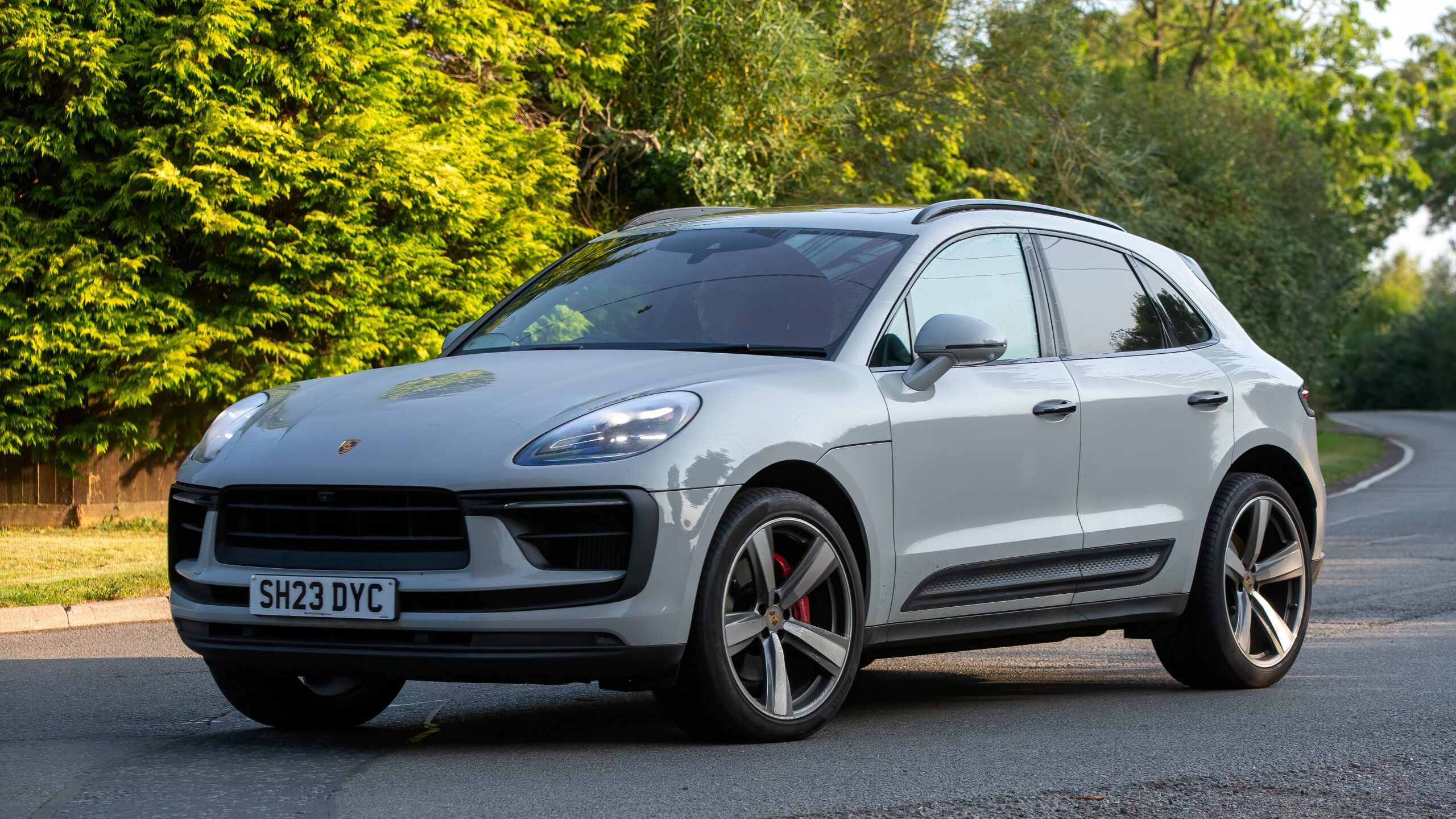
Porsche is building as many gas-powered Macans as it possibly can right now.
The company confirmed on its Q1 2026 earnings call that production of the first-generation gasoline Macan will end this summer, with July 2026 as the most specific target date available, and Porsche CFO Jochen Breckner was explicit about what is driving the urgency on the factory floor.
“During the last month that we have, we produce as much as we can,” he told analysts.
The reason for the sprint to stockpile is simple. The gas Macan has been Porsche’s entry-level bestseller since it arrived in 2013, and it continues to outsell the electric version by a significant margin in the United States, the market that matters most for the model’s remaining months.
When production stops this summer, there will be no gas Porsche compact SUV to replace it for approximately two years. The new model that will eventually fill the gap is not expected until 2028.
If you have been considering a gas Macan and have not yet bought one, the clock is running.
What Did Porsche Confirm?
The Q1 2026 earnings call confirmed what industry observers had been tracking for several months. Breckner said production stops in summer 2026 and added that the original Macan remains in “great demand” in the United States despite being a 12-year-old platform.
The plan is to stockpile enough inventory to keep the model available in some markets into 2027, meaning dealerships may have gas Macans on lots after the production line stops, but those units represent the end of the first-generation model rather than any continuation of it.
The production run from 2013 to 2026 will total more than one million units, a milestone the Macan reached and passed during its current production cycle.
That makes it the longest-running Porsche model currently in existence and one of the most commercially significant vehicles the company has ever produced.
The sales reality heading into the final months is striking. In Q1 2026 alone, Porsche delivered 10,130 units of the gas Macan globally, compared to 8,079 units of the electric version.
In the United States, where the gas model’s relative strength is most pronounced, approximately two-thirds of all Macan sales are still the internal combustion version. The electric Macan represents roughly one-third.
Breckner was specific about what is driving US demand and what the removal of the federal EV tax credit has meant for the mix.
The elimination of the $7,500 credit under the current administration’s policy changes is considered a “substantial issue” for electric Macan competitiveness.
The plan going forward is to push as many gas units as possible into the US market before the line shuts down.
Why Porsche Cannot Simply Keep Building It
The gas Macan’s retirement this summer is not a choice in the conventional sense, it is the intersection of multiple forces that converged to make continued production effectively impossible regardless of demand.
The first force was regulatory.
In July 2024, the European Union’s General Safety Regulation 2, a set of comprehensive cybersecurity requirements for connected vehicles, took effect. The first-generation Macan, designed on a platform that predates those regulations, did not meet the new requirements.
Porsche stopped selling the gas Macan across all EU markets at that point. The car that is currently being sold in the United States and a handful of non-EU markets is, in the regulatory framework of its home continent, already discontinued.
The second force is supply chain reality. A production line that has been running for 12 years eventually exhausts the supplier relationships, component availability and manufacturing commitments that keep it viable.
Breckner acknowledged that parts availability from suppliers is one of the limiting factors in how many Macans Porsche can produce in the final weeks, the bottleneck is not the factory floor or the demand but the components that the supply chain can still deliver for a 12-year-old platform.
The third force is the original strategic decision that Porsche is now navigating the consequences of.
When the electric Macan was developed and introduced in 2024, Porsche assumed that customers would shift naturally from the gas version to the electric one.
The gas Macan’s retirement was planned as part of a transition rather than as a loss.
That assumption has proven incorrect, EV demand has not grown as quickly as projected, buyers in the compact luxury SUV segment still strongly prefer combustion and hybrid powertrains, and the US market in particular has moved further from the EV transition rather than closer to it. Porsche is now managing a gap it created by planning for a future that did not materialize.
The Two-Year Gap And What It Means For Buyers
The gap between the gas Macan’s July 2026 production end and the new combustion-powered Porsche compact SUV’s approximately 2028 arrival is the central problem the company faces in this segment for the next two years.
Porsche will not have a gas-powered entry-level SUV in its lineup during that window.
The electric Macan will continue, and it is a genuinely good car, built on a dedicated electric platform and delivering the Porsche driving character that the brand has built its reputation around.
The problem is adoption. If one-third of US customers are buying the electric version, two-thirds of current Macan buyers will not have a like-for-like gas alternative when they walk into a Porsche dealer looking for one.
Some will move up to the Cayenne. Some will wait for the new model. Some will go to Audi, BMW or Mercedes.
For buyers who want a gas-powered compact Porsche right now, the remaining inventory is the only option on the immediate horizon.
Dealers have been receiving final production allocations and the stock, while limited, is still available at most Porsche dealerships in the United States as of this writing.
What The Replacement Will Be
The vehicle that will eventually fill the gas compact Porsche SUV role is currently in development as part of a €1 billion deal between Porsche and Audi.
It will use the Volkswagen Group’s Premium Platform Combustion architecture, the same platform underpinning the next-generation Audi Q5, and will be offered with gasoline and hybrid powertrains.
It will not be called the Macan. Porsche has confirmed that the Macan name continues forward only with the electric model.
The new gas and hybrid compact SUV will carry a different name, one that Porsche has not yet announced, and CEO Michael Leiters has promised it will be “a real Porsche” with distinct content, technology and product substance separate from the Audi Q5 that shares its platform.
The timing, approximately 2028, reflects the reality that developing a new platform-based vehicle from scratch takes years even when Porsche is motivated to move quickly.
Leiters has suggested a reveal could come as early as 2027. The production start that gets cars to customers is currently the 2028 target.
What Was The Macan?
The Porsche Macan arrived in 2013 as something the brand had never quite offered before. A compact luxury SUV that was small enough, affordable enough and positioned broadly enough to draw buyers who wanted a Porsche badge and Porsche driving dynamics without the financial commitment of a Cayenne or a 911. It worked spectacularly.
In 2025, the Macan was Porsche’s bestselling model globally with 84,328 units delivered. The Cayenne was second with 80,886.
Those two vehicles together represent the commercial core of Porsche’s business, not the 911, which is culturally central but comparatively low in volume, and not the electrics, which have not reached the volumes Porsche had projected.
The Macan is the model that has funded Porsche’s sports car development, its motorsport programs and its brand positioning as something aspirational but accessible.
Losing its gas version, even temporarily, removes the most commercially important Porsche from dealership floors. The electric Macan is available and will keep the name in circulation.
It is one-third of the US market rather than two-thirds, and the buyers who make up that other two-thirds are the ones currently at Porsche dealerships asking how much longer the gas version will be available.
The answer, as of the Q1 2026 earnings call, is, until the summer stock runs out.