
Spotify launched a new feature on Tuesday May 12, 2026 that lets every user on the platform look back at their complete listening history, every song, every artist, every year, and the response across social media has been exactly what Spotify designed it to produce.
People are finding out what song they played first when they joined the app. They are seeing how many songs they have streamed in their entire time as a subscriber.
They are staring at the name of their all-time most-played artist and having a moment of personal reckoning with who they apparently are.
The feature is called “Spotify 20: Your Party of the Year(s),” a Wrapped-style experience released as part of Spotify’s 20th anniversary celebrations and built around something the platform has never shown users before: a complete retrospective of their entire listening life on the service, not just one year.
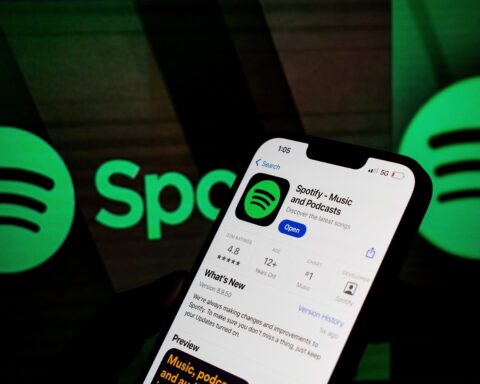
It is mobile only. Both free and premium users can access it. Search “Spotify 20” or “Party of the Year(s)” in the mobile app, and it is there.
What The Feature Actually Shows You
The Party of the Year(s) experience walks users through four key pieces of personal data that have never appeared in any previous Spotify feature, not in Wrapped, not in any prior anniversary campaign, not in any form.
The first is your join date, the exact day you created your Spotify account. For users who joined in 2011 when the service first arrived in the United States, that date is a small archaeological artifact.
For newer users who joined during the pandemic when streaming services saw record signups, it is a reminder of a very specific moment in their lives when they decided they needed more music.
The second is the first song you ever streamed on Spotify.
This is the detail that has generated the most social media sharing and the most surprised reactions from users who pull up the feature and discover that the inaugural track of their entire Spotify journey was something they had entirely forgotten about, or something they are genuinely embarrassed to have as their first entry.
The first song is a time capsule, it is whatever was in your head at the specific moment you downloaded the app and hit play for the first time.
The third is your all-time most-played artist. Not the artist you played most this year, not the artist you played most this month, but the artist you have listened to more than any other across your entire time on the platform.
For some users that answer is obvious and unsurprising. For others it is a revelation, the artist you apparently played at 1 AM for three years who now makes complete sense given where you were emotionally during that period.
The fourth is the total number of unique songs you have listened to since joining.
This number tells a different kind of story than the artist data, it is a measure of breadth rather than depth, of how many distinct songs have come through your ears in whatever period of time your account covers.
Some users will discover they have a narrower catalog than they thought. Others will discover they have explored more music than they realized.
The 120-Song Playlist
Beyond the four data points, the feature generates a personalized playlist of each user’s top 120 most-streamed songs, and pairs each track with its individual play count.
That combination is where the experience crosses from interesting to genuinely revealing.
A play count for a single song is a specific kind of emotional data. When you see that you played a particular song 847 times, you do not need to do any analysis to understand what that means.
You know exactly what was happening in your life during the period when that song became your most-played track.
You know who you were with, what you were going through, where you were driving when it came on. The play count is the number, but what it points to is the memory.
Spotify’s design choice to include individual play counts alongside the playlist, rather than just giving users the songs, turns the feature from a simple listening history into something more emotionally resonant. It is not just “here are the songs you liked.”
It is “here is the evidence of how much each of these songs mattered to you, expressed in the most honest metric available.”
The 120-song playlist can be saved directly to a user’s library, followed and replayed indefinitely. It is a time capsule in playlist form.
How Party Of The Year(s) Differs From Wrapped
Spotify Wrapped is the most successful consumer data product the platform has ever created, a December tradition since 2015 that has generated billions of social media shares and that users anticipate with something approaching genuine excitement every year.
Wrapped 2025 was the biggest version yet. 200 million users engaged with the feature in the first 24 hours, a 19 percent increase over 2024, and users shared their recaps 500 million times.
Party of the Year(s) is not a replacement for Wrapped. The two features cover different things.
Wrapped is an annual snapshot, your year in music, your genres, your podcasts, your audiobooks, the artist whose work defined your last twelve months.
It covers a single calendar year and it shows up in December when the year is almost over and the listening is still fresh.
Party of the Year(s) covers everything from the day you joined through the present.
It is longitudinal rather than snapshot-based, retrospective rather than annual, a biography rather than a yearbook entry.
What it does not include, and what Wrapped does include, is genre data, podcast statistics and audiobook listening.
The anniversary feature is narrowly focused on music and on the user’s personal history with music on the platform.
For someone who has been on Spotify since 2011, Party of the Year(s) covers fifteen years of listening.
That is more than a decade and a half of music discovery, playlist building, late-night listening and early-morning drives.
Wrapped has covered each of those years individually. Party of the Year(s) is the first time the entire arc is visible in one place.
The All-Time Spotify Records Released Alongside The Feature
Alongside the personal feature, Spotify released its all-time records for the platform’s 20-year history, global data that reflects cumulative streaming through April 2026.
Taylor Swift is the most-streamed artist in Spotify history. the first time the platform has released an all-time individual artist ranking.
Swift’s position at the top reflects both the extraordinary scope of her catalog and the specific intensity of her fanbase, which has a documented tendency to stream her music at volumes that other artists’ followings do not match. Behind Swift in the all-time ranking are Puerto Rican rapper Bad Bunny, Drake, The Weeknd and Ariana Grande.
The most-streamed song in Spotify’s history is “Blinding Lights” by The Weeknd, a record that in retrospect feels inevitable given the specific combination of timing and cultural resonance that made the song inescapable in 2020.
Released at the end of 2019, “Blinding Lights” became the pandemic-era soundtrack in a way that is difficult to fully explain without reference to the specific moment when millions of people were home, anxious and playing music at volumes they had never played it before.
The viral TikTok dance built around the song extended its cultural shelf life well beyond the release cycle.
The most-streamed podcast in Spotify history is The Joe Rogan Experience, a result that reflects both the length of the podcast’s run and the size of its audience, which moved to Spotify when Rogan signed an exclusive deal with the platform in 2020. Bad Bunny holds the record for the most-streamed album in Spotify history.
What This Tells You About Spotify’s Strategy
The platform celebrated its 20th year by giving users a product that makes them feel something rather than just a product that gives them information.
The personal data, your first song, your most-played artist, your 15 years of listening compressed into a shareable card, is the currency of the feature. But the emotional response to seeing that data is what Spotify is actually building.
When you discover that your most-played artist of all time is someone you listened to obsessively during a specific difficult year of your life, Spotify is not just showing you a statistic.
It is reminding you of the relationship between music and memory, the specific way that the songs you played on repeat during formative periods become permanently associated with those periods in a way that nothing else quite replicates.
That association is what keeps users on the platform. Not the catalog, which every streaming service is converging toward.
Not the recommendation algorithm, which every streaming service is improving.
The specific accumulated history of personal listening that makes your Spotify account a record of your emotional life, organized by song.
Party of the Year(s) is the feature that makes that explicit. It will be available for a limited time as a mobile-only in-app experience at spotify.com/20 on mobile or by searching “Spotify 20” in the app.