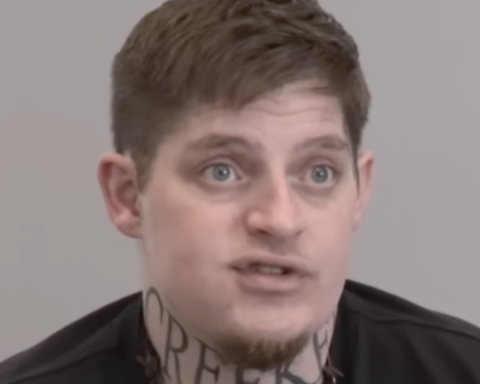

A federal jury in Nashville ruled Monday that Ryan Upchurch, the YouTube personality and country-rapper with millions of followers, must pay $17.5 million to the father and grandfather of Kiely Rodni, the 16-year-old California girl who disappeared after a party near Truckee in August 2022 and was found dead inside her submerged SUV two weeks later.
The jury found for the plaintiffs on all four counts, defamation, false light invasion of privacy, intentional infliction of emotional distress and negligent infliction of emotional distress.
The case now moves to a separate punitive damages phase that could add to the $17.5 million already awarded. Upchurch is expected to appeal.
At the center of the verdict is a video Upchurch posted while Kiely Rodni was still missing, while her family did not know whether she was alive, titled “ZERO proof of Kiely Rodni situation being REAL.”
In that video, Upchurch told his audience that the GoFundMe set up for Kiely’s family had raised $63,000 in seven days and suggested the whole situation was a scheme to raise money through fake deaths. A federal jury in 2026 decided that was not protected opinion. It was defamation.
Who Was Kiely Rodni?
Kiely Rodni was 16 years old when she went missing from a party at a campground near the Tahoe National Forest outside Truckee, California in August 2022.
The search that followed lasted two weeks and generated the kind of widespread media attention and public concern that surrounded missing person cases in that era, social media searches, news coverage, community vigils and the GoFundMe that Upchurch would later cite as evidence of a scheme.
Her vehicle was found in a reservoir near where the party had been held. She was inside it.
The Placer County coroner examined the circumstances and ruled the cause of death as drowning, an accidental drowning. The sheriff’s office stated explicitly that there was no evidence of foul play.
She did not fake her death. She did not catfish anyone. She drowned accidentally at 16.
Her father and grandfather spent the two weeks she was missing grieving a disappearance that ended with the worst possible answer, then spent additional years watching a YouTuber tell his audience that the entire thing was a money-making scam.
What Was In The Defamatory Video?
While Kiely Rodni was still missing, while her father and grandfather did not know whether she was dead or alive, Ryan Upchurch published a video titled “ZERO proof of Kiely Rodni situation being REAL.”
The title communicated the core argument before the first word of narration. The content made the argument explicit.
“Do you realize that you can be a millionaire on GoFundMe by catfishing people with internet deaths?” Upchurch said in the video. “You could do it fast as f–k. Look at the Kiely Rodni GoFundMe. It’s made $63,000 in the past seven days. That’s one GoFundMe for Kiely Rodni. If you have five GoFundMe’s for each individual person that you catfish, fake a death with, all you need is three people. Three people. Three viral stories. You’re a millionaire in two weeks.”
He did not present this as a hypothetical about the true crime economy. He named Kiely Rodni specifically, pointed to her family’s GoFundMe specifically and used that specific dollar figure as the anchor for a theory about how internet death hoaxes are monetized.
To his audience, millions of subscribers who heard the video, the implication was specific and clear: this family, during this crisis, was running a financial scam.
The family’s attorneys argued that the video did not stay online in isolation. It spread. It supercharged harassment aimed at the Rodni family.
It amplified threats and accusations during a period when a father and grandfather were living through what every parent and grandparent most fears.
The First Amendment Argument That Didn’t Work
Upchurch’s legal team built their defense around the First Amendment and the nature of online commentary.
The argument was that his videos contained the specific characteristics of opinion rather than fact, the dramatic delivery, the hyperbolic language, the heated debate style that audiences understand as persona rather than reporting.
“All of Mr. Upchurch’s videos contain the same elements of drama, hyperbolic language, and heated debate that would certainly give the audience the impression Mr. Upchurch was not asserting objective fact,” his attorneys argued in pretrial filings. “Mr. Upchurch is not presenting his statements with any indication of private and personal knowledge or authority on investigations.”
The court denied his motion to dismiss. The pretrial rulings established a critical finding: the plaintiffs are private figures, not public figures.
That distinction matters enormously under defamation law. Public figures, politicians, celebrities, people who have voluntarily inserted themselves into public controversy, must prove that defamatory statements were made with “actual malice,” knowledge that they were false or reckless disregard for their truth or falsity.
That is a high bar that protects vigorous criticism of people who have chosen public life.
Private figures face a lower standard. Kiely Rodni’s father and grandfather are not celebrities.
They did not choose to become public figures. They became briefly known through the tragedy of their daughter and granddaughter’s disappearance.
The court’s determination that they are private figures removed the actual malice requirement, the family only had to show that the statements were false, that Upchurch acted at least negligently and that they suffered harm.
The jury found all of those elements present. The verdict was found on all counts. The damages are $17.5 million before punitive damages are determined.
What The Verdict Means For True Crime Content
The Kiely Rodni verdict arrives at a moment when the true crime content space is under increasing legal scrutiny.
Just recently, a TikTok psychic was ordered to pay millions of dollars to a University of Idaho professor after she accused him of killing four students in 2022, a case that generated significant attention in the content creator community for exactly the reasons the Upchurch verdict now amplifies.
Whiskey Riff’s analysis of the verdict noted directly what it means for the broader space:
“It will also no doubt cause other ‘true crime’ YouTubers to pause before releasing their own commentary, given the size of the verdict and the implications on free speech. The true crime space has become a popular one on social media, with plenty of amateur sleuths chiming in on big cases and giving their opinions and theories along with the facts.”
The specific combination of factors that produced the $17.5 million verdict, a private figure plaintiff who did not need to prove actual malice, a family targeted during acute grief, a video that named them specifically and characterized their fundraising as a scam, and supercharged harassment as a documented downstream consequence, creates a template that content creators in the true crime space will need to study carefully.
The line between opinion and defamation in online video commentary has now been drawn by a federal jury in one of the largest cases the true crime YouTube world has faced.
The line sits, at minimum, between general commentary about how GoFundMe scams work and specifically naming a missing person’s family while implying they are running one.
Upchurch’s Statement
Upchurch’s attorney released a statement after the verdict that acknowledged the family’s grief while signaling the appeal that most observers expect to follow.
“The freedom of speech is one of the most fundamental rights that is necessary for every free society, and that right is one that needs protecting now more than ever,” the statement read.
It extended sympathy to the Rodni, Robertson and Nieman families and added that Upchurch “has no comment at this time” regarding the verdict itself.
The First Amendment argument that did not succeed at trial will likely be the centerpiece of the appeal, the argument that a federal jury has applied defamation law to online opinion content in a way that chills protected speech.
The appeal will take time. The punitive damages phase will add another layer to the proceedings before the final dollar figure is set.
For Kiely Rodni’s father and grandfather, the verdict represents the culmination of a three-year legal fight that began with a July 2023 lawsuit and ended with a jury deciding that what was done to them while they were grieving a 16-year-old’s disappearance was defamation.
The $17.5 million is what a federal jury decided that cost.