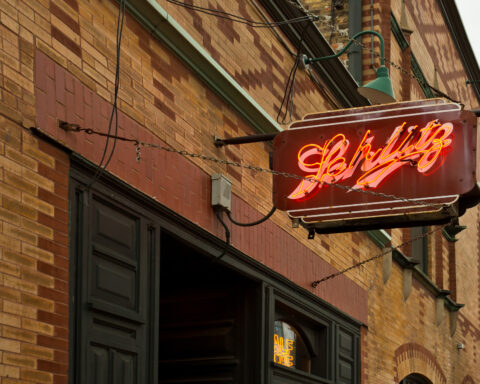

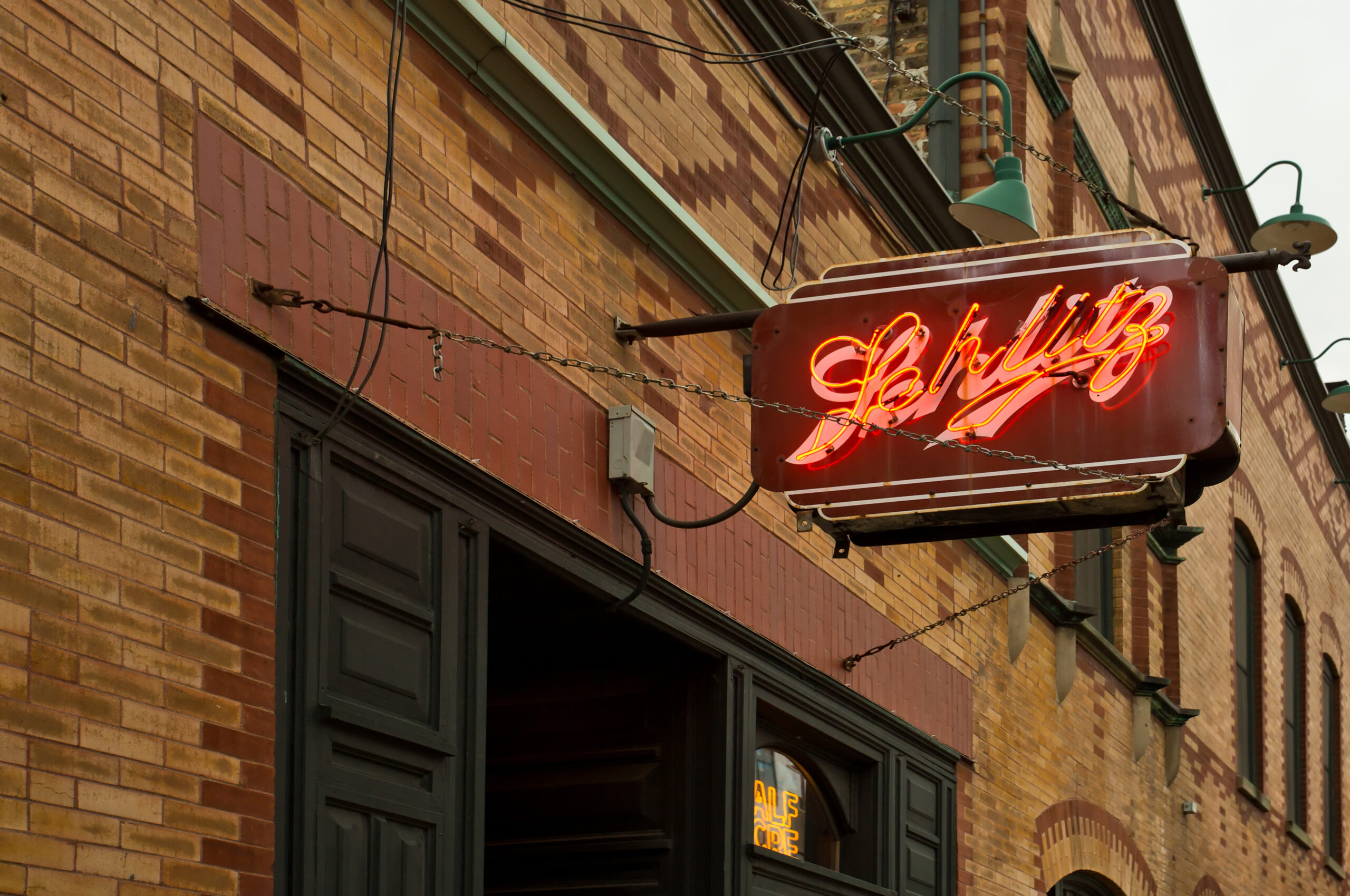
Schlitz Premium, the Milwaukee-born lager that was once the most popular beer in the world, that made the slogan “the beer that made Milwaukee famous” one of the most recognized taglines in American advertising history, and that has been a part of American drinking culture since 1849, is being discontinued by parent company Pabst Brewing Co. after 177 years.
The final 80-barrel batch will be brewed this Saturday, May 23, at the Wisconsin Brewing Company in Verona, Wisconsin.
A limited release of 16-ounce four-packs goes on sale June 27, available only at the brewery, only in person, only while they last.
Pabst confirmed the decision to Milwaukee Magazine last Friday, describing it as placing Schlitz Premium “on hiatus,” the corporate language for discontinued that leaves a theoretical door open to revival while closing the actual door on production.
Zac Nadile, Pabst’s head of brand strategy, explained the reasoning without sentiment:
“Unfortunately, we have seen continued increases in our costs to store and ship certain products and have had to make the tough choice to place Schlitz Premium on hiatus.”
Kirby Nelson, the brewmaster at Wisconsin Brewing Company who has brewed Schlitz before and who reached an agreement with Pabst to produce this final batch, described the assignment in terms that reflected something Nadile’s statement did not. “We decided that, Schlitz being what Schlitz was, it deserved a proper sendoff. One with dignity and respect.”
He is calling the final batch “Wisconsin Brewing Company’s love letter to our state.”
That is a generous framing for a beer that its parent company is putting down because shipping costs are too high.
It is also the right framing, because the story of what Schlitz was before it became what it is deserves that kind of acknowledgment.
How Schlitz Became The Most Famous Beer In America
The story begins in 1849 when a German immigrant named August Krug opened a tavern brewery in Milwaukee, Wisconsin. Milwaukee in 1849 was a small but fast-growing city on the western shore of Lake Michigan, a city with an enormous German immigrant population that had brought European brewing traditions with it and that demanded beer made the way beer was made back home.
Krug’s brewery was one of several that served that demand.
Krug died and a man named Joseph Schlitz married his widow and took over the business.
Schlitz was a better businessman than Krug had been, or luckier, or both. What happened next was one of those historical accidents that produces empires.
The Great Chicago Fire of 1871 burned for two days and destroyed approximately three square miles of the city including most of its commercial district.
Among the things the fire destroyed or disabled were Chicago’s local breweries, which suddenly could not supply beer to a population of hundreds of thousands of people trying to rebuild their lives in the aftermath of a catastrophe.
Schlitz, 90 miles north in Milwaukee, saw the opportunity and took it. The company shipped beer to Chicago.
Chicago drank it. Chicago remembered where the beer came from when the fires were out and the city was being rebuilt.
The slogan, “the beer that made Milwaukee famous,” arrived as a direct consequence of that moment. Schlitz had made itself famous in the largest city in the Midwest by being there when Chicago needed it.
The brand awareness that came from the Chicago Fire recovery launched Schlitz into national prominence in a way that years of conventional advertising could not have replicated.
By the early 20th century, Schlitz was not just the largest brewery in the United States.
It was the largest brewery in the world. The Joseph Schlitz Brewing Company was Milwaukee’s most important industry and one of the defining commercial enterprises of the American Midwest.
How Schlitz Lost Everything And Never Got It Back
In 1957, Anheuser-Busch and Budweiser took the top spot in American beer sales.
Schlitz had been No. 1 for decades. Being overtaken by a competitor was not immediately catastrophic, Schlitz remained one of the two or three best-selling beers in the country through the early 1970s, but losing the top position was the beginning of a long unraveling that the company’s subsequent decisions accelerated rather than reversed.
The 1970s recipe changes are the specific event that Schlitz drinkers cite as the turning point.
In pursuit of lower production costs, the company altered its formula, changing ingredients in ways that affected the taste and the way the beer aged and settled. Regular customers noticed. Bars noticed.
The beer that had built its reputation on a specific flavor profile now tasted different, and not better.
Schlitz tried to manage the fallout publicly, which produced one of the more infamous moments in American advertising history, a series of advertisements so defensive and aggressive in their attempt to convince drinkers that nothing had changed that they became known derisively as the “drink Schlitz or I’ll kill you” campaign.
The campaign made things worse.
By the early 1980s, the brand that had dominated American brewing for most of the 20th century was in severe decline.
The Milwaukee brewery closed in 1992. The Schlitz brand was sold to Stroh Brewing Company and then, in 1999, to Pabst Brewing Co., a company that specializes in acquiring heritage American beer brands and managing them as portfolio assets rather than manufacturing them as independent operations.
Pabst also owns Old Milwaukee, Lone Star and several other regional American beer brands that exist as cultural artifacts of their respective regions more than as active competitive forces in the beer market.
Pabst relaunched Schlitz in 2008, a reformulation attempt that tried to return the beer to something closer to its pre-recipe-change glory days.
The relaunch generated nostalgic attention but did not reverse the fundamental commercial reality of a brand that had been out of the mainstream for decades competing in a craft beer era where the major growth was happening at the opposite end of the market from where Schlitz had ever operated.
What Saturday’s Final Batch Represents
The 80-barrel batch that Kirby Nelson is brewing at Wisconsin Brewing Company in Verona this Saturday is not a commercial production run.
It is a goodbye, a specific and intentional act by a brewmaster who has brewed Schlitz before and who believes the beer deserves better than simply stopping without acknowledgment.
Nelson told the Milwaukee Journal Sentinel that this final batch is “back to Schlitz’s glory days,” meaning the formulation is intended to reflect what Schlitz was at its peak, not what the cost-cutting 1970s recipe changes turned it into.
The 80 barrels will be packaged as 16-ounce four-packs available for pre-order beginning Saturday at the Wisconsin Brewing Company taproom in Verona and online, with pickup beginning June 27. You cannot order them shipped. You have to go get them.
Milwaukee-area bars and breweries are also planning farewell events tied to the final batches, the local celebration of a beer that was, for more than a century, the specific product that put the city on the American cultural map.
The Pabst Language
“On hiatus” is not “discontinued.” That is Pabst’s official position, and it is technically accurate in the sense that Pabst has brought other brands back from hiatus when market conditions or consumer demand made it viable to do so. Nadile’s statement included the standard language:
“We continually look for opportunities to bring back beloved brands, and customer feedback is important in shaping those discussions.”
The practical reality is that Schlitz Premium is ending production this Saturday and will not be available after the Wisconsin Brewing Company’s limited June 27 release sells through.
Whether Pabst eventually revives it depends on factors the company is not committing to and consumers have no control over.
The feedback Nadile invites is welcome, but the costs of storage and shipping that prompted the hiatus will not disappear because consumers express affection for the brand on social media.
The beer that was once the largest brewery in the world, that made Milwaukee famous, that fueled Chicago after its great fire, that peaked before most people alive today were born and then declined through a series of decisions that became a business school case study in how not to manage a legacy brand, that beer is being brewed for the last time on Saturday in Verona, Wisconsin, in an 80-barrel batch that a brewmaster is describing as a love letter.
Pour one out before June 27. After that, the love letter is all that remains.