
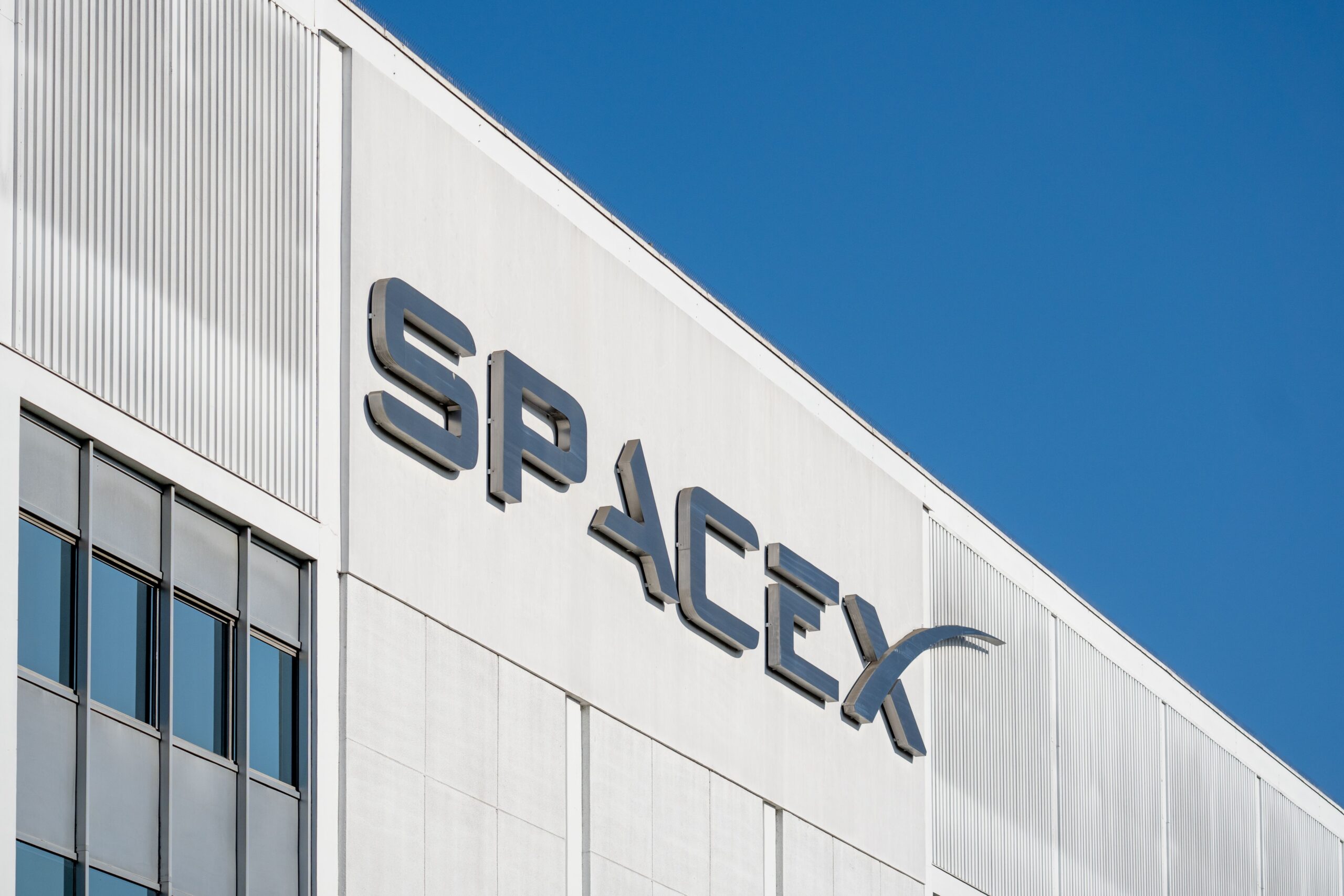
SpaceX came within 40 seconds of launching Starship Flight 12, the first test flight of the new third-generation Version 3 Starship, on Thursday evening May 21, 2026, before a component issue in the launch tower sent engineers back to the drawing board and postponed what would have been the most significant Starship test in the program’s history.
The earliest possible next attempt is Friday evening at 6:15 PM Eastern.
The scrub happened at Starbase, SpaceX’s company town in South Texas on the Gulf Coast, where tens of thousands of spectators had gathered including singer Nicki Minaj, who sang the 2012 hit “Starships,” wearing a SpaceX Starship t-shirt and telling the crowd “this is historic, this is a major moment, y’all” before the holds began and the launch window closed without a liftoff.
The mission did not fly. The Mars announcement was real.
During the launch webcast, while engineers were managing the technical issues that eventually produced the scrub, SpaceX revealed that Chun Wang, the cryptocurrency billionaire who previously commanded the Fram2 private Dragon mission, has signed on to lead the first-ever Starship flyby of Mars, with a lunar flyby included in the mission profile.
“A lot of people talk about Mars,” Wang said in a recorded video played during the webcast. “We like Mars, we’re gonna land on Mars. We’re gonna do a colony on Mars, but let’s get it started with a flyby.”
The rocket never left the ground. The announcement that the world’s most powerful launch vehicle will eventually carry humans on a flyby of Mars arrived anyway.
What Went Wrong And Why
The 90-minute launch window that opened at 6:30 PM Eastern time on Thursday had been pushed from its original target the previous day, SpaceX had originally planned to attempt Flight 12 on Wednesday May 20 before updating its plans and pushing the attempt by 24 hours.
The window opened on Thursday and immediately went into a hold. The countdown resumed. It went back into hold.
The sequence of holds continued, the launch team dipping in and out of the countdown several times before the final decision to stand down was made at approximately 8:03 PM Eastern, when the window closed with the rocket still on the pad.
SpaceX webcast host Dan Huot identified the problem during the broadcast, “managing some pressures in the Ship quick disconnect.”
The quick disconnect is one of the umbilical connections between the launch tower’s ground support equipment and the Starship spacecraft, a line used to load propellant into the vehicle that is specifically designed to detach rapidly at the moment of liftoff.
The pressures in that component were not behaving as the launch team required, and the repeated holds reflected engineers attempting to resolve the issue within the available window before ultimately concluding they could not do so in time.
Elon Musk, who has been visible throughout the Starship development program and whose public commentary on SpaceX missions has become part of the news cycle around each launch attempt, indicated after the scrub that if the issue could be fixed quickly, the company could attempt another launch on Friday.
Federal air traffic warnings filed by SpaceX confirm a Friday window at 6:15 PM Eastern.
What Is Version 3 Starship?
The rocket on the Starbase pad Thursday evening is the first of the third generation of Starship, the vehicle that SpaceX has been developing since the company’s founding with the explicit goal of enabling human settlement of Mars.
Each generation has brought improvements in capability, reliability and size. Version 3 is bigger and more powerful than either of its predecessors.
The stakes surrounding Flight 12 go beyond the test flight itself. NASA selected Starship as the vehicle to land its Artemis 4 astronauts on the Moon in 2028, the second crewed lunar landing in the Artemis program, following the Artemis 3 mission planned for earlier in that sequence.
The specific vehicle NASA needs for that mission is one that can complete a full orbit, demonstrate the orbital propellant transfer operations required for a lunar mission, and eventually dock with the Orion capsule that will carry the crew.
None of those capabilities have yet been demonstrated by any Starship in flight.
Flight 12 is supposed to begin building the foundation for those demonstrations.
The mission goals are broadly similar to the successful Flights 10 and 11, the first fully successful Starship missions, both conducted in 2025, with two specific additions.
The payload for Flight 12 includes a pair of modified Starlink satellites that will test hardware planned for the next generation of the Starlink broadband constellation.
Those satellites will also attempt to photograph Starship’s heat shield during the flight, transmitting imagery back to SpaceX engineers to test methods for assessing heat shield condition from orbit.
SpaceX launched five Starship missions in 2025.
Flight 12 would have been the first of 2026. The program has come an extraordinary distance from the first launch attempt in April 2023, when Starship cleared the pad for the first time and then exploded approximately four minutes after liftoff.
Flights 10 and 11, both in the second half of 2025, were the first missions the company described as completely successful, with the Super Heavy booster executing its return splashdown, the Ship deploying its dummy satellite payload and making its own splashdown in the Indian Ocean off the coast of Western Australia.
The Nicki Minaj Moment That Already Has The Internet Going
Among the thousands of spectators at Starbase on Thursday was Nicki Minaj, the rapper and pop artist whose 2012 single “Starships” has been a part of the cultural vocabulary of space enthusiasm ever since the song became an anthem for people who dream about the future of human spaceflight.
She was wearing a SpaceX Starship t-shirt on the observation deck and delivered exactly the kind of statement that the occasion called for before the holds began.
“This is historic. This is a major moment, y’all,” Minaj said as the launch window opened and the countdown began.
The holds started. The countdown recycled. The holds continued. The window eventually closed without a launch.
Minaj and the crowd of tens of thousands who had gathered at Starbase, many of whom had been there since before the original Wednesday attempt was announced, went home without seeing a launch.
The image of Minaj in her SpaceX shirt waiting for a rocket named after her biggest song while that rocket remained stubbornly on the ground is the specific moment that the internet will be sharing through Friday’s rescheduled attempt.
The Mars Announcement Made During The Webcast
The surprise that arrived during the launch webcast had nothing to do with the rocket on the pad.
SpaceX announced during the Flight 12 coverage that Chun Wang, who commanded the private Fram2 Dragon mission that completed the first polar orbit crewed spaceflight in history, has signed on to command the first Starship flyby of Mars.
The mission profile, a flyby of Mars with a lunar flyby also included in the trajectory, represents the first concrete step toward the crewed Mars missions that SpaceX and Elon Musk have been describing as the company’s ultimate purpose since its founding in 2002.
Wang’s involvement brings a private explorer who has already demonstrated willingness to take the operational risks of experimental spaceflight into the specific context of humanity’s first attempt to get a crewed spacecraft to the vicinity of Mars.
“A lot of people talk about Mars,” Wang said in the recorded announcement video. “We like Mars, we’re gonna land on Mars. We’re gonna do a colony on Mars, but let’s get it started with a flyby. Here’s what Wang did on Fram2.”
No launch date for the Mars flyby mission has been announced. The announcement was made during a launch webcast for a mission that itself did not launch.
The juxtaposition captures something essential about the SpaceX experience, the ambitions are always larger than the current moment, and the current moment always involves holding at T-minus 40 seconds while engineers manage pressures in a quick disconnect.
Friday evening at 6:15 PM Eastern. The rocket is still on the pad.