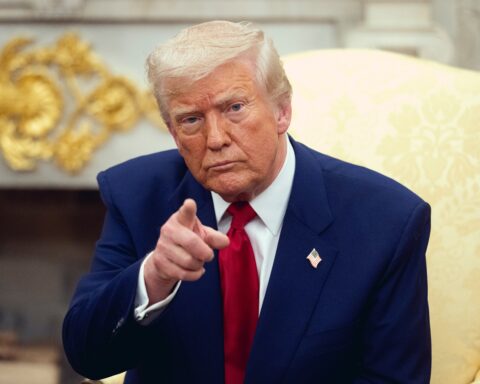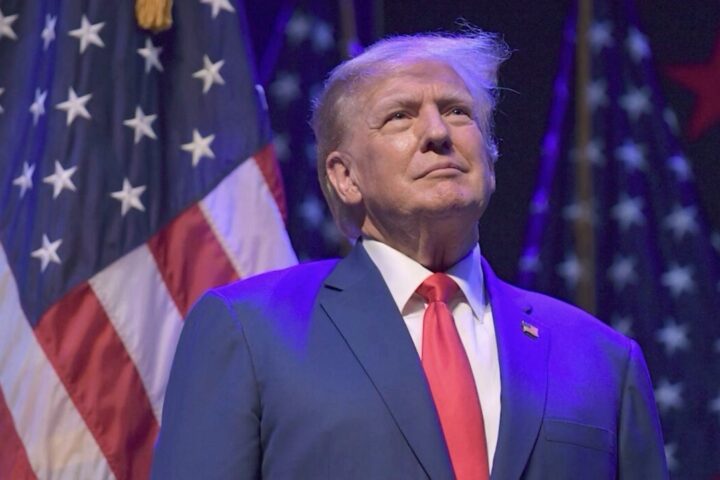

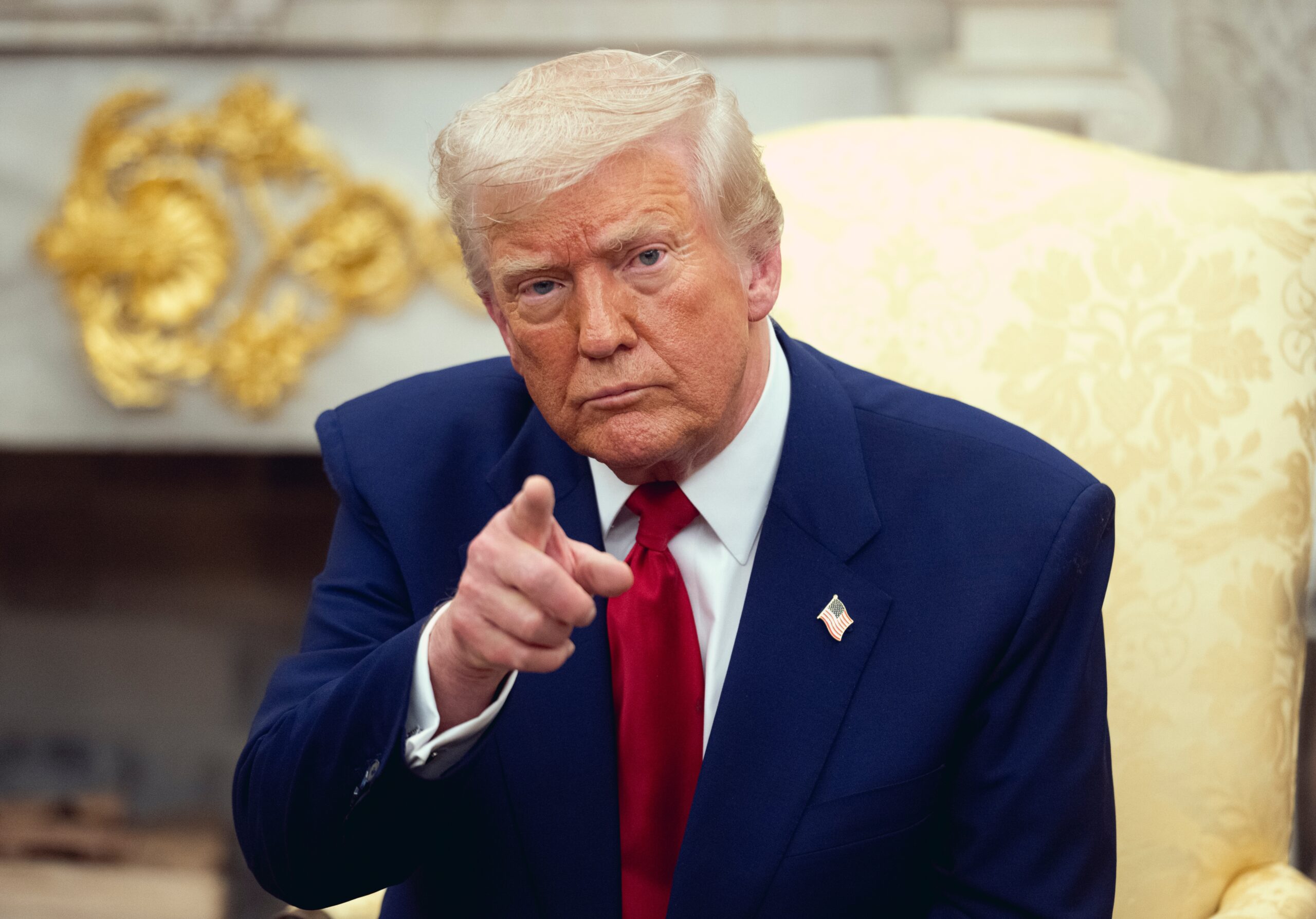
President Trump announced Tuesday that he will convene a rare Cabinet meeting at Camp David on Wednesday morning, the first time all of his Cabinet members have gathered since March 26, only the 10th full Cabinet meeting of his second term, and only the second time in this presidency that Trump has visited the secluded Maryland mountain retreat that every other modern president has used routinely but that Trump has largely avoided.
The choice of Camp David is the detail that tells you how serious the administration views what is about to happen.
Trump said in 2017 that Camp David was “very rustic” and that you would enjoy it for “about 30 minutes.”
He has visited it twice in two years of his second term. The first time was just days before the United States and Israel launched their coordinated strikes on Iran’s nuclear and military infrastructure on February 28, 2026.
The second time is tomorrow, in the middle of a fraying ceasefire, overnight US airstrikes on Iranian military positions, Iranian threats to retaliate and high-stakes negotiations over a peace deal that Trump says is close but that Iran is publicly denying is imminent.
The official agenda includes economy and small business wins, a Task Force to Eliminate Fraud update and foreign policy. Iran is expected to dominate every minute.
What Happened Overnight That Tightened The Urgency?
The Camp David announcement landed on the same day that US Central Command confirmed American forces had conducted airstrikes overnight on Iranian targets, specifically, missile launch sites and boats that CENTCOM said were laying mines in or near the Strait of Hormuz.
The US described the strikes as “self-defense,” a characterization consistent with its stated policy of maintaining the right to respond to Iranian military activity that threatens American forces or commerce even while ceasefire talks are ongoing.
Iran’s response was immediate and sharp. Iranian officials called the overnight strikes a “grave violation” of the existing ceasefire.
The IRGC threatened retaliation. Iran’s supreme leader said American military bases in the Middle East were no longer safe following the new strikes, a statement that raises the specific threat of proxy attacks against US personnel and installations across the region.
The sequence, overnight US strikes, Iranian accusations of ceasefire violations, Iranian retaliation threats, Trump calling a rare Cabinet meeting at Camp David the following morning, describes a situation that is moving fast and that the administration is treating with the institutional gravity of gathering everyone in one room at the location that American presidents have historically reserved for their most consequential national security deliberations.
The State Of Iran Negotiations
The Iran war that began on February 28, 2026, Operation Epic Fury, the coordinated US and Israeli strikes on Iranian nuclear and military infrastructure that executed nearly 900 strikes in the first twelve hours, has been followed by a period of military action, ceasefire attempts and diplomatic negotiation that has not resolved into either a clear military victory or a comprehensive peace agreement.
Trump said Saturday that a deal with Tehran to end the Middle East war was “close.”
The framing reflected what administration officials have been projecting for weeks, that the combination of military pressure and diplomatic engagement is producing movement toward a deal that would include the reopening of the Strait of Hormuz, a halt to hostilities and an agreement to resolve Iran’s nuclear program within 60 days.
Iranian officials have pushed back on that characterization.
They have denied that a deal is as imminent as American officials are describing and have maintained public positions on the nuclear question that appear incompatible with the US terms.
Trump’s social media post on Tuesday, that he wants a “good deal or no deal at all,” sharpens the choice being presented to Tehran without ruling out either outcome.
It is the kind of statement that is simultaneously a negotiating position and a warning that the military option remains on the table.
The overnight strikes on mine-laying vessels and missile sites reinforce that the US has not stood down its military posture regardless of whether peace talks are proceeding.
Why Camp David?
Camp David’s place in American diplomatic and national security history is specific and well documented.
The 180-acre retreat in Maryland’s Catoctin Mountain Park, originally named Shangri-La by Franklin Roosevelt, renamed Camp David by Eisenhower after his grandson, has been the scene of some of the most significant moments in American foreign policy over the past 80 years.
Jimmy Carter brought Egyptian President Anwar Sadat and Israeli Prime Minister Menachem Begin to Camp David in September 1978 and spent 13 days facilitating the negotiations that produced the Camp David Accords, the peace framework between Egypt and Israel that remained the foundation of Middle Eastern diplomacy for decades.
Bill Clinton brought Israeli and Palestinian leaders to Camp David in July 2000 in an attempt to reach a final status agreement on Palestinian statehood, the summit failed, but the attempt reflected the same logic of using the retreat’s isolation and seriousness as a context for maximum effort.
George W. Bush gathered his national security team at Camp David in the days following the September 11 attacks.
Trump’s own first Camp David visit in his current term, immediately before the Iran strikes began, established the precedent that his administration uses the retreat when the decisions are genuinely consequential.
The Camp David meeting for Wednesday is described as a full Cabinet meeting rather than a National Security Council meeting, which means it includes domestic and economic cabinet members alongside the national security and foreign policy officials who would normally handle Iran deliberations.
The broader audience, and the formal Cabinet meeting structure, only the 10th of Trump’s second term, reflects either an intent to brief the full government on where the Iran situation stands or a decision to elevate the decision-making process to the highest institutional level.
Who Is Attending The Meeting?
The full Cabinet that Trump is gathering at Camp David on Wednesday is not the same Cabinet that was confirmed in early 2025. Three members have departed.
Attorney General Pam Bondi left last month. Homeland Security Secretary Kristi Noem was fired in March. Labor Secretary Lori Chavez-DeRemer departed last month. Acting officials or successors are filling those roles.
Director of National Intelligence Tulsi Gabbard, who resigned last week citing her husband’s rare bone cancer diagnosis, effective June 30, will attend the Camp David meeting despite being in the final weeks of her tenure.
Her presence is significant for Iran specifically, the DNI chairs the intelligence assessment process that informs the president’s understanding of Iran’s military capabilities, negotiating positions and intentions.
Having Gabbard at the table for what may be one of the most consequential Iran discussions of the administration reflects the intelligence dimension of what is being decided.
The press contingent that normally accompanies presidential travel will be kept at a distance from Camp David, as is standard for the retreat.
Whether the meeting will be on camera, as previous Cabinet meetings under Trump have been, is not confirmed as of Tuesday evening.
The Midterm Context
The political pressure surrounding the Iran negotiations is not separate from the military and diplomatic pressure, it is part of the same equation. Midterm elections are in November 2026.
The Iran war, which began in late February, has been ongoing for three months.
The economic consequences, elevated oil prices, the mortgage rate pressure reported earlier this week, the inflation spike driven partly by energy costs, are being felt by American households and will be felt more acutely as the months between now and November proceed.
A successful peace deal that reopens the Strait of Hormuz, removes the Iran war as an ongoing military commitment and addresses the nuclear question would be, for the Trump administration heading into midterms, one of the most significant political and foreign policy achievements a second-term president could deliver.
The urgency of Camp David reflects that context alongside the genuine national security stakes.
Wednesday’s meeting is in the morning. The weather in Washington has been rainy, Trump’s Marine One travel to the retreat is contingent on conditions clearing enough for helicopter travel. If the weather does not cooperate, the meeting will be relocated.
If it does, the president and his full Cabinet will convene in the Maryland mountains to decide what happens next with Iran.