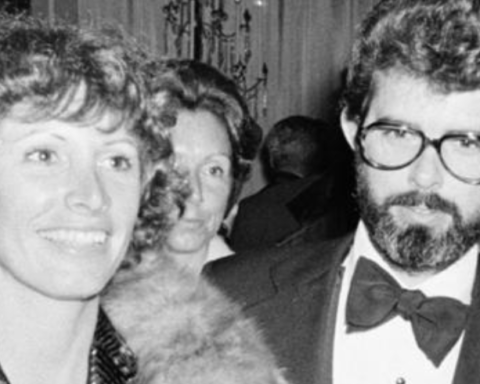

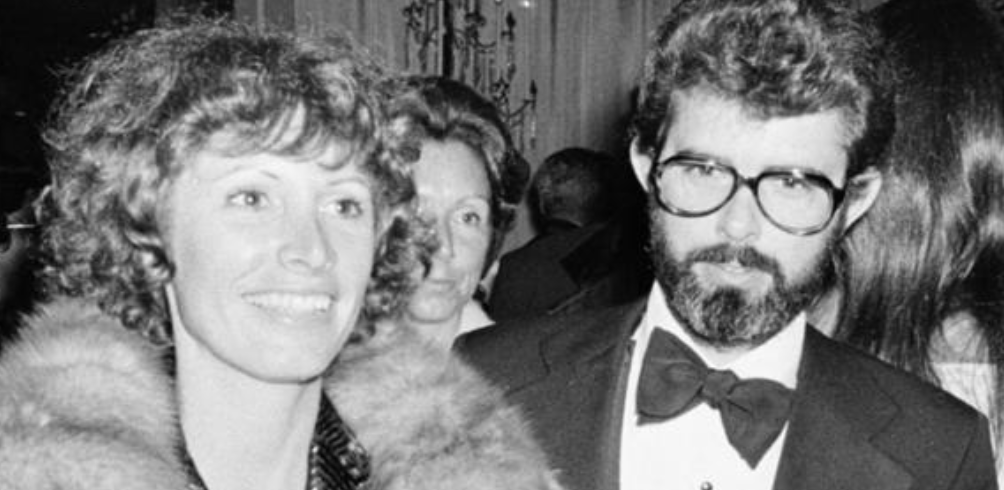
Marcia Lucas, the film editor who shaped the original Star Wars trilogy, edited Taxi Driver and American Graffiti, won the Academy Award for Best Film Editing for A New Hope in 1978 and spent her career being described as one of the great unsung figures behind some of the most important films of the New Hollywood era, died on Wednesday May 27, 2026 at her home in Rancho Mirage, California. She was 80.
The cause was metastatic cancer. She died peacefully, surrounded by loved ones. Her family’s attorney confirmed the news to the Associated Press and the San Francisco Chronicle on Friday.
The family statement released Friday captured what the people who knew her best understood about who she was. It read:
“Marcia will be remembered as a brilliant storyteller, a trailblazer for women in film, a loving mother and grandmother, a generous host, and a loyal friend whose humor and sparkle filled every room she entered. Her work was known for its emotional intelligence, rhythm, and humanity, a rare ability to find the truth of a scene and bring heart, momentum, and clarity to the screen. Marcia was a force.”
She is survived by her former husband George Lucas, her daughters Amanda Lucas and Amy Soper, three grandchildren and her chosen family.
The Edit That Changed Cinema
The making of Star Wars in 1976 and 1977 was, by the accounts of nearly everyone who was present for it, one of the most chaotic and difficult film productions in the history of Hollywood.
The special effects were unfinished for months. Scenes were shot without knowing what would be intercut with them.
George Lucas was reportedly so unhappy with the early rough cut that he considered abandoning the project.
The film that the editors received to work with was, in its raw form, not a movie that anyone could see would become the highest-grossing film in history up to that point.
Marcia Lucas was one of three editors who cut A New Hope, working alongside Paul Hirsch and Richard Chew, all three of whom shared the Academy Award for Best Film Editing at the 50th Academy Awards in 1978.
Her specific contribution to what the film became was something that people close to the production talked about for decades.
The most cited example is Obi-Wan Kenobi. George Lucas, during production and in the early editing stages, had planned for Obi-Wan to survive his lightsaber duel with Darth Vader.
Marcia pushed back. The audience needed something real, she argued, not a lucky escape or a strategic retreat, but a genuine loss, a sacrifice that gave Luke’s journey an emotional weight it could not otherwise carry.
Alec Guinness’s character needed to die. The force ghost, the ability for Obi-Wan to continue guiding Luke after his physical death, made the sacrifice possible without removing him from the story entirely.
George Lucas listened to his wife. Obi-Wan Kenobi died. The audience wept and then carried that grief into the sequel. The emotional architecture of the original trilogy, built on loss and legacy, was shaped in part by an editor’s conviction that the audience deserved a real story rather than a safe one.
The Associated Press described her as “often called the unsung hero of Star Wars.” The specific irony embedded in that description is the Oscar story.
Marcia Lucas won the Academy Award for Best Film Editing for A New Hope. George Lucas was not nominated for Best Director.
The Directors Guild of America was in a dispute with him over his decision not to put credits at the start of the film, the standard DGA requirement that Lucas bypassed for artistic reasons, and he ultimately resigned from both the DGA and the Writers Guild rather than conform to their rules.
The film was nominated for ten Oscars and won six. The editing award went to the three people who had cut it together. One of them was his wife.
The Career That Preceded Star Wars
Marcia Lucas did not arrive at Star Wars from nowhere. She had spent more than a decade building a career in film editing that would have stood alone as significant regardless of what came afterward.
She was born in Modesto, California on October 4, 1945, the same city where George Lucas was born, though they did not meet until they were both working in film.
She was raised in North Hollywood and began her career in 1964 at Sandler Films, working as an apprentice film librarian.
By the time she was twenty, she had been promoted to assistant film editor, a promotion that reflected both her capability and the specific reality that editing was one of the few senior creative positions in Hollywood where a woman could find a foothold in an industry dominated by men at every other level.
She assisted on George Lucas’s feature debut THX 1138 in 1971, the dystopian science fiction film that was his first major studio project after his student work.
She co-edited American Graffiti in 1973, the film that made Lucas a commercial director before Star Wars made him a cultural institution, and received an Academy Award nomination for Best Film Editing for her work on that film.
Between American Graffiti and Star Wars, she edited three films for Martin Scorsese. Alice Doesn’t Live Here Anymore in 1974, which launched Ellen Burstyn to an Academy Award for Best Actress. Taxi Driver in 1976, one of the most disturbing and perfectly constructed films of the New Hollywood era, which went on to win the Palme d’Or at Cannes.
New York, New York in 1977, released the same year as Star Wars. Three films for one of the most demanding and specific directors in American cinema, across the period when Scorsese was establishing himself as one of the major filmmakers of his generation.
She was not George Lucas’s wife who helped out on his movies. She was a film editor of the first rank who happened to be married to one of the directors she worked with.
The Woman Behind The New Hollywood
The AP’s obituary placed Marcia Lucas in the specific context she deserves, among the group of women whose editing work was essential to the New Hollywood movement of the late 1960s through the early 1980s.
Dede Allen edited Bonnie and Clyde and Dog Day Afternoon. Verna Fields edited Jaws and Paper Moon.
Thelma Schoonmaker edited most of Scorsese’s films starting with Raging Bull in 1980 and continues to edit his films today.
These were the women who were, as the AP put it, making sense of the work of the overwhelmingly male directors of the New Hollywood. They were not supporting characters in someone else’s story.
They were the people who took the footage that directors shot and assembled it into the films that audiences actually saw, the people who determined the rhythm, the pacing, the emotional arc and the specific moments that registered as true.
Editing is the invisible art. The director’s name is on the poster. The editor’s name appears in the credits and is rarely otherwise seen.
The specific decisions that distinguish a great film from a merely competent one, which take of a performance to use, where to cut away from a face, how long to hold on a reaction before moving to the next scene, are editing decisions. They are invisible when they are right and glaring when they are wrong.
Marcia Lucas made them right, repeatedly, across the most important films of one of American cinema’s most creative decades. She won the Oscar.
The films she helped make are still being watched, studied and loved nearly fifty years later.
She was 80 years old. She died at home, surrounded by the people who loved her. The films remain.