Anthony Guidera, 'The Godfather Part III' Actor, Has Died At 65
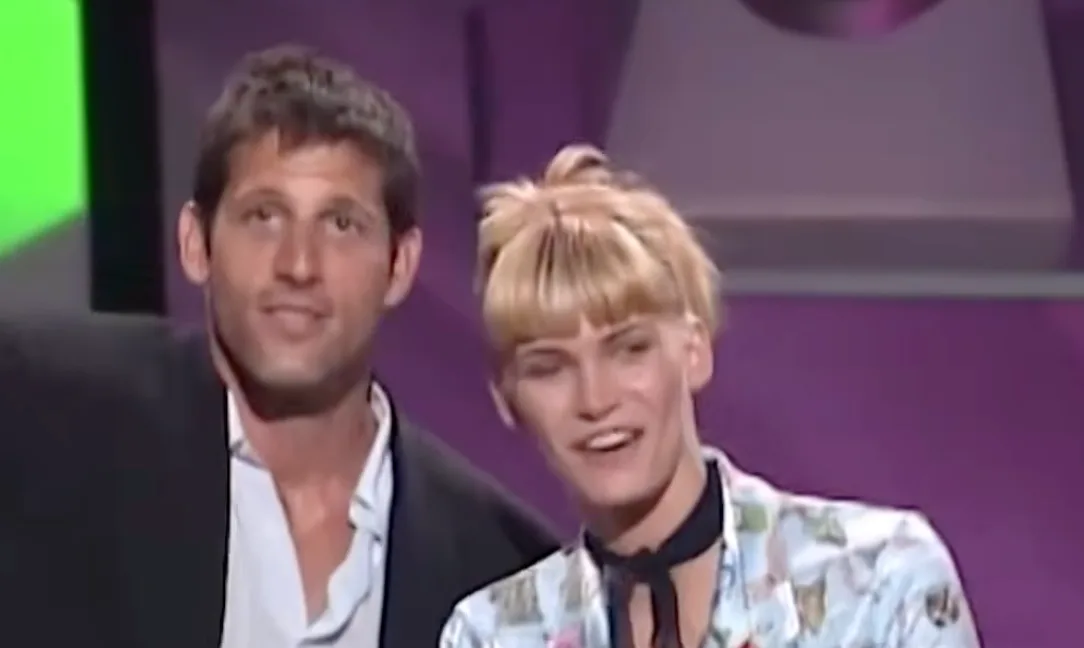
Anthony Guidera, the actor who launched his Hollywood career as a bodyguard in The Godfather Part III, spent the 1990s moving through some of the decade's biggest films, and won the 1996 MTV Movie Award for Best Kiss alongside Natasha Henstridge for Species, died on Saturday June 6, 2026 at a Los Angeles-area hospital. He was 65. His wife Valarie Anderson confirmed the news to TMZ.
He had been on life support for three weeks following a sudden cardiac arrest on May 11. Guidera and Valarie were in the living room of their Southern California home when he collapsed and his heart stopped.
He was rushed to the hospital, placed on life support and spent the following three weeks there while doctors attempted to determine what had gone wrong. They never found an answer. The cause of his cardiac arrest remains unknown.
Guidera had a prior advance directive that addressed exactly this kind of situation. He was taken off life support in accordance with that directive and brought home, where he died peacefully on June 6.
"It is with heavy hearts that we announce the sudden passing of our beloved Anthony," Valarie wrote in a statement. "We are devastated and trying to breathe through the impossible, taking each moment as it comes. Please hold this eternal light in your hearts and our family in your prayers."
He is survived by Valarie and their son Nick.
The Man Who Went To Paris And Came Back A Movie Star
Anthony Guidera was born in San Francisco in 1960. After college in California, he accepted what he later described as a one-way ticket to Paris, France, an offer from an agent that he took in 1983 and that would keep him in Europe for nearly a decade.
He modeled under the name James Guidera, working with European commercial directors on productions shot across Brazil, Uruguay, New Zealand, South Africa, Morocco and Turkey.
In Paris he studied theatre at the Théâtre Marie Stuart under Robert Cordier, appearing in bilingual French and English productions.
He also traveled back and forth to New York to study at Robert Lewis' Master Class, one of the original founders of the Actors Studio, the institution whose method acting tradition shaped American film performance across the postwar era.
He returned to the United States in the early 1990s and landed the role that would define how the industry first encountered him. Francis Ford Coppola was finishing The Godfather Part III, the third installment of the trilogy he had built across two decades, with Al Pacino, Diane Keaton and Andy Garcia joining the surviving cast of the original films. Guidera was cast as Anthony, a bodyguard for Joe Mantegna's character.
He was physically imposing in exactly the way that role required, 6 feet tall with the build and bearing that the word bodyguard implies, and his screen presence in the film was enough to get him noticed by the people who cast the action films and genre films that defined 1990s Hollywood.
The Kiss That Won An Award
Five years after The Godfather Part III, Guidera appeared in Species as Robbie, a character whose most significant narrative function is to not know that the woman he is kissing is an alien-human hybrid moments before she reveals what she actually is.
The film starred Natasha Henstridge as Sil, the extraterrestrial creation of scientists who immediately and catastrophically lose control of her, and the moment between Guidera's Robbie and Henstridge's Sil is the kind of scene that stays in the memory of anyone who saw the movie in theaters in 1995, the specific combination of attraction, danger and the realization that the character has made a serious mistake.
The MTV Movie Award for Best Kiss that Guidera and Henstridge won at the 1996 ceremony is the detail that pop culture has attached to his name ever since, the recognition that placed one of his briefest significant screen appearances among the most widely remembered moments of his career.
The award put him on a stage in a context that had nothing to do with being a bodyguard in a prestige drama and everything to do with a scene that audiences found unforgettable for exactly the reasons that the best Science Fiction horror uses human desire against its characters.
The 1990s Films That Built His Career
Guidera's career from Species forward took him into the specific universe of large-scale 1990s blockbusters that were built around physical spectacle, practical effects and the kind of supporting cast that directors like Michael Bay assembled to populate the edges of enormous set pieces.
Bay cast him twice, in The Rock in 1996, where he played a military pilot in the film that made Nicolas Cage and Sean Connery a pair, and in Armageddon in 1998, the asteroid disaster film that became one of the highest-grossing movies of the decade.
He appeared in Kevin Costner's The Postman in 1997, a film whose commercial failure obscured some genuine ambition in its premise.
The television work ran alongside the films with the consistent variety of a working actor who could fit into any genre the industry needed. He appeared on Baywatch. He appeared on Star Trek: Deep Space Nine in an episode called The Circle.
He guest starred on Angel, the Buffy the Vampire Slayer spinoff, in an episode called The Ring. He appeared on Nash Bridges, Red Shoe Diaries, The Pretender and ER.
The range of those credits tells the story of a performer who spent fifteen years working steadily across the full breadth of 1990s Hollywood television without ever settling into a single recurring role that might have made him more famous and might also have limited what he could do.
His final listed screen credit was L.A. Dicks in 2005. He was 44 years old when he made it. He had been working for fifteen years.
He spent the next two decades largely outside the entertainment industry, living with his wife in Southern California, volunteering at Astara, the spiritual foundation in Palos Verdes Estates where he was known as Reverend Anthony, and building the life that ended without warning on a May afternoon when his heart simply stopped.
The doctors never found out why.