Joe Negri, Handyman Negri From Mister Rogers Neighborhood, Dies At 99
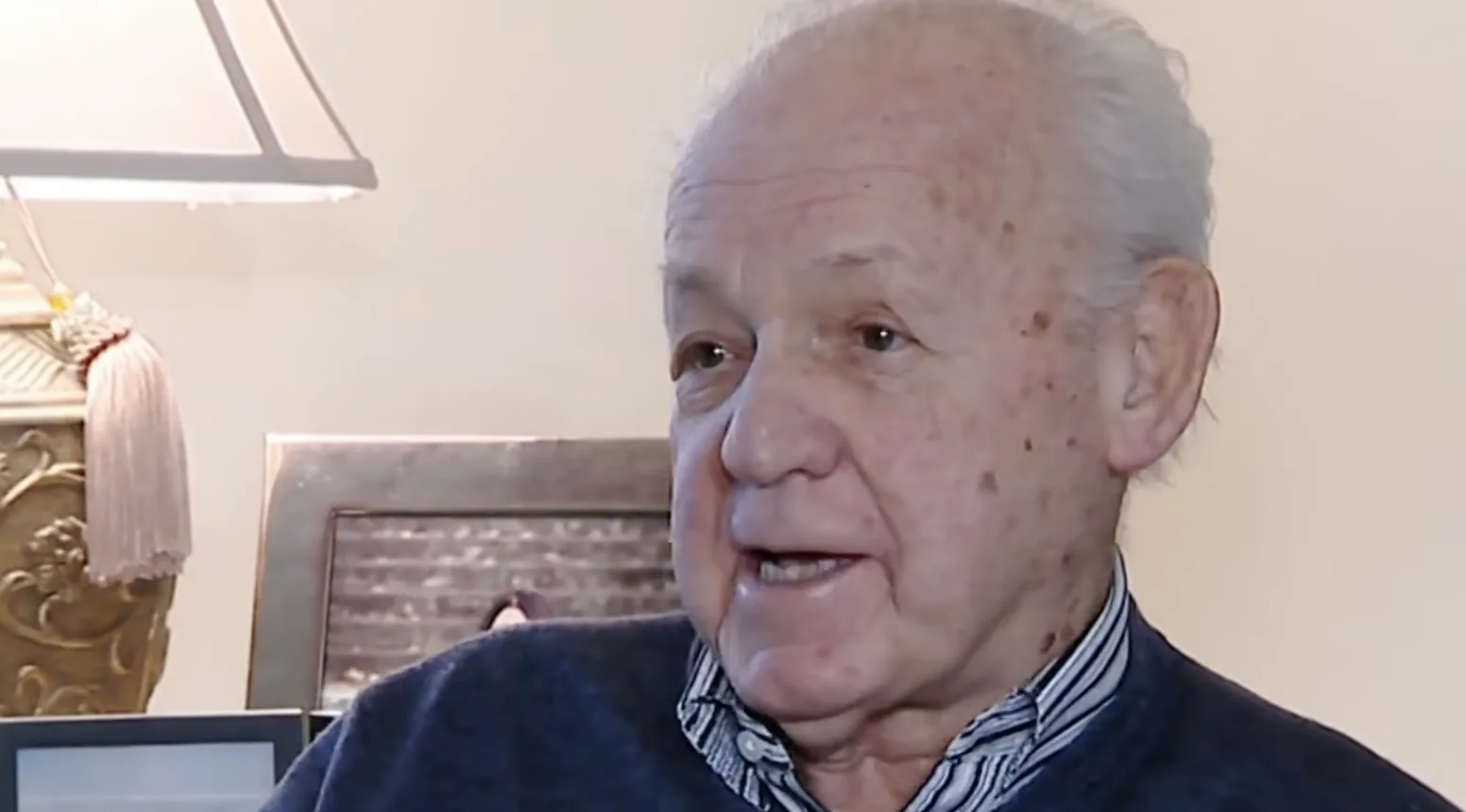
Joe Negri, the jazz guitarist who played Handyman Negri on Mister Rogers' Neighborhood, died of natural causes at age 99, according to his daughter Lisa Negri. He died on Saturday May 30, 2026, just days before he would have celebrated his 100th birthday.
Fred Rogers Productions confirmed the news to Pittsburgh's KDKA-TV on Sunday evening.
The detail that Joe Negri shared in every interview he ever gave about how he came to play a handyman is the one that belongs at the beginning of his obituary. "I said, 'Fred, I'm not handy at all. I can't even hammer a nail.' And he said, 'Don't worry about a thing, it's going to be all pretend,'" Negri recalled. He was not being modest. His wife was more handy than he was. He could not fix things, he had no particular talent for construction or repair, and Fred Rogers looked at him and said it did not matter in the least.
What Negri could do was play the guitar at a level that made Wynton Marsalis and Yo-Yo Ma want to perform beside him.
For 31 seasons across 33 years, from the show's premiere on February 19, 1968 through its final episode in 2001, Joe Negri was Handyman Negri, the man in the Neighborhood of Make-Believe who fixed things and played music and became one of the most enduring figures in the history of American children's television.
He was also, for the generations of Pittsburghers who knew him outside the television, one of the finest jazz guitarists the city has ever produced.
The Pittsburgh Boy Who Picked Up A Ukulele At Three
Born in Pittsburgh in 1926, Joe Negri started playing instruments as a young child after receiving a ukulele from his father at age 3. By 16, he was touring the country with swing bands.
His father Michael, "Banjo Mike" to everyone who knew him, was an Italian immigrant who had come to the United States to escape being drafted into the Italian army in World War I, served in the American army instead and returned to Pittsburgh to work as a union bricklayer and play Dixieland music in his spare time.
The combination of Italian immigrant work ethic and jazz musician's soul produced a household on Mount Washington, one of Pittsburgh's hillside neighborhoods overlooking the confluence of the three rivers, where music was not something you listened to but something you did.
Joe absorbed all of it. The ukulele at three became multiple instruments across childhood. The local clubs became the touring circuit at 16, playing with the swing bands that were the commercial popular music of the early 1940s.
Pittsburgh in the postwar era had a jazz scene that fed the national circuit, and Negri became part of it, performing on radio programs, playing the clubs where dancers came on Friday and Saturday nights, developing the guitar technique that would eventually draw collaborators from the highest levels of the jazz world.
He played the clubs where Fred Kelly came to dance. Fred Kelly was Gene Kelly's brother, they had grown up in Pittsburgh together, the same city that was producing Negri's music, and the world that Joe Negri inhabited was the world of Pittsburgh entertainment in its golden era, before television reorganized how Americans consumed music and before the recording industry consolidated around a handful of coastal cities.
How Fred Rogers Found Him
Fred Rogers was a music composition major at Rollins College in Florida before he became the most beloved figure in the history of children's television. He understood music deeply, wrote many of the songs that he sang on his show, and he cared passionately about what Mister Rogers' Neighborhood sounded like.
The show was, among its many things, a jazz program. His jazz quartet tucked swinging riffs into every episode. Thanks to them, generations of children unconsciously absorbed a little soul with their public television.
The quartet Rogers assembled around himself was remarkable. Johnny Costa, one of the most gifted jazz pianists in Pittsburgh history, played piano and served as musical director. Carl McVicker Jr. played bass.
Bobby Rawsthorne played drums. And Joe Negri, the jazz guitarist who could not hammer a nail, played guitar as Handyman Negri.
The character evolved over the course of the show's run in the specific way that Fred Rogers allowed things to evolve, organically, following the natural talents of the people he had chosen to be part of his neighborhood.
As the show progressed and Handyman Negri became a fan favorite, he eventually had his own Negri's Music Shop in Mr. Rogers' neighborhood, playing jazz guitar with the likes of Yo-Yo Ma, Wynton Marsalis and Johnny Costa.
The Music Shop was the acknowledgment of what Joe Negri actually was. The handyman framing had always been a gentle fiction, something Fred Rogers invented to give a jazz musician a reason to be present in a neighborhood full of children and puppets. Once the character was established enough that the fiction could be gently loosened, Rogers let Negri be what he was.
The music shop in the Neighborhood of Make-Believe became the place where world-class musicians came to perform, where children encountered jazz without knowing they were encountering jazz, and where Joe Negri got to do on television what he had been doing in Pittsburgh clubs since he was a teenager.
The Importance Of Mr. Rogers
Mister Rogers' Neighborhood ran from 1968 to 2001, 33 years of production, 31 seasons, more than 900 episodes. Fred Rogers died of stomach cancer in 2003, and his wife Joanne Rogers, who had worked to protect and extend his legacy across the years after his death, died in 2021.
The people who were central to the world Rogers created have been leaving it gradually, and Joe Negri's death at 99 removes one of the last original members of that neighborhood from the world.
For generations of American children, Handyman Negri was simply a fixture — a familiar face in the familiar world of the show, present across the entirety of a childhood spent watching Fred Rogers put on his cardigan and talk directly to them about things that mattered.
The show's particular genius was its consistency. The same people, the same neighborhood, the same puppets, the same music, a world that did not change in all the ways the real world was always changing. Handyman Negri was part of that consistency.
The joke that Joe Negri always told about himself, that he was not handy, that the whole thing was pretend, was also a kind of profound Mister Rogers truth. The neighborhood did not require him to be good at fixing things.
It required him to be good at being present, at being warm, at being authentically himself in a space that Fred Rogers had created for exactly that kind of authenticity. The jazz guitar was the authentic part. The handyman was the character. The children who watched never needed to know the difference.
The Jazz Career That Continued Until Nearly The End
Long before generations of viewers knew him from Fred Rogers' television neighborhood, Negri had already built a remarkable music career. And after the show ended in 2001, that career continued.
At age 84, he released a new jazz guitar album, his first in a stripped-down setting designed to showcase the finger-work that had been the foundation of his playing since childhood. NPR covered the release, describing him as someone jazz fans knew independent of his television work, a guitar virtuoso whose technique had developed across more than seven decades of playing.
He continued to perform around Pittsburgh, remained a figure in the city's music community and was celebrated in tribute concerts that brought together the musicians and fans who knew him first as a jazz player.
He was almost 100 years old. He did not stop being a musician before he stopped being alive.
Fred Rogers told him it would all be pretend. The jazz was never pretend. Neither was the warmth, the humor or the love for the neighborhood — real and imaginary — that Joe Negri inhabited for 31 seasons.
He was 99 years old. He died on Saturday. His birthday would have been this week.