Tren de Aragua Leader Niño Guerrero Was Killed In A US Strike Inside Venezuela
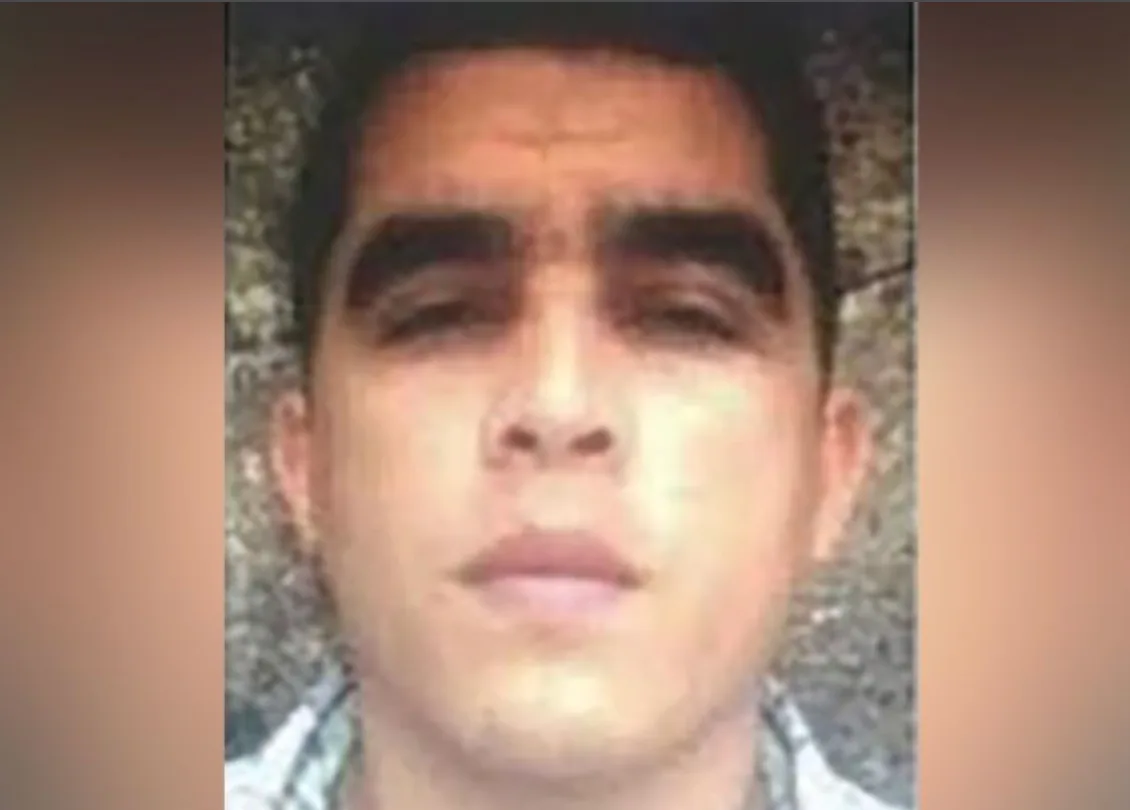
President Trump announced Friday that Hector Rusthenford Guerrero Flores, known as Niño Guerrero and described by US authorities as the leader of Tren de Aragua, was killed in a US military strike on a compound in Venezuela's Bolívar state.
The strike was carried out by US Southern Command earlier this week. Trump posted the announcement on Truth Social along with unclassified video footage showing a projectile striking a small building with a green roof and destroying it in a fireball.
"At my direction, the United States Southern Command delivered a swift and lethal kinetic strike to successfully execute Niño Guerrero, the infamous leader of Tren De Aragua, one of the most bloodthirsty Terrorist Organizations on Planet Earth," Trump wrote.
Venezuela's communications ministry confirmed the operation, describing it as a "combined operation" between US forces and Venezuelan security services targeting organized crime in Bolívar state.
Defense Secretary Pete Hegseth said in a statement that the strike "underscores the shared U.S. and Venezuelan commitment to take the fight to narco-terrorists and deny them any safe haven in our hemisphere."
Who Was Guerrero Flores?
US Attorney Jay Clayton, who has since been nominated by Trump to serve as Director of National Intelligence, described Guerrero Flores in December 2025, when the Southern District of New York unsealed charges against him, as "the mastermind of Tren de Aragua's evolution from a Venezuelan prison gang into a transnational terrorist organization."
The charges included racketeering conspiracy and lending support to terrorists across more than a decade of criminal activity.
The State Department had offered a $5 million reward for information leading to his capture.
Tren de Aragua originated in Tocorón Prison in Venezuela's Aragua state, where Guerrero Flores was alleged to control day-to-day operations even while incarcerated.
The gang has since spread across Venezuela and into Peru, Colombia, Chile and the United States, engaging in violence, extortion and human trafficking.
The Trump administration designated it a foreign terrorist organization earlier in 2025.
The Venezuela Relationship Behind The Strike
The cooperation with Venezuela on the operation is the specific geopolitical context that makes the strike more significant than a conventional counterterrorism action.
Trump highlighted the collaboration explicitly, writing that it "was coordinated closely with our friends in Venezuela, with whom we are working very well."
The reference to "friends in Venezuela" reflects the changed nature of the US-Venezuela relationship following the US military operation that removed President Nicolás Maduro from power in January 2026.
The Venezuelan government that followed Maduro's removal has been cooperating with US security operations to a degree that would have been unthinkable during the Maduro era.
Trump framed the strike as fulfillment of a campaign commitment. "During my Campaign, I pledged to expel these monsters from our Country, and bring Justice to the families of those they slaughtered. With this action, the United States Military has brought retribution for them, their families, and their loved ones."
The strike is part of a broader military campaign against drug trafficking operations that has included more than 200 people killed in strikes on alleged drug boats in the Caribbean since the campaign began in September 2025.